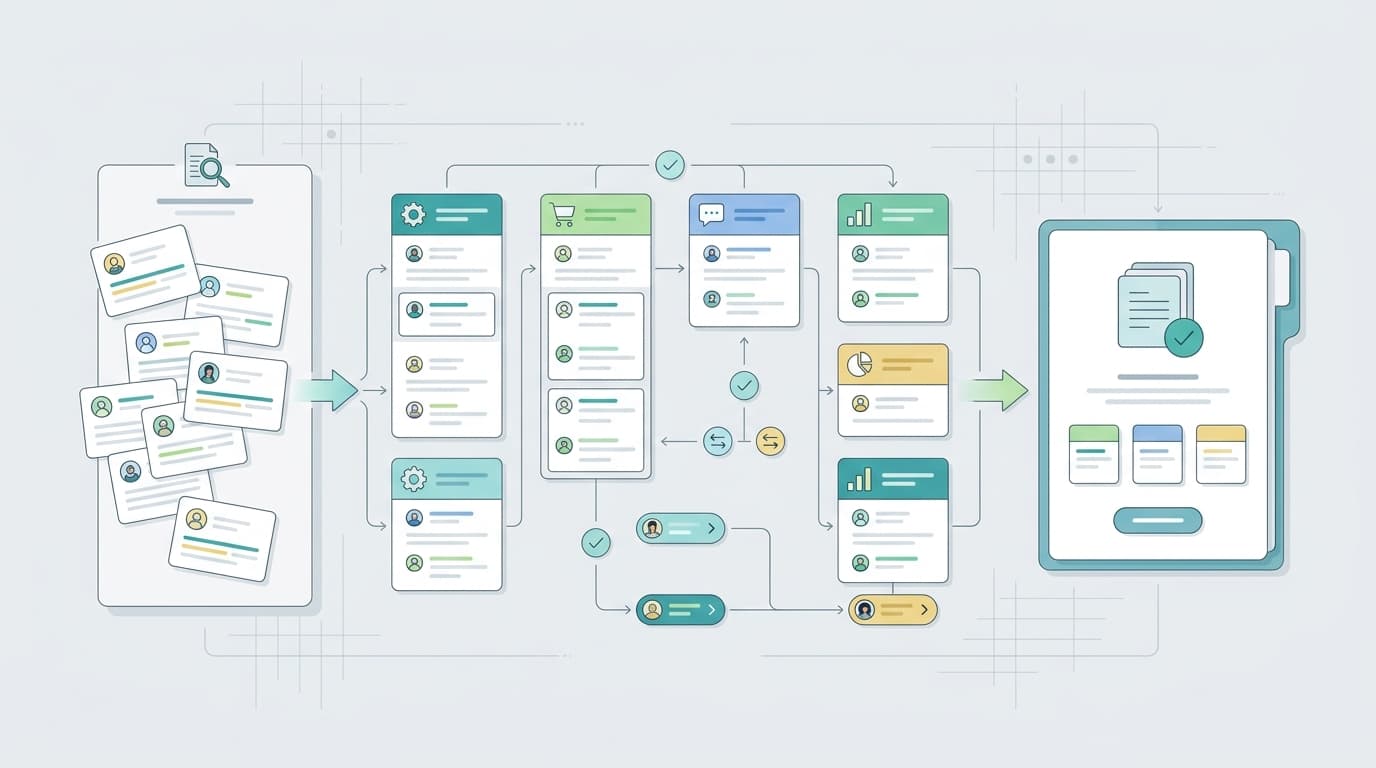
Amazon Brand Health Quarterly Review Template gives marketplace, product, support, and leadership teams a practical way to summarize what changed this quarter, why it changed, and who owns the next action. The goal is not to create more dashboards, more headings, or more disconnected tasks. The goal is to move from signal to decision to follow-up with enough evidence that the next owner knows what to do.
This refreshed version follows the SEO skills workflow: clear intent, table-based summary, deeper sections, visible quality checks, and structured data aligned with the page. It also follows the current VOC article rules: no thin heading stacks, no separate related-guides section, and one approved VOC AI image without a caption.
TL;DR: Amazon Brand Health Quarterly Review Template
| Area | What to evaluate | Action |
|---|---|---|
| Signal quality | Monitor priority ASIN movement, customer voice, listing quality, competitor changes, and operations risks with enough context to explain what changed and which ASIN is affected. | Helps the assigned owner with a due date and expected signal respond to the real issue rather than reacting to a vague alert. |
| Buyer clarity | Use review language, support questions, and listing evidence to see whether shoppers understood the promise before purchase. | Connects marketplace data with the customer experience that caused the signal. |
| Priority rules | Rank issues by revenue exposure, launch timing, complaint severity, catalog importance, and how likely the pattern is to repeat. | Keeps the team focused on changes that can protect trust or improve conversion. |
| Follow-up | Record the change, expected signal, review date, and owner so the team can see whether the action worked. | Turns brand health quarterly review from a one-time edit into a repeatable operating workflow. |
What brand health quarterly review should help sellers decide
Brand health quarterly review is useful only when it supports a specific operating decision. For marketplace, product, support, and leadership teams, that decision is to summarize what changed this quarter, why it changed, and who owns the next action. A strong workflow separates raw data from interpretation, then assigns the next action to the team that can actually change the outcome.
The most reliable approach combines Amazon-native context, marketplace performance, and buyer language. Metrics show that something changed; reviews, listing content, and competitor movement help explain why it changed. Sellers should avoid treating one metric as the whole story, especially when the issue can affect trust, conversion, support volume, or product requirements.
For official Amazon context, this workflow can be connected to Amazon SEO guidance, A+ Content, and Manage Your Experiments. Those references should support the seller decision, not sit in a separate source block that interrupts the article.
Workflow sellers can use
Start with priority ASINs rather than the full catalog. Priority can come from revenue exposure, launch timing, category risk, brand importance, or recent customer feedback. Once the first workflow is stable, sellers can expand it without creating alert fatigue.
Next, define the evidence required before action. For this topic, the useful evidence includes priority ASIN movement, customer voice, listing quality, competitor changes, and operations risks. The team should also record the date, affected ASIN, marketplace, variation, and any listing or operations change that may explain the movement.
Finally, assign the response to the right owner. The likely owner may be a assigned owner with a due date and expected signal, depending on the root cause. Every action should leave a record of what changed, why it changed, and when the result will be checked.
Scorecard for prioritizing work
A scorecard keeps the team from chasing whichever signal looks loudest. It also helps leadership understand why one ASIN or issue is getting attention before another. The table below is designed as a practical working tool rather than a decorative report.
| Area | What to evaluate | Why it matters |
|---|---|---|
| Signal quality | Monitor priority ASIN movement, customer voice, listing quality, competitor changes, and operations risks with enough context to explain what changed and which ASIN is affected. | Helps the assigned owner with a due date and expected signal respond to the real issue rather than reacting to a vague alert. |
| Buyer clarity | Use review language, support questions, and listing evidence to see whether shoppers understood the promise before purchase. | Connects marketplace data with the customer experience that caused the signal. |
| Priority rules | Rank issues by revenue exposure, launch timing, complaint severity, catalog importance, and how likely the pattern is to repeat. | Keeps the team focused on changes that can protect trust or improve conversion. |
| Follow-up | Record the change, expected signal, review date, and owner so the team can see whether the action worked. | Turns brand health quarterly review from a one-time edit into a repeatable operating workflow. |
Use the scorecard before and after the fix. If the same problem returns, the team should tighten the root-cause diagnosis instead of repeating the same surface-level update. The strongest workflows become more accurate over time because they learn from resolved and unresolved issues.
How VOC AI supports the workflow
VOC AI helps sellers add customer voice to brand health quarterly review. It can surface repeated review themes, complaint language, praise patterns, and buyer expectations across products or competitors. That context is what turns a number or alert into a clearer business decision.
Review analysis is strongest when the team already has a concrete ASIN set, competitor set, or listing question. The insight should become a specific action: improve a product requirement, rewrite a bullet, clarify an image, update support content, monitor a risk, or escalate an issue with better evidence.

Common mistakes and operating cadence
The biggest mistake is treating brand health quarterly review as a one-time task. Sellers often make a change, assume the issue is fixed, and move on without checking whether buyer language or performance improved. Another mistake is assigning every issue to the same team even when the cause belongs somewhere else.
A practical cadence is simple: urgent signals get weekly review, recurring patterns get monthly summaries, and larger decisions move into quarterly planning. This cadence keeps the work manageable while still giving the team enough rhythm to catch material changes early.
Before making a change, define the expected signal. That signal may be rating recovery, fewer repeated complaints, better conversion, clearer review language, lower support volume, faster escalation, or stronger ownership. Without a defined signal, the team cannot tell whether the work improved the business.
FAQ
What is brand health quarterly review? Brand health quarterly review is a structured workflow for helping marketplace, product, support, and leadership teams summarize what changed this quarter, why it changed, and who owns the next action. It combines marketplace signals, buyer language, and clear ownership so the team can act rather than simply report data.
What should sellers check first? Start with priority ASINs and the signals most likely to change the decision: priority ASIN movement, customer voice, listing quality, competitor changes, and operations risks. Then review buyer language so the team understands why the signal moved.
How should teams measure success? Measure the expected business signal after the action. Depending on the topic, that may include rating recovery, fewer repeated complaints, better conversion, clearer listing engagement, faster response time, or fewer unresolved issues.