Amazon review analyzer tools are easy to misunderstand. Teams often treat them like a faster way to summarize complaints, then wonder why the output never changes a roadmap, a listing, or a support decision. The better use case is narrower and more useful: make the review analyzer part of the growth system, not the whole system.
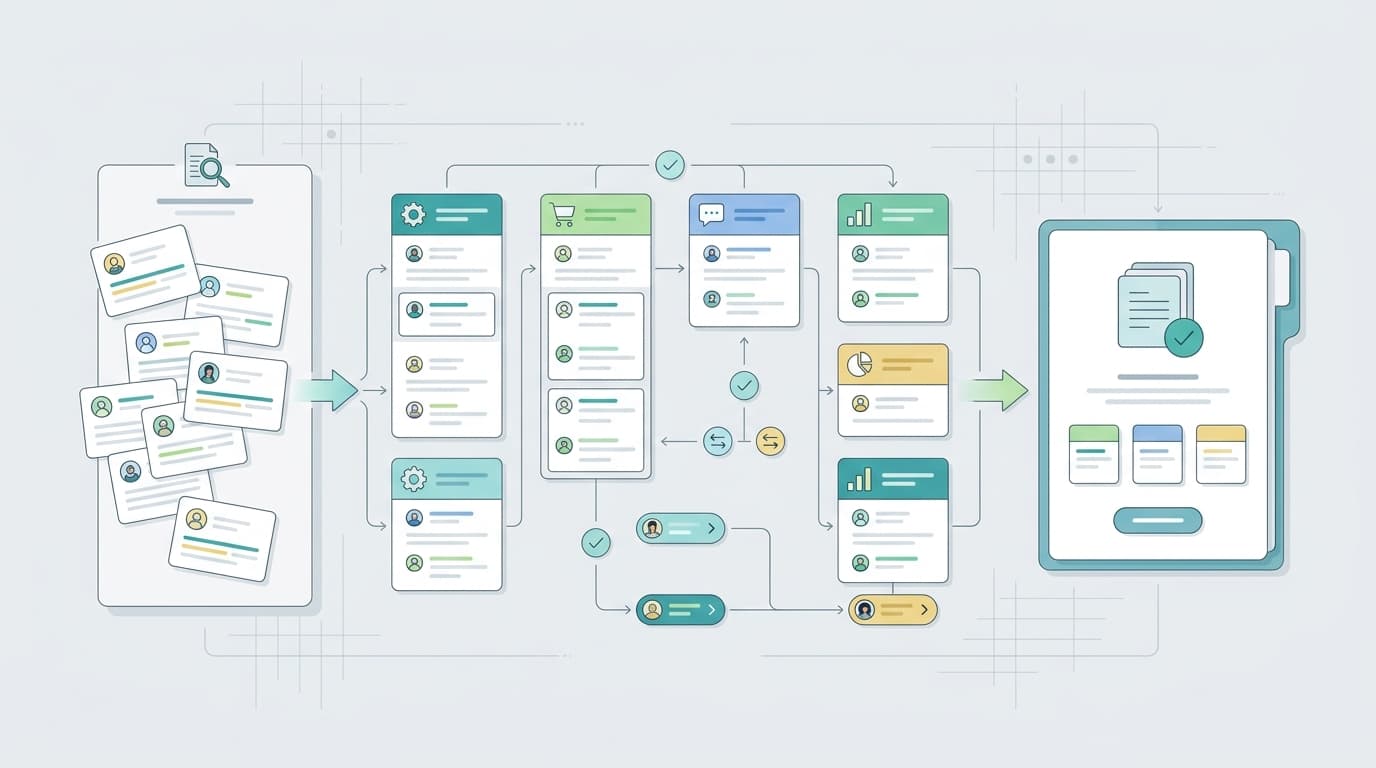
For growth teams, the job is not to count complaints. The job is to turn review language into a decision packet that product, marketing, and support can act on. That means defining the cohort, preserving the source evidence, separating signal from noise, and routing the result to an owner who can change something.
A good Amazon review analyzer should do that every time, not only when the dataset is small or the complaint is obvious.
Why this matters now
Amazon review analysis is crowded because the SERP mixes tool pages, fake-review checkers, seller-suite pages, and general explainers. That makes it harder for a growth team to tell what a review analyzer actually does and where it belongs in the workflow.
The practical opportunity is not another analyzer. It is a repeatable operating model that helps a team answer questions like what is broken, what should change first, which complaints matter, and who owns the next action.
That is why an Amazon review analyzer belongs inside the growth workflow, not on the side as a reporting toy.
Where an Amazon review analyzer fits
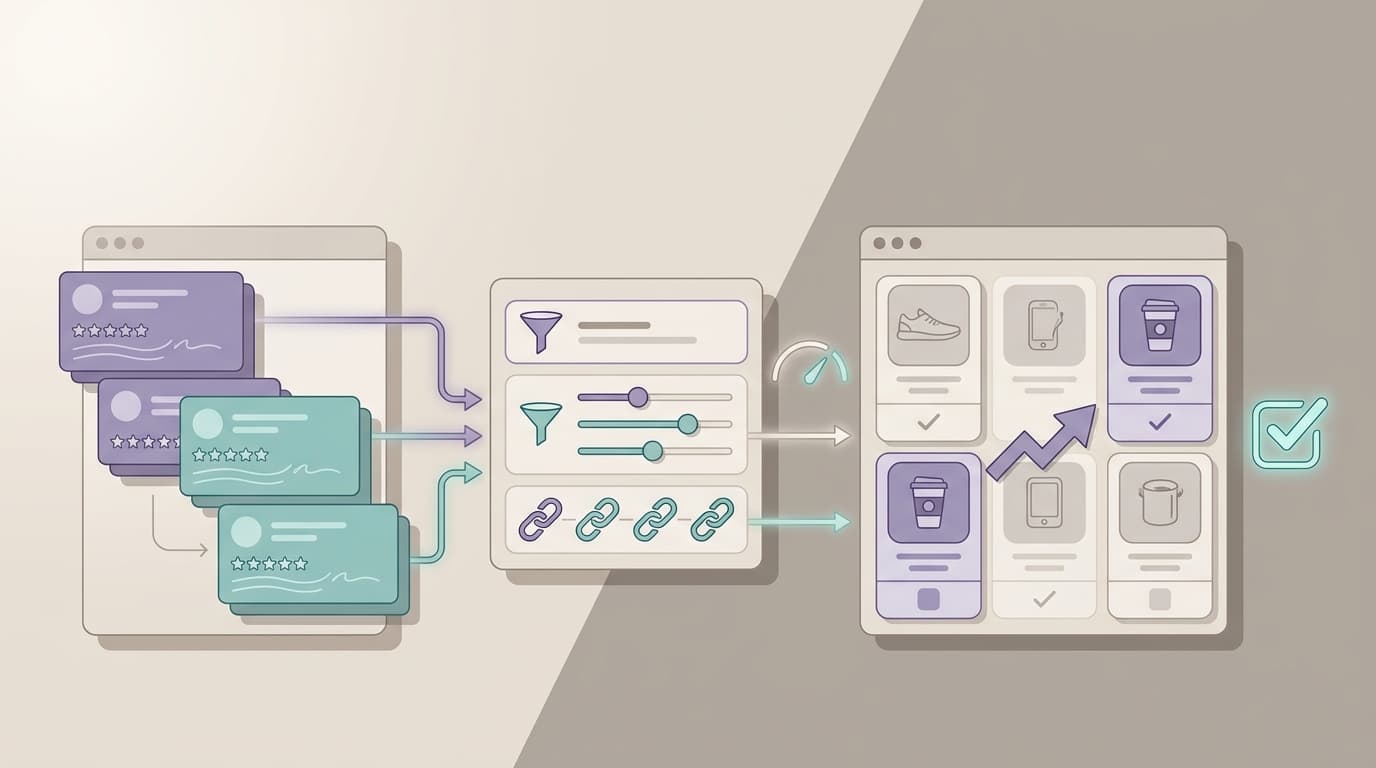
A review analyzer is most useful when a team already has a real decision to make. That decision might be about a product gap, a listing rewrite, a support issue, a competitor weakness, or a monitoring cadence. In that case, the analyzer becomes an evidence layer for the decision.
VOC.AI is positioned well for that job. The live VOC Analysis page says the product turns customer reviews into product direction, buyer language, and market-ready decisions. The Review Analysis API page adds the programmatic path: reviews, keywords, sales, and listing data can flow through API and MCP surfaces. The pricing page shows a Trial plan, a $99/month Personal plan, a $299/month Team plan, and API/MCP access for teams that need a repeatable workflow.
The strategy lens
- Start with the decision sentence.
- Lock the review cohort.
- Preserve the source evidence.
- Extract themes that are specific enough to act on.
- Check for contradictions and weak signals.
- Route the output to one owner.
- Choose whether this should run once, on a cadence, or through API.
That sequence matters because growth teams usually fail in one of three ways: they analyze too broadly, they report insights without a next owner, or they optimize for the report instead of the decision.
In practice, the Amazon review analyzer should be the step that converts customer language into a decision path, not the end state itself.
What good output looks like
| Question | Good answer includes |
|---|---|
| What was analyzed? | Product, date range, rating band, market, and filter rules |
| What did customers say? | Specific themes, not a generic sentiment label |
| What supports it? | Review excerpts, IDs, timestamps, or export rows |
| What weakens it? | Contradictions or split segments |
| Who should act? | Product, support, marketing, research, or operations |
| What happens next? | Ticket, test, monitoring plan, or investigation |
How growth teams should use it
- Product: decide whether a complaint belongs in the roadmap.
- Listing: decide whether copy should match customer language more closely.
- Support: decide whether the issue needs a new response path or escalation rule.
- Competitive analysis: compare what rivals' customers complain about most.
- Monitoring: watch whether a known issue is getting better or worse.
That is the useful strategy. The tool is not the point; the routing logic is.
When not to overuse it
The analyzer is probably the wrong starting point when there is no owner for the decision, the sample is too small, the feedback source does not match the decision, the team only wants a few quotable snippets, or the real question is legal, pricing, or operational and needs a different evidence base.
What to pair it with
The VOC.AI review workflow is strongest when paired with the rest of the product surface: Voice of Customer Analysis for review interpretation and product direction, Review Analysis API for repeatable workflows and internal integration, Market Insight for category and opportunity work, Product Research for product and listing decisions, and Pricing for evaluating plan fit before rollout.
FAQ
Is an Amazon review analyzer the same as sentiment analysis?
No. Sentiment analysis labels tone. A review analyzer should also preserve themes, evidence quality, contradictions, owner routing, and the next action.
Do growth teams need a tool?
Not always. A small cohort can be handled manually. A tool matters when volume, repeatability, or handoff cost makes that too slow.
What should I read next?
If you are choosing between tools, read the Amazon review analysis buyer guide. If you already have a cohort and want a faster execution checklist, read the Amazon review analyzer checklist for faster decisions. If you need a fuller workflow, read the how-to guide.
Bottom line
An Amazon review analyzer is most valuable when it helps a growth team make a decision faster, with better evidence, and with a clear owner for the next step. If the output cannot do that, the team has not built a strategy yet, only a summary pipeline.