Customer Feedback Analysis Software for Ecommerce: Structure One Dashboard for Product, Support, and Marketing
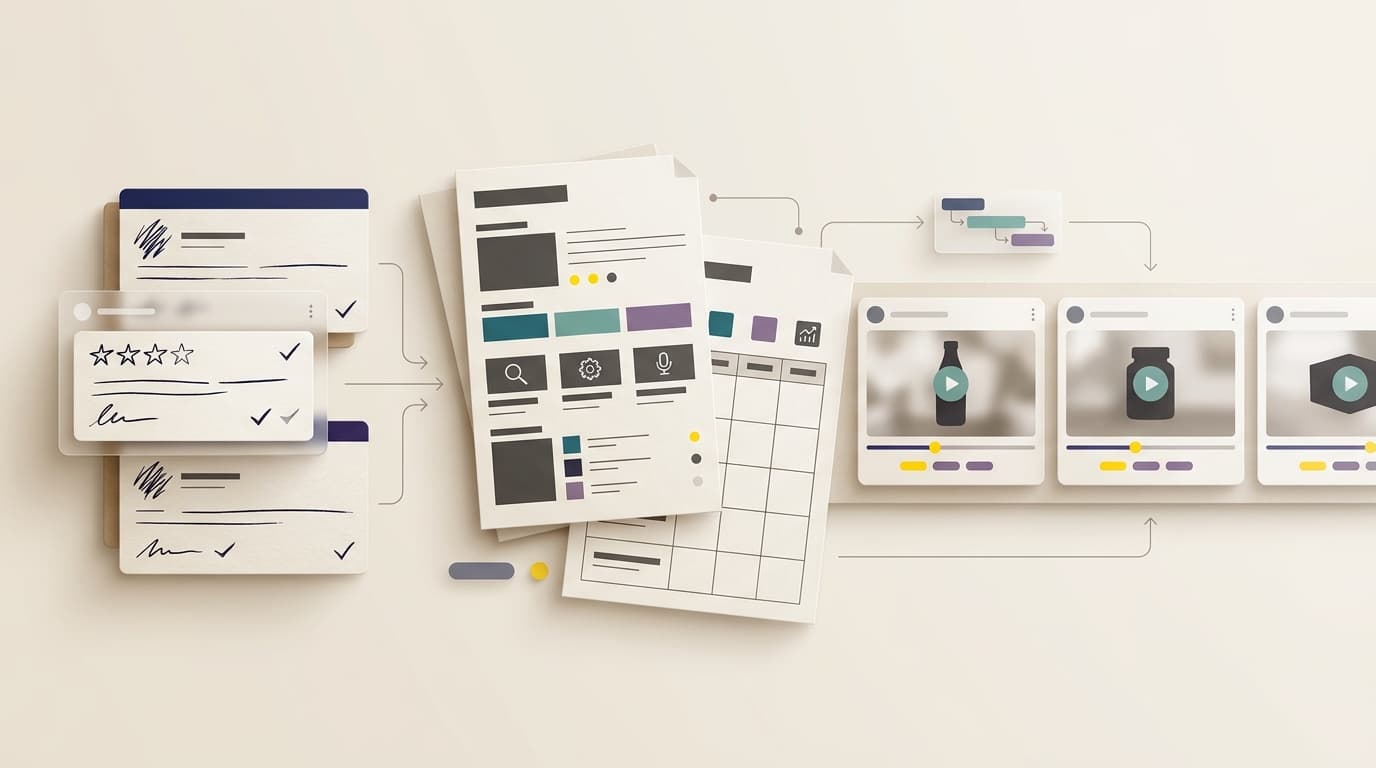
Customer feedback analysis software for ecommerce is only useful if it helps more than one team make better decisions from the same review signal. A dashboard that stops at a sentiment score does not do that. Product, support, marketing, and category owners need a shared view that explains what customers keep repeating, why it matters now, and who should act next.
That is the gap many seller teams run into. They already have reviews, exports, and a few AI summaries. What they do not have is one review insights dashboard that turns repeated complaint themes and stable praise patterns into a clear operating view.
VOC.AI's current public product pages position the platform around turning customer reviews into buyer language, product direction, and market-ready decisions. The live VOC Analysis page describes the product in exactly those terms. The live Product Research page emphasizes review-backed demand and buyer tradeoffs. The live Competitive Analysis page emphasizes side-by-side competitor review patterns and buyer complaints. Together, those surfaces point to a practical workflow question: what should a seller review dashboard actually show if multiple teams need to work from the same evidence?
This guide answers that question. It is not another explainer on what amazon review sentiment analysis means. It is a design guide for building a customer feedback dashboard that helps teams route repeated feedback into listing, support, product, and competitive decisions.

Why most seller review dashboards fail to change decisions
Many dashboards fail because they summarize reviews without structuring the next action. They show a positive-versus-negative split, a few top keywords, and maybe an average rating trend. That is not enough for a product manager deciding whether there is a defect pattern, a support lead deciding whether macros need to change, or a marketing owner deciding whether buyer language belongs in the listing.
The problem is not lack of data. The problem is lack of shared structure.
| Weak dashboard pattern | What it shows | Why it underperforms |
|---|---|---|
| Sentiment-only view | Positive, neutral, negative percentages | It flattens different complaint types into one score |
| Keyword cloud | Frequent words with no role context | Teams still do not know what deserves action |
| Single-team report | Notes built for only marketing or only support | Other teams stop trusting the same dataset |
| Raw export view | Review text with minimal grouping | The analysis burden stays manual |
| Isolated screenshot summary | Snapshot with no owner or follow-up | Insight does not turn into execution |
The better question is not whether a dashboard looks analytical. The better question is whether a cross-functional team can open it and answer:
- what complaint themes are repeating
- what praise patterns deserve reinforcement
- which signals are rising fast enough to matter this week
- and who owns the next move
What customer feedback analysis software for ecommerce should show beyond sentiment
Strong customer feedback analysis software for ecommerce should help a team move from summaries to structured decisions. That means the dashboard needs to preserve theme context, representative wording, timing, and ownership.
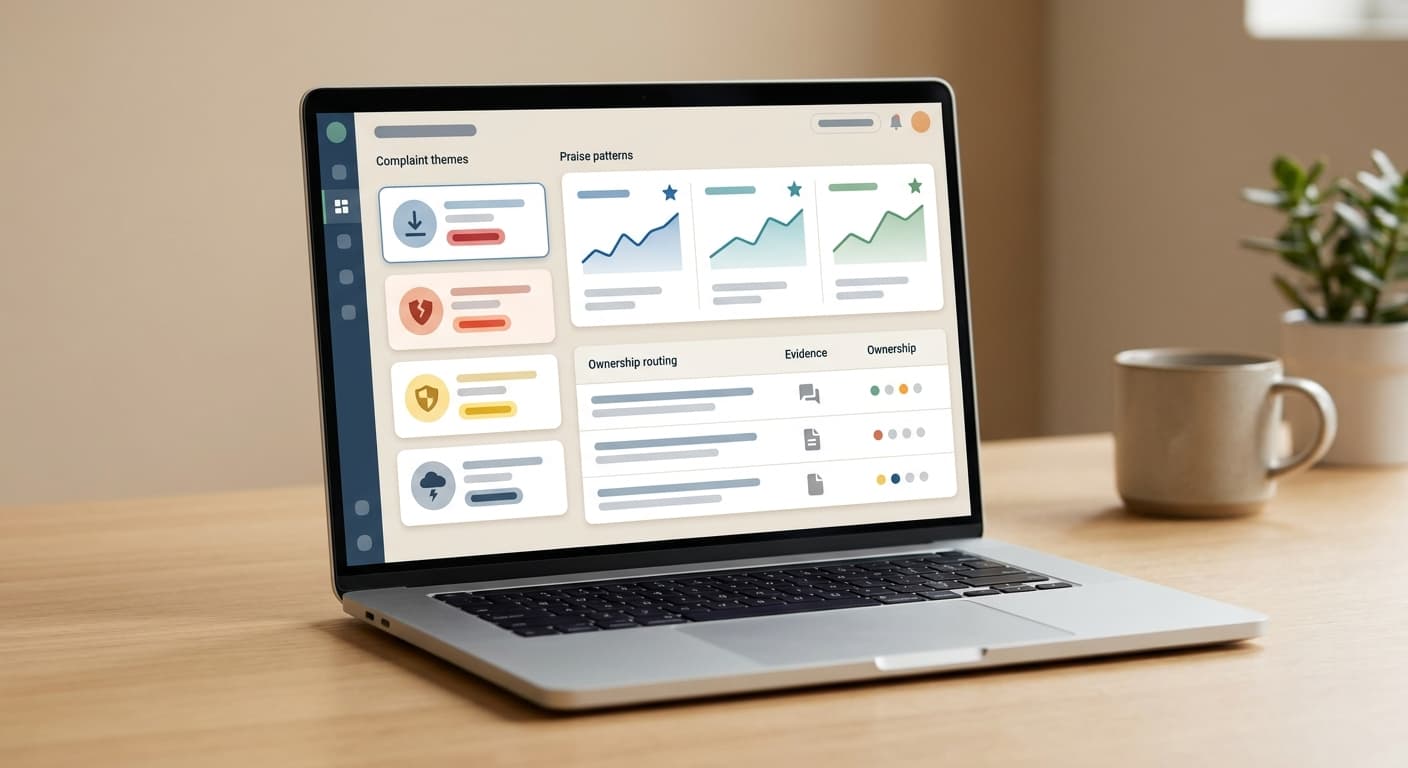
The most useful review insights dashboard usually includes five sections.
| Section | What it should show | Why it matters | Primary reader |
|---|---|---|---|
| Complaint themes | The top recurring negatives by frequency, recency, and product scope | Shows what is creating friction or return risk | Product, support, ops |
| Praise patterns | The most repeated positives and exact buyer wording | Shows what customers value and what messaging should reinforce | Marketing, listing, product |
| Trend movement | Which themes are rising, stable, or fading across time windows | Separates new risk from background noise | Founders, category leads, analysts |
| Evidence panel | Representative reviews, timing, and overlap notes | Keeps the dashboard tied to proof instead of abstractions | Cross-functional reviewers |
| Owner routing | Current owner, next action, and status by theme | Converts insight into accountability | Product, support, marketing, ops |
That is what separates a real customer feedback dashboard from a sentiment widget. If the dashboard cannot show proof and ownership, it will not change how teams work.
Start with complaint themes, not only ratings
Complaint themes are usually the highest-value section because they explain what is actually going wrong from the customer point of view. A rating average may drop for many reasons. A complaint-theme view shows whether the issue is packaging, setup confusion, performance inconsistency, expectation mismatch, or something else.
That structure matters because different teams need different responses.
| Complaint theme type | Typical question | Likely owner |
|---|---|---|
| Product defect pattern | Is there a quality or durability issue? | Product, QA, ops |
| Packaging or shipping complaint | Is this arriving damaged or causing disappointment before use? | Ops, 3PL, support |
| Setup confusion | Are customers failing because instructions or onboarding are weak? | Support, product, content |
| Expectation mismatch | Does the listing overpromise or hide an important limitation? | Marketing, listing, product |
| Feature-gap comparison | Are competitor reviews revealing a missing strength or feature? | Product, research, leadership |
The live Competitive Analysis page makes this easier to understand because it frames the job as comparing rival listings, review patterns, and buyer complaints side by side. That is useful for dashboard design too. A complaint theme becomes much more actionable when the team can tell whether it is unique to one ASIN, shared across a category, or exposed by a competitor gap.
Praise patterns should feed listing and message decisions
The second core section is praise patterns. Many teams underuse this because they think positive reviews are only for morale or testimonial copy. In practice, repeated praise often tells you:
- which benefit should lead the listing
- which phrase sounds more credible in customer language than in internal brand language
- which use case deserves ad or PDP space
- and which differentiator is actually visible to buyers
The live Product Research page reinforces that angle by emphasizing review-backed demand, category signals, and buyer tradeoffs. In dashboard terms, praise patterns are not just compliments. They are market language and decision input.
| Praise pattern signal | What it can influence | Best owner |
|---|---|---|
| Repeated customer wording | Listing bullets, PDP copy, ad copy | Marketing, listing |
| Repeated use-case language | Hero use case, imagery, merchandising | Marketing, product |
| Repeated quality confirmation | Priority proof points and conversion copy | Marketing, product |
| Repeated competitor-win reason | Positioning and comparison messaging | Marketing, research |
This is one reason customer feedback analysis software for ecommerce has to do more than classify sentiment. A team needs buyer wording, not just a polarity label.
Give product, support, and marketing separate views of the same evidence
One dashboard does not mean one identical view for every role. It means one shared evidence base with role-specific priorities layered on top.
Product teams
Product teams usually need to see:
- repeated defects
- missing-feature requests
- variation-level quality issues
- competitor review gaps
- signals that look large enough for roadmap or packaging review
Their working question is: is this a product issue, a quality issue, or an expectation issue?
Support teams
Support teams usually need to see:
- repeated confusion patterns
- setup or instruction friction
- refund and return-adjacent complaint language
- objections that could be reduced by better help content or macros
Their working question is: which repeated complaint can support reduce fastest without waiting for a product change?
Marketing and listing teams
Marketing teams usually need to see:
- stable praise language
- customer phrases that belong in bullets and ads
- expectations that current copy is setting too aggressively
- use cases that deserve stronger visibility
Their working question is: what should we change in the message before we spend more traffic on the current page?
| Role | What they should see first | Main decision |
|---|---|---|
| Product | Defect themes, feature gaps, severity trend | Investigate, ship, deprioritize |
| Support | Confusion patterns, repeat objections, evidence samples | Update macro, escalate, add help content |
| Marketing | Praise language, objection clusters, expectation mismatch | Rewrite copy, test message, shift emphasis |
| Founder or GM | Theme velocity, owner status, unresolved high-severity items | Reprioritize resources or review cadence |
This shared-view approach is why a review insights dashboard can reduce internal debate. Teams stop arguing about which evidence set is “the real one” and start arguing about which action is worth taking first.
Add proof notes before any theme becomes an action item
A recurring mistake is turning every memorable review into a dashboard issue. The better workflow is to require proof notes before a theme becomes an action item.
| Proof check | What to confirm | Why it matters |
|---|---|---|
| Repetition | The same problem or benefit appears across multiple reviews | Prevents overreaction to one anecdote |
| Freshness | The pattern is current in the active review window | Stops stale themes from hijacking priority |
| Scope | The issue is tied to a product, ASIN group, or variation clearly enough to route | Keeps ownership practical |
| Representative wording | Real customer phrasing is visible in the panel | Preserves nuance and credibility |
| Channel overlap | Similar language appears in adjacent support or return signals when available | Raises confidence that the issue is operationally real |
This is where the live VOC Analysis positioning becomes useful. The page describes turning customer reviews into product direction, buyer language, and market-ready decisions. That only works if teams keep the source evidence visible enough to validate what “direction” actually means.
Build one feedback loop, not one static dashboard
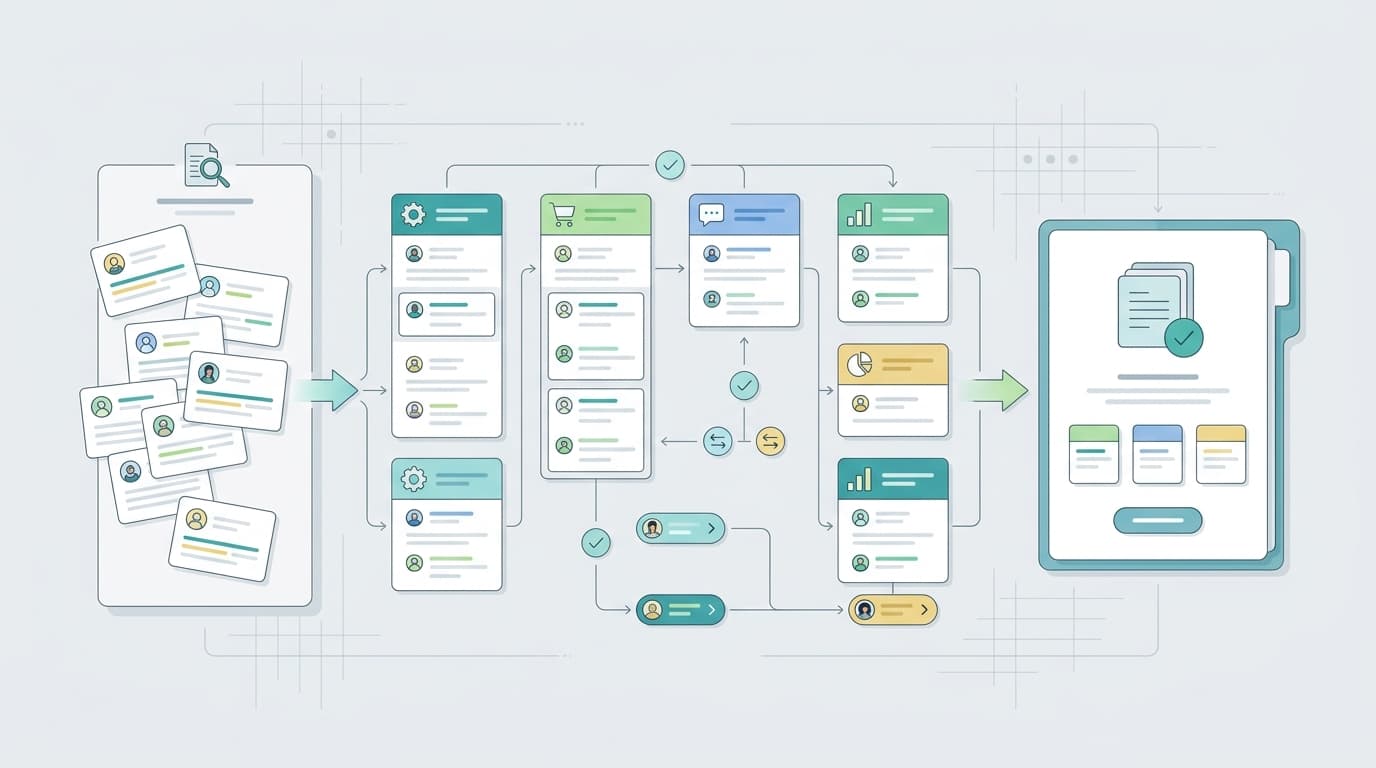
The dashboard should not end at reporting. It should feed a repeatable loop.
- Pull the relevant review window and product scope.
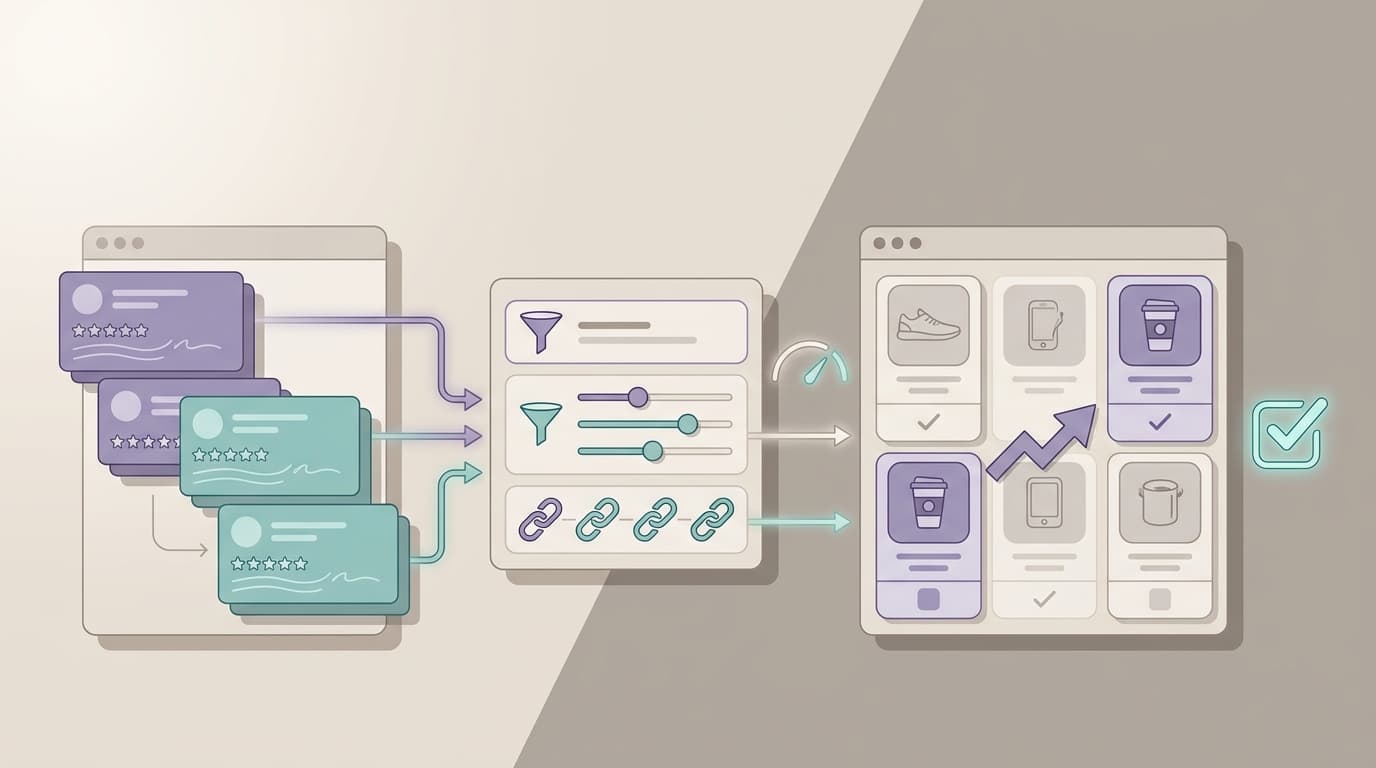
- Group repeated complaint themes and praise patterns.
- Score them by frequency, recency, and business relevance.
- Attach proof notes and representative language.
- Route each theme to an owner.
- Revisit the same dashboard after the team changes copy, support flows, packaging, or product decisions.
| Workflow step | Output | Why it matters |
|---|---|---|
| Collect | Current review set by ASIN, variation, and time period | Keeps analysis scoped |
| Cluster | Plain-language complaint and praise themes | Surfaces what customers repeat |
| Prioritize | Ranked issues and opportunities | Prevents everything from looking urgent |
| Prove | Evidence samples and overlap notes | Makes the dashboard defensible |
| Route | Named owner and next action | Converts analysis into work |
| Recheck | Before-and-after signal review | Turns the dashboard into a learning loop |
That last step matters. A dashboard is not useful only because it organizes the present. It becomes valuable when the team can check whether its last decision changed the customer signal.
How VOC.AI fits this dashboard workflow
VOC.AI fits well when the team needs one review-intelligence layer that can support product, support, marketing, and competitive workflows without forcing everyone to read the same raw export manually.
Current public VOC.AI pages support that framing in a claim-safe way:
- the live VOC Analysis page says the platform turns customer reviews into product direction, buyer language, and market-ready decisions
- the live Product Research page says teams can evaluate product ideas with review-backed demand, category signals, and buyer tradeoffs
- the live Competitive Analysis page says teams can compare rival listings, review patterns, and buyer complaints side by side
Taken together, those current public routes support a dashboard workflow centered on complaint themes, praise patterns, evidence review, and cross-functional routing. They do not promise that software replaces judgment. They support a more useful claim: the team can get to a structured view faster than it would by reading and re-summarizing everything manually.
If your team wants the broader educational setup first, the live article on Amazon review sentiment analysis for sellers, not data scientists covers the adjacent concept. If your team already understands the analysis basics and needs to operationalize them, the dashboard model in this article is the better next step.
Final takeaway
The best customer feedback analysis software for ecommerce does not stop at classifying reviews. It helps a team build one shared dashboard where complaint themes, praise patterns, proof notes, and owner routing all live in the same operating view.
That is what makes the dashboard useful across product, support, marketing, and leadership. If your team still sends separate summaries to every function, start with one review insights dashboard instead. Build it around repeated themes and buyer language first, then let each team read the same evidence through its own action lens.
If you want a practical next step, start with one product line, one recent review window, and one cross-functional dashboard review. That is enough to see whether your current customer feedback dashboard is a reporting artifact or a real decision tool.
FAQ
What should a seller review dashboard include besides sentiment?
At minimum, it should include repeated complaint themes, repeated praise patterns, trend movement, an evidence panel with representative customer wording, and owner routing for the next action.
Why is a review insights dashboard better than a basic export?
A basic export still leaves the grouping, prioritization, and ownership decisions to a manual process. A review insights dashboard is better when teams need refreshable structure, proof notes, and action routing.
How is this different from amazon review sentiment analysis?
Amazon review sentiment analysis helps categorize emotional direction. A stronger dashboard goes further by grouping concrete complaints and praise patterns, showing how they are changing, and making them usable for different teams.
Who should own the dashboard?
Usually a category lead, product ops lead, or founder-level operator should own the review cadence, while product, support, and marketing each own the action items tied to their themes.
Can customer feedback analysis software for ecommerce replace human judgment?
No. It can speed up organization, clustering, and review visibility, but product changes, support decisions, and message updates still require human review of the evidence.