How to Use an Amazon Review Analysis Tool Before You Rewrite Listing Copy
An amazon review analysis tool is not the same thing as a writing model. That distinction matters because many Amazon sellers already know how to generate cleaner copy with generic AI tools. The harder problem is deciding what the draft should say before the prompt is written.
That is where many listing workflows break. A seller opens ChatGPT or another writing tool, pastes a product spec, asks for better bullets, and gets a polished draft back. The draft reads smoothly, but it still reflects seller assumptions more than buyer evidence.
VOC AI is useful in a different part of the workflow. Instead of starting with blank-slate prompting, it helps sellers surface repeated objections, praise patterns, purchase motivations, and buyer language from review data first. Then the writing model has better inputs to work with.
If you are evaluating when to bring review intelligence into your listing workflow, the fair question is not which tool writes faster. The fair question is how to use an amazon review analysis tool early enough that your listing draft starts from evidence instead of assumptions.

Why generic AI writing tools still appeal to sellers
Generic AI writing tools are attractive for good reasons:
- they produce first drafts quickly
- they rewrite bullets, descriptions, and headlines without much setup
- they help teams test tone and formatting faster
- they reduce the friction of starting from a blank page
That value is real. If a seller already knows the strongest buyer objection, the most credible benefit, and the best use-case angle, a writing model can save time.
The problem appears when the prompt starts with weak inputs.
| What sellers like about generic AI writing tools | What the tool actually improves |
|---|---|
| Fast drafts | phrasing, structure, and speed |
| Easy revisions | rewrites, variants, and formatting |
| Lower writing friction | helps teams move past a blank page |
| Broad flexibility | can support bullets, titles, and descriptions |
Those strengths are downstream strengths. They improve how a message is written. They do not automatically improve what message should be written in the first place.
Where prompt-only listing workflows usually fail
The weak point in a prompt-only workflow is not grammar. It is input quality.
When sellers use generic AI writing tools without an amazon review analysis tool, they usually run into one or more of these problems:
| Workflow gap | What happens | Why it hurts the listing |
|---|---|---|
| Thin source inputs | The prompt is based on feature notes instead of review evidence | The draft sounds polished but generic |
| Missed objections | Repeated buyer hesitation never reaches the bullets | The page does not answer why shoppers hesitate |
| Weak priority | Every feature gets treated like it matters equally | The strongest value signal does not lead |
| Generic benefit language | The draft repeats phrases like "high quality" or "easy to use" | Copy loses specificity and trust |
| No competitor feedback context | The team cannot see where rival products disappoint buyers | Positioning stays vague |
This is why a seller can feel productive while still shipping average listing copy. The model writes faster, but the workflow still starts from assumptions.
What an amazon review analysis tool changes before the draft starts
An amazon review analysis tool helps the team improve the input layer before copy generation begins.
The goal is not only to summarize reviews. The useful output is a cleaner decision brief:
- which objections repeat often enough to deserve bullet space
- which praise patterns deserve stronger emphasis
- which buyer phrases sound more credible than internal brand wording
- which purchase motivations belong near the top of the listing
- which competitor complaints create a positioning opportunity
That is where VOC AI fits. The live VOC Analysis product page positions the workflow around turning customer reviews into buyer language and market-ready decisions. The live Product Research page supports purchase-motivation and customer-profile framing. The live Competitive Analysis page supports competitor review context when a seller needs to sharpen positioning before rewriting copy.
In other words, the amazon review analysis tool is not competing with a writing model on sentence generation. It is improving the quality of the evidence that reaches the writing model.
Where generic AI writing tools still fit
An amazon review analysis tool does not replace every drafting tool. Generic AI writing tools still help with formatting, rewrites, and first-pass variants after the input brief is clear.
| Workflow step | Best tool fit | Why |
|---|---|---|
| Review pattern discovery | amazon review analysis tool | surfaces what buyers actually repeat |
| Input prioritization | amazon review analysis tool | helps decide what deserves bullet space |
| Draft generation | generic AI writing tool | rewrites and structures faster |
| Final claim check | operator review | keeps the page accurate and defensible |
That is the practical difference. Generic AI writing tools improve expression. An amazon review analysis tool improves evidence and priority.
The five inputs you should pull before rewriting listing copy
Before you rewrite bullets, titles, or descriptions, your amazon review analysis tool should help you extract five things:
-
Repeated objections
These are the complaints that appear often enough to shape buyer hesitation. -
Repeated praise
This is the positive language that reveals what customers value most. -
Purchase motivations
These are the reasons buyers say they chose the product in the first place. -
Use-case wording
These are the phrases customers use to describe where, when, and how they use the item. -
Competitor complaint context
These are the patterns that show where rival products disappoint buyers and where your positioning can become sharper.
| Input type | What it tells you | Where it usually belongs |
|---|---|---|
| Repeated objections | what buyers fear or dislike | bullets, FAQ, clarification copy |
| Repeated praise | what deserves more emphasis | top bullets, image text, headline support |
| Purchase motivations | why the item wins | bullet order, title angle, description framing |
| Use-case wording | how buyers describe value | bullets, images, A+ style modules |
| Competitor complaints | where the gap is in the market | positioning, contrast, feature emphasis |
The mistake is assuming that every weak listing is a writing problem. Many weak listings are input problems.
When VOC AI becomes the stronger fit
VOC AI becomes more valuable when the team still needs to discover what matters before it writes.
That usually happens when:
- bullets feel polished but still generic
- support tickets and reviews mention problems the listing never addresses
- the team cannot agree on the first objection to handle
- competitor products keep winning with clearer positioning
- the seller wants to use customer wording instead of internal feature language
This is the point where an amazon review analysis tool can improve the workflow more than another prompt template can.
VOC AI can help sellers:
- analyze repeated buyer complaints
- identify purchase motivations from review language
- compare review-backed feature gaps across competitors
- connect review insights to product and listing decisions
If the team wants a broader educational walkthrough first, the live guide on how to analyze Amazon reviews using AI is the most relevant support page. If the team wants a practical listing-copy example, the existing article on writing Amazon bullets from customer objections and praise shows how review signals can shape the final copy.
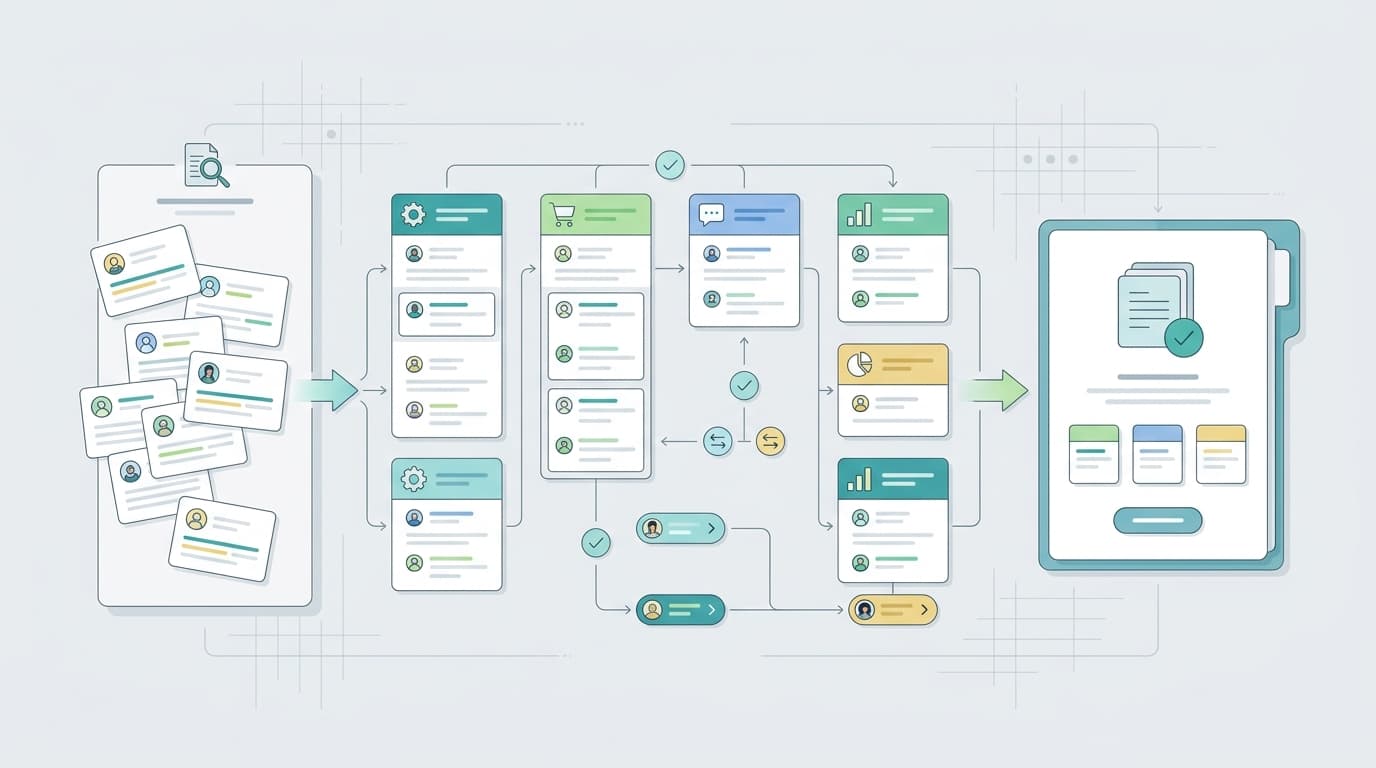
A simple way to use VOC AI before your next listing draft
The strongest workflow is often hybrid, not either-or.
Use this order:
- Start with one ASIN or one competitor set.
- Pull repeated objections, praise, and purchase motivations from review patterns.
- Turn those findings into a short listing-input brief.
- Feed that brief into your preferred writing model.
- Rewrite only after the top objection and top benefit are clear.
| Step | Output | Why it improves the draft |
|---|---|---|
| Review analysis | grouped objections and praise | reduces guessing |
| Input brief | buyer language, use cases, and priorities | gives the prompt real direction |
| AI drafting | bullets, titles, and descriptions | makes speed useful instead of random |
| Operator review | claim check and placement check | keeps the listing defensible |
This is the most practical reason to use an amazon review analysis tool before drafting. You do not necessarily replace the writing model. You give it better material.
Common mistakes sellers make with AI listing workflows
- Treating the writing model as a substitute for research
- Using internal product language instead of buyer wording
- Turning every positive review into a bullet claim
- Ignoring repeated low-star objections because the draft "sounds good"
- Rewriting copy before checking whether the listing promise matches the delivered experience
- Expecting any workflow to guarantee rankings, conversion, or sales outcomes
Those mistakes usually create copy that looks finished but still misses the real buyer hesitation.
Final takeaway
The most useful question is not "which AI tool writes faster?" The useful question is whether your listing workflow starts with evidence or assumptions.
Generic AI writing tools are good at helping sellers draft faster. VOC AI is stronger when the team needs an amazon review analysis tool that can surface buyer language, recurring objections, purchase motivations, and competitor feedback before the drafting step.
If your team already knows what the listing should say, a writing model may be enough. If your team still needs to discover what buyers actually care about, start with review intelligence first and rewrite second.
FAQ
Is VOC AI trying to replace generic AI writing tools?
No. The practical workflow is often to use VOC AI first for review-led inputs, then use a writing model for rewrites, variants, or formatting.
Why would a seller use an amazon review analysis tool before writing bullets?
Because the strongest bullets usually come from repeated buyer objections, praise, use-case wording, and purchase motivations, not from internal feature notes alone.
What does VOC AI do that generic AI writing tools do not do well on their own?
VOC AI is better suited to surfacing buyer language, review-backed objections, competitor complaint context, and purchase-motivation patterns before copy generation begins.
Are generic AI writing tools still useful for Amazon listing optimization?
Yes. They remain useful for drafting and rewriting. The limitation is that they depend on the quality of the prompt and source inputs.
Can an amazon review analysis tool guarantee better conversion or ranking?
No. A stronger input workflow can reduce guesswork and improve relevance, but it does not guarantee ranking, conversion, or sales outcomes.