Updated August 29, 2026.
\nProduct research AI is useful only if it helps a team make a product decision. If the tool can summarize evidence but cannot show the evidence behind the recommendation, it is just moving words around.
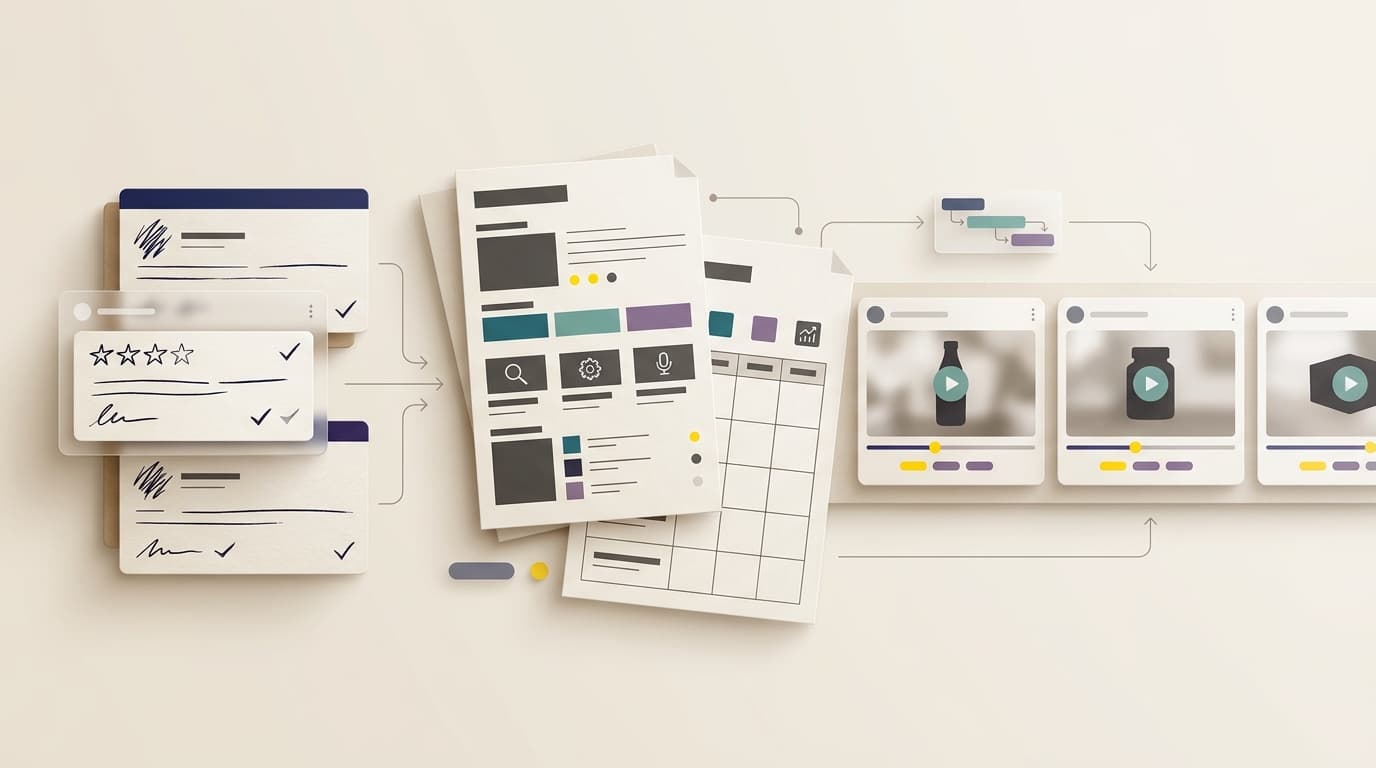
\nThat is the difference between a real workflow and another dashboard. Some product research AI tools estimate demand. Some mine reviews. Some synthesize interviews or support tickets. Some draft briefs and roadmaps. Those are different jobs, so they should be evaluated differently.
\nThis guide gives you a practical way to compare product research AI on decision quality, evidence quality, and repeatability.
\nIf you need a broader category map first, start with the companion product research AI comparison. If you already know the category but need the operating model, use the product research AI practical guide. This article is narrower: it gives you the evaluation framework to run before you commit to a workflow.
\nStart with the decision
\nBefore you compare any product research AI, write one sentence:
\n\n\nWe need to research this product opportunity, for this market, using this evidence, so this team can decide on this action by this date.
\n
That sentence forces clarity on:
\n- \n
- the market or category in scope \n
- the decision owner \n
- the evidence sources that matter \n
- the output format the team can use \n
- the deadline for action \n
If a tool cannot support that sentence, it is not ready for the workflow you need.
\nWhat product research AI actually does
\nThe phrase covers several tool types. Buyers often lump them together, but the evaluation should not.
\n\n\n\n\n\n\n\n\n\n\n\n\n\n\n\n\n\n\n\n\n\n\n\n\n\n\n\n\n\n\n\n\n\n\n\n\n\n\n\n| Tool type | Best for | What to verify | Common trap |
|---|---|---|---|
| Review-backed product research | Finding pain points, feature gaps, and exact buyer language | Can it show the source reviews, product set, time window, and evidence trail? | Treating volume as proof without checking the quality of the complaints |
| Market-demand intelligence | Sizing a category and spotting demand shifts | Can it connect demand to a specific product decision? | Buying a chart that never explains what to change |
| Research synthesis assistant | Summarizing interviews, surveys, tickets, or notes | Can it preserve source quotes and contradictions? | Mistaking a clean summary for validated demand |
| PM writing assistant | Drafting PRDs, briefs, and roadmaps | Can it ingest real evidence instead of only prompts? | Automating documents before the evidence is settled |
| API-first research workflow | Repeating analysis inside internal tools or agents | Does it expose stable fields, source IDs, and filters? | Assuming a UI workflow will scale into automation |
The right product research AI is the one that matches the decision, not the one with the most features.
\nThe checks buyers should run
\nUse these checks before you shortlist any vendor or build a pilot.
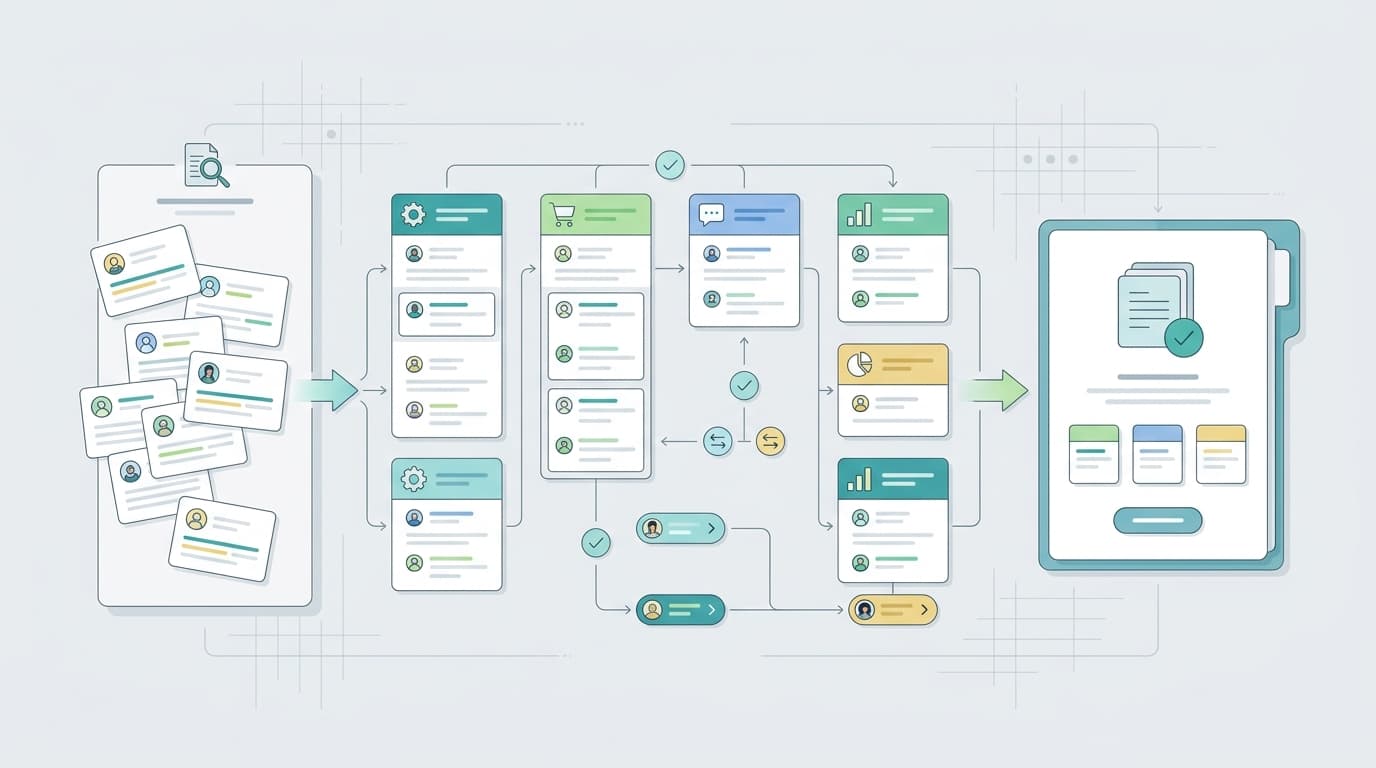
\n1. Evidence source
\nThe tool should tell you where the conclusion came from. Reviews, interviews, tickets, surveys, market data, and prompts are not interchangeable.
\n2. Cohort control
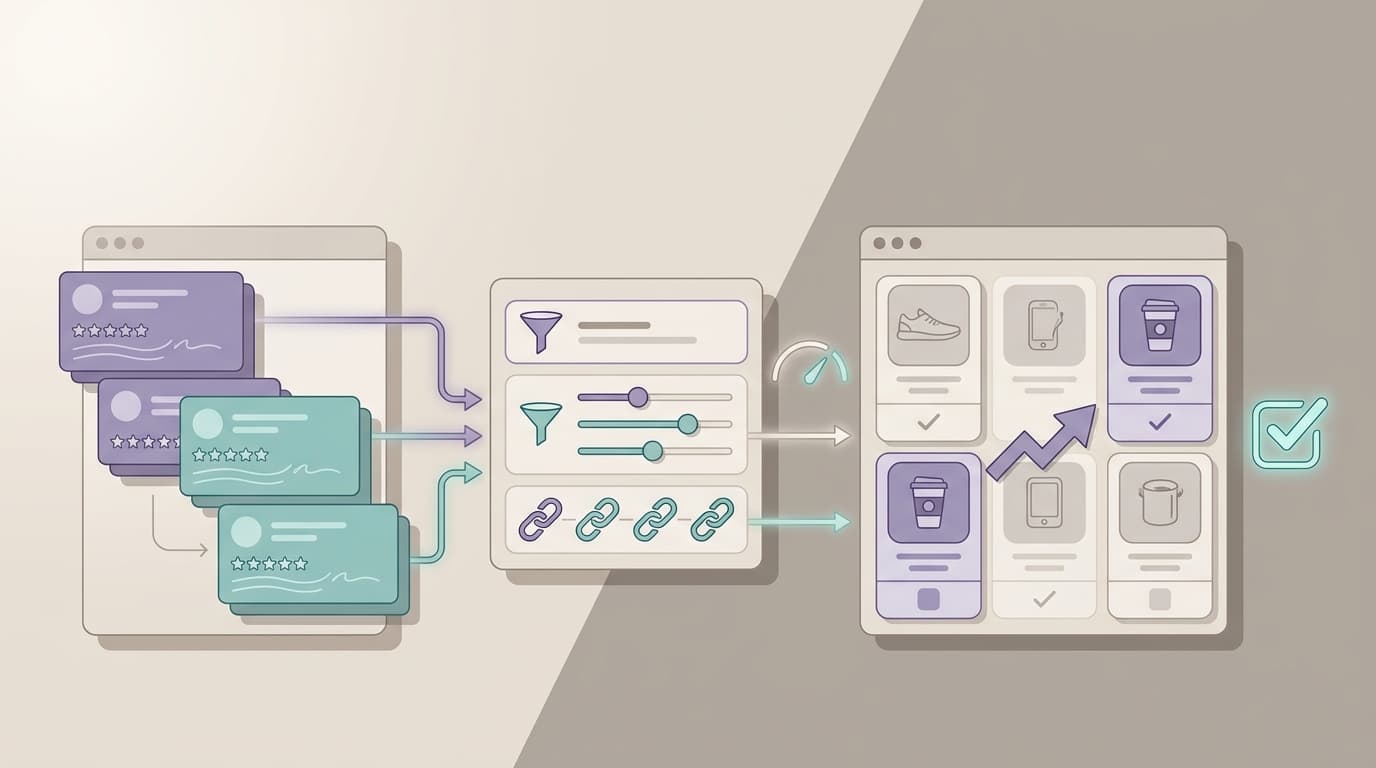
\nYou should be able to lock the product set, category, time window, rating range, and competitor set. If the input pool is vague, the output will drift.
\n3. Demand versus pain
\nGood product research AI separates category demand from buyer frustration. A hot category is not the same thing as a solvable product opportunity.
\n4. Contradictions
\nWeak tools smooth over disagreement. Strong tools keep minority evidence visible, especially when different segments want different things.
\n5. Decision handoff
\nThe output should move cleanly into a roadmap, product brief, listing update, or research memo. If it stops at a summary, the team still has work to do.
\n6. Repeatability
\nAnother teammate should be able to rerun the same analysis later and understand what changed. If the result depends on one prompt nobody can reproduce, the workflow is fragile.
\n7. Export and API path
\nIf product research is recurring, the tool needs a way out: export, API, or structured fields. Screenshots and PDFs do not scale.
\n8. Operating cost
\nInclude analyst time, setup, data cleanup, taxonomy maintenance, and review time. A cheap tool can become expensive if the team has to repair every output.
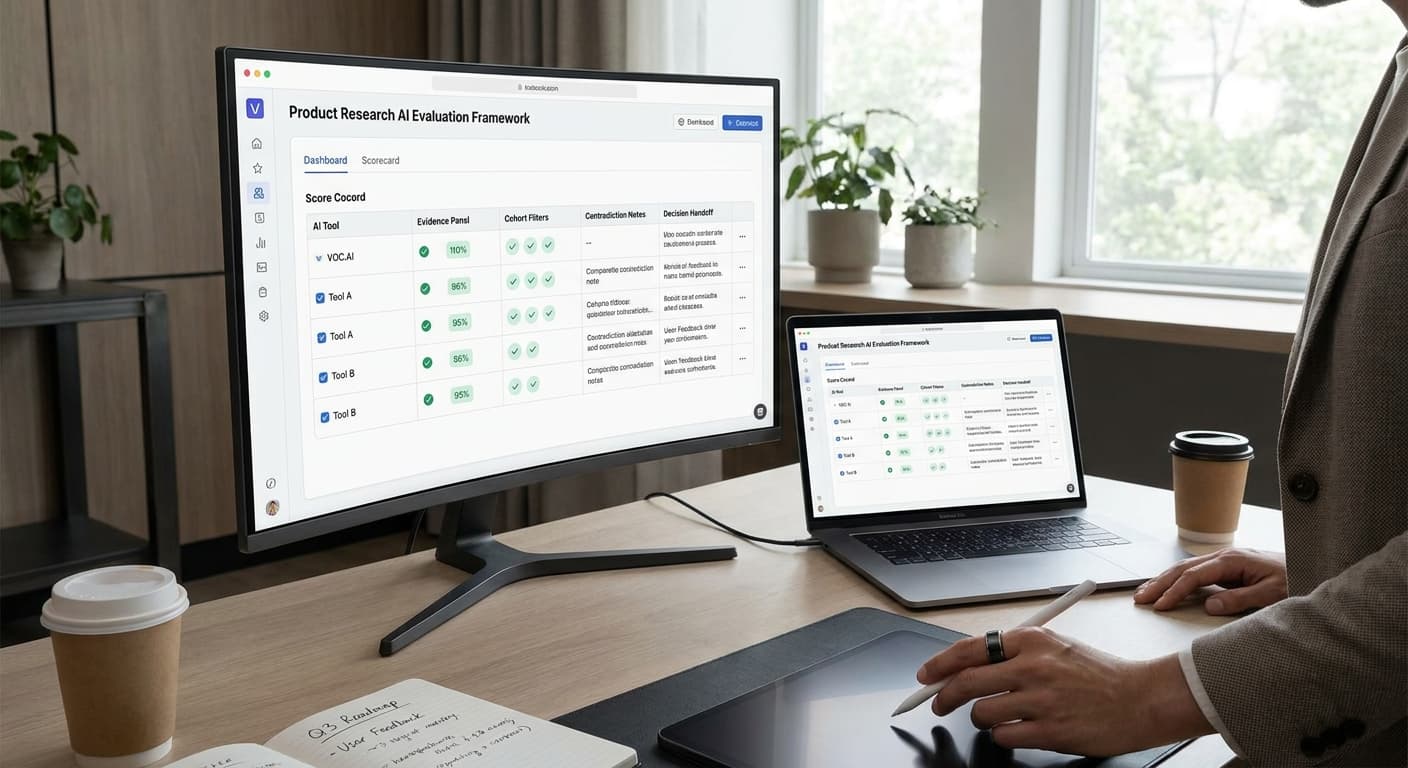
\nA product research AI scorecard
\nUse a simple weighted scorecard during a pilot. Do not let a polished UI compensate for missing evidence.
\n\n\n\n\n\n\n\n\n\n\n\n\n\n\n\n\n\n\n\n\n\n\n\n\n\n\n\n\n\n\n\n\n\n\n\n\n\n\n\n\n\n\n\n\n\n\n\n\n| Evaluation area | Weight | What to collect during the pilot |
|---|---|---|
| Decision fit | 15% | A named decision, owner, deadline, and accepted output format |
| Source traceability | 20% | Links or IDs that connect every major finding back to source evidence |
| Cohort control | 15% | Locked product, market, time-window, rating, and competitor filters |
| Demand and pain separation | 15% | A clear split between market opportunity and buyer frustration |
| Contradiction handling | 10% | Counterevidence, minority segments, and cases where the recommendation may not apply |
| Handoff quality | 10% | A product brief, listing brief, roadmap note, or test plan that a teammate can use |
| Repeatability | 10% | A rerunnable workflow with saved inputs and clear change tracking |
| Export/API fit | 5% | Export, API, or structured output path for recurring work |
Score each row from 0 to 3:
\n- \n
- 0 means absent \n
- 1 means possible only with manual repair \n
- 2 means usable for the pilot \n
- 3 means repeatable enough for the real workflow \n
The total matters less than the blockers. If a finalist scores zero on source traceability, cohort control, or data-use fit, pause the purchase even if the rest of the demo looks strong.
\nRun a same-evidence test
\nDo not evaluate product research AI with each vendor's preferred demo. Use one real decision from your backlog.
\n- \n
- Pick one product question you need to answer in the next 30 days. \n
- Choose the same evidence set for every tool. \n
- Define the required output before the demo. \n
- Ask every finalist to explain the top findings and the strongest counterevidence. \n
- Check whether each claim can be traced back to source data. \n
- Score how much cleanup is needed before the output can be used. \n
If the tool cannot survive a same-evidence test, it is not ready for a team workflow.
\nMatch the tool to the job
\nDifferent teams buy product research AI for different reasons. Match the checklist to the job.
\n\n\n\n\n\n\n\n\n\n\n\n\n\n\n\n\n\n\n\n\n\n\n\n\n\n\n\n\n\n\n\n\n\n\n\n\n\n\n| Use case | Ask the tool to produce | Must-have evidence |
|---|---|---|
| New product screening | A short list of opportunities with demand, pain, and risk notes | Category movement, review themes, competitor gaps, and price/rating context |
| Variant or bundle planning | A recommendation for what to add, remove, resize, or reposition | Variant-level review complaints and competitor comparisons |
| Listing or message testing | A buyer-language brief for positioning and copy | Source phrases, objection patterns, and outcome language from reviews |
| Competitive response | A gap map against named competitors | Attribute-level complaints, praise, ratings, and review examples |
| Roadmap prioritization | A ranked set of evidence-backed product bets | Frequency, severity, revenue relevance, counterevidence, and owner |
| Internal automation | A structured research output for another workflow | API access, stable fields, source IDs, and repeatable filters |
If the product research AI cannot produce the required artifact, the workflow will still need manual repair after purchase.
\nWhere VOC AI fits
\nVOC AI is strongest when product research needs review-backed evidence, market context, and a path into repeated workflows.
\nThe Product Research page positions VOC AI around review-backed demand, category signals, and concrete buyer tradeoffs. The Market Insight page adds category movement, sales estimates, market share, category trends, competitor tracking, product research, and review signals. The Voice of Customer Analysis page focuses on clustering feedback by pain point, expectation, and feature mention.
\nThat combination matters because a serious product research AI should not only find ideas. It should prove which idea deserves work.
\nFor teams that need automation, the Review Analysis API gives structured access for recurring workflows. If budget is part of the evaluation, the Pricing page currently lists Free, Pro, Team Lite, Team Growth, and Enterprise Custom plans.
\nWhat generic product research AI pages miss
\nMost generic pages stop at tool lists. That helps with discovery, but it leaves buyers with harder questions:
\n- \n
- Which evidence source drives the recommendation? \n
- Can I compare products and competitors on the same cohort? \n
- Does the tool separate demand from pain? \n
- Can the output survive a product review meeting? \n
- Can the workflow repeat next month without starting over? \n
Those are the questions that decide whether the tool saves time or just creates another document.
\nFAQ
\nIs product research AI the same as market research AI?
\nNot exactly. Market research AI usually focuses on category and audience context. Product research AI should connect that context to a decision about what to build, improve, or retire.
\nShould teams start with reviews or market data?
\nStart with the decision. If you need category sizing, market data comes first. If you need to understand why buyers choose or reject products, reviews usually provide the sharper signal.
\nWhat is the biggest risk when buying product research AI?
\nBuying fluent summaries without inspectable evidence. A good tool should make the decision easier to defend, not just easier to describe.
\nDo I need an API?
\nOnly if product research is recurring, embedded, or routed into other systems. For one-off research, a UI may be enough.
\nConclusion
\nThe useful product research AI tools are the ones that can show the evidence, control the cohort, separate demand from pain, preserve contradictions, and hand the result to the team that owns the decision.
\nThat is the line between another summary and a workflow your team can trust.
\n