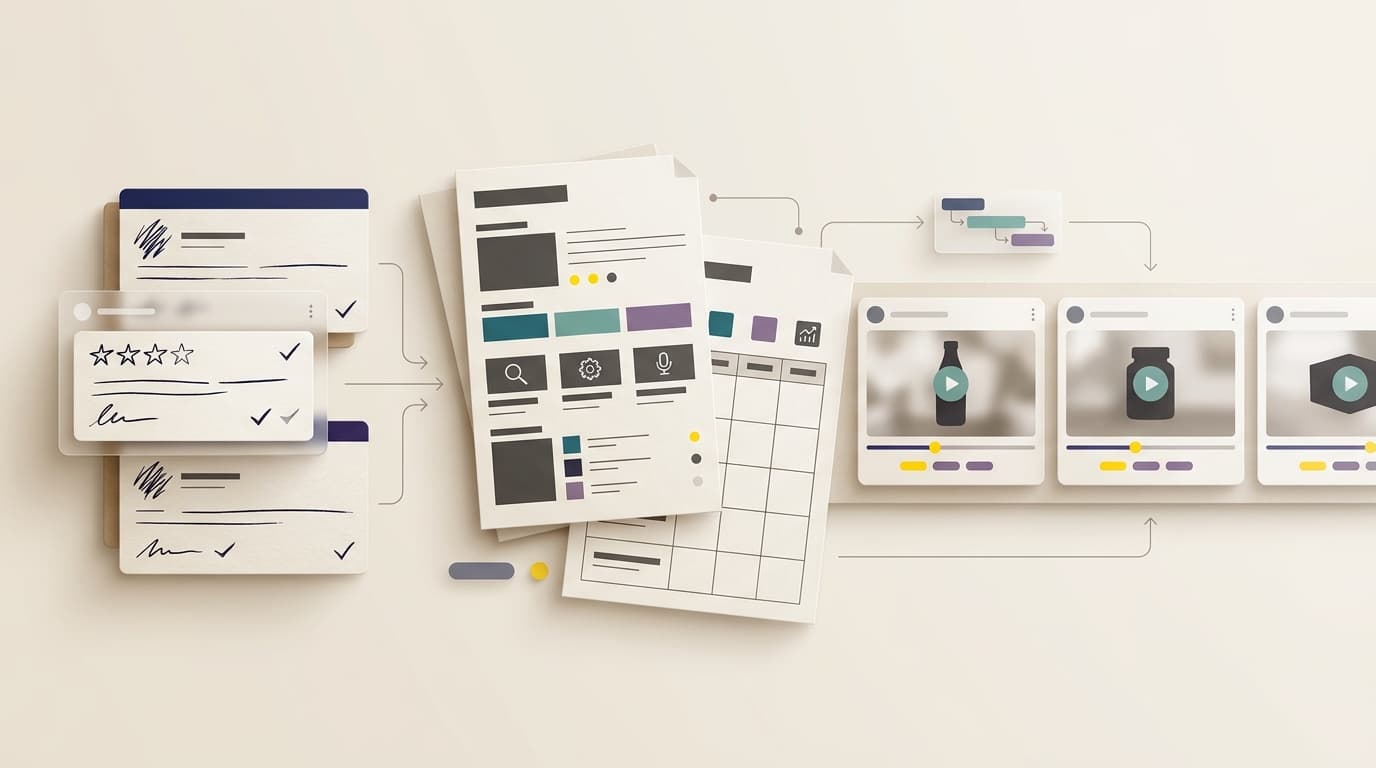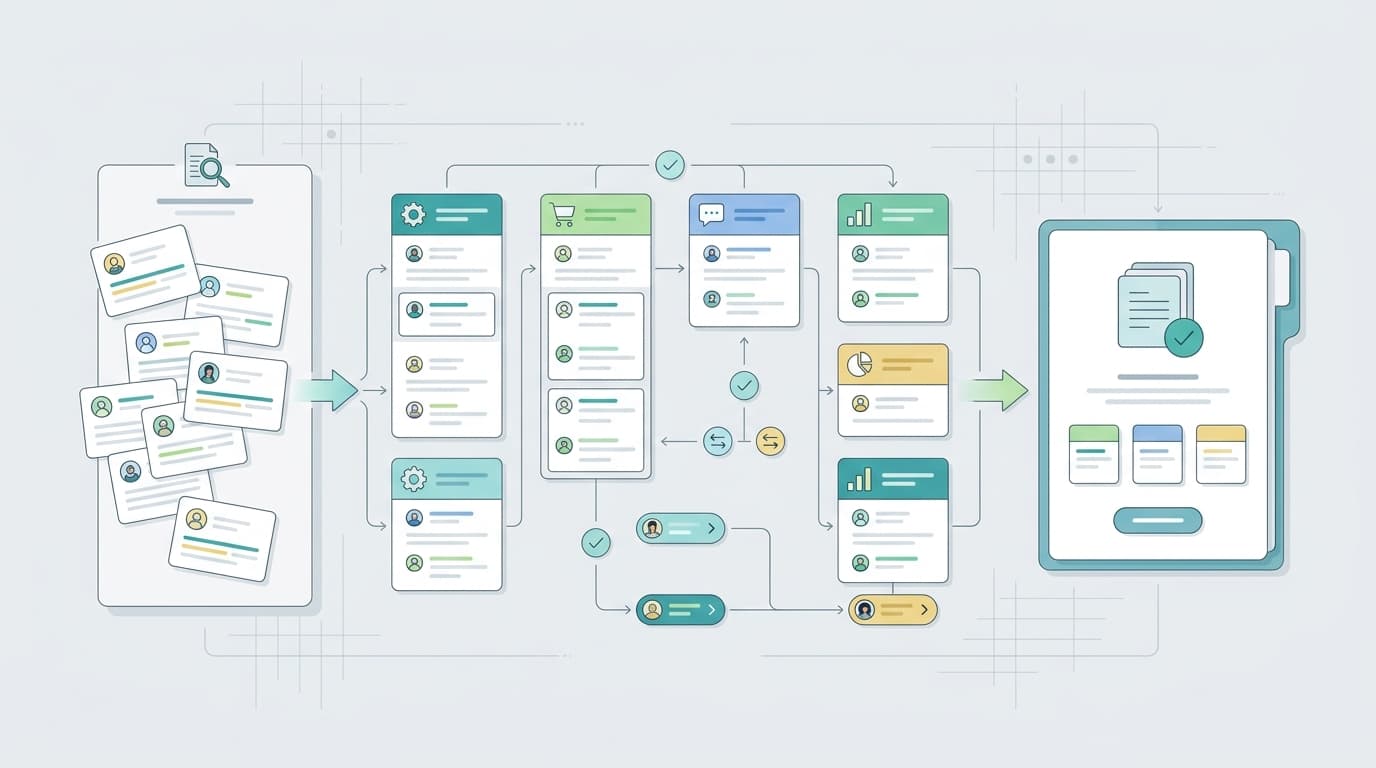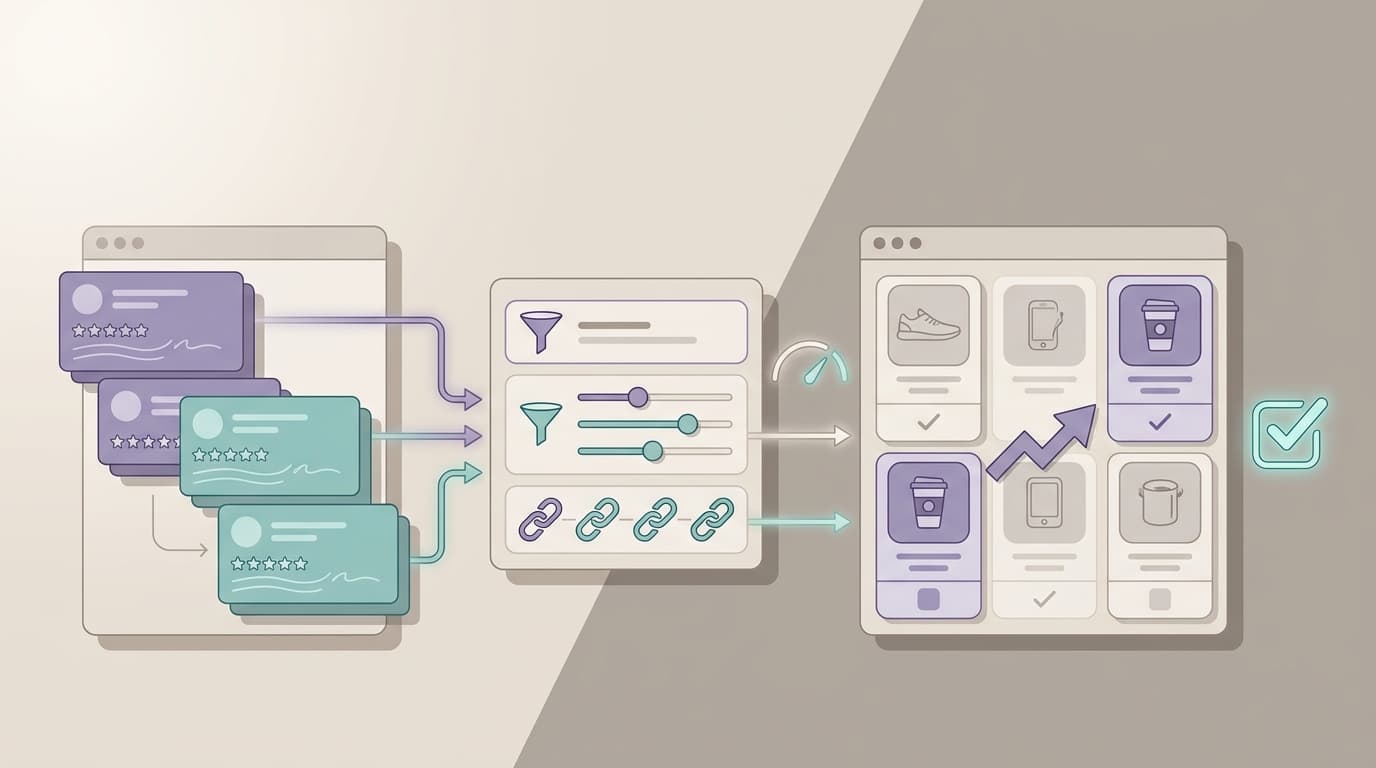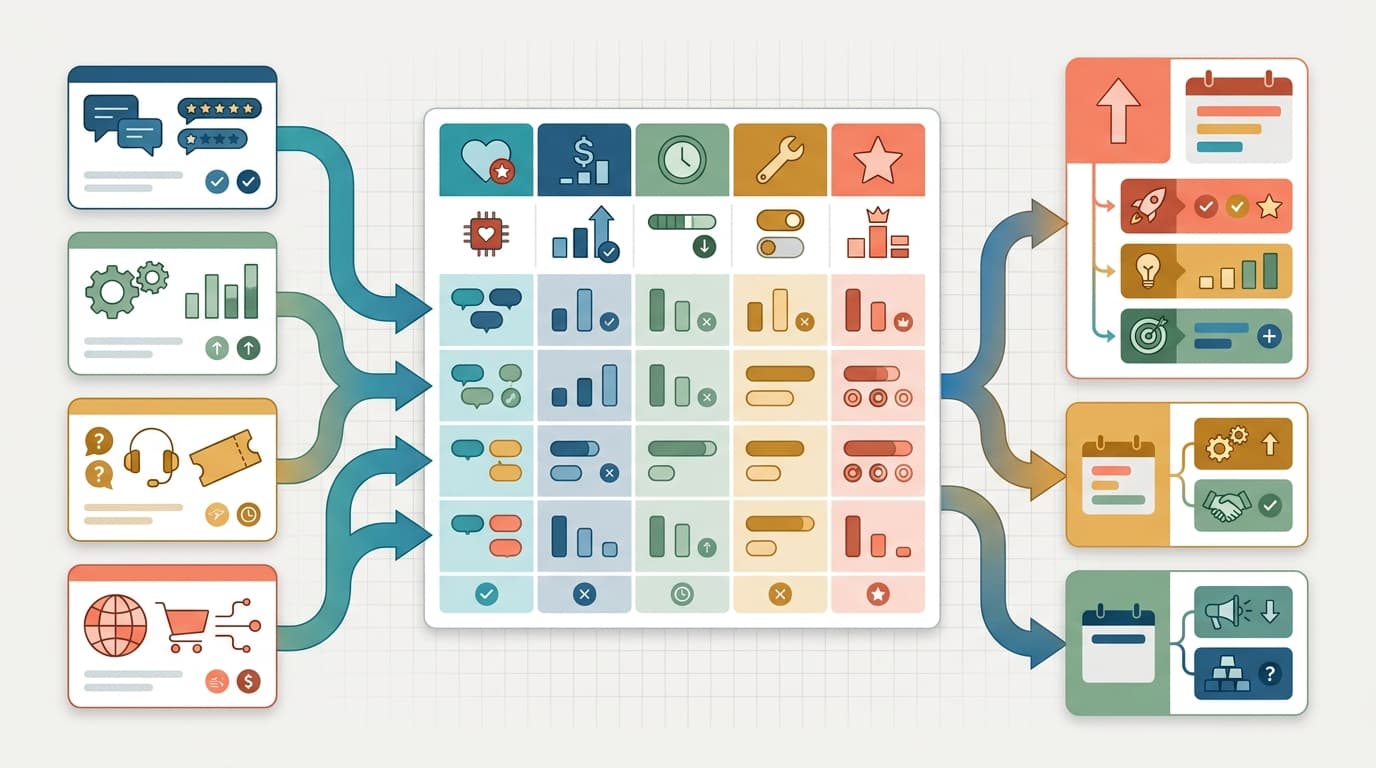
A voice of customer product roadmap should not be a list of the loudest complaints. It should be a decision system that helps product, support, marketplace, and revenue owners decide which recurring review theme deserves roadmap attention first.
Customer reviews are useful because they show post-purchase language: what buyers expected, where they struggled, which competitor they compare you with, and which issue made them contact support or leave a lower rating. The risk is overreacting. One severe review can matter, but one review alone is rarely enough to define a roadmap item. A practical voice of customer product roadmap scores themes by frequency, severity, revenue exposure, competitor gap, and support burden before the team commits product capacity.
This workflow is written for product teams and e-commerce brand managers who need a review-driven prioritization process. Use it when customer feedback, competitor reviews, support tickets, and marketplace signals are all competing for the same roadmap meeting.
What a Voice of Customer Product Roadmap Should Decide
A voice of customer product roadmap should decide whether a theme belongs in product work, listing work, support work, monitoring, or rejection. That first decision matters because many review themes are real but not roadmap-ready.
| Theme type | First decision | Likely owner | Roadmap caveat |
|---|---|---|---|
| Recurring defect, durability, compatibility, or missing-feature complaint | Investigate for product or packaging change | Product, QA, operations, supplier, engineering | Confirm affected SKU, variation, time window, and source overlap before committing a fix. |
| Expectation mismatch, unclear dimensions, confusing comparison, or missing setup detail | Clarify listing, image, FAQ, or packaging insert | Marketplace, listing, product marketing, CX | Do not spend roadmap capacity when a supported copy or education change can close the gap. |
| Support-heavy setup or troubleshooting theme | Update support macro, diagnostic flow, or help article | Support operations, CX, product education | Escalate to product only when the same theme persists after approved support and listing fixes. |
| Competitor praise or repeated competitor comparison | Benchmark the gap and decide whether it is strategic | Product management, competitive intelligence, marketing | A competitor feature is not automatically your roadmap priority; score demand, differentiation, and fit. |
| Low-volume but high-risk safety, compliance, trust, or warranty theme | Escalate outside normal scoring | Senior support, legal, compliance, product, operations | Severity can override frequency. Do not wait for volume when risk is material. |
This routing step keeps the voice of customer product roadmap honest. The goal is not to turn every review into a feature request. The goal is to put the right signal in front of the team that can act on it.
Source-Label Every Theme Before Scoring
Do not score a theme until the team knows where it came from. Product reviews, competitor reviews, support tickets, customer questions, social comments, ratings, returns, and category trend tools all support different conclusions.
| Source | What it can support | What to verify | Confidence signal |
|---|---|---|---|
| Owned product reviews | Post-purchase complaints, praise, setup friction, feature requests, expectation gaps, and buyer language. | SKU, variation, date range, star mix, review recency, and whether the theme is still active. | Theme repeats across recent reviews and appears in multiple rating bands. |
| Competitor reviews | Category expectations, competitor gaps, buyer tradeoffs, and unmet demand your product may address. | Comparable product tier, price range, marketplace, release timing, and whether the gap matters to your target buyer. | Same complaint appears across several relevant competitors or a high-volume competitor listing. |
| Support tickets and macros | Customer effort, repeat-contact cost, unclear instructions, failed troubleshooting, and policy-sensitive language. | Tag quality, agent notes, current macro wording, escalation rate, and whether support owns the first fix. | Repeated ticket tags align with review language and support owners agree the macro does not solve it. |
| Marketplace and category trend data | Revenue exposure, category momentum, competitor movement, price pressure, ratings, and demand context. | Whether the data is current, category-relevant, and tied to the affected products or use cases. | Theme affects a high-exposure product, growing category, or strategically important segment. |
| Social listening and public web | Fast-moving public narratives, creator claim mismatch, campaign feedback, and emerging objections. | Whether commenters are verified buyers, whether the theme also appears in reviews or support, and whether the source is representative. | Public conversation matches review and support evidence rather than standing alone. |
The source label protects the roadmap meeting from false precision. A theme with weak source overlap can still matter, but it should carry a confidence caveat instead of pretending to be a finished requirement.
Build a Voice of Customer Product Roadmap Scoring Model
A good scoring model makes tradeoffs visible. It should be simple enough for a weekly roadmap meeting but concrete enough that two teams scoring the same theme reach roughly the same result.
Use this formula as a starting point for a voice of customer product roadmap discussion:
roadmap_priority_score =
  frequency
  + severity
  + revenue_exposure
  + competitor_gap
  + support_burden
  + strategic_fit
  - evidence_uncertainty
  - delivery_risk
| Factor | Score | Scoring question | Typical evidence | Decision caveat |
|---|---|---|---|---|
| Frequency | 0-15 | How often does this theme recur in the current review window? | Review theme count, share of recent reviews, support tag recurrence, repeated questions. | Normalize by sales volume and review velocity. A niche SKU may show low count but high concentration. |
| Severity | 0-25 | How painful is the issue for the customer and the brand? | Low-star reviews, refund risk, safety or trust language, unusable-product complaints, escalation notes. | Severity can override frequency for safety, compliance, warranty, or trust themes. |
| Revenue exposure | 0-20 | How much customer, SKU, or category exposure could this theme affect? | Best-selling ASINs, strategic segments, high-margin bundles, category trend data, repeat buyer impact. | Do not let revenue exposure justify unsupported claims or premature product commitments. |
| Competitor gap | 0-15 | Does the theme reveal a gap competitors exploit or a weakness competitors also have? | Competitor review complaints, comparison language, market positioning, feature benchmark notes. | Score only comparable competitors. Do not copy features that do not fit the product strategy. |
| Support burden | 0-15 | How much support effort does the theme create? | Ticket tags, repeat contacts, macro failure patterns, escalation volume, troubleshooting time. | Check whether a macro, FAQ, or listing update can solve the burden before product capacity is assigned. |
| Strategic fit | 0-10 | Does solving the theme support the product direction, target segment, and brand promise? | Roadmap themes, product positioning, customer profile, category focus, margin or retention strategy. | A high complaint count may still be a poor roadmap fit if it pulls the product away from its intended buyer. |
| Evidence uncertainty | 0 to -10 | How much confidence should be deducted? | Old reviews, one-off comments, unclear product versions, source mismatch, poor support tagging. | Use the penalty to force follow-up research instead of arguing over weak evidence. |
| Delivery risk | 0 to -10 | How risky, expensive, or compliance-sensitive is the action? | Engineering scope, supplier changes, regulatory review, inventory cycle, warranty implications. | The penalty does not mean "do not fix." It means the roadmap decision needs owner review. |
Keep the model visible, but do not pretend it is a substitute for judgment. The score should rank discussion, expose why a theme matters, and show what evidence is missing.
Example Roadmap Scoring Table
The table below uses illustrative themes. Replace the example numbers with your own review, support, and marketplace data before using the score in a real voice of customer product roadmap meeting.
| Theme | Evidence summary | Freq | Severity | Revenue | Gap | Support | Strategic | Penalty | Total | Decision |
|---|---|---|---|---|---|---|---|---|---|---|
| Setup pairing fails for older device versions | Recent reviews, support tickets, and macro escalations repeat the same compatibility confusion. | 12 | 18 | 14 | 8 | 13 | 8 | -5 | 68 | Roadmap investigation plus immediate FAQ and support macro update. |
| Box contents misunderstood during promotion | Reviews and support tickets mention missing accessory, but listing image is unclear. | 9 | 10 | 16 | 3 | 10 | 6 | -3 | 51 | Listing and packaging copy first; monitor before roadmap work. |
| Competitor product praised for longer battery life | Competitor reviews and comparison comments repeat the feature gap; owned reviews mention it less often. | 6 | 12 | 15 | 14 | 4 | 9 | -6 | 54 | Benchmark and discovery work; not yet a committed feature. |
| Support macro causes repeated troubleshooting loop | Support notes show customers repeat the same failed step, while reviews mention poor instructions. | 8 | 12 | 9 | 2 | 15 | 7 | -2 | 51 | Support and product education fix now; roadmap only if repeat signal stays high. |
| Rare safety-related complaint | Only one recent review, but the language suggests a possible safety or compliance risk. | 2 | 25 | 8 | 0 | 4 | 10 | -4 | 45 | Bypass normal rank order and escalate to owner review immediately. |
The total score is less important than the decision note. A high total can still land outside the roadmap when the first fix is a listing clarification. A lower total can still require urgent review when severity is unusually high.
Decision Caveats for Review-Driven Roadmaps
Use these caveats every time a voice of customer product roadmap score is shared outside the core team.
- Do not mix old and new evidence. A review from before a product change should not carry the same weight as a recent review after customers saw the updated product or listing.
- Do not let one source dominate. Reviews are strong customer language, but support tickets, returns, competitor benchmarks, and category context can change the decision.
- Do not score private data into public claims. Internal support or return data can guide decisions, but public copy needs approved, source-safe language.
- Do not treat competitor gaps as automatic requirements. A competitor feature may matter, but it still needs demand, fit, cost, and differentiation review.
- Do not ignore support fixes. If a macro, FAQ, setup image, or listing note can reduce customer effort, ship that while product investigates.
- Do not hide uncertainty. A score with weak evidence should carry a penalty and a research task.
- Do not automate final commitments. AI can cluster themes and suggest scores, but accountable owners should approve roadmap, safety, warranty, legal, and product decisions.
- Do not promise outcome lift. A review-driven roadmap improves decision quality; it does not guarantee sales, ranking, ratings, or support-volume improvements.
Workflow: From Review Theme to Roadmap Decision
- Define the decision window. Choose the products, competitors, marketplaces, and dates included in the analysis.
- Collect source-labeled signals. Pull owned reviews, competitor reviews, support tags, customer questions, sentiment changes, social mentions, and authorized operational clues.
- Cluster the customer language. Group recurring complaints, praise, use cases, objections, feature requests, and expectation gaps.
- Route obvious non-roadmap work. Send listing, FAQ, macro, or monitoring fixes to the right owner before the roadmap meeting.
- Score roadmap candidates. Apply frequency, severity, revenue exposure, competitor gap, support burden, strategic fit, uncertainty, and delivery risk.
- Create the decision packet. Include theme, source labels, example paraphrases, affected products, score, confidence, owner, requested decision, and next check date.
- Make the owner decision. Mark each theme as fix, investigate, list/update support, monitor, reject, or escalate.
- Monitor the next signal. Recheck review themes, support tags, sentiment, and competitor language after customers have had time to experience the change.
This workflow keeps a voice of customer product roadmap from becoming a static report. Every theme should leave the meeting with an owner, a decision, and a date for checking whether the signal changed.
What to Put in the Roadmap Ticket
A roadmap ticket created from customer feedback should be traceable without exposing sensitive data or overclaiming what reviews prove.
| Field | What to include | Why it matters |
|---|---|---|
| Theme title | Short label such as SETUP-COMPATIBILITY or BATTERY-COMPETITOR-GAP. | Creates a durable handle for reviews, tickets, and roadmap notes. |
| Customer language | Approved paraphrase of recurring review language, not raw private data. | Keeps the ticket grounded in customer wording while protecting data boundaries. |
| Source map | Owned reviews, competitor reviews, support tickets, social mentions, returns, or trend sources included. | Shows whether the theme is broad, channel-specific, or still uncertain. |
| Scoring summary | Frequency, severity, revenue exposure, competitor gap, support burden, strategic fit, penalties, and total. | Explains why the theme enters the roadmap conversation now. |
| First action | Product investigation, listing clarification, macro update, competitor benchmark, monitor, or reject. | Prevents every theme from becoming a vague feature request. |
| Decision caveat | What is not proven yet, what owner approval is needed, and what would change the score. | Makes uncertainty visible instead of burying it in the score. |
| Next signal | The review phrase, support tag, rating movement, or competitor theme to check later. | Defines how the team knows whether the loop closed. |
Where VOC AI Fits
VOC AI fits the analysis layer of a voice of customer product roadmap. Current VOC AI pages describe review intelligence for Amazon product reviews, including 2B+ Amazon reviews indexed, pain points, expectations, sentiment, customer profiles, feature mentions, and competitor benchmarks. That makes Voice of Customer analysis useful for finding recurring themes before a product team decides what deserves roadmap ! 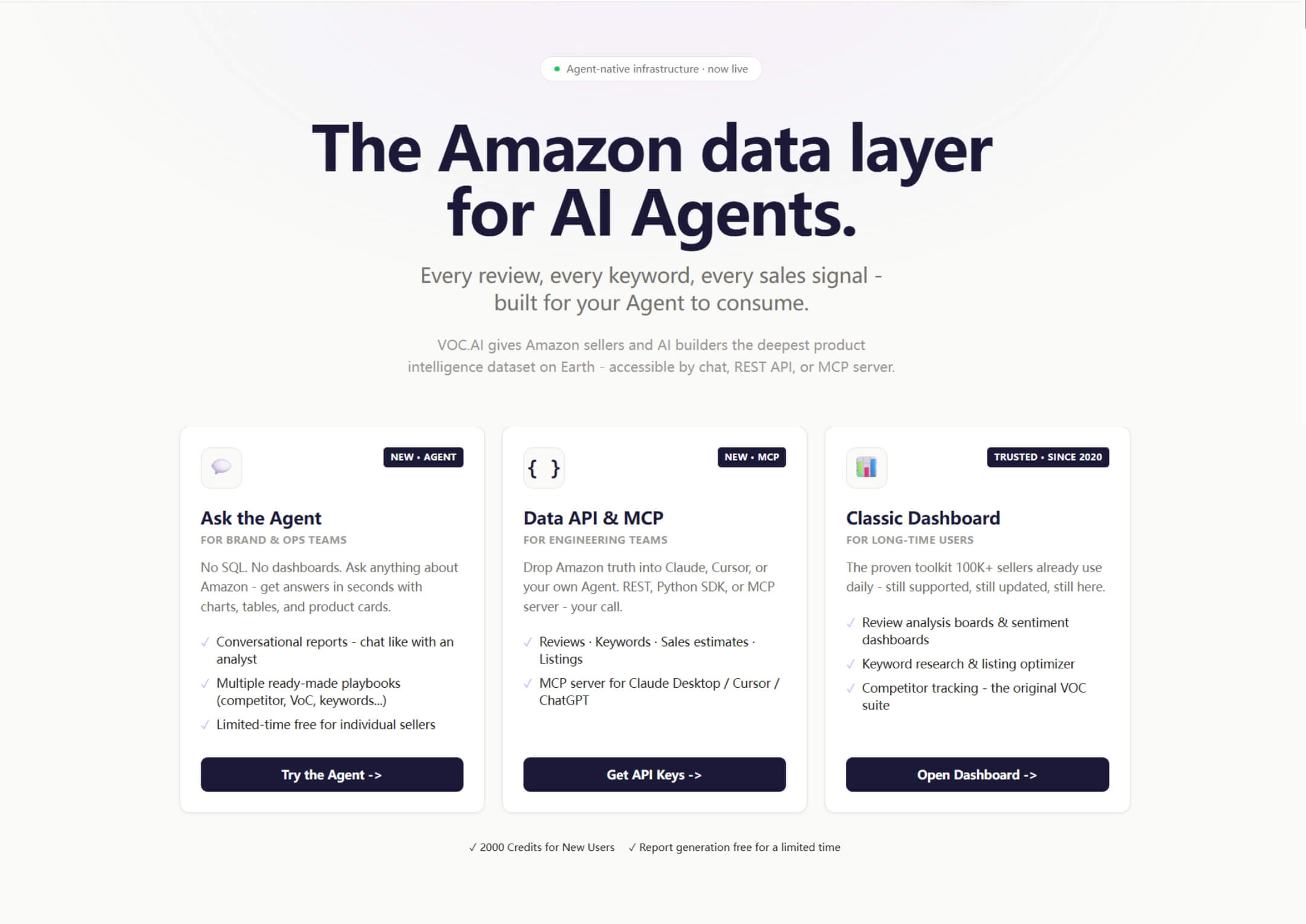
For product managers, product research can support requirement discovery from review patterns, while competitor analysis can reveal which customer complaints repeat across competing products. Market Insight can add category context when a theme affects a high-exposure product or a shifting segment.
Use VOC AI as decision support, not as an automatic roadmap owner. Product, support, legal, operations, and marketplace owners should still approve policy-sensitive language, safety escalations, product commitments, and final prioritization. When your team is ready to turn review signals into an accountable voice of customer product roadmap, use VOC AI Voice of Customer analysis or contact VOC AI to map the workflow to your review, support, competitor, and product systems.
FAQ
What is a voice of customer product roadmap?
A voice of customer product roadmap is a product planning workflow that uses source-labeled customer feedback, such as reviews, support tickets, competitor complaints, and market signals, to decide which themes deserve product, listing, support, or monitoring action.
How should product teams score customer review themes?
Score customer review themes by frequency, severity, revenue exposure, competitor gap, support burden, strategic fit, evidence uncertainty, and delivery risk. The score should rank discussion, not replace owner judgment.
Should every repeated review complaint enter the roadmap?
No. Some repeated complaints should become listing clarifications, support macro updates, setup content, packaging checks, or monitoring rules. Only themes that need product capacity and have enough evidence should enter the roadmap.
How should competitor review gaps influence product prioritization?
Competitor review gaps are useful when they show repeated category expectations or unmet demand. They still need to be scored against your own customer segment, strategy, cost, and evidence quality before becoming a roadmap commitment.
How often should a team revisit VOC roadmap scores?
Review high-volume products weekly, strategic categories monthly, and urgent risk themes immediately. Re-score after product changes, listing updates, support macro changes, major promotions, or competitor launches.
Can AI automate product roadmap prioritization from customer feedback?
AI can cluster feedback, summarize customer language, and suggest scoring inputs. Product and business owners should still approve roadmap decisions, safety issues, legal language, policy-sensitive support actions, and customer-facing commitments.