Review Sentiment Analysis Use Cases by Funnel Stage

Updated September 5, 2026.
\nReview sentiment analysis is most useful when it changes the next decision. A sentiment label by itself does not tell a product team what to fix, a marketing team what to test, or a support team what to route. The better question is where sentiment helps each funnel stage move forward.
This guide maps review sentiment analysis to the funnel stages that matter most for ecommerce and product teams: awareness, consideration, purchase, activation, retention, and expansion. Use it when you already have customer reviews and need a practical way to turn them into stage-specific decisions instead of a generic summary.
If you need the operating checklist for one cohort, read the review sentiment analysis checklist for faster decisions. If you want the broader workflow and examples, start with review sentiment analysis workflows and examples. This page owns the funnel-stage lens.
The funnel-stage view
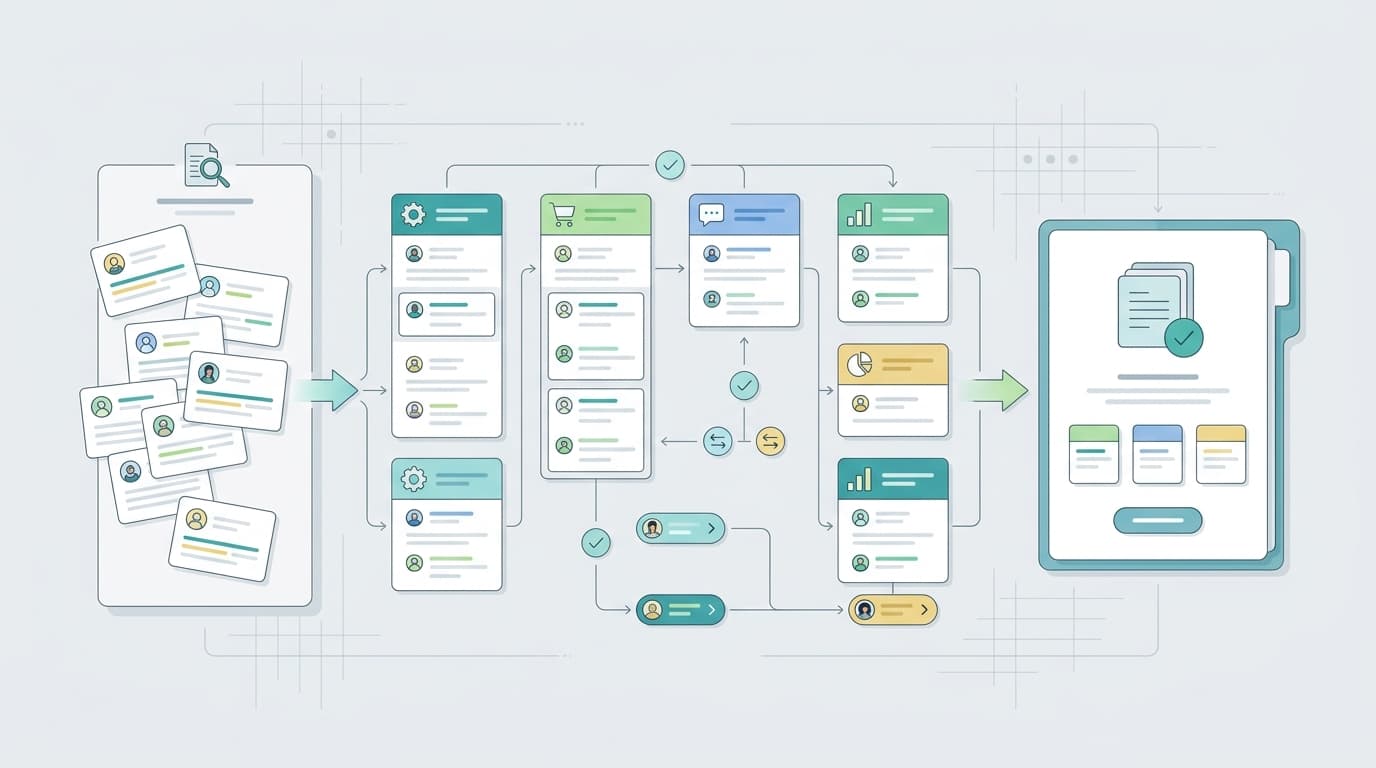
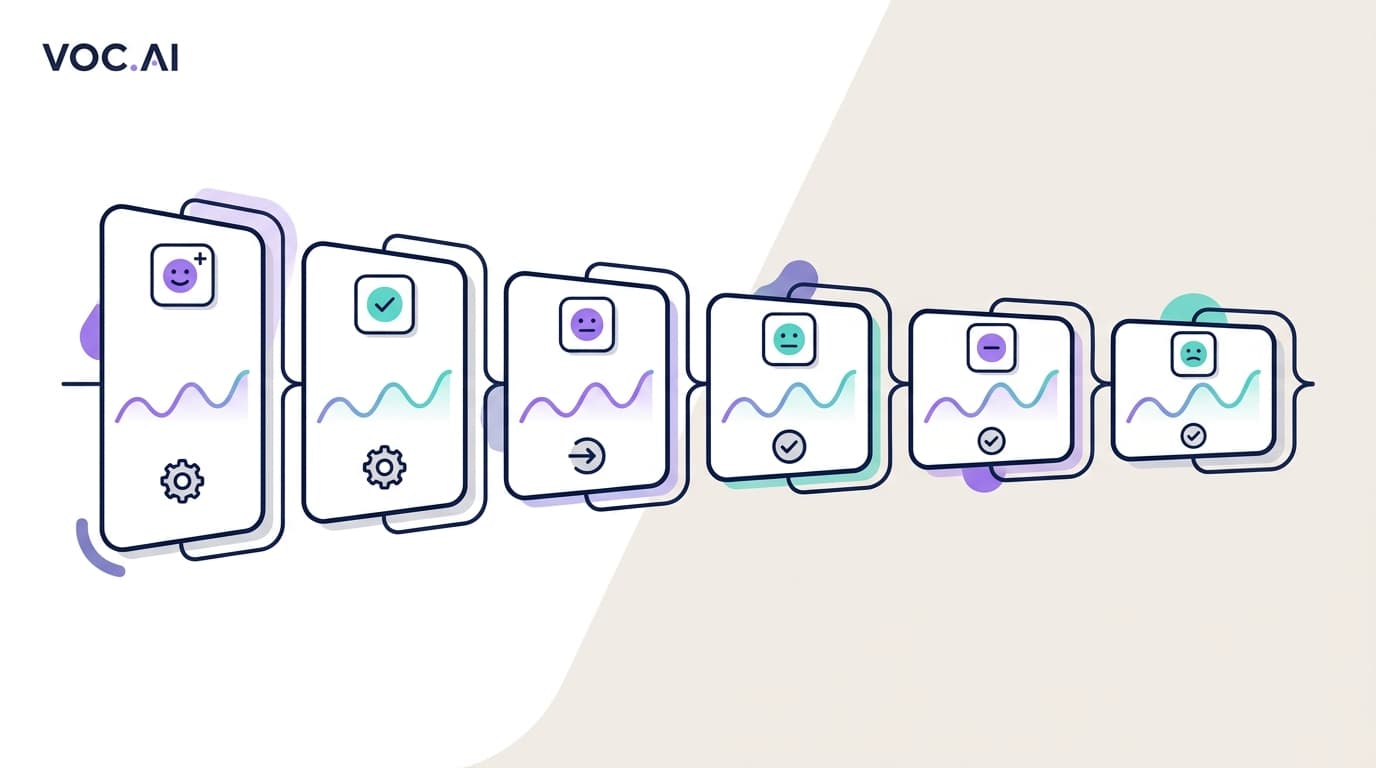
Each stage has a different job, so the same review theme should be used differently depending on where the buyer is in the journey.
| Funnel stage | What sentiment helps answer | Best output | Next owner |
|---|---|---|---|
| Awareness | What language attracts attention or creates first trust? | Messaging themes, praise language, pain-point framing | Marketing |
| Consideration | What objections or comparisons shape shortlists? | Comparison themes, proof points, competitor gaps | Product marketing |
| Purchase | What blocks conversion at the moment of decision? | Expectation mismatches, size, price, shipping, trust issues | Ecommerce |
| Activation | What causes first-use friction or setup failure? | Onboarding themes, confusion points, first-success gaps | Product or CX |
| Retention | What recurring issues appear after use? | Defect themes, support patterns, durability signals | Product or support |
| Expansion | What themes suggest cross-sell, upsell, or broader adoption? | Strong-value language, use-case expansion, segment fit | Growth or product |
1. Awareness: find the language that earns attention
Awareness-stage review sentiment is less about defects and more about the words customers use when they describe value.
Look for:
- praise phrases customers repeat across reviews
- the problem language that made a product feel relevant
- words buyers use to describe why they noticed the product in the first place
- positive sentiment around outcomes, not just features
Use cases:
- turn customer language into ad copy and landing page angles
- find the first promise the market already believes
- decide which benefit should sit above the fold
Example output:
| Theme | Sentiment | Action |
|---|---|---|
| Easy to understand for first-time users | Positive | Use the phrasing in awareness copy |
| Solves the problem I already had | Positive | Turn into a hero message or ad hook |
| Hard to tell what makes it different | Neutral | Clarify the positioning |
This stage is where VOC.AI's Voice of Customer Analysis is useful because it surfaces buyer language from review text rather than invented marketing jargon.
2. Consideration: map objections and comparison signals
Consideration-stage sentiment is about shortlist pressure. Buyers are comparing alternatives, checking proof, and looking for reasons to trust one option over another.
Look for:
- competitor comparisons inside reviews
- praise for a differentiating feature
- complaints that reveal a missing proof point
- negative sentiment around claims that felt overstated
Use cases:
- sharpen comparison pages
- decide which objections need evidence on the product page
- identify gaps versus competitors
Example output:
| Theme | Sentiment | Action |
|---|---|---|
| Better than competitor on durability | Positive | Promote as a comparison proof point |
| Wanted clearer specs before buying | Negative | Add spec clarity and comparison content |
| Looks similar to other options | Neutral | Strengthen differentiation |
At this stage, review sentiment analysis helps because it shows why a buyer did or did not stay interested. A generic sentiment score does not.
3. Purchase: remove conversion blockers
Purchase-stage sentiment is the most urgent because it appears right before money changes hands.
Look for:
- price objections
- shipping or delivery complaints
- trust issues
- size, compatibility, or variant confusion
- sentiment around whether the listing matched expectations
Use cases:
- rewrite titles, bullets, images, and FAQs
- tighten variant naming
- reduce checkout anxiety with clearer proof
Example output:
| Theme | Sentiment | Action |
|---|---|---|
| Size was smaller than expected | Negative | Show dimensions earlier |
| Shipping delay hurt confidence | Negative | Review logistics messaging and support escalation |
| Good value for the price | Positive | Keep the price-to-value language visible |
This stage belongs to ecommerce owners because the finding should change the purchase page, not just the report.
4. Activation: fix first-use friction
Activation-stage sentiment focuses on what happens when a buyer opens, installs, unboxes, or tries the product for the first time.
Look for:
- setup confusion
- instructions that do not match reality
- missing parts or unclear steps
- first-success failures
- sentiment around whether the product feels easy enough to keep
Use cases:
- improve onboarding or packaging instructions
- update support macros and help content
- decide whether the product needs a setup redesign
Example output:
| Theme | Sentiment | Action |
|---|---|---|
| Confusing first setup | Negative | Rewrite onboarding or instructions |
| Worked immediately after opening | Positive | Reinforce the easiest path in messaging |
| Needed support to complete setup | Mixed | Improve both docs and escalation path |
Activation is where sentiment becomes a workflow signal. VOC.AI's Review Analysis API is relevant when the team wants this output to flow into a repeatable process instead of a manual read.
5. Retention: watch for repeat issues and drift
Retention-stage sentiment tells you whether the product is holding up after the first use.
Look for:
- durability complaints
- repeat failures
- support issues that recur after the initial purchase
- negative sentiment that rises over time
- praise that confirms the product still earns trust
Use cases:
- monitor product quality over time
- detect supplier or packaging drift
- decide whether support issues are becoming product issues
Example output:
| Theme | Sentiment | Action |
|---|---|---|
| Broke after repeated use | Negative | Investigate product quality |
| Still works after months of use | Positive | Protect the feature in future revisions |
| More complaints this month than last | Negative | Trigger a monitoring review |
Retention is where theme-level sentiment matters more than a one-line summary. The question is whether the same complaint is growing or fading.
6. Expansion: identify what deserves broader rollout
Expansion-stage sentiment is the least obvious and often the most valuable. It shows where a product or message can spread into a larger use case, team, or segment.
Look for:
- reviews that reveal a new customer job
- praise from adjacent use cases
- comments about repeat buying or broader adoption
- language that suggests the product fits more than the original segment
Use cases:
- test new segment messaging
- build cross-sell or upsell angles
- decide whether a feature deserves broader positioning
Example output:
| Theme | Sentiment | Action |
|---|---|---|
| Useful for both travel and daily use | Positive | Expand the use-case story |
| Would recommend to my team | Positive | Consider team or enterprise messaging |
| Works for a different buyer segment than expected | Mixed | Validate before repositioning |
Expansion is where review sentiment analysis can feed growth strategy, not just product cleanup.
A simple decision rule
If the theme answers a different question at a different stage, route it differently.
| If the review says... | The stage is probably... | The team should... |
|---|---|---|
| "I noticed this because it solved my problem" | Awareness | Reuse the language in marketing |
| "I compared it to two other options" | Consideration | Strengthen proof and differentiation |
| "I almost did not buy because of this" | Purchase | Remove the blocker |
| "I needed help getting started" | Activation | Fix onboarding and support |
| "It failed after repeated use" | Retention | Investigate product quality |
| "I now want more of the same" | Expansion | Test broader adoption |
How VOC.AI fits
VOC.AI is most useful here when a team needs review-backed ecommerce evidence that can move through a real workflow.
The current public product pages position VOC.AI around:
- turning customer reviews into product direction and buyer language
- mapping sentiment across themes
- using the Review Analysis API for repeatable workflows
- connecting review evidence to product, support, listing, and growth decisions
That makes it a fit when you need stage-specific output instead of a generic sentiment dashboard.
FAQ
Is review sentiment analysis the same at every funnel stage?
No. The same review can support different decisions depending on the funnel stage. Awareness uses language and positioning. Consideration uses objections and comparison. Purchase uses conversion blockers. Activation uses first-use friction. Retention uses repeat issues. Expansion uses broader adoption signals.
What should I analyze first?
Start with the stage where the decision is most urgent. If buyers are dropping before purchase, look at purchase-stage sentiment. If support is overwhelmed, look at activation or retention.
Do I need a tool for this?
Not always. A small, narrow cohort can be handled manually. A tool matters when you want repeatability, team handoff, or API-backed reuse.
Bottom line
Review sentiment analysis becomes much more useful when it is tied to the funnel stage that needs a decision. The best use of the analysis is not to say that sentiment is positive or negative. It is to help the right owner act on the right stage with the right evidence.