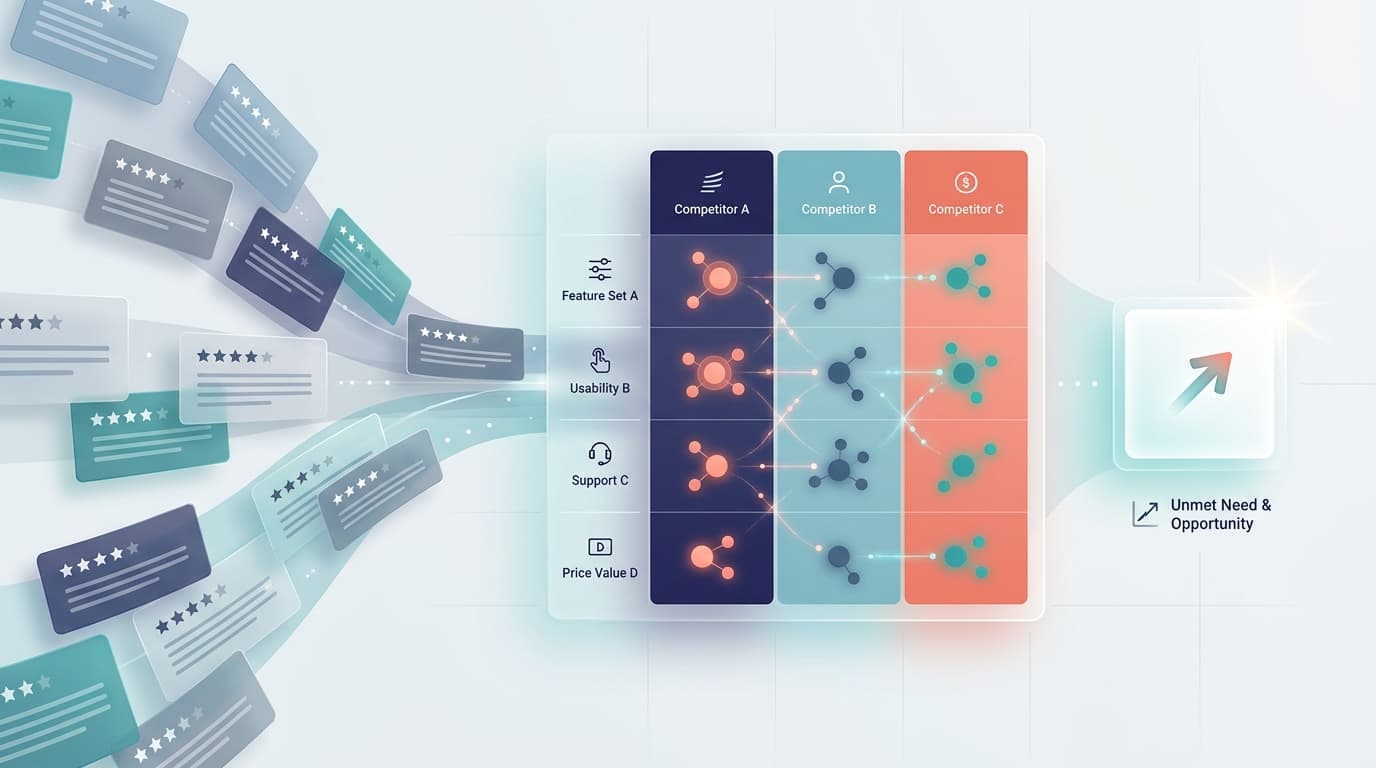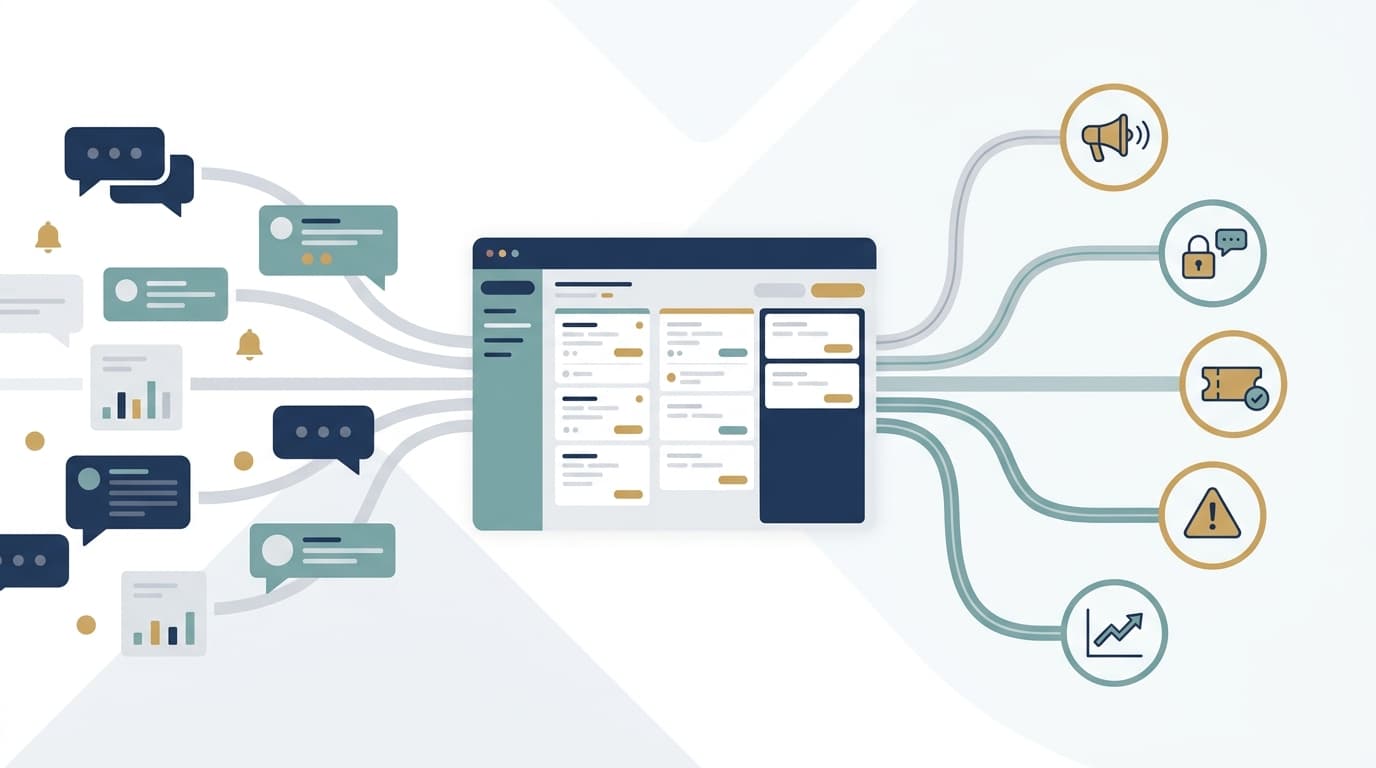
A social media customer service workflow should do more than answer comments fast. For ecommerce teams, comments, DMs, mentions, ad replies, creator posts, social listening alerts, and product reviews all point to different decisions.
Some messages need a public reply. Some need a private DM. Some should become support tickets. Some should move to product, legal, quality, or marketplace owners. Others are not one-off tickets at all; they are voice-of-customer signals that should be checked against reviews, sentiment, and market context before the team changes product messaging or support policy.
This social media customer service workflow gives social, CX, and brand teams a practical operating system for that routing problem.
Why a Social Media Customer Service Workflow Breaks Down
Most social support failures are not caused by a lack of effort. They happen because the team treats every interaction as the same type of work.
| Signal | Common mistake | Better workflow decision |
|---|---|---|
| Public comment | Reply quickly without checking context | Decide whether it needs a public answer, private follow-up, support ticket, or escalation |
| DM | Handle as a private one-off conversation | Preserve order, campaign, product, and sentiment context before routing |
| Mention or tag | Treat as engagement only | Check whether it contains support need, creator risk, product feedback, or reputation risk |
| Ad comment | Leave with the paid-social owner only | Add CX visibility because ad comments can contain service issues and product objections |
| Social listening alert | Send to marketing as a dashboard metric | Compare the theme with reviews, support tickets, and product evidence |
| Repeated product complaint | Answer each message separately | Convert the pattern into a VOC signal with owner, evidence, and next review date |
The goal is not to turn every comment into a ticket. The goal is to make sure each message reaches the right response path with enough evidence to act safely.
Build the Workflow Around Five Response Paths
A useful social media customer service workflow needs a small number of decision paths that everyone understands.
| Response path | Use when | Required context | Owner |
|---|---|---|---|
| Public reply | The answer is general, non-private, and useful to other shoppers | Post or ad source, campaign, product, approved public answer, tone risk | Social or community |
| Private DM | The customer needs account, order, return, warranty, shipping, or personally identifying support | Public source link, customer handle, product, issue type, privacy caveat | CX or support |
| Support ticket | Resolution requires tracking, ownership, status updates, or cross-team follow-up | Conversation transcript, product, order-safe metadata, severity, requested outcome | Support operations |
| Escalation | The message involves safety, legal, compliance, viral reputation risk, defects, fraud, or high-value accounts | Screenshot, source URL, timestamp, severity, owner, response deadline | CX lead, legal, product, quality, or brand lead |
| VOC insight | The theme repeats or matches a known review, sentiment, or market signal | Theme label, source count, sample paraphrase, review check, product owner | VOC, product, insights, or marketing strategy |
This five-path model keeps the social media customer service workflow simple enough for daily queues and structured enough for reporting.
Capture Every Message With Source Context
Before the team replies, capture enough context to explain where the message came from and why it matters.
| Field | What to record | Why it matters |
|---|---|---|
| Channel | Instagram, Facebook, TikTok, YouTube, X/Twitter, LinkedIn, marketplace, forum, or other source | Prevents cross-channel averages from hiding channel-specific risk |
| Surface | Organic post, ad comment, creator post, story reply, DM, mention, product tag, video comment, or listening alert | Shows whether the message is public, private, paid, creator-driven, or indirect |
| Product or campaign | SKU, ASIN, product line, offer, launch, promotion, creator, or campaign | Routes the issue to the right owner |
| Message type | Question, complaint, defect report, setup issue, praise, spam, policy request, or product idea | Keeps triage consistent |
| Privacy risk | Low, medium, or high | Controls when the team should move to DM or ticket |
| Severity | P0, P1, P2, or P3 | Prevents critical issues from being buried by high-volume routine comments |
| Sentiment | Positive, neutral, confused, frustrated, angry, urgent, or mixed | Helps identify tone and escalation needs |
| Evidence link | URL, screenshot, internal ticket link, or social listening alert link | Makes the decision traceable |
Do not wait for perfect automation to use this model. A shared queue, spreadsheet, or helpdesk view can work if the fields are consistent and the owner rules are clear.
Prioritize With a Simple Severity Model
A social media customer service workflow needs explicit priority rules because public visibility can distort judgment. A viral comment may need fast brand review; a quiet DM may carry higher customer risk.
| Priority | Route first | Examples | Response standard |
|---|---|---|---|
| P0 critical | Escalation plus holding response | Safety issue, legal threat, data exposure, fraud claim, high-risk viral thread, repeated defect with harm language | Notify owner immediately, preserve evidence, avoid unsupported public claims |
| P1 high | Support ticket or escalation | Refund dispute, warranty issue, angry public complaint, creator post with serious objection, repeated launch problem | Acknowledge, move private details to DM, assign owner, track resolution |
| P2 normal | Public reply, DM, or ticket | Product question, shipping confusion, setup issue, compatibility question, deal clarification | Answer from approved source or route to support with context |
| P3 low | Public reply, monitor, or moderation | Praise, UGC, low-risk comment, spam, duplicate question, non-actionable mention | Reply, save insight, hide/report spam according to policy, or monitor |
Severity should never be purely volume-based. A rare safety, legal, privacy, or defect message can outrank a large number of routine questions.
Decide Public Reply vs DM vs Ticket
The public/private decision is one of the most important parts of the workflow.
| Situation | Public reply | Move to DM | Create ticket | Escalate |
|---|---|---|---|---|
| General product question | Yes, if answer is approved and non-private | Optional for deeper fit questions | No, unless follow-up is required | No |
| Order, shipping, return, warranty, or account issue | Acknowledge only | Yes | Yes, if resolution needs tracking | If high severity or repeated |
| Public complaint about defect or quality | Acknowledge carefully | Yes, for details | Yes | If safety, defect cluster, or viral risk |
| Ad comment asking about promotion terms | Yes, if terms are clear and approved | If customer-specific | If billing or order issue appears | If legal or compliance ambiguity exists |
| Creator or influencer mention | Sometimes | If partnership or sensitive details appear | If customer support issue appears | If brand risk or contract issue appears |
| Repeated social listening theme | No individual reply required unless message is direct | Not usually | Only if a customer needs resolution | Route as VOC insight if pattern is material |
Public replies should not ask customers to share private information in public. DMs should not become invisible support debt. Tickets should not lose the original social context. Escalations should not wait for a perfect report when severity is already clear.
Write Replies From Evidence, Not Instinct
Response quality matters, but the workflow should control what a team is allowed to say.
- Answer only what the source supports.
- Do not promise outcomes that product, logistics, legal, or support owners have not approved.
- Move private customer details to DM or ticket without exposing the customer.
- Save repeated wording as VOC evidence instead of rewriting every reply from scratch.
A useful public reply has three parts: acknowledge the issue, give a source-safe answer, and state the next route. For example, a team can say that it will help check order-specific details in DM, but it should not promise a refund, replacement, rating change, delivery date, or product fix unless that commitment is approved.
That discipline makes the social media customer service workflow safer for brand teams. It also gives CX teams better evidence when repeated comments point to a product, listing, or support-process gap.
Close the Loop With Review and Social Signals
The workflow becomes more valuable when the team stops treating social messages as isolated conversations.
VOC AI's live social media page describes social listening as a way to compare marketplace feedback with broader social conversation. The same page positions social signals alongside Amazon, TikTok, YouTube, and other channel signals, which makes it a route-safe internal link for this article.
VOC AI's Voice of Customer Analysis page supports review-driven customer understanding and product decisions. Current public homepage proof checked for this package supports 2B+ ecommerce reviews, 500M+ products tracked, 30+ categories, and daily refresh. Use those numbers only as public review-intelligence proof. Do not turn them into claims that VOC AI automatically reads private DMs, guarantees support outcomes, removes reviews, or directly resolves every social support channel.
| Step | Question | Output |
|---|---|---|
| Label the theme | What customer language keeps appearing? | Theme name and source examples |
| Check source mix | Does it appear in comments, DMs, reviews, support tickets, or market chatter? | Confidence level |
| Compare review evidence | Do product reviews mention the same issue, expectation, or use case? | Review corroboration |
| Add market context | Is the theme connected to competitor complaints, category shifts, or campaign timing? | Business context |
| Assign owner | Should social, support, product, quality, marketplace, or brand own the next action? | Decision owner |
| Recheck | What signal will show whether the issue improved? | Review date and metric |
This is where the social media customer service workflow becomes a VOC system. The team still answers customers, but it also learns which themes deserve product, listing, support, or positioning action.
Use a Weekly Operating Cadence
Daily triage keeps the queue moving. Weekly review keeps the business learning.
| Cadence | Who attends | What to review |
|---|---|---|
| Daily queue review | Social, CX, support lead | P0/P1 items, unanswered DMs, public complaints, owner handoffs |
| Twice-weekly campaign review | Social, paid media, ecommerce, CX | Ad comments, creator mentions, promotion confusion, product objections |
| Weekly VOC review | CX, product, insights, marketing | Repeated themes, review corroboration, sentiment movement, route decisions |
| Monthly owner review | Product, quality, operations, support leadership | Defect patterns, policy changes, support macro gaps, listing and help-content fixes |
Do not measure only response speed. Track whether the workflow reduces dropped messages, repeat contacts, unclear ownership, repeated public complaints, unsupported replies, and unresolved VOC themes.
Implementation Checklist
Use this checklist before a social media customer service workflow goes live.
| Area | Requirement | Pass condition |
|---|---|---|
| Channel inventory | List every public and private source the team monitors | No major comments, DMs, mentions, ads, creator posts, or listening alerts are unowned |
| Routing rules | Define public reply, DM, ticket, escalation, and VOC insight paths | Agents can choose a path without asking a manager every time |
| Privacy guardrails | Define what cannot be requested or answered publicly | Order, payment, account, and personal details move to private support |
| Severity model | Define P0/P1/P2/P3 rules | High-risk items route faster than routine volume |
| Evidence requirements | Save source link, screenshot, product, campaign, and owner | Every escalation is traceable |
| Reply library | Maintain approved public answers and DM handoff language | Responses stay source-safe and consistent |
| VOC loop | Compare repeated themes with reviews, social listening, and market context | Repeated issues create owner decisions, not only replies |
| Measurement | Track queue health, owner handoffs, repeated themes, and resolution follow-up | The team can see what changed after action |
The checklist should be owned by operations, not only social media. Social teams see the signals first, but support, product, quality, and marketplace owners often own the resolution.
Where VOC AI Fits
VOC AI should be positioned as the analysis layer around this workflow. The live social media page supports the cross-channel social listening angle. Voice of Customer Analysis supports product review analysis, buyer language, sentiment, customer profiles, and competitor benchmarks. Market Insight can add category context when repeated social themes point to market timing, competitor movement, or product opportunity.
| Need | Route |
|---|---|
| Compare social signals with broader marketplace and review context | Social Listening |
| Analyze product reviews, sentiment, buyer language, and customer profiles | Voice of Customer Analysis |
| Add category and competitor context to repeated social themes | Market Insight |
| Discuss custom workflows, enterprise use cases, or implementation needs | Contact Sales |
This article intentionally avoids the broken or blocked customer-service feature route. It also avoids unsupported claims about direct private-message ingestion, guaranteed response outcomes, sales lift, ranking improvement, review removal, or automatic issue resolution.
FAQ
What is a social media customer service workflow?
A social media customer service workflow is a repeatable process for capturing comments, DMs, mentions, ad replies, social listening alerts, and related customer signals, then routing each item to a public reply, private DM, support ticket, escalation, or VOC insight.
When should a brand reply publicly instead of moving to DM?
Reply publicly when the answer is general, approved, and useful to other shoppers. Move to DM when the issue requires order details, account information, return status, warranty information, private customer data, or sensitive support context.
How should ecommerce teams handle ad comments?
Ad comments should be visible to both social and CX owners. Some are routine product questions, but others reveal promotion confusion, delivery concerns, objections, complaints, or compliance risk. Capture the ad, campaign, product, message type, and severity before routing.
How does social listening fit into customer service?
Social listening helps teams notice repeated themes that may not arrive as direct support tickets. When a theme repeats across comments, mentions, creator posts, reviews, or market chatter, the team should treat it as a VOC signal and assign an owner for follow-up.
How can VOC AI support a social media customer service workflow?
VOC AI can support the review-intelligence and social-listening side of the workflow by helping teams compare social conversation with product review language, sentiment, customer profiles, competitor benchmarks, and market context. Accountable owners should still approve public replies, support decisions, product commitments, and escalation actions.
Final Standard
A social media customer service workflow is successful when every message has a route, every escalation has evidence, every repeated theme has an owner, and every customer-facing claim is source-safe.
That standard helps social, CX, and brand teams move faster without turning social support into disconnected replies. Use VOC AI to compare social themes with review intelligence and market context, then contact VOC AI when your team is ready to design a route-safe workflow for comments, DMs, mentions, and VOC signals.