Amazon Review API vs. Scrapers: Which Workflow Fits Ecommerce Teams Better?
An amazon review api becomes valuable when it supports a repeatable workflow instead of creating one more brittle extraction project. Many ecommerce teams do not struggle with the idea of getting review data. They struggle with what happens after the data arrives: dashboards break, schema shifts, analyst cleanup expands, and the same review questions get rebuilt every week.
That is why the better evaluation is not simply "API or scraper?" The better question is which workflow your team can maintain once review data needs to feed dashboards, reports, alerts, and AI-assisted analysis.
VOC.AI's current public API product pages position the platform around review, keyword, sales, and listing data through REST API, Python SDK, and MCP surfaces. Amazon's own current Selling Partner documentation also shows that programmatic customer-feedback access is a real operating need, not a niche experiment. The practical decision for most ecommerce teams is narrower: keep owning a scraped review pipeline, or move to a managed review-data workflow that is easier to reuse across teams.
Why ecommerce teams still build scraper-led review pipelines
Scraper-led review pipelines still appeal to technical teams for understandable reasons:
- they can be fast to test,
- they feel flexible at the start,
- and they can work for a narrow extraction task.
If the team only needs a temporary pull for a one-off audit, a scraper can be acceptable. The problem is that a narrow experiment often turns into an ongoing operating dependency.
| Why teams choose scraping first | Why it feels reasonable early |
|---|---|
| Fast proof of concept | A team can show data movement without waiting for a bigger buying process |
| Full control | Engineers can shape the fields and flow exactly as they want |
| Narrow use case | The first job may only need one category, one report, or one internal export |
| Budget caution | Teams may prefer to test before adopting a managed workflow |
That logic is defensible for a short-term test. It becomes harder to defend when the same flow has to support a weekly seller report, a category dashboard, or an AI workflow that people expect to trust.
Where scraper-led review workflows usually become expensive
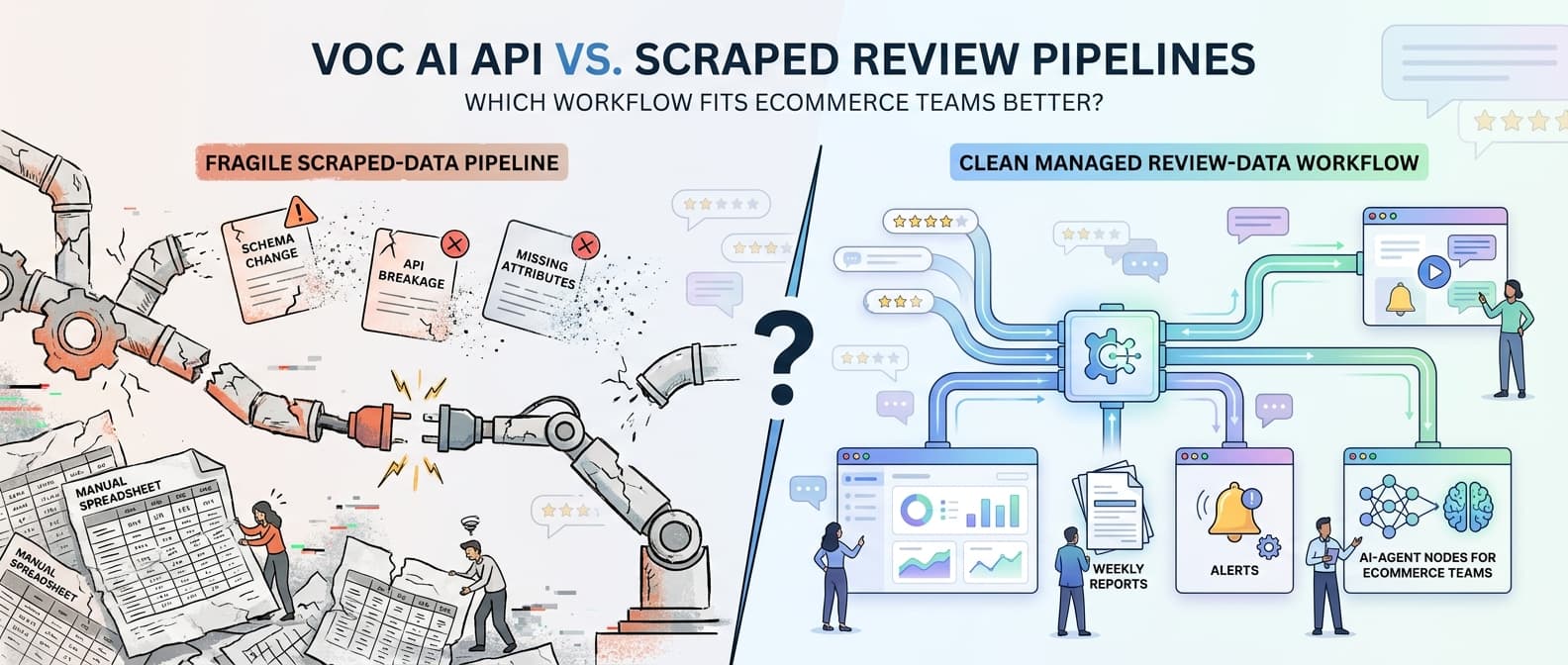
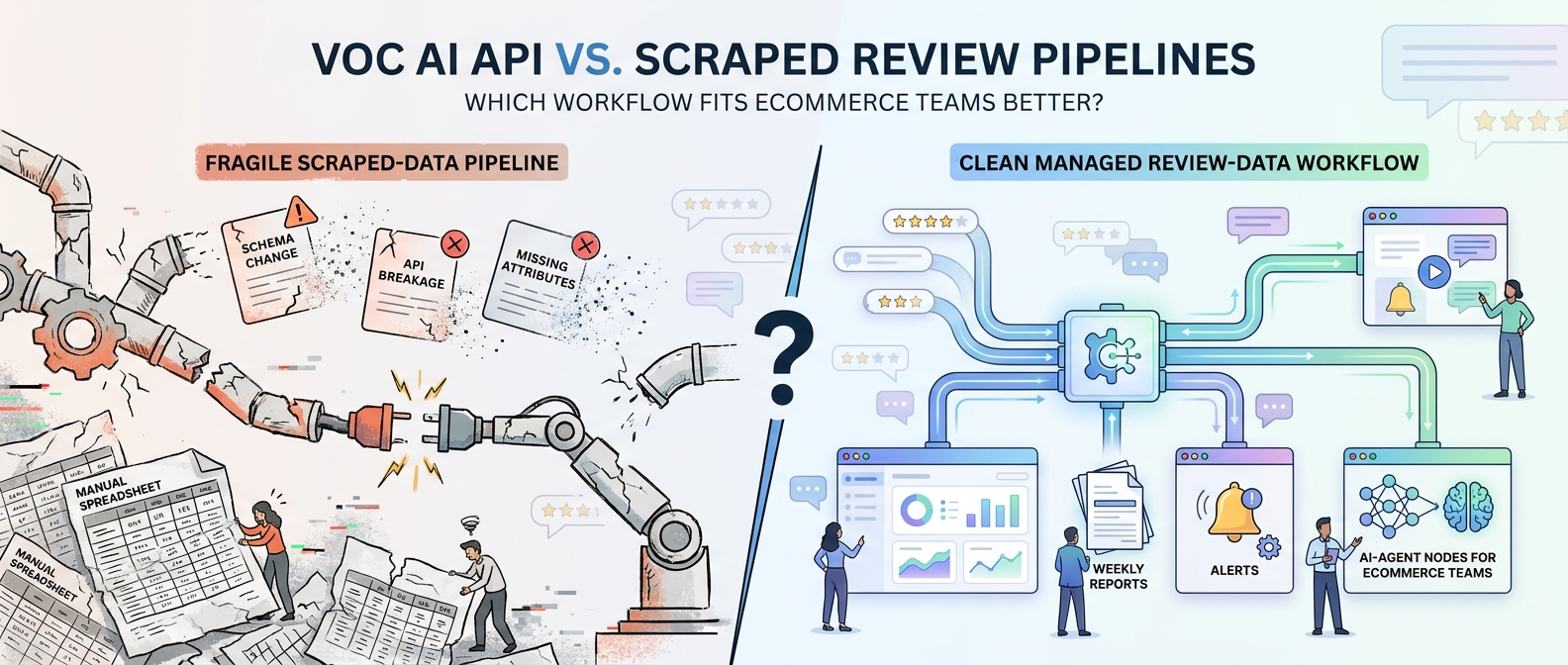
The hidden cost of a scraper is rarely the first pull. The cost appears after the team tries to rely on it.
| Failure mode | What happens in practice | Why it matters |
|---|---|---|
| Markup or selector drift | Extraction breaks or returns inconsistent fields | Engineers inherit reactive maintenance work |
| Schema instability | Different pulls need extra cleanup before analysis | BI, reporting, and automation all slow down |
| Retry and monitoring overhead | The "simple scraper" becomes an ops surface | Reliability work grows beyond the original estimate |
| Raw-text-only output | Teams still need a second project for clustering, summarization, or routing | Extraction alone does not answer the business question |
| Reuse across teams | Each new workflow creates more custom logic | The pipeline stops compounding and starts fragmenting |
This is the point where an amazon review api or a managed review-data workflow becomes a more serious option. The question is not whether scraping can work once. The question is whether your team wants to keep paying the maintenance tax after launch.
What a managed amazon review api workflow changes
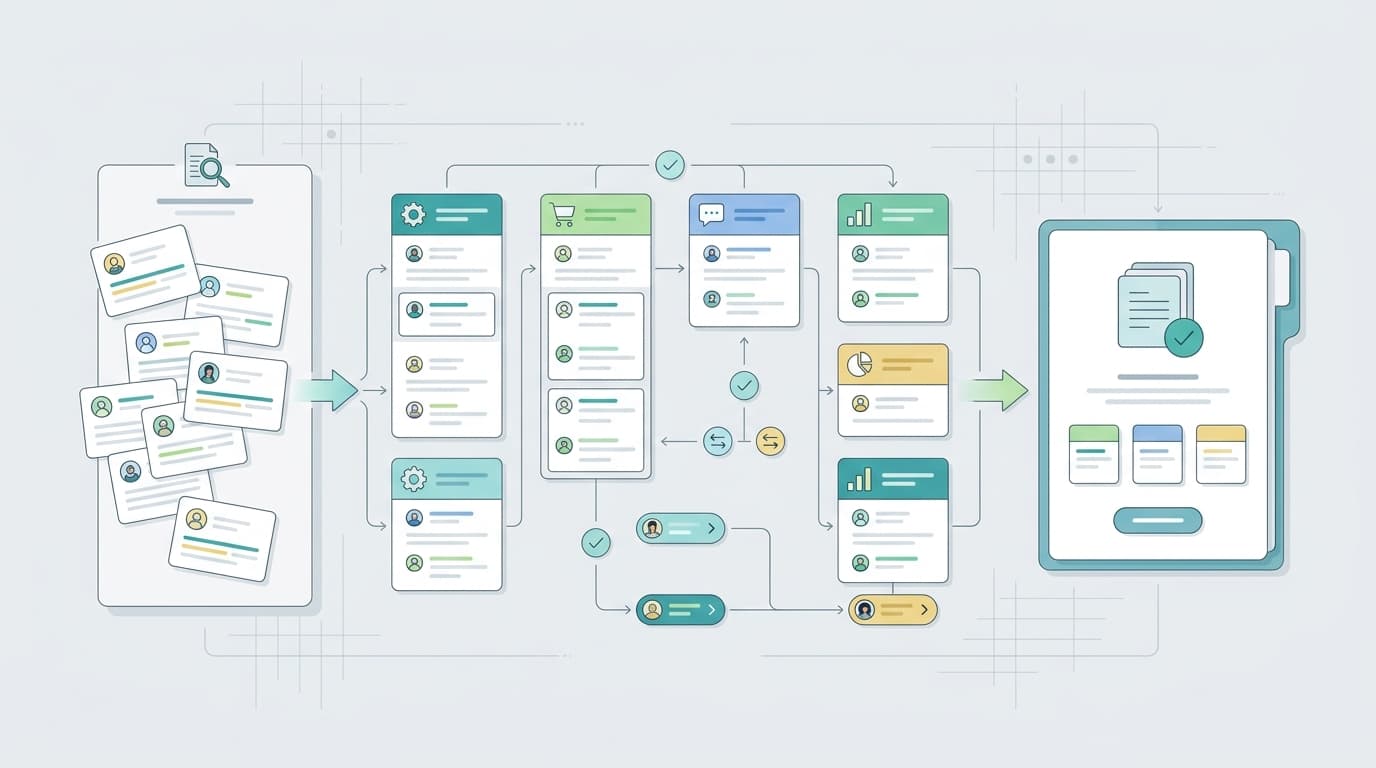
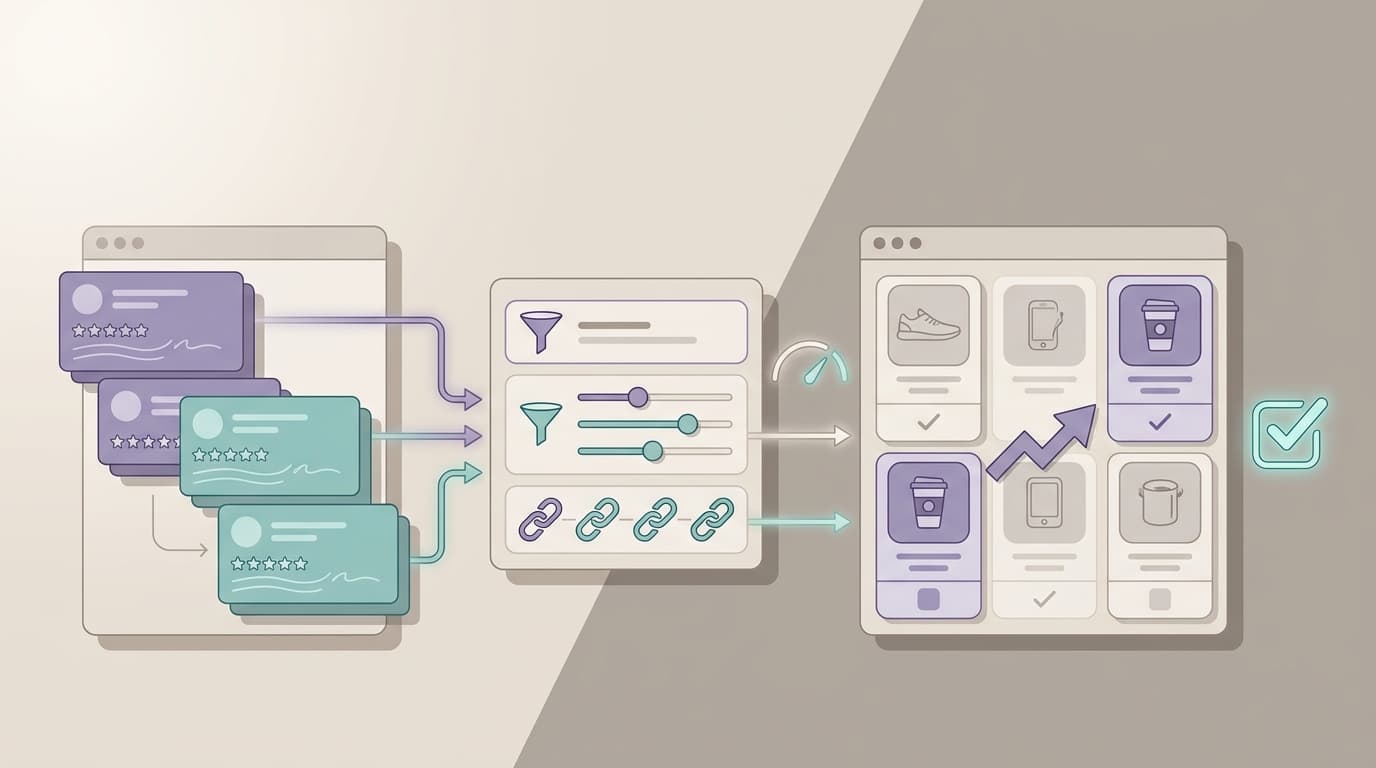
A managed workflow changes who owns the hard parts. Instead of your team rebuilding extraction, cleanup, and review-analysis structure on its own, the team starts from a data surface meant to support reuse.
That matters when the same review evidence needs to power:
- a weekly operator report,
- a dashboard for category managers,
- alerts around repeated complaint themes,
- competitor review comparisons,
- or an AI workflow that still needs grounded source evidence.
| Decision area | Scraper-led pipeline | Managed amazon review api workflow |
|---|---|---|
| Initial setup | Often fast for a narrow experiment | Often faster to operational value when the needed data surface already exists |
| Maintenance burden | Ongoing fixes stay with engineering | More of the structure is productized upstream |
| Schema consistency | Normalization and remapping stay local | Easier for downstream teams to reuse stable output |
| Analysis layer | Teams usually add their own summarization or tagging project | Better fit when review data and analysis outputs need to work together |
| Cross-team reuse | Often branches into custom one-offs | More practical for reporting, monitoring, and AI-assisted workflows |
This is why a managed amazon review api is usually a workflow decision, not just a developer preference.
Dashboards, reports, and alerts expose the real difference
The easiest way to compare an amazon review api against scrapers is to test a recurring workflow instead of a one-time pull.
1. Dashboards
A real dashboard has to refresh cleanly and preserve context. It needs product scope, time windows, representative evidence, and enough consistency that the next meeting is easier than the last one.
2. Weekly reports
A weekly seller report should not be rebuilt from screenshots, exports, and manual notes every time. If the workflow still depends on analyst reconstruction, the pipeline is not stable enough yet.
3. Alerts
Useful alerts do more than announce that ratings changed. They help the team understand what changed and which owner should look first.
| Weak alert | Stronger workflow-ready alert |
|---|---|
| New negative reviews arrived | Repeated packaging complaints appeared across recent low-star reviews |
| Rating dropped this week | Rating dropped and the same complaint theme now appears in multiple recent reviews |
| Sentiment worsened | Expectation-mismatch language is rising and may require listing clarification |
These use cases expose the real cost difference between one more scraper and an amazon review api workflow your team can keep running.
When scraping is still acceptable
The fair comparison is not "scrapers are always bad." Scraping can still be acceptable when all of the following are true:
- the use case is temporary,
- the scope is narrow,
- the team is comfortable owning breakage,
- and downstream users do not expect a durable reporting or AI workflow.
If that description fits your team, a scraper may still be a reasonable short-term choice.
When a managed workflow is the better fit
A managed workflow is usually the stronger choice when:
- the same review data must support dashboards, reports, and alerts,
- multiple teams need the same evidence layer,
- AI-assisted workflows need grounded source data,
- or the maintenance burden is already larger than the original extraction task.
That is where VOC.AI's current public positioning becomes relevant. Its live Review Analysis API page describes a workflow around review, keyword, sales, and listing data, while the API & MCP story emphasizes reuse in internal systems and AI-native surfaces instead of treating review extraction as a one-off job.
Which VOC.AI surface fits which workflow
VOC.AI currently presents three main access surfaces publicly: REST API, Python SDK, and MCP.
| Surface | Best fit | Why teams choose it first | Watch out for |
|---|---|---|---|
| REST API | Internal apps, dashboards, recurring reporting jobs | Good fit when the team already knows the workflow it wants to automate | Still requires implementation ownership |
| Python SDK | Analyst scripts, notebook workflows, reporting automation | Faster for teams that want to prototype without wiring raw requests by hand | Scripts still need maintenance and output discipline |
| MCP | AI clients and agent workflows that need Amazon review context | Fastest path when the team wants review-grounded answers inside AI workflows | AI outputs still need evidence review and prompt discipline |
If your first workflow is a dashboard, direct API or SDK work may be the right path. If your first workflow is AI-assisted analysis, MCP may be the cleaner starting point.
A practical decision framework
Before choosing between an amazon review api workflow and scrapers, ask:
- Is this a one-time extraction task or a recurring operating workflow?
- Will the same review data need to feed dashboards, reports, alerts, or AI workflows later?
- How much engineering time are we willing to spend on drift, retries, and cleanup?
- Do downstream users need stable structure, not just raw rows?
- Will the team validate source evidence before making listing, support, product, or operations changes?
| If your situation looks like this | Better fit |
|---|---|
| Narrow internal test with short expected lifetime | Scraper can still be acceptable |
| Weekly reporting or category monitoring | Managed amazon review api workflow |
| AI-assisted workflows that need source-grounded context | Managed workflow with API or MCP support |
| Multiple teams need the same evidence layer | Managed workflow |
| Maintenance debt is already visible | Managed workflow |
Where VOC.AI fits in this comparison
VOC.AI is the stronger fit when a team wants more than raw extraction. Its current public pages support a workflow story around:
- review, keyword, sales, and listing data,
- API, SDK, and MCP access patterns,
- and review-analysis workflows that support product, listing, and operator decisions.
That makes VOC.AI relevant for ecommerce teams that want:
- a reusable review-data layer instead of another brittle extraction branch,
- a cleaner path from review evidence to weekly reporting,
- faster dashboard and alert workflows,
- or an AI-assisted workflow that still keeps review evidence visible.
For current public product proof and next-step evaluation, the most relevant routes are:
If your team already knows the first workflow it wants to improve, that is usually enough to test whether an amazon review api is a better long-term fit than another scraper.
FAQ
What is an amazon review api?
An amazon review api is a programmatic way to move Amazon review-related data into dashboards, reports, scripts, or AI-assisted workflows. The useful version is not just access. It is a workflow the team can repeat.
Are scrapers always the wrong choice?
No. Scrapers can still be acceptable for short-term, narrow-scope extraction tasks when the team is prepared to own maintenance and does not need a durable multi-team workflow.
Why do teams move from scrapers to a managed workflow?
Teams usually move when maintenance, cleanup, or cross-team reuse becomes more expensive than the original extraction problem.
When is MCP more useful than direct API integration?
MCP is often more useful when the team wants review-grounded answers inside an AI workflow quickly and does not want to build a full dashboard first.
What should an ecommerce team validate before making decisions from review data?
The team should still inspect representative source evidence before making listing, support, product, or operations changes. AI summaries and alerts should accelerate review, not replace it.