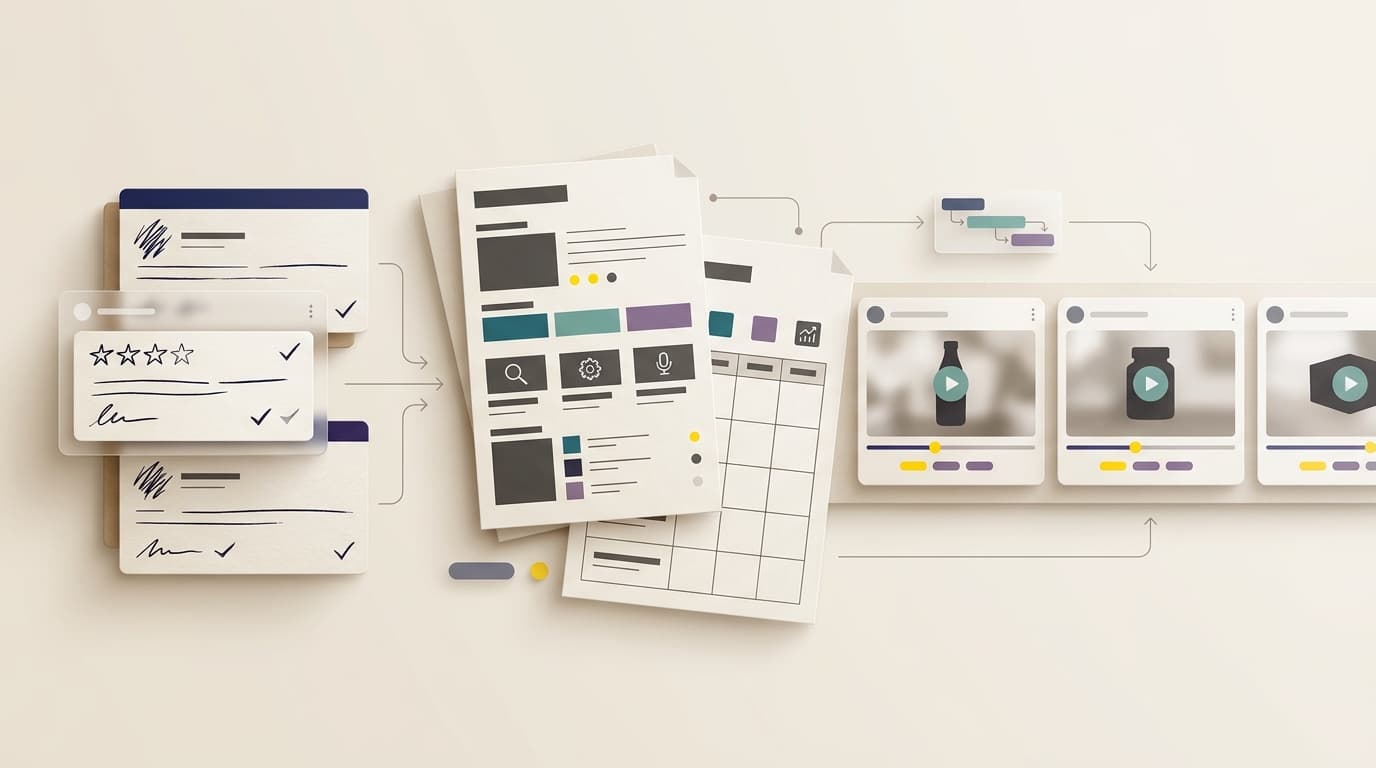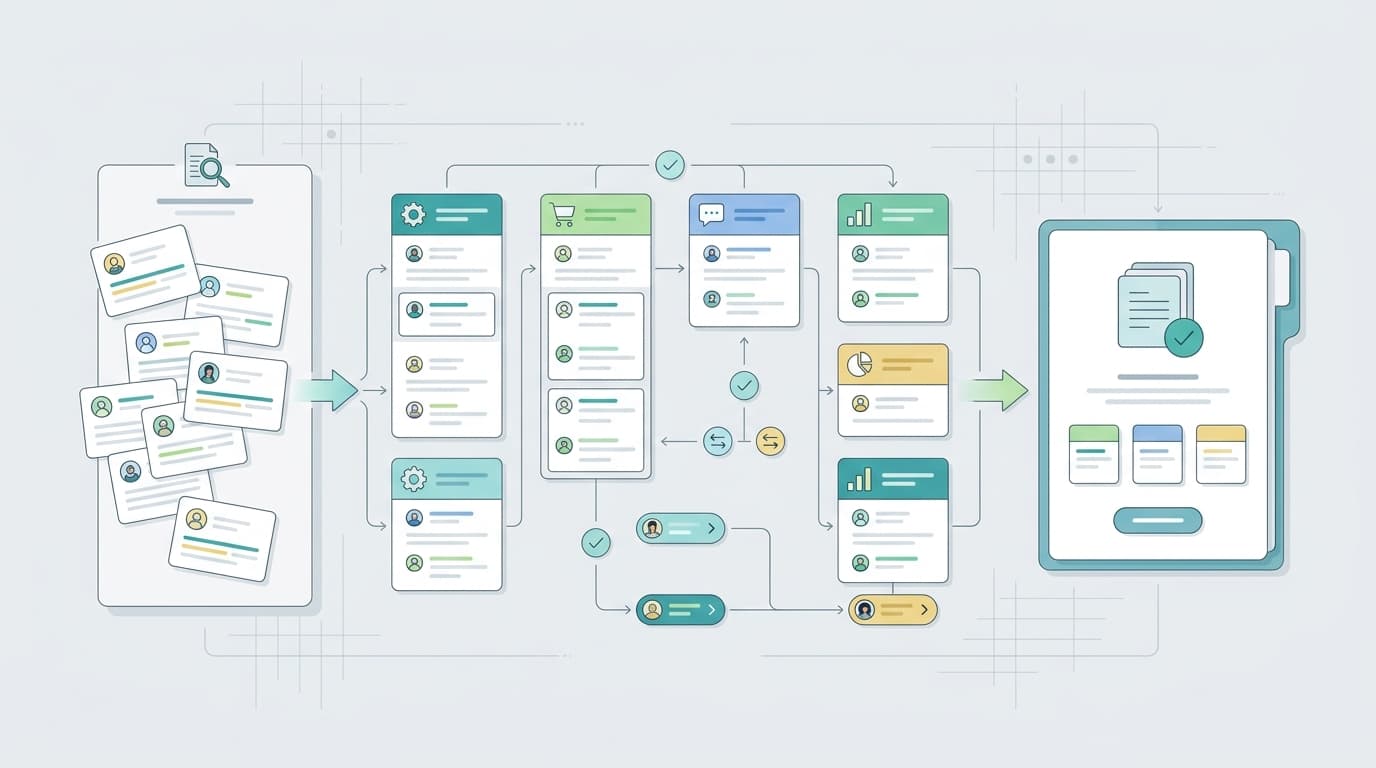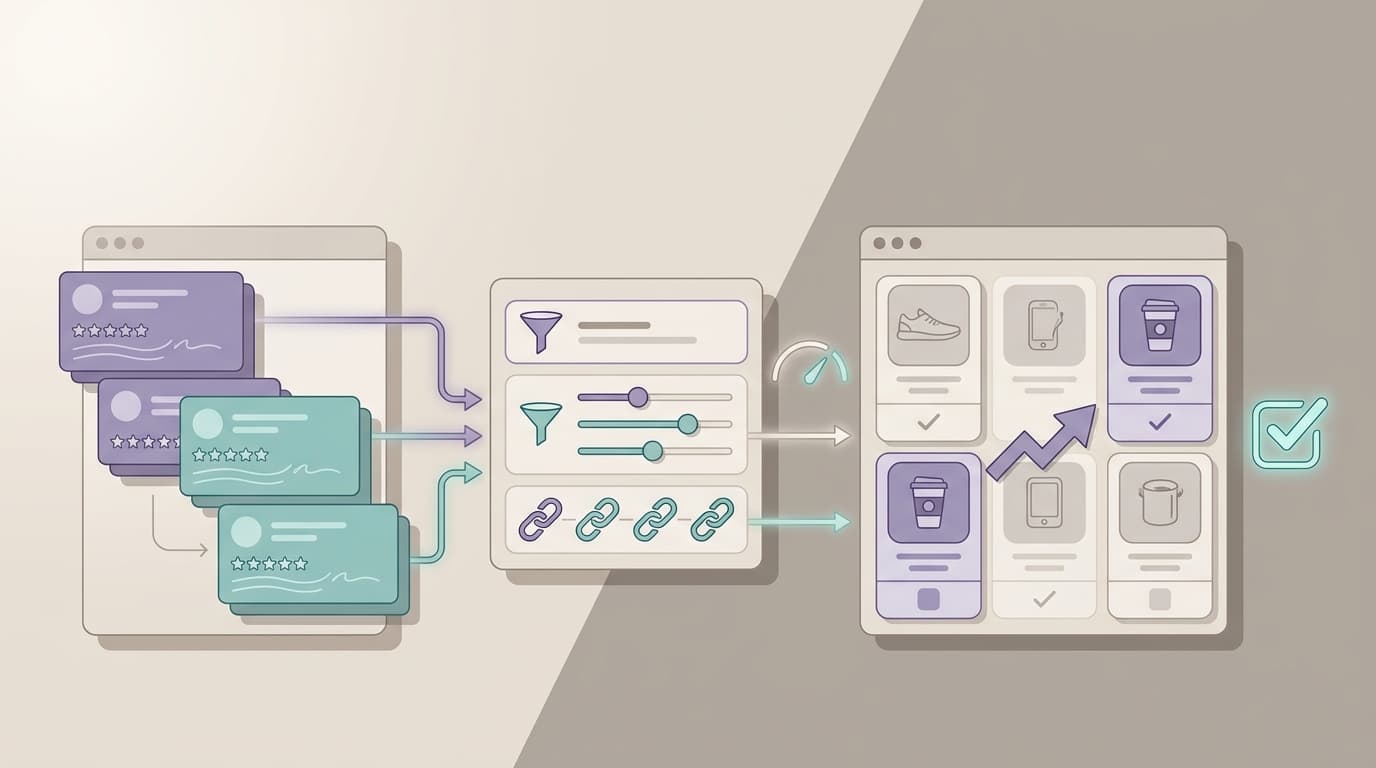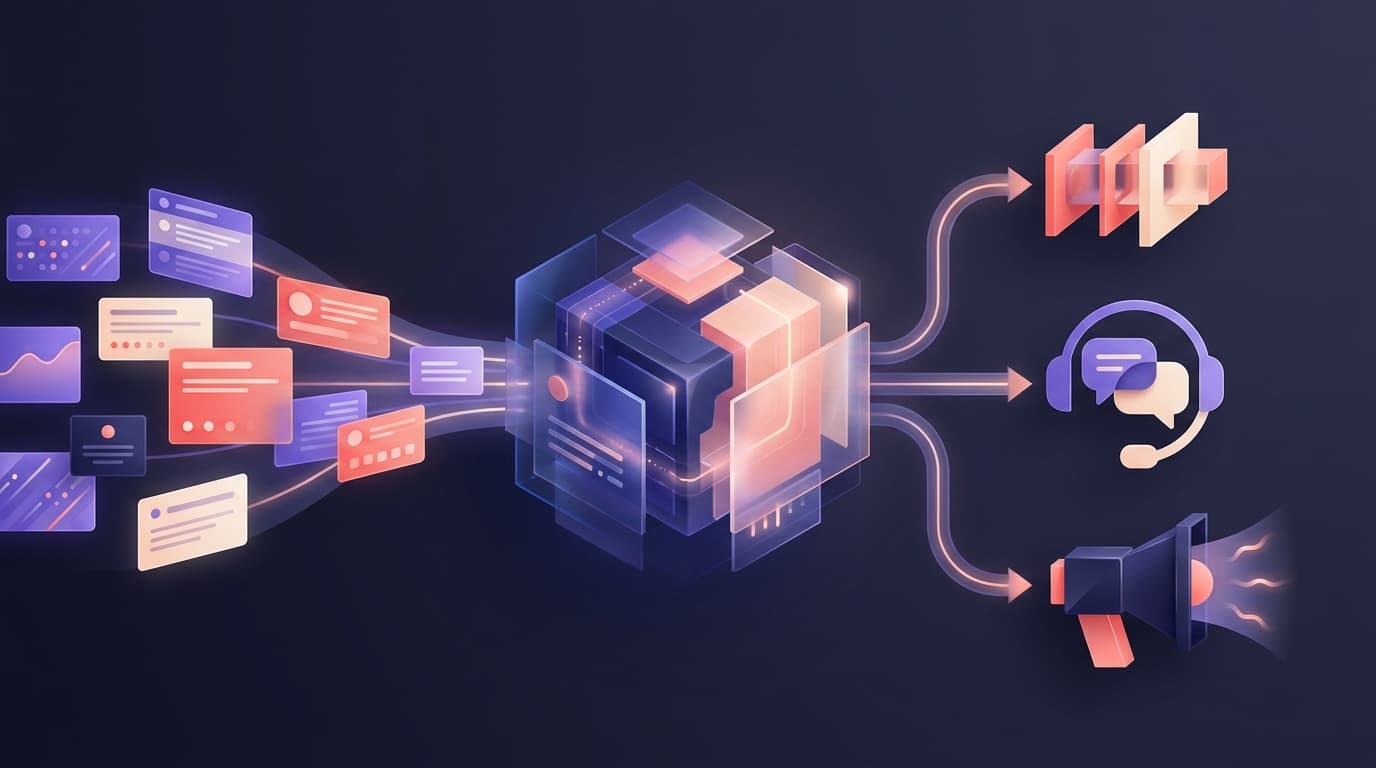
Anker is useful as a voice of customer case study because it shows that customer insight does not scale through a bigger dashboard alone. It scales when feedback, analysis, ownership, and action become one operating system.
In a 2025 report on Anker's internal AI program, the company said it had more than 300 active AI agents. The report also said its customer-service AI resolved more than 70% of tickets. Those figures describe a broad AI transformation, not a controlled study of one voice-of-customer platform. But they reveal an important operating principle: customer intelligence becomes more valuable when it is connected to the work teams already perform.
For ecommerce brands, the lesson is not to copy Anker's scale. It is to build a smaller, traceable feedback-to-action loop that can grow without losing customer context.
This voice of customer case study breaks that loop into seven practical design choices.
What this voice of customer case study actually proves
A customer story is evidence only when it helps a buyer understand the starting problem, the workflow change, the decision that improved, and the limits of the result.
Anker's public AI disclosures suggest an organization working to embed AI into operating processes, including customer service. VOC.AI's current customer-stories hub describes the same general destination for ecommerce teams: moving from customer feedback to faster product and marketing decisions. Its Voice of Customer Analysis page describes a workflow that clusters feedback by pain point, expectation, and feature mention, then carries those findings into product planning, copywriting, and team workflows.
Together, those sources support a practical conclusion:
A voice of customer case study is most useful when it explains how evidence moves from a customer signal to an owned business decision.
That is a stronger standard than a logo wall, a testimonial, or an isolated percentage.
1. Start with a decision, not a data source
Many teams begin a voice of customer program by collecting more inputs: reviews, support tickets, surveys, social comments, return reasons, call transcripts, and competitor feedback. The result is often a larger inbox.
Start with the decision instead.
Examples include:
- Which product defect should engineering investigate first?
- Which expectation gap should the listing clarify?
- Which support question deserves a proactive help article?
- Which competitor complaint creates a credible positioning opportunity?
- Which customer segment describes a different use case?
Write the decision in one sentence before choosing the analysis method:
We need [team] to decide [action] using feedback from [sources and cohort] during [time period].
This makes the voice of customer case study measurable at the decision level. It also prevents a generic sentiment summary from being mistaken for useful customer intelligence.
2. Create a bounded evidence set
Customer feedback becomes misleading when unrelated cohorts are blended. A complaint may apply only to one model, variation, country, sales channel, or production period.
Define the evidence boundary before clustering themes:
| Boundary | Questions to record |
|---|---|
| Product | Which ASINs, models, bundles, or versions are included? |
| Customer | Which segment, use case, or buyer type is represented? |
| Channel | Reviews, support, returns, surveys, social, or a combination? |
| Market | Which country, language, and marketplace? |
| Time | Which dates, and is recency important to the decision? |
| Comparison | Which competitor or earlier product cohort is the baseline? |
This step is especially important at Anker-like scale. More feedback increases analytical power, but it also increases the chance that a broad theme hides a specific operational problem.
A disciplined voice of customer case study should tell readers what evidence was analyzed and what was excluded.
3. Translate raw feedback into decision-ready themes
The goal is not to label every comment positive or negative. The goal is to create themes specific enough to support action.
Weak themes include:
- quality
- shipping
- design
- customer service
Decision-ready themes include:
- charging cable fails after repeated bending near the connector
- product dimensions are unclear for buyers fitting it into a travel kit
- setup instructions omit the step that resolves the most common pairing error
- customers praise compact storage but dislike the included carrying case
VOC.AI's current Voice of Customer Analysis page describes clustering feedback by pain point, expectation, and feature mention. That structure is useful because it preserves the relationship between what happened, what the customer expected, and which part of the product or experience is involved.
For each theme, store:
- A precise theme label.
- The affected customer outcome.
- Representative source evidence.
- Product, market, rating, and date context.
- Contradictory or disconfirming evidence.
- The next validation question.
The last two fields matter. A voice of customer case study should demonstrate judgment, not just pattern detection.
4. Route each theme to a named owner
Insights do not create value while they remain in an analysis tool. Every actionable theme needs an owner, a decision deadline, and a next step.
Use a simple routing table:
| Theme type | Primary owner | Typical action |
|---|---|---|
| Product reliability | Product or quality | Reproduce the issue and inspect affected cohorts |
| Expectation mismatch | Ecommerce or growth | Clarify copy, imagery, specifications, or comparison language |
| Repeated setup friction | CX or education | Update onboarding, help content, and support macros |
| Packaging damage | Operations or supply chain | Audit packaging, carriers, routes, and recent batches |
| Competitor praise pattern | Product marketing | Validate differentiation and buyer-language opportunities |
| Emerging complaint | CX analytics | Monitor recurrence, severity, spread, and recency |
This is where the Anker voice of customer case study becomes an operating-model lesson. AI can increase the speed of analysis and service, but organizational value depends on who receives the finding and what they are authorized to change.
5. Preserve traceability when AI increases speed
The more a team automates summarization, routing, or response generation, the more important evidence traceability becomes.
For every recommendation, a reviewer should be able to answer:
- Which feedback supports this conclusion?
- Does the evidence come from the right cohort?
- How common, severe, recent, and widespread is the theme?
- Are there reviews that contradict the summary?
- Is the proposed action reversible or expensive?
- What would make the team change its decision?
AI can organize evidence faster, but it should not turn an uncertain pattern into a certain claim. Preserve representative quotes, source links or IDs, metadata, and the analyst's confidence level.
This principle also improves customer proof. A trustworthy voice of customer case study distinguishes reported company outcomes from independently verified results and explains what the available evidence can support.
6. Measure the closed loop, not the number of insights
Counting dashboards, themes, or generated summaries rewards activity. Measure whether the feedback loop closes.
Useful metrics include:
- Median time from signal detection to an owned decision.
- Percentage of priority themes with representative evidence.
- Percentage of themes assigned to an owner and deadline.
- Percentage of actions followed by a scheduled signal recheck.
- Change in complaint recurrence after a product, packaging, content, or support intervention.
- Change in avoidable contacts after a help-content or listing clarification.
- Percentage of recommendations rejected after human validation.
That last metric is healthy. If no AI-generated recommendation is ever rejected, the team may not be testing the analysis carefully enough.
A mature voice of customer case study should show the loop:
Customer signal → bounded evidence → theme → validation → owner → action → recheck
The action is not the end. The recheck tells the team whether the intervention changed the customer experience.
7. Scale the workflow in stages
Most ecommerce teams do not need hundreds of agents or an enterprise-wide transformation to begin. Start with one recurring decision and one bounded feedback set.
Stage 1: One product, one decision
Choose a single ASIN or product family. Analyze one decision, such as a recurring complaint or listing expectation gap. Preserve evidence and assign one owner.
Stage 2: One repeatable taxonomy
Standardize theme names, severity, confidence, affected outcome, and owner. Reuse the taxonomy in the next analysis rather than rebuilding it.
Stage 3: Cross-functional routing
Connect product, CX, growth, and operations to the same evidence structure. Each team can keep its execution system while sharing the analytical layer.
Stage 4: Monitoring and automation
Automate ingestion, clustering, alerts, and draft recommendations where the workflow is stable. Keep human review for high-cost, customer-facing, legal, safety, and product-quality decisions.
Stage 5: Portfolio learning
Compare themes across products, markets, time periods, and competitors. Look for repeated customer problems that should influence portfolio strategy rather than one listing.
This staged approach turns the Anker voice of customer case study from an intimidating scale story into a practical roadmap.
A 30-day feedback-to-action pilot
Use this plan to test the operating model before investing in a wider rollout.
Week 1: Define the evidence and decision
- Select one high-value product or category.
- Choose one decision owner.
- Define included sources, markets, variants, and dates.
- Write the decision question and success metric.
Week 2: Build and validate themes
- Cluster feedback into specific pain points, expectations, use cases, and praise patterns.
- Review representative evidence and contradictions.
- Score themes by frequency, severity, business impact, and confidence.
Week 3: Route actions
- Assign the top themes to product, CX, growth, or operations.
- Record the action, owner, deadline, risk, and expected customer outcome.
- Separate fast reversible tests from expensive product changes.
Week 4: Recheck and document proof
- Review whether the action was completed.
- Schedule the next signal check.
- Document what changed, what did not, and what remains uncertain.
- Turn the result into an internal voice of customer case study with links to evidence.
Questions to ask when evaluating customer proof
When a vendor presents a customer story, use this checklist:
- Is the customer and use case specific?
- Does the story explain the previous workflow?
- Is the data source and cohort clear?
- Are reported outcomes attributed to the customer or independently verified?
- Does the story connect insight to an owned action?
- Are limitations, exclusions, and time periods visible?
- Can the workflow be tested with your own product and evidence?
These questions help buyers separate proof of a repeatable operating model from a claim that may not transfer to their business.
The main lesson from the Anker voice of customer case study
The most transferable lesson is not a specific automation percentage. It is the decision architecture behind the scale.
Customer feedback must move through a traceable system: bounded evidence, decision-ready themes, human validation, named ownership, action, and remeasurement. AI can compress the time between those stages, but it cannot remove the need for context or accountability.
VOC.AI's Voice of Customer Analysis workflow is designed to help ecommerce teams cluster review evidence into pain points, expectations, and feature themes, then carry those findings into product, listing, and team decisions. Start with one product and one decision. Build the proof loop before you scale the automation.
Explore VOC.AI Voice of Customer Analysis or review the customer feedback loop from reviews to product roadmap.
Sources and methodology
- VOC.AI Customer Stories, accessed July 27, 2026.
- VOC.AI Voice of Customer Analysis, accessed July 27, 2026.
- 36Kr Global report on Anker's 2025 AI strategy, published June 23, 2025.
This analysis uses public company disclosures and current product documentation. Reported company outcomes are attributed to their sources and should not be treated as independently audited performance guarantees.