Updated September 6, 2026.
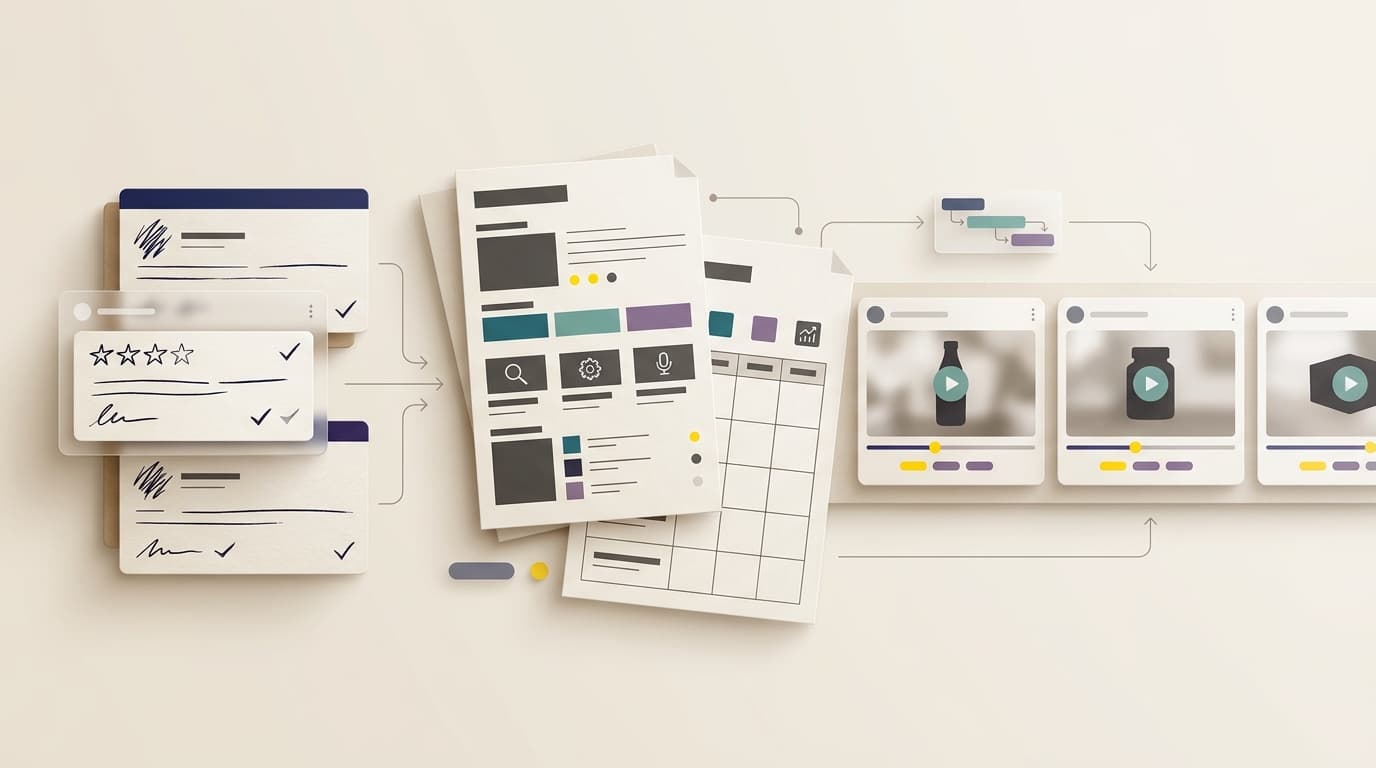
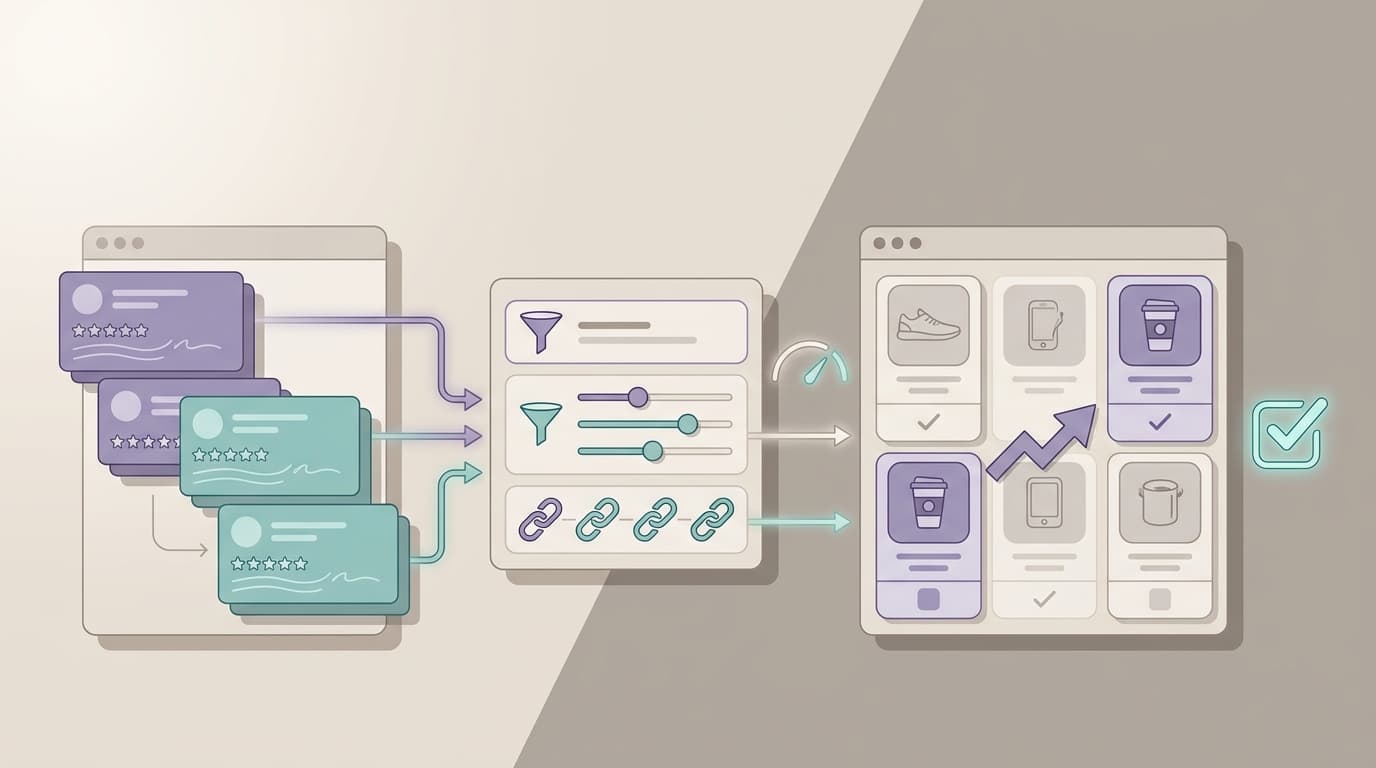
Product research AI is software that combines category movement with customer evidence so a team can decide what to build, launch, improve, or monitor next.
That makes it a decision layer, not a summary layer. The useful version does not just describe demand. It connects demand to buyer language, competitor context, and a named action.
If you are still comparing categories, start with the companion product research AI comparison or the product research AI practical guide for teams. This page is narrower: it defines the category and explains when it earns its keep.
Product research AI is a decision layer
| Layer | What it does | Example |
|---|---|---|
| Customer evidence | Collects buyer language, complaints, wishes, feature requests, and usage context | Review themes, support tickets, interview notes |
| Market context | Shows whether the category is moving, crowded, or opening up | Category trend, competitor activity, demand signals |
| Decision layer | Turns evidence into a named choice | Build, improve, launch, reposition, monitor, or reject |
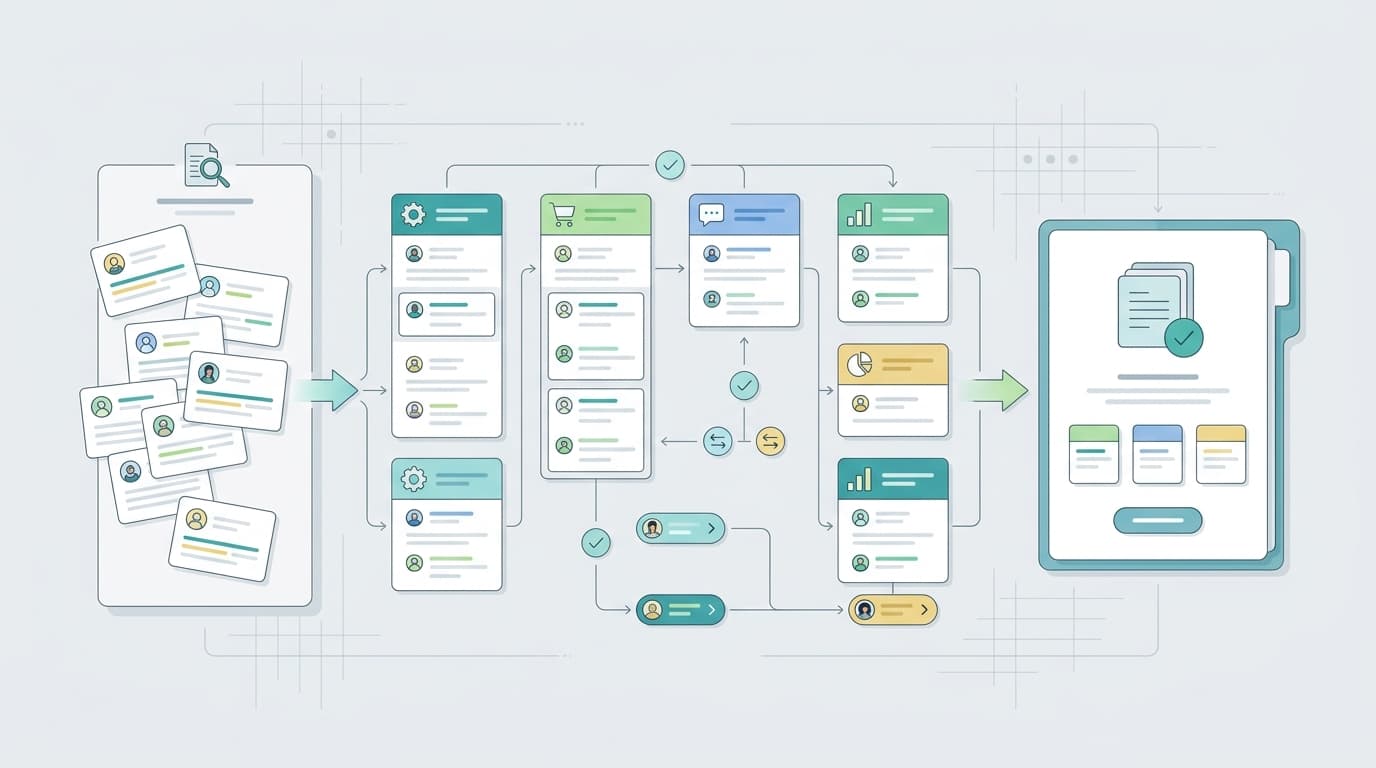
That is why VOC.AI's Product Research page matters here. It combines category movement with customer evidence so you can choose what to build, launch, or improve next. Its Market Insight page adds trend, competitor, demand, and opportunity context. Those are different jobs, and product research AI works best when it keeps them separate until the decision step.
What product research AI is not
- a generic summarizer that rewrites reviews
- a market research dashboard that ignores customer language
- a replacement for product judgment
- a one-off report with no owner
If the tool cannot name the cohort, preserve the evidence behind a theme, and route the next action, it is not doing product research AI. It is doing commentary.
When product research AI matters
| Situation | Why it matters | Best fit |
|---|---|---|
| You need to choose what to build or improve next | Product research AI can turn noisy feedback into a decision packet | Product Research |
| You need to separate demand from pain | Category movement and buyer complaints are not the same signal | Market Insight + Voice of Customer Analysis |
| You need the same evidence across product, growth, support, and ecommerce | One source of truth reduces handoff loss | Review Analysis API |
| You need repeatable research across many cohorts | Repeated work is where automation pays back | Product Research + API/MCP |
| You need to compare a new idea against current market context | Market movement changes whether a complaint is worth acting on | Market Insight |
That is the practical answer to "when does it matter?" It matters when the output changes a decision that already has cost, timing, or ownership attached to it.
When it does not matter yet
- You do not have a decision to make
- No one owns the next step
- The evidence set is too small or too noisy
- You only need a one-time summary for a meeting
- The answer is already obvious from one source
In those cases, a simpler report or manual review is usually enough. Product research AI becomes useful after the team needs to compare signals, preserve counterevidence, and repeat the workflow.
A fast yes/no test
- Do we need to choose build, improve, launch, reposition, monitor, or reject?
- Do we have at least one stable evidence cohort?
- Can we inspect the evidence behind the recommendation?
- Will someone own the next artifact?
- Do we need the same analysis again next week or next month?
- Do we need market context, customer language, or both?
If the answer to most of those questions is no, product research AI is probably too heavy for the job.
What the output should look like
The useful output is not a long essay. It is a short decision packet.
| Packet field | What to include |
|---|---|
| Decision sentence | The exact choice the research supports |
| Cohort | Source set, date range, segment, and exclusions |
| Top finding | One plain-English answer |
| Evidence table | Themes, counts or strength, source examples, and counterexamples |
| Segment split | Which users, buyers, use cases, regions, or price bands differ |
| Opportunity type | Build, fix, bundle, reposition, monitor, test, or reject |
| Owner | Product, marketing, support, growth, research, ecommerce, or engineering |
| Next artifact | PRD, listing brief, test plan, roadmap note, support macro, sales enablement, or no-action record |
| Confidence | High, medium, or low, with the reason |
| Recheck date | When the team should refresh the evidence |
This is the line between "the AI found something interesting" and "the team can make a decision."
Where VOC.AI fits
VOC.AI is strongest when product research AI needs review-backed evidence and a path into repeated workflows.
The Product Research page positions VOC.AI around demand signals, review-backed validation, and launch planning. The Market Insight page adds category movement, sales estimates, market share, category trends, competitor tracking, product research, and review signals. The Voice of Customer Analysis page focuses on clustering feedback by pain point, expectation, and feature mention.
For teams that need automation, the Review Analysis API gives structured access through REST API, Python SDK, and MCP support. If budget is part of the evaluation, the Pricing page currently shows trial, Personal, Team, and API/MCP options.
That combination matters because product research AI should do more than suggest ideas. It should prove which idea deserves work.
What generic product research AI pages miss
- Which evidence source drives the recommendation?
- Can I compare products and competitors on the same cohort?
- Does the tool separate demand from pain?
- Can the output survive a product review meeting?
- Can the workflow repeat next month without starting over?
Those are the questions that decide whether the tool saves time or just creates another document.
FAQ
Is product research AI the same as market research AI?
Not exactly. Market research AI usually focuses on category and audience context. Product research AI should connect that context to a decision about what to build, improve, position, or retire.
Should teams start with reviews or market data?
Start with the decision. If you need category sizing, market data comes first. If you need to understand why buyers choose or reject products, reviews usually provide the sharper signal.
What is the biggest risk when buying product research AI?
Buying fluent summaries without inspectable evidence. A good tool should make the decision easier to defend, not just easier to describe.
Do I need an API?
Only if product research is recurring, embedded, or routed into other systems. For one-off research, a UI may be enough.
Conclusion
The useful product research AI tools are the ones that can show the evidence, control the cohort, separate demand from pain, preserve contradictions, and hand the result to the team that owns the decision.
That is the line between another summary and a workflow your team can trust.