AI customer service for ecommerce is often framed as a speed project: answer common questions faster, reduce queue pressure, and give shoppers help outside business hours. Those benefits matter, but they leave a larger source of value unused.
Every support conversation is also product evidence. Questions reveal unclear listing copy. Repeated troubleshooting points reveal onboarding gaps. Refund requests expose expectation mismatches. Escalations show where automation lacks context. When teams treat these conversations only as tickets to close, the same issues return to the queue.
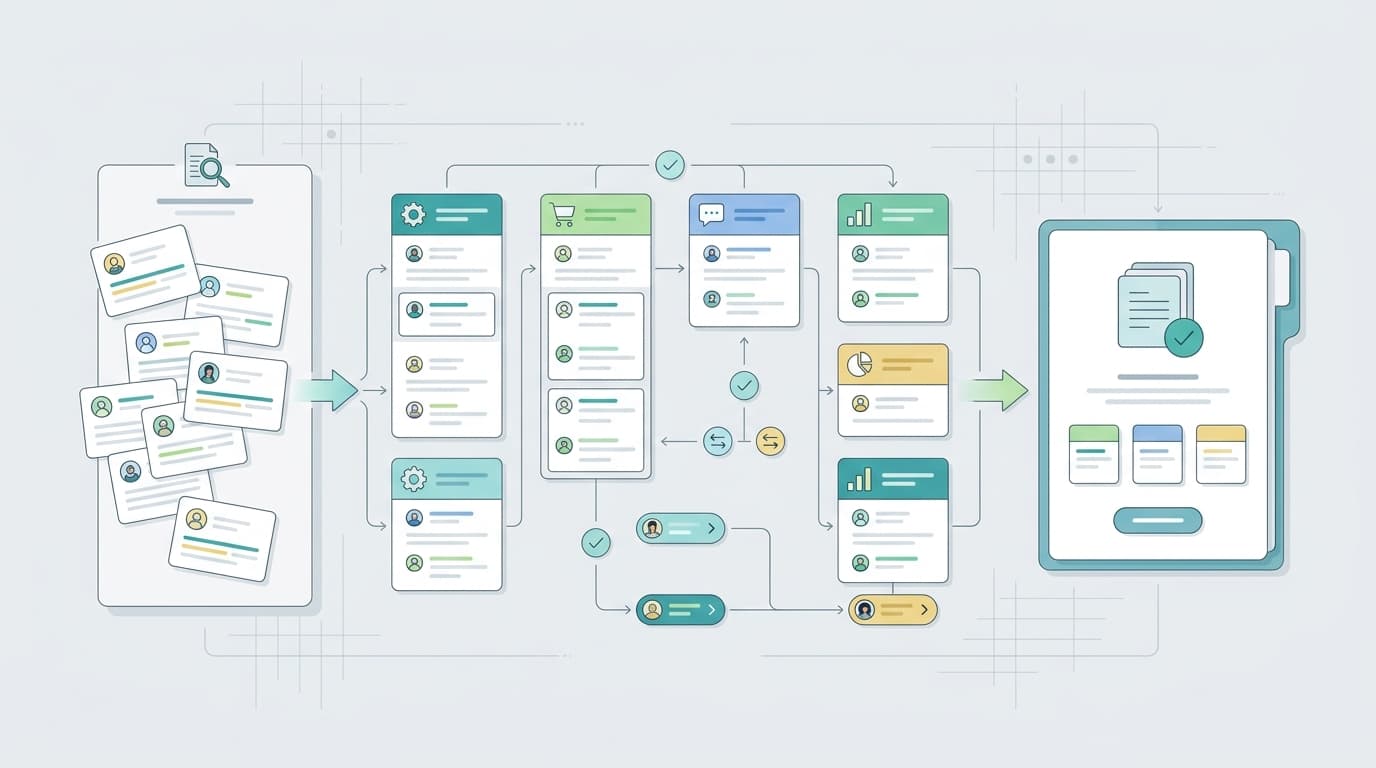
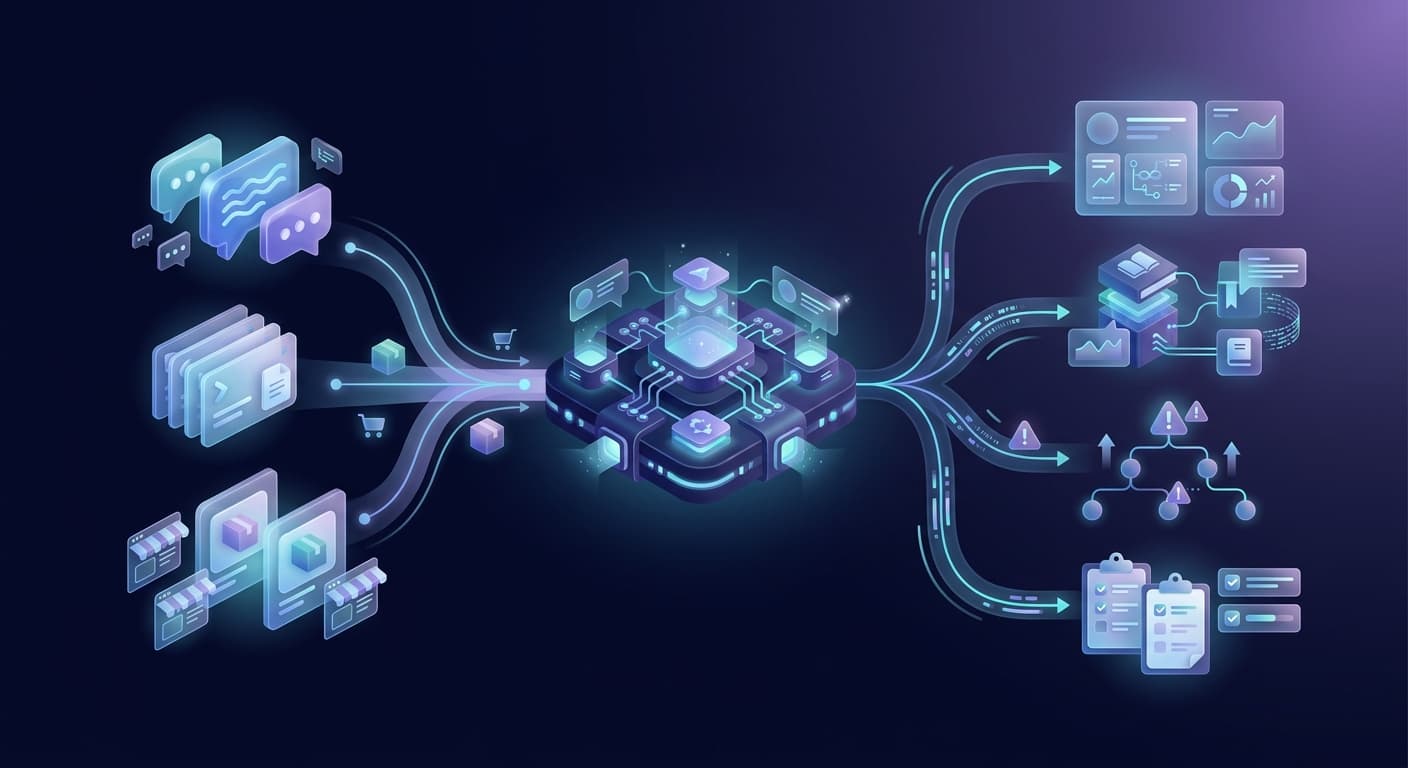
A better operating model connects service automation to a support-to-product feedback loop. The AI assists with routine conversations, preserves the evidence behind recurring issues, routes risk to people, and turns validated patterns into product, content, and customer-experience actions.
This guide shows how to build that loop without flattening every conversation into a generic sentiment score.
Definition: A support-to-product feedback loop is a repeatable process that captures customer-service evidence, groups recurring issues, validates them against source conversations, assigns an action owner, and checks whether the signal changes after action.
What AI customer service should do beyond answering tickets
An ecommerce support system has two jobs.
The first is conversational: understand the request, retrieve relevant information, answer when confidence is sufficient, and escalate when it is not.
The second is analytical: preserve what customers are asking, identify repeated friction, and make those patterns usable by teams outside support.
Many implementations optimize only the first job. They track response time, queue size, containment, or customer satisfaction, but the underlying causes remain scattered across chats, emails, social messages, marketplace questions, and return reasons.
The result is a closed-ticket system rather than a learning system.
A learning system adds several outputs to each resolved conversation:
- a consistent issue theme;
- the product, order stage, channel, and market involved;
- whether the answer came from an approved source;
- whether a human corrected or escalated the response;
- the evidence needed to investigate a recurring pattern;
- an owner and recheck date when action is warranted.
These fields do not need to make the service experience feel like a survey. Most can be captured from existing context or added during quality review.
Start with decision questions, not automation volume
Before selecting workflows or dashboards, define the decisions the system should support.
Useful questions include:
- Which presale questions indicate that a product page is unclear?
- Which post-purchase issues are concentrated in one product, variant, region, or fulfillment path?
- Which answers repeatedly require human correction?
- Which return reasons are preceded by the same expectation mismatch?
- Which support themes should become knowledge-base, packaging, onboarding, or product changes?
- Which issues have declined after a change, and which continue to recur?
This keeps the project grounded in business outcomes. Automating a high volume of conversations is not automatically valuable if the system repeats weak guidance, hides uncertainty, or fails to surface the causes behind demand.
It also prevents a common reporting mistake: treating fewer escalations as universally positive. A lower escalation rate may reflect better automation, but it may also reflect a threshold that is too permissive. Escalation quality matters more than escalation avoidance.
Build one minimum evidence record
Different channels carry different context, but the team needs a shared minimum record before it can compare patterns.
For each conversation, preserve at least:
| Field | Why it matters |
|---|---|
| Product or service | Connects the issue to an actionable owner |
| Journey stage | Separates presale confusion from setup, delivery, use, or return problems |
| Channel | Shows whether friction is concentrated in chat, email, social, marketplace, or another source |
| Issue theme | Groups conversations without discarding the original evidence |
| Customer intent | Distinguishes a question, complaint, cancellation risk, refund request, or troubleshooting need |
| Source used for the answer | Shows whether the response relied on an approved product page, policy, help document, or prior message |
| Automation outcome | Records answered, clarified, escalated, corrected, or unresolved states |
| Evidence link | Lets reviewers inspect the source conversation |
| Confidence or review state | Separates an automated suggestion from a validated finding |
The evidence link is essential. A theme label such as “quality issue” is too broad to support a decision. A product manager needs to see representative conversations, edge cases, and contradictions before changing a specification or public claim.
If reviews are another major signal, connect this service record to a broader cross-channel ecommerce feedback analysis workflow. Shared fields make it easier to compare what shoppers say before purchase, after purchase, and in public reviews.
Create a taxonomy that separates symptom, cause, and action
Support teams often label conversations by queue destination: shipping, refund, warranty, product question. Those labels help route work, but they are usually too shallow for product learning.
A useful taxonomy separates three layers.
1. Symptom
What did the customer experience or ask?
Examples: cannot connect, arrived damaged, sizing unclear, missing accessory, subscription confusion, unexpected charge, product does not match listing.
2. Possible cause
What might explain the symptom?
Examples: onboarding gap, product defect, variation mismatch, packaging weakness, policy ambiguity, fulfillment issue, unsupported use case, outdated help content.
The word “possible” matters. AI can suggest a cause, but the source conversation rarely proves it alone.
3. Action lane
Who should investigate or act?
Examples: support operations, knowledge management, product, quality, logistics, ecommerce content, growth, or legal and policy review.
This structure prevents the automation from converting an observation into an unsupported conclusion. “Customer cannot connect” is evidence. “The hardware is defective” is a hypothesis until additional evidence supports it.
Design the escalation ladder before launch
Human handoff should not be an exception added after the chatbot fails. It should be part of the system design.
Create an escalation ladder with explicit triggers:
| Level | Typical condition | Expected action |
|---|---|---|
| Routine | Approved answer exists and the request is low risk | Respond and log the source used |
| Clarification | Intent, product, order, or requested outcome is unclear | Ask a bounded follow-up question |
| Human review | Confidence is low, sources conflict, or the customer rejects the answer | Transfer with context and attempted steps |
| Specialist escalation | Safety, legal, payments, privacy, fraud, or product-risk concerns appear | Route to the designated specialist workflow |
| Pattern escalation | Similar validated issues exceed the team’s review threshold | Open an investigation with evidence samples |
The system should pass context with the handoff. Customers should not have to repeat the entire story because the automation reached its boundary.
The same principle applies to analytical outputs. The NIST AI Risk Management Framework emphasizes managing AI risks across design, deployment, use, and evaluation. In practice, that means assigning people who can review outputs, challenge weak evidence, and monitor whether the system behaves as intended.
Turn resolved conversations into a weekly learning queue
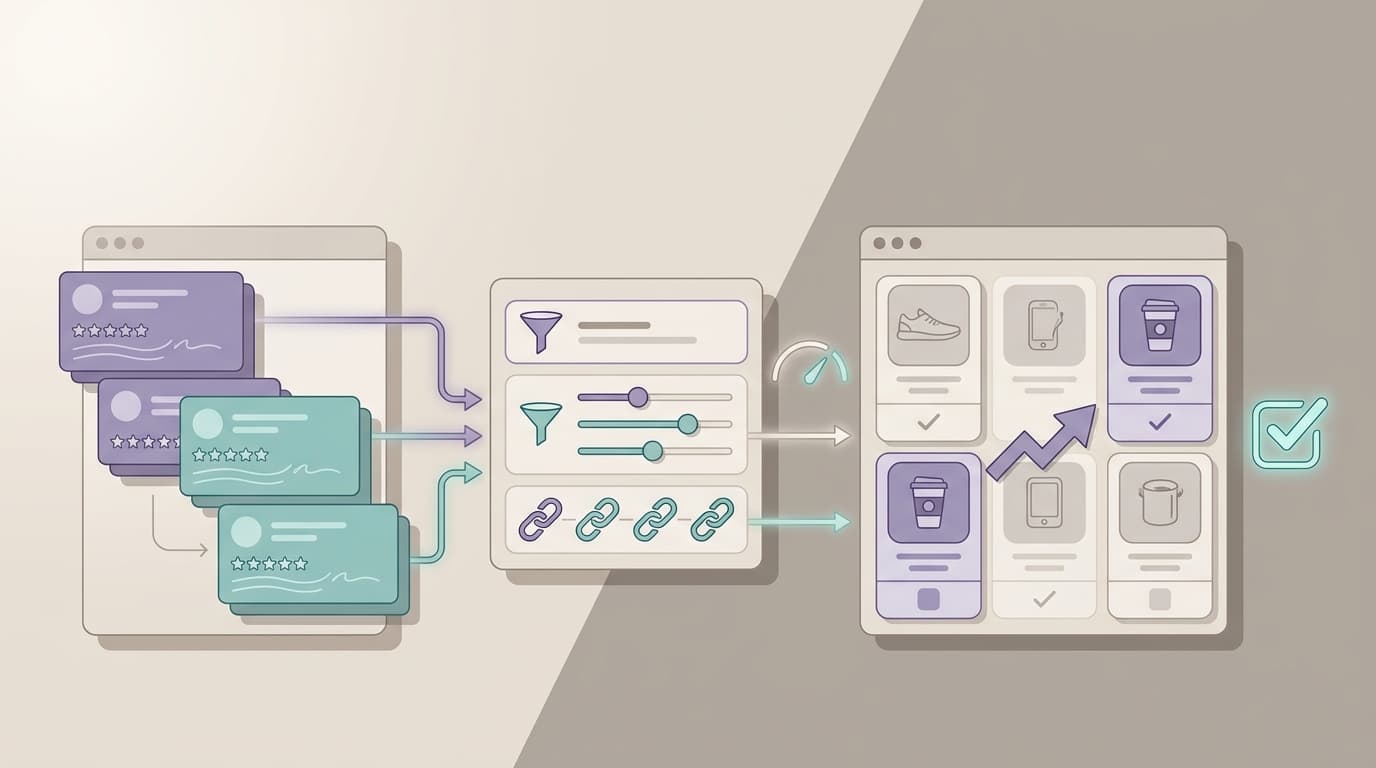
Do not send every theme directly to the product roadmap. Create a weekly learning queue that filters noise while preserving emerging risks.
For each candidate theme, review:
- Frequency: How often does the issue appear in the defined period and source set?
- Severity: Does it create confusion, lost sales, repeat contacts, refund risk, safety concerns, or trust damage?
- Concentration: Is it clustered by product, variation, market, channel, campaign, or fulfillment path?
- Evidence quality: Are source conversations available, and do they support the interpretation?
- Contradiction: Are there customers with the opposite experience or another plausible explanation?
- Actionability: Can a team test a product, content, policy, or workflow change?
- Reversibility: Can the team trial the change safely before a broad rollout?
This is where a shared voice of customer dashboard becomes useful. The dashboard should not be a wall of charts. It should show the evidence, decision question, owner, action status, and recheck date for the small number of themes that deserve attention.
Route signals to the team that can change the outcome
The support team should not own every root cause simply because it received the conversation.
Use a routing table:
| Signal | Primary owner | Example action |
|---|---|---|
| Repeated presale confusion | Ecommerce content or growth | Rewrite the title, bullets, comparison table, imagery, or FAQ |
| Setup questions after delivery | Product education or CX | Improve onboarding, quick-start content, or in-app guidance |
| One-variant complaint concentration | Product or quality | Inspect the variation, supplier lot, packaging, or listing mapping |
| Policy misunderstanding | Operations or policy owner | Clarify the policy and update approved response sources |
| Answer correction pattern | Knowledge manager | Fix the source document and retrain or reevaluate the workflow |
| Recurring unmet use case | Product research | Validate demand and constraints before roadmap prioritization |
| Social complaint trend | Social support and brand team | Coordinate response, investigation, and public follow-up |
VOC AI’s public customer-service pages describe workflows that learn from ecommerce domains and help documents, support customer conversations across sales stages, and connect with multiple service channels. Those capabilities are most useful when the knowledge sources and downstream owners are explicit. See the AI customer service for ecommerce and customer service chat workflow pages for the current product descriptions.
Measure answer quality and learning quality separately
One scorecard cannot represent the entire system.
Service metrics
- time to first useful response;
- successful resolution after customer confirmation;
- escalation quality and context completeness;
- correction rate during human review;
- repeat-contact rate for the same issue;
- customer effort and satisfaction.
Learning metrics
- percentage of high-priority themes with source evidence;
- time from recurring signal to owner assignment;
- number of knowledge-source corrections completed;
- number of product, content, or policy experiments launched;
- change in the target signal after action;
- reviewer agreement on theme and cause classification.
Avoid presenting a vendor’s published automation or resolution rate as a guaranteed outcome. Definitions, channels, source quality, workflow boundaries, and customer mix can differ. Validate performance against your own baseline and known conversations.
Run a 14-day support-to-product pilot
A small pilot can test the operating model before a broad rollout.
Days 1–2: Set the boundary
Choose one product line, support queue, region, or channel. Define exclusions, approved knowledge sources, risk triggers, and a manual comparison sample.
Days 3–5: Configure the evidence model
Create the minimum evidence record, symptom-cause-action taxonomy, and escalation ladder. Select five to ten recurring questions the workflow should handle.
Days 6–9: Observe and review
Run the workflow with human review. Record corrections, rejected answers, missing sources, escalation quality, and emerging patterns.
Days 10–11: Build the learning queue
Group validated conversations into themes. Inspect representative evidence and contradictions. Score frequency, severity, concentration, confidence, and actionability.
Days 12–13: Assign one change
Choose one bounded improvement: update a help article, clarify listing copy, change an escalation rule, improve onboarding, or investigate one product issue.
Day 14: Review the system
Compare results with the baseline. Decide what to expand, what to correct, and what should remain human-led. Set a recheck date for the selected change.
The pilot succeeds when the team learns whether the workflow produces reliable, traceable, actionable evidence—not when the automation handles the largest possible share of conversations.
Common failure modes
Optimizing for containment alone
High containment can hide poor answers or weak escalation. Pair automation metrics with corrections, repeat contacts, and customer confirmation.
Training on ungoverned content
If product pages, policies, and help documents conflict, the automation inherits the conflict. Assign owners and review dates to every approved knowledge source.
Treating themes as causes
A cluster of similar complaints is a signal to investigate, not proof of a root cause.
Removing the source conversation
Summaries without evidence make it difficult to validate nuance, mixed sentiment, and exceptions.
Sending every request to the roadmap
Many issues are better solved through content, education, operations, or support workflow changes. Route the signal before prioritizing it.
Failing to remeasure
If the team never checks whether the signal changed, the process stops at reporting instead of becoming a feedback loop.
Build customer service that helps the business learn
AI customer service for ecommerce should do more than close conversations. It should help the organization understand why customers need help, where approved information is weak, which issues require human judgment, and which recurring signals deserve action.
Start with one queue and one decision question. Preserve the evidence. Make escalation explicit. Assign the resulting signal to the team that can change the outcome. Then remeasure.
If you want to connect service conversations with a broader customer-evidence workflow, explore VOC AI’s Voice of Customer Analysis or discuss an ecommerce customer-service workflow with the VOC AI team.