Back to Blog
May 27, 2026

What Is Amazon Market Intelligence? Definition and Seller Use Cases

What Is Amazon Market Intelligence? Definition and Seller Use Cases

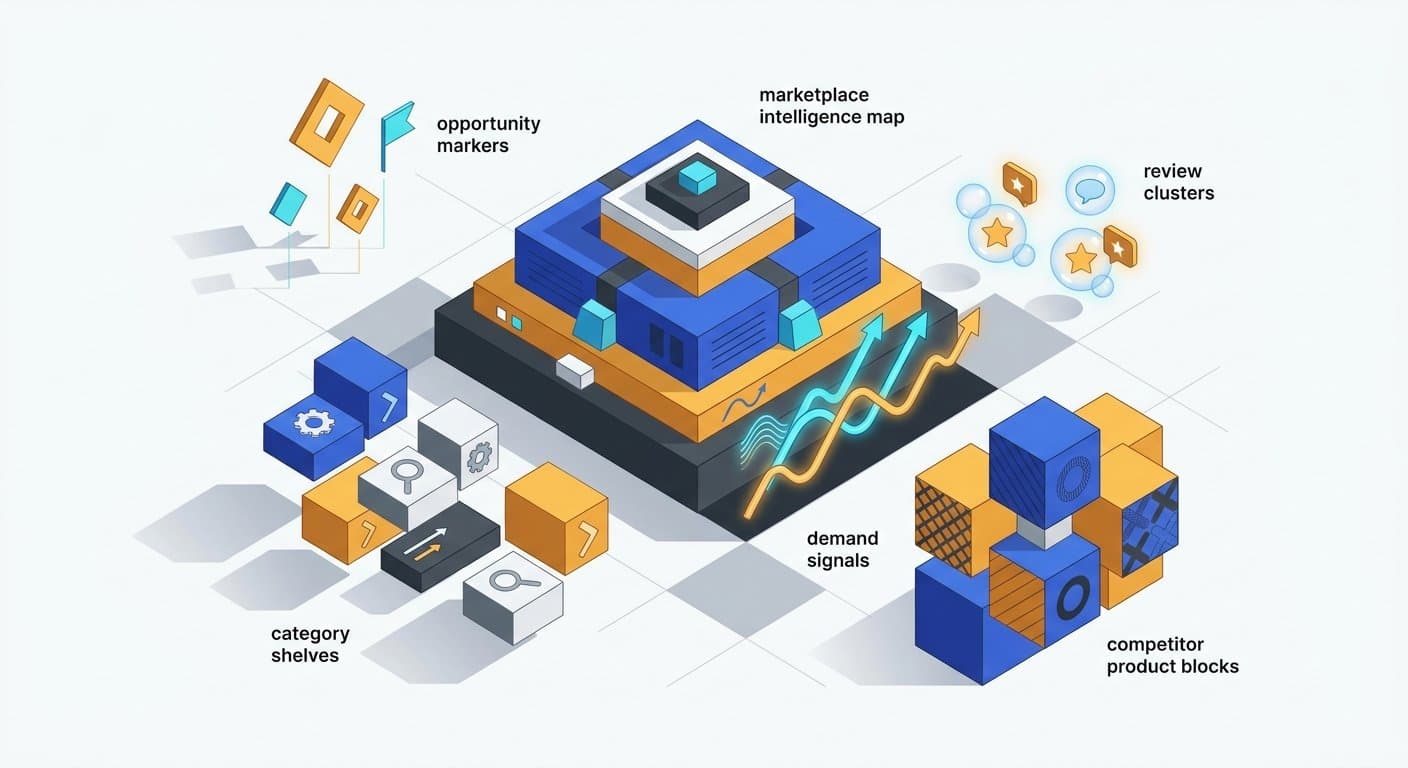
Amazon market intelligence is the structured use of marketplace data to understand where demand is moving, how competitors are performing, what buyers complain about, and which product opportunities are worth pursuing. It is broader than product research and more practical than a static market report. For sellers, the goal is to make better decisions before inventory, listing, pricing, or product-development bets become expensive.

Amazon itself gives sellers several native lenses. Product Opportunity Explorer helps sellers research customer demand, niches, and product opportunities. Amazon Ads and Brand Analytics resources show how search, shopping, and campaign signals can inform brand decisions. Third-party tools add competitor and review intelligence on top.

The most useful market intelligence combines hard marketplace signals with buyer language. Search volume, sales rank, price, and share can tell you what is happening. Reviews explain why it is happening and where the next opportunity may be hiding.

Quick Definition

Field Definition
Term Amazon market intelligence.
Plain-English meaning A repeatable way to understand a category before making seller decisions.
Used by Amazon brand owners, aggregators, agencies, category managers, product teams, and investors.
Main seller decision Which niche to enter, which competitor to benchmark, which feature gap to solve, and how to position a listing.
Related metrics Search demand, BSR movement, price bands, review themes, rating mix, conversion signals, share of voice, competitor gaps.

Why Amazon Market Intelligence Matters

Amazon is not a single market. It is thousands of category, keyword, price, fulfillment, and review micro-markets. A seller can win in one subcategory while the broader category looks saturated. Another seller can launch into a category with demand but miss the real buyer objection because the keyword data looked attractive and the review data was ignored.

Market intelligence reduces that risk. It helps sellers compare category demand against competition, detect where buyer expectations are not being met, and watch whether a niche is becoming more expensive or more crowded. It also helps existing sellers defend their position when competitors change price, launch new bundles, or improve a feature that customers repeatedly mention.

For Amazon sellers, the most important shift is from one-time research to ongoing monitoring. A launch brief created in January may be outdated by April if competitor review themes, ad intensity, or price bands changed. Market intelligence is the habit of refreshing those signals before each major decision.

How Amazon Market Intelligence Works

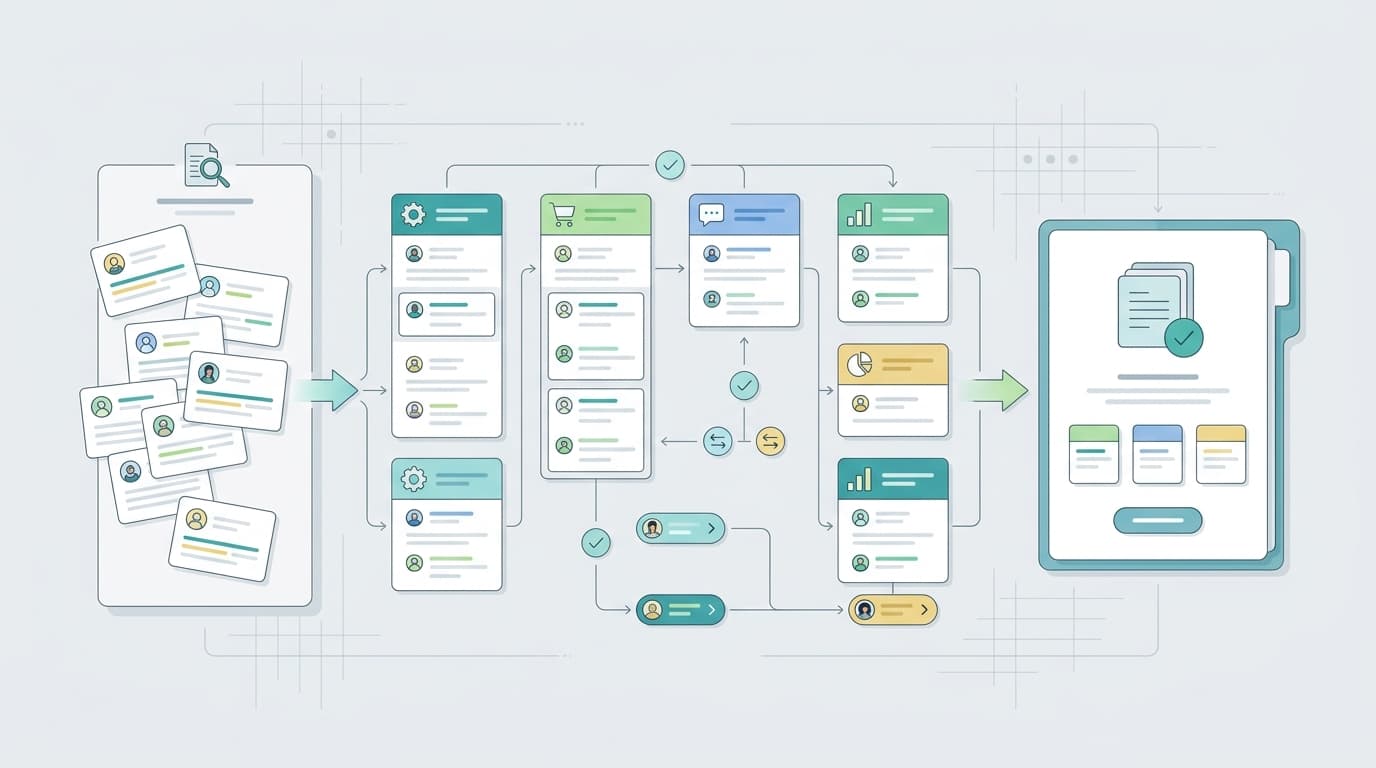
A practical workflow starts with the market boundary. Define the niche by customer job, product type, price band, and competitor set. 'Water bottle' is too broad. 'Leakproof insulated bottle for commuters under $35' is closer to a decision-ready market. The tighter boundary makes the data meaningful.

Next, gather signals from several layers. Amazon's Product Opportunity Explorer guidance points sellers toward niches, customer search patterns, demand, and product opportunities. Brand Analytics-style data can add search and purchase behavior. Review analysis adds the customer reasons behind the numbers.

Signal layer What it answers Seller use
Demand Are shoppers actively searching and buying? Validate category or niche interest.
Competition Who owns the visible shelf and how strong are they? Choose target competitors and positioning.
Pricing Where are viable price bands and margin pressure? Set launch price and bundle strategy.
Reviews What do buyers love, hate, and ask for? Shape product specs, listing copy, and support.
Trend Is the niche stable, seasonal, growing, or declining? Plan inventory, timing, and risk.

Example: Market Intelligence for a New Pet Product

A seller considering a pet grooming accessory might start with search and category demand. The initial data shows a large category, but also strong incumbents. Market intelligence then narrows the field to a smaller niche: quiet grooming tools for anxious pets in small apartments. That niche boundary changes the competitor set and the review questions.

The seller compares top ASINs and finds repeated review themes: noise scares pets, hair gets stuck in the guard, instructions are unclear, and buyers like tools that are easy to rinse. The listing opportunity is not simply 'best pet grooming tool.' It is a quieter, easier-cleaning grooming tool for anxious pets, supported by images and bullets that address the exact objections buyers raise.

The seller also checks pricing and rating distribution. If every strong competitor clusters around the same price, launching far above that range requires a clear premium reason. If the low-price products have many durability complaints, a mid-price quality position may be stronger than a race to the bottom.

Reviews Are Market Intelligence, Not Just Reputation Data

Many sellers treat reviews as reputation management after the sale. That misses their strategic value. Reviews are one of the clearest public records of unmet demand. A competitor's one-star reviews can reveal the feature buyers expected. Three-star reviews can show the tradeoff buyers accepted because no better option existed. Five-star reviews show the language that should appear in your listing if your product truly delivers the same benefit.

This is where Amazon review insights become market intelligence. A review theme is not just a complaint. It can be a product concept, a bundle idea, a positioning angle, or an early warning that a competitor is fixing a weakness you planned to exploit.

Related Metrics and Signals

  • Search demand: relevant keywords, suggested searches, and customer language around the job to be done.
  • BSR movement: changes in category ranking that may indicate demand, seasonality, or competitor momentum.
  • Price bands: clusters where shoppers appear willing to buy and competitors can sustain margins.
  • Rating mix: whether high ratings are broad and durable or carried by older reviews.
  • Review themes: recurring praise, complaints, use cases, feature requests, and confusion.
  • Listing quality: image clarity, claim specificity, A+ content, Q&A coverage, and variation structure.
  • Competitor change velocity: new bundles, image refreshes, price changes, ad pressure, or sudden review shifts.

Common Mistakes

  • Starting too broad: category-level data can hide the niche that matters to your product decision.
  • Equating demand with opportunity: high demand can still be a bad entry point if competitors are entrenched and buyer expectations are already met.
  • Ignoring reviews: sales and keyword data show what sells; reviews explain why buyers stay, return, complain, or switch.
  • Using stale snapshots: Amazon categories move quickly, so research needs refresh points before inventory commitments.
  • Copying competitor claims: buyer language should inform positioning, but your listing must match your product's real capabilities.

How VOC AI Helps

VOC AI Market Insight adds a review-intelligence layer to market research. Instead of looking only at keywords or category rank, sellers can compare buyer complaints, feature gaps, sentiment themes, and competitor weaknesses across ASIN cohorts. That helps teams see not only where demand exists, but where buyers are underserved.

For existing products, VOC AI also helps connect market intelligence to daily operations. Review themes can feed listing changes, product roadmap priorities, competitor monitoring, and Amazon competitor analysis. The best output is a decision: enter, avoid, reposition, improve, bundle, or monitor.

A Practical Market Intelligence Cadence

Market intelligence should run on a cadence tied to seller decisions. Before a launch, refresh demand, competitor, pricing, and review-gap data. During the first month after launch, watch review language and competitor changes more often because early customer signals can expose listing or product gaps quickly. For mature products, a monthly or quarterly market review may be enough unless a competitor launches a major update.

The cadence should also reflect inventory risk. If a purchase order locks the brand into months of stock, refresh market intelligence before the order is placed. If a listing rewrite can be changed quickly, the research can be lighter. The more expensive the decision, the more evidence you need from multiple signal layers.

Decision Refresh these signals Why it matters
New product launch Demand, competitors, review gaps, price bands. Confirms whether the entry point is still attractive.
Listing rewrite Buyer language, competitor claims, Q&A, recent reviews. Keeps copy aligned with current buyer objections.
Inventory buy Trend, seasonality, competitor movement, review health. Reduces the risk of buying into a weakening niche.
Product roadmap Complaint clusters, feature requests, competitor weaknesses. Prioritizes improvements buyers actually mention.

How to Brief Teams With Market Intelligence

A market intelligence brief should not be a data dump. Give each team the slice it can use. Product teams need unmet needs, complaint clusters, and feature tradeoffs. Listing teams need buyer phrases, objection language, and competitor claim patterns. Advertising teams need positioning angles and conversion blockers. Leadership needs market risk, investment size, and the recommended decision.

End every brief with a recommendation and a confidence level. For example: 'Enter the niche with a mid-price durability position; confidence medium because demand is clear but the competitor set is improving.' That is more useful than a spreadsheet full of metrics without a decision.

Market Intelligence Questions Sellers Should Ask

A strong market intelligence pass answers a small set of practical questions. Is the niche large enough for the seller's goals? Are the strongest competitors vulnerable on product experience, listing clarity, price, availability, or review trust? Is buyer language pointing to a feature gap or only to isolated preferences? Does the brand have a reason to win that is visible on the product page?

The last question is often the hardest. A seller may find a market with demand and complaints, but still lack a credible wedge. If every competitor complaint points to a manufacturing capability the seller cannot deliver, the opportunity is not actionable. If the complaint points to clearer instructions, better bundling, simpler setup, or a listing promise competitors fail to explain, the wedge may be realistic.

Question Good evidence Weak evidence
Is demand real? Search, sales, BSR, and competitor depth point in the same direction. One keyword tool shows volume but visible competitors are weak or unrelated.
Is the gap actionable? Reviews repeat a solvable issue that your product can address. Complaints are broad preferences or tied to cost structure you cannot change.
Can the listing win? Buyer language maps to claims, images, and proof points you can show. The angle requires claims your product cannot support.
Is timing acceptable? Trend and inventory windows match your launch or reorder cycle. Research is old or seasonality is already passing.

From Intelligence to Action

After the research, choose one of five actions: enter, avoid, reposition, improve, or monitor. Enter means the opportunity is strong enough to justify a product or launch investment. Avoid means the category is too crowded, too price-sensitive, or poorly matched to the brand. Reposition means the product can win with a sharper promise. Improve means the current product needs a fix before more spend. Monitor means the signal is interesting but not yet decisive.

Write the action in plain language so it can be challenged. 'Monitor this niche' should name the trigger that would change the decision, such as a competitor review decline, a price-band opening, a new supplier capability, or a seasonal demand signal. Without a trigger, monitoring becomes another way to postpone a decision.

FAQ

What is Amazon market intelligence?

Amazon market intelligence is the structured use of marketplace data to understand category demand, competitors, pricing, reviews, search behavior, and product opportunities. It helps sellers make better product, listing, inventory, and positioning decisions.

How is market intelligence different from product research?

Product research often evaluates whether one product idea is viable. Market intelligence monitors the broader market context: competitor movement, category demand, review gaps, pricing pressure, and buyer expectations over time.

What data should Amazon sellers monitor?

Sellers should monitor demand signals, competitor listings, pricing, review themes, rating movement, search terms, share signals, inventory patterns, and customer complaints. The right mix depends on whether the decision is launch, optimize, defend, or expand.

Can reviews be part of market intelligence?

Yes. Reviews are one of the most useful market intelligence sources because they explain buyer expectations in natural language. They reveal unmet needs that keyword and sales data may not show clearly.

What does VOC AI add to Amazon market intelligence?

VOC AI adds review-driven insight across products and competitors. It helps sellers identify customer themes, product gaps, sentiment changes, and competitor weaknesses that can guide product and listing decisions.

Related Articles

Voice-of-customer
What Is Amazon Brand Health? Definition, Metrics, and Seller Use Cases

Amazon brand health is the condition of your brand as shoppers, Amazon systems, and your own team experience it. It includes performance signals such as reviews, pricing, availability, and advertising, but it also includes trust signals: whether customers receive what the listing promised, whether r

May 27, 2026
Read more
Voice-of-customer
What Is VOC Analysis? Definition, Examples, and Seller Use Cases

VOC analysis means voice-of-customer analysis: the work of turning customer feedback into decisions. For Amazon sellers, that feedback often lives in reviews, returns, refunds, customer service contacts, buyer-seller messages, Q&A, seller feedback, and social comments. The point is not to collect mo

May 27, 2026
Read more
Voice-of-customer
Amazon Listing Brand Protection: Step-by-Step Seller Guide

Amazon listing brand protection is not one task. It is a control system around the ASIN that carries your revenue, customer trust, and search visibility. If the brand value is wrong, the listing copy drifts, unauthorized sellers attach offers, or recent reviews start describing a different product,

May 27, 2026
Read more
VOC AI Inc. 160 E Tasman Drive Suite 202 San Jose, CA, 95134 Copyright © 2026 VOC AI Inc.All Rights Reserved. Terms & Conditions Privacy Policy
This website uses cookies
VOC AI uses cookies to ensure the website works properly, to store some information about your preferences, devices, and past actions. This data is aggregated or statistical, which means that we will not be able to identify you individually. You can find more details about the cookies we use and how to withdraw consent in our Privacy Policy.
We use Google Analytics to improve user experience on our website. By continuing to use our site, you consent to the use of cookies and data collection by Google Analytics.
Are you happy to accept these cookies?