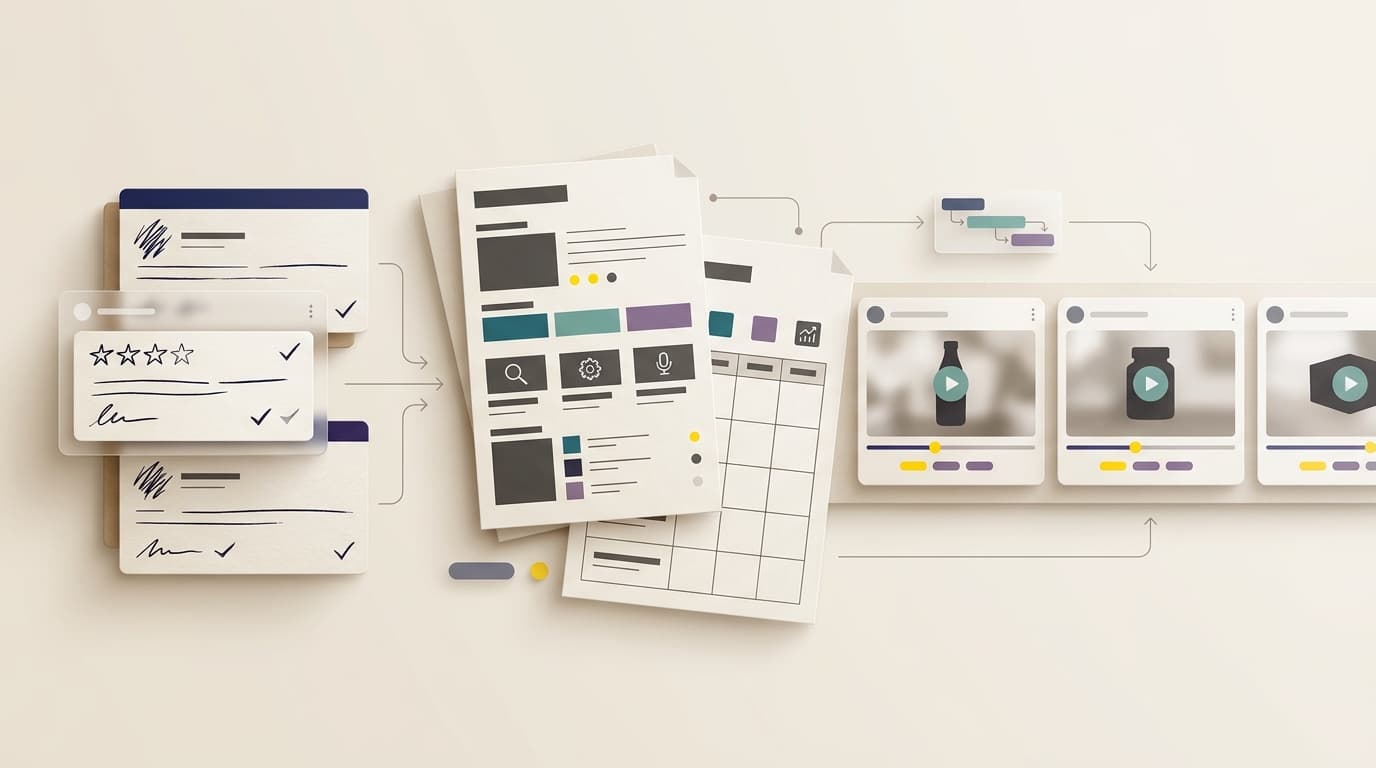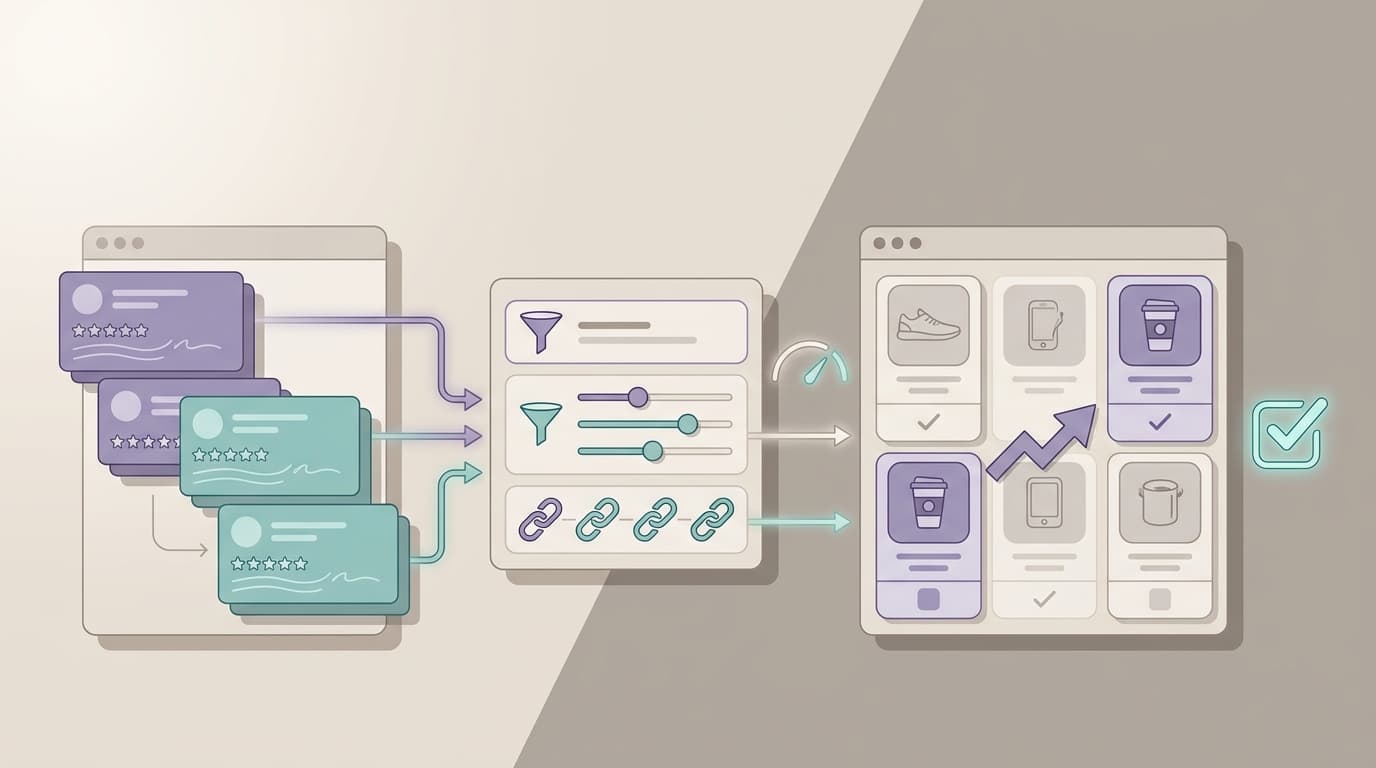
Agencies do not need a review analysis API just to pull another dataset. They need repeatable ways to turn review language into client-facing reports, dashboards, benchmark packs, alerts, and internal workflows that account teams can trust.
That is why review analysis API use cases should start with the deliverable, not the endpoint. A monthly marketplace report has different requirements from a live client dashboard. A competitor benchmark pack needs different data controls from a product-roadmap workshop. An internal AI assistant needs stricter provenance than a one-time research export.
This guide maps practical review analysis API use cases for agencies and service providers. Use it to decide which client workflow to productize first, how to structure the data layer, where VOC AI can fit, and which approval gates should happen before review insights become client recommendations.
Start With The Agency Deliverable
Before building an integration, define what the agency is actually selling or supporting. The wrong starting point is "Can we get review data?" The better question is "Which recurring client decision will this workflow make easier?"
Use these five filters before engineering starts:
| Filter | Agency question | What to document |
|---|---|---|
| Client deliverable | Is this for a dashboard, QBR, benchmark pack, listing brief, alert, or internal tool? | Output format, audience, refresh cadence, owner, and approval path. |
| Product scope | Which ASINs, products, categories, markets, or competitors are in scope? | Client product map, competitor set, marketplaces, and historical window. |
| Source layer | Which fields need to stay traceable to source reviews? | Review corpus, rating, date, sentiment, product identifiers, request metadata, and source tags. |
| Analysis layer | Which outputs are AI-derived conclusions? | Topics, buyer language, pain points, strengths, weaknesses, opportunity themes, and confidence notes. |
| Governance layer | Who signs off before client-facing recommendations go live? | Analyst review, account owner approval, client feedback, and evidence retention. |
When these pieces are clear, review analysis API use cases become easier to prioritize. The agency can build one reliable workflow, prove value, and then roll the pattern into more clients instead of rebuilding every report from scratch.
Review Analysis API Use Cases Agencies Can Productize
The strongest agency use cases share one pattern: they turn unstructured review language into a repeatable business artifact. The API is the input. The agency value is the interpretation, narrative, and decision process around it.
| Use case | Best client fit | Review signals to collect | Agency output |
|---|---|---|---|
| Monthly client review intelligence report | Brands that need customer-language evidence in QBRs or monthly retainers. | Rating shifts, review volume, top positive themes, top negative themes, recurring buyer phrases, and new complaint clusters. | Executive summary, issue list, recommended next actions, and evidence table. |
| Live client dashboard | Multi-product clients that want a recurring health view across ASINs or categories. | Rating, date, sentiment, product ID, theme, market, and competitor tags. | Dashboard with trend lines, filters, alerts, and account-team commentary. |
| Competitor review benchmark | Marketplace teams comparing client products against rival listings. | Shared themes, competitor weaknesses, review freshness, sentiment by topic, and feature mentions. | Side-by-side benchmark pack and messaging opportunities. |
| Launch and post-purchase monitoring | Brands launching or relaunching products. | New-review velocity, early complaint spikes, packaging issues, usage scenarios, and unmet expectations. | Launch health report, issue triage, and product/support handoff. |
| Listing and content brief generation | SEO, marketplace, or creative teams refreshing PDP copy. | Buyer language, purchase motivation, objections, feature praise, and FAQ candidates. | Listing brief, FAQ additions, product copy inputs, and content roadmap ideas. |
| Product roadmap evidence pack | Product and CX teams choosing what to fix next. | Repeated feature requests, negative-review themes, sentiment severity, and affected product groups. | Prioritized evidence pack with source review examples and owner recommendations. |
| Internal account-team assistant | Agencies that want faster client prep without exposing raw data to every teammate. | Normalized review layer plus approved analysis summaries. | Internal query workflow for client calls, pitch prep, and report QA. |
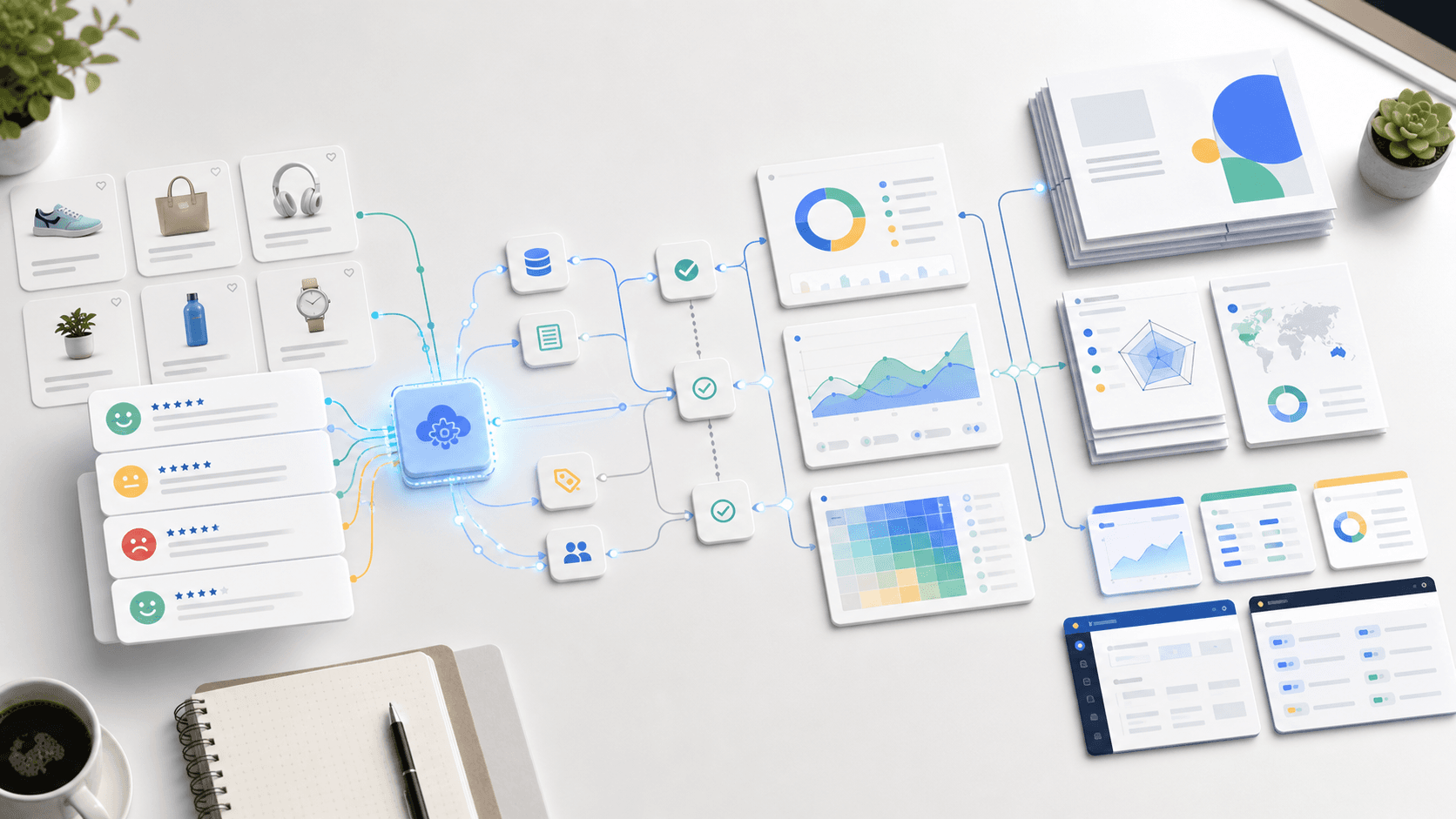
These review analysis API use cases are not mutually exclusive. A mature agency might use the same normalized review layer to feed a dashboard, a monthly narrative report, a competitor deck, and an internal account-team assistant. The important constraint is that every client-facing claim should remain traceable back to an approved source layer.
Build A Client Reporting Pipeline
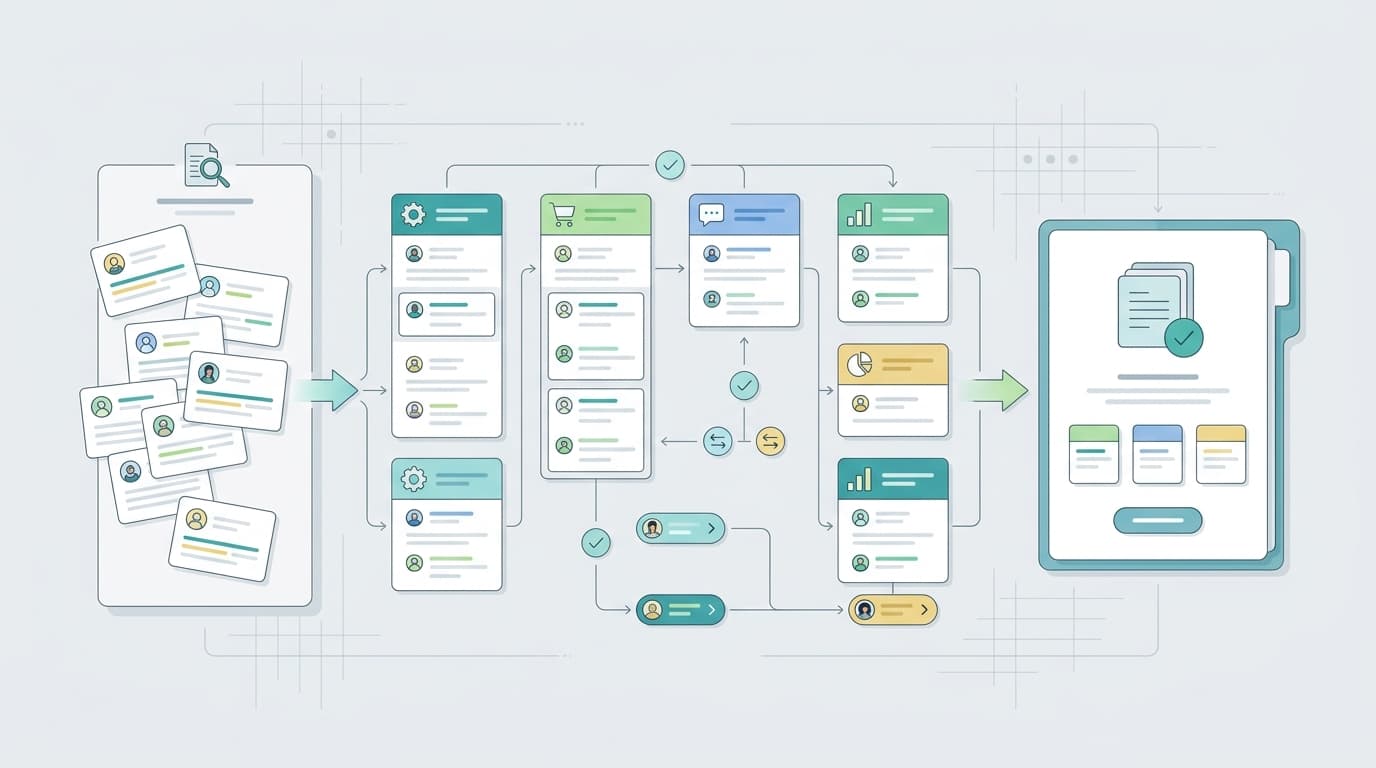
For agencies, a review data API becomes valuable when it supports a predictable reporting pipeline. The pipeline should make the agency faster without making the evidence harder to audit.
Use this sequence:
-
Define the client account map. List the client, brand, product group, ASINs, marketplaces, competitor set, reporting owner, and reporting cadence. Keep this map outside the API response so account managers can update ownership without changing the data model.
-
Pull review and product signals. Use a review analysis API or API/MCP workflow to bring in review records, rating, date, sentiment, and other approved review-intelligence fields. VOC AI's public API and MCP page describes reviews, keywords, sales estimates, REST API access, Python SDK access, MCP Server access, bulk fetch, and JSON response. The exact production response shape should still be confirmed before launch.
-
Normalize fields for multi-client reporting. Agencies need consistent fields across clients. Create a standard schema for source, client, product, market, rating, review date, ingestion date, sentiment, topic, language, and evidence URL or source identifier when available.
-
Separate source records from conclusions. Store original review signals apart from AI-derived conclusions. A topic like "battery concerns" is useful, but it is not the same as a verbatim review. Keeping the layers separate lets analysts explain where a recommendation came from.
-
Create report-ready views. Build views for monthly change, top themes, competitor deltas, urgent complaints, and listing opportunities. These views should be stable enough for dashboard tools and export templates.
-
Add analyst and account-owner approval. Human review matters because client recommendations affect product, support, pricing, listing, and reputation decisions. The API can surface the evidence; the agency should still approve the interpretation.
-
Deliver the client narrative. The final artifact should explain what changed, why it matters, what evidence supports the conclusion, and what the client should do next. This is where agencies create value beyond raw API access.
This pipeline turns review analysis API use cases into an operating model. Instead of treating each client request as a custom research project, the agency can reuse the same data contract, QA checks, and report views.
Use Case 1: Monthly Review Intelligence Reports
Monthly reports are often the easiest first productized workflow. They do not require a live dashboard on day one, and they give the agency a regular moment to connect review language to product, content, and customer-experience work.
A useful monthly report should answer:
| Report section | What it shows | Why clients care |
|---|---|---|
| Review health | Review volume, rating movement, sentiment movement, and product coverage. | Shows whether customer perception is stable, improving, or weakening. |
| Top praise | Repeated positive themes and exact buyer language. | Supports product positioning, listing copy, and ad messaging. |
| Top complaints | Recurring issues, sentiment severity, and affected products. | Helps prioritize fixes, support content, and product follow-up. |
| Competitor contrast | Where competitors are praised or criticized more often. | Creates benchmark context and positioning ideas. |
| Recommended actions | Short list of approved next steps with evidence. | Turns analysis into client decisions. |
VOC AI can support this pattern when the agency needs review intelligence from Amazon product signals rather than a one-off manual spreadsheet. The public VOC AI product pages describe review analysis, buyer language, product direction, market-ready decisions, and API/MCP access for reviews, keywords, sales estimates, and listings.
Use Case 2: Client Dashboards For Account Teams
Dashboards are useful when the client or account team needs frequent visibility. They are risky when the underlying data is not normalized, when sentiment labels are treated as absolute truth, or when account teams cannot explain the methodology.
Design the dashboard around decisions, not vanity charts:
| Dashboard view | Required fields | Recommended gate |
|---|---|---|
| Product health | Product ID, market, review count, rating, sentiment, date, and theme. | Analyst checks unexplained spikes before client call. |
| Theme trend | Theme, sentiment, product group, first seen, latest seen, and source count. | Product owner confirms whether the theme maps to a real issue. |
| Competitor benchmark | Client product, competitor product, shared theme, sentiment, and evidence count. | Account lead approves competitor wording before delivery. |
| Alert queue | Trigger type, affected product, source examples, severity, and owner. | Human review before sending client escalation. |
A dashboard can be a strong fit for review analysis API use cases because the same API pull can refresh the client view on a schedule. The hard part is not drawing charts. The hard part is keeping source provenance, product mapping, and approval logic clean as the agency adds more clients.
Use Case 3: Competitor Benchmark Packs
Competitor review benchmarks help agencies show clients where buyer expectations are shifting. They can support marketplace positioning, listing changes, product roadmap discussions, and pitch strategy.
Keep the benchmark narrow enough to be defensible:
- Pick the client products and competitor products before pulling data.
- Compare shared themes rather than cherry-picking isolated reviews.
- Separate "competitor weakness" from "client claim." A competitor complaint can suggest an opportunity, but it does not prove the client product is superior.
- Add a source note for every table or chart.
- Avoid review-removal, ranking, sales-lift, or compliance-bypass promises.
VOC AI's Review Analysis API positioning is useful here because it centers review, keyword, listing, and sales-estimate signals inside workflows. For agency benchmark packs, that can support a stronger evidence story than manual review scraping, as long as the exact field contract and use permissions are confirmed.
Use Case 4: Alerting For Launches And Reputation Risk
Some review analysis API use cases are not about monthly reporting. They are about catching problems before they become bigger client issues.
Good alert triggers are specific:
| Trigger | Example signal | Suggested owner |
|---|---|---|
| New complaint cluster | Repeated reviews mention breakage, fit, battery, sizing, smell, shipping, or missing parts. | Product or operations lead. |
| Sentiment drop | Negative sentiment rises for a product group over a defined period. | Account analyst and client owner. |
| Rating movement | Low-star reviews increase after a launch, relaunch, or packaging change. | Launch team. |
| Competitor opportunity | Competitors receive repeated complaints on a theme the client can credibly address. | Strategy or creative lead. |
| Support-content gap | Reviews repeat questions that product pages or help content do not answer. | SEO/content lead. |
The review analysis API should not send every raw alert straight to a client. Add a review gate. Confirm the sample size, source, product mapping, and recommended response before the alert becomes client-facing.
Use Case 5: Listing, Content, And FAQ Briefs
Review data is useful for content because customers write in the language other customers understand. Agencies can turn repeated buyer phrases into listing briefs, FAQ updates, product-page copy inputs, and content ideas.
Use a simple brief structure:
| Brief field | What to include |
|---|---|
| Buyer problem | The recurring issue or decision point found in reviews. |
| Evidence | Source count, affected products, representative review language, and sentiment. |
| Content action | Listing bullet, FAQ, comparison section, support article, or product-page clarification. |
| Approval | Account owner and client contact who approve final wording. |
| Limits | Claims that need product, legal, or compliance confirmation before publication. |
This is one of the most practical review analysis API use cases for agencies because it connects customer language to output teams already manage. It also keeps the promise realistic: review intelligence can guide better briefs, but it should not guarantee ranking, conversion, or sales outcomes.
Where VOC AI Fits In The Agency Stack
VOC AI is relevant when an agency wants Amazon and ecommerce review intelligence that can move from analysis into repeatable workflows.
The current public VOC AI pages support these points:
- The Review Analysis API page describes programmatic use of VOC AI review, keyword, sales, and listing data through API and MCP surfaces.
- The API and MCP page describes Amazon reviews, keywords, and sales data through REST API, Python SDK, or MCP Server, including review corpus, star rating, sentiment, date, bulk fetch, and JSON response.
- The Voice of Customer analysis page positions review analysis around product direction, buyer language, and market-ready decisions.
- The VOC AI homepage currently describes 2B+ ecommerce reviews, 500M+ products tracked, 30+ categories, daily refresh, and the classic platform used daily by 100K+ sellers.
- The pricing page describes OpenAPI, MCP, and Agent plans, API keys, credits, team seats, audit logs, and higher or custom API/MCP limits for team and enterprise use.
For an agency, the commercial path is straightforward: start with a small client sample, confirm the API fields and plan limits, map the output to one recurring deliverable, then expand once the reporting process is approved. Teams with enterprise needs should use contact sales to confirm limits, support, data use, and rollout requirements.
Governance Checklist Before Client Delivery
A review analysis API can make agencies faster, but speed is only useful when the output is defensible. Use this checklist before a workflow becomes part of client delivery:
| Check | Why it matters |
|---|---|
| Official-source distinction | Do not imply that a third-party review analysis API is an official Amazon API or official Amazon partner. |
| Field contract | Confirm which fields are raw, derived, aggregated, optional, or plan-dependent. |
| Source provenance | Keep enough metadata to explain where each recommendation came from. |
| Data minimization | Store only what the workflow needs, especially when review text includes personal context. |
| Client permissions | Confirm what can be stored, shared, displayed, and included in reports. |
| Sentiment interpretation | Treat sentiment and themes as decision support, not absolute truth. |
| Human approval | Require analyst or account-owner review before product, listing, support, or reputation recommendations go to the client. |
| Current-page checks | Recheck pricing, API field language, routes, and product claims before publishing public content or sales collateral. |
This gate protects the agency and the client. It also improves the report. A client is more likely to trust a recommendation when the agency can show the source, method, and approval path behind it.
How To Choose The First Workflow
If several review analysis API use cases look attractive, choose the one with the clearest buyer, repeat cadence, and evidence path.
| Priority question | Choose this first when... |
|---|---|
| Which client pain is already recurring? | Account teams repeatedly answer the same review, listing, or competitor questions. |
| Which output is easiest to approve? | A monthly report or benchmark pack can launch before a live client dashboard. |
| Which workflow has the cleanest product scope? | The client has a manageable ASIN list and stable competitor set. |
| Which deliverable can prove value fastest? | The output supports an existing QBR, launch review, or content refresh. |
| Which one scales across clients? | The same fields and template can be reused with only account mapping changes. |
Start small. A single client report with clean evidence and a clear action list is a better first milestone than a broad dashboard with unclear source rules. Once the agency has a working schema, QA gate, and delivery template, it can extend the same foundation to more clients and use cases.
Review Analysis API Use Cases FAQ
What are the best review analysis API use cases for agencies?
The best review analysis API use cases for agencies are recurring client reports, client dashboards, competitor review benchmark packs, launch monitoring, listing briefs, product roadmap evidence packs, and internal account-team assistants. These workflows turn review data into repeatable client value rather than one-off exports.
Should agencies start with dashboards or reports?
Most agencies should start with a report or benchmark pack if the data model is new. Reports are easier to review, explain, and approve. Dashboards are better once the agency has stable product mapping, source provenance, refresh cadence, and analyst QA.
What should an agency confirm before using a review data API for clients?
Confirm product scope, marketplaces, review fields, sentiment labels, response shape, pagination, bulk behavior, rate limits, credits, API keys, retention rules, source permissions, and client reporting rights. Also confirm which fields are raw source data and which are AI-derived conclusions.
Can VOC AI support agency reporting workflows?
VOC AI's public pages support review intelligence, API/MCP access, REST API, Python SDK, review corpus, star rating, sentiment, date, bulk fetch, JSON response, and broader review, keyword, listing, and sales-estimate signals. Agencies should still confirm exact production fields, plan limits, and governance requirements before launch.
How should agencies use sentiment analysis in client reports?
Use sentiment as directional evidence. Pair it with topic clusters, review examples, source counts, product context, and analyst review. Do not present sentiment as a guaranteed measure of sales, ranking, or customer behavior.
What is the safest way to productize review analysis API use cases?
Pick one repeatable deliverable, define a normalized review schema, separate source records from AI conclusions, build an approval gate, and launch with a small client sample. Expand only after the agency can explain the evidence trail and the client accepts the reporting format.
The best review analysis API use cases are not the most technical ones. They are the workflows where agencies can turn customer language into a repeatable, approved, and useful client decision. Start with one deliverable, keep the source trail clean, and scale the reporting system after the first workflow proves itself.