Updated September 5, 2026.
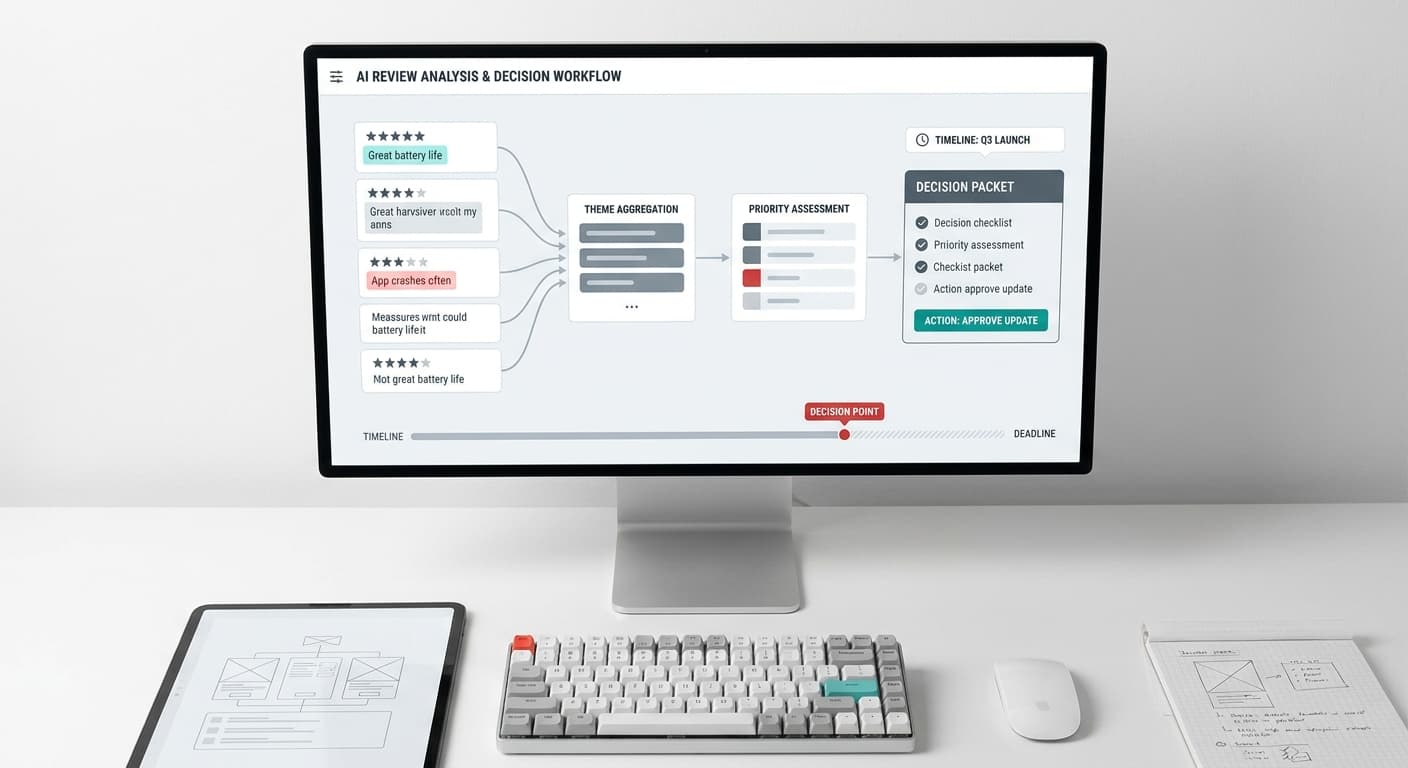
AI review analysis is the process of using AI to turn customer reviews into decision-ready evidence. The output should do more than summarize sentiment. It should tell a team what customers are saying, which cohort said it, which themes repeat, what counterevidence exists, and what decision should happen next.
That matters because review data is only useful when it changes a decision. A clean summary that nobody can inspect, route, or act on is not enough.
What AI review analysis means
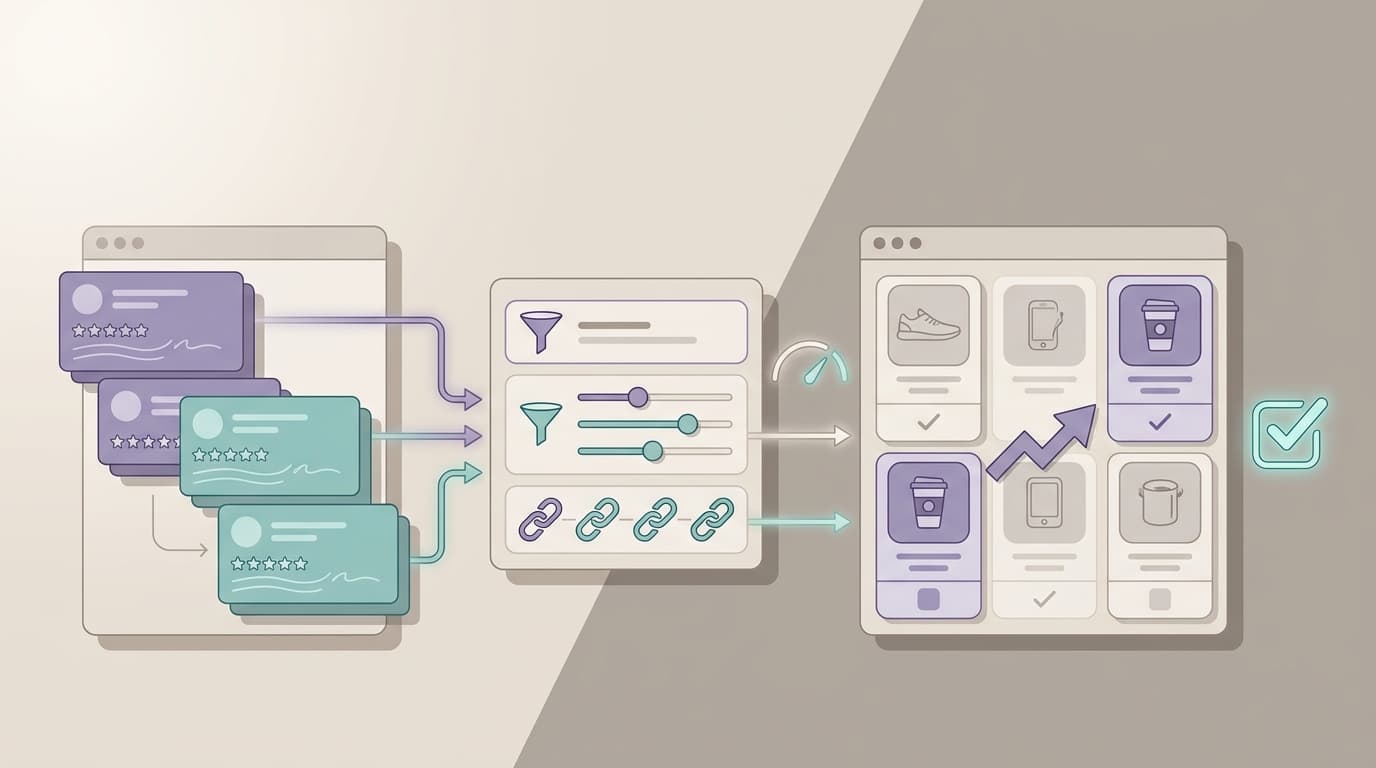
AI review analysis usually has four jobs:
- Collect the review set that matches the decision.
- Structure the evidence by product, cohort, date, rating band, market, and theme.
- Interpret recurring patterns without losing the original customer language.
- Hand off a decision packet to the owner of the next action.
In practice, that can be as simple as a spreadsheet and a prompt, or as structured as a Voice of Customer platform or API workflow. The tool matters less than the discipline: preserve the source records, keep the cohort tight, write specific themes, and check counterevidence before anyone acts.
If you are still comparing software categories, start with the AI review analysis comparison. If you need the operating workflow, use the AI review analysis practical guide. If you want to measure whether the workflow worked, use the AI review analysis metrics page.
What it should produce
AI review analysis should not stop at "customers are unhappy" or "sentiment is negative." A useful output usually answers these questions:
| Question | What a good answer includes |
|---|---|
| Which reviews were analyzed? | Product, date range, rating band, market, and filter rules |
| What did customers say? | Specific themes, not just broad sentiment |
| Which evidence supports it? | Review snippets, IDs, dates, or export rows |
| What weakens the claim? | Counterevidence or split segments |
| Who should act? | Product, support, marketing, research, or operations owner |
| What happens next? | Ticket, copy test, monitor, interview, or investigation |
That is the difference between a summary and a decision.
When AI review analysis matters
AI review analysis matters when at least one of these is true:
- the review volume is too large for manual reading
- the decision has real cost, risk, or opportunity value
- product, support, and marketing are reading the same evidence differently
- a metric moved and the team needs the customer-language explanation
- the team needs a repeatable weekly or monthly review workflow
This is where VOC AI fits well. The public Voice of Customer Analysis page frames the product around large review sets, buyer language, decision-ready outputs, and clustering by pain point, expectation, and feature mention. That makes it useful when review evidence needs to move into product, listing, support, or research decisions.
When it does not matter yet
AI review analysis may be premature when:
- there is no decision owner
- the team only wants interesting quotes
- the sample is too small for the action being considered
- the feedback source does not match the decision
- nobody can inspect the original records
- the real question is legal, pricing, or operational and needs another evidence type
If the analysis cannot change a decision, reduce the scope first.
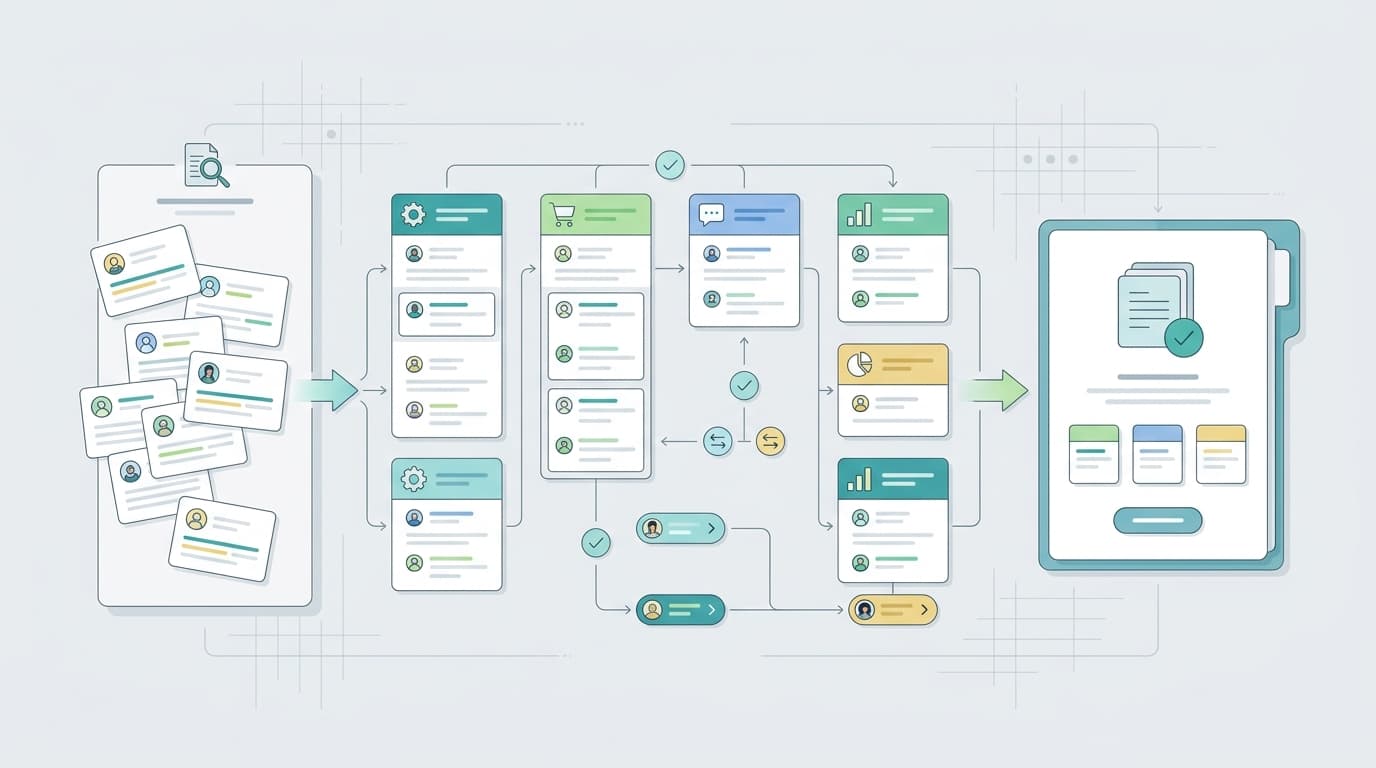
A simple workflow
Use this light version when you need AI review analysis to support an actual decision:
- Write the decision sentence.
- Define the review cohort.
- Preserve source evidence.
- Extract specific themes.
- Check counterevidence.
- Hand off a decision packet.
Example decision sentence:
We are analyzing this review cohort so this owner can decide whether to take this action.
If that sentence is hard to write, the team is probably still exploring rather than deciding.
Common uses
| Situation | Does AI review analysis matter? | Why |
|---|---|---|
| A founder wants three quotes for a pitch deck | Not much | A lightweight pull is enough if no decision is changing |
| A PM is choosing whether to delay a roadmap item | Yes | The decision needs source-backed evidence |
| Support sees a complaint spike after a release | Yes | The team needs recency, severity, and owner routing |
| Marketing wants customer language for copy | Yes, narrowly | Review language can improve copy if context is preserved |
| An ecommerce team compares competitor complaints | Yes | Review-backed themes reveal objections and product gaps |
| An exec meeting only wants a dashboard number | Maybe not | A metric may be enough unless a real decision is being made |
Where VOC.AI fits
VOC AI is strongest when AI review analysis depends on ecommerce review intelligence.
The current Review Analysis API page says engineering teams can pull review, keyword, listing, and sales-estimate signals into their own workflows through REST API, Python SDK, and MCP support. The Pricing page shows a trial plan plus Personal, Team, and API/MCP options for different usage levels.
That makes VOC AI relevant when AI review analysis needs to be more than a one-off report. It becomes a repeatable workflow for product, support, listing, market, or engineering teams.
FAQ
Is AI review analysis the same as sentiment analysis?
No. Sentiment analysis labels tone. AI review analysis is broader: it also includes themes, evidence quality, cohort control, counterevidence, ownership, and next action.
Do I need a tool for AI review analysis?
Not always. A small decision can work in a spreadsheet. A tool matters when volume, repetition, or handoff cost makes manual review too slow.
What should I read next?
If you are comparing vendors, read the AI review analysis comparison. If you need the operating model, read the AI review analysis practical guide. If you need to measure the workflow, read the AI review analysis metrics.
Final take
AI review analysis matters when review language is about to drive a decision that should not rest on the loudest quote or the newest complaint. Start with the decision, keep the cohort tight, preserve source evidence, check counterevidence, and route the result to an owner.
If review-backed ecommerce evidence is central to that decision, VOC AI can turn reviews into a repeatable workflow instead of another summary.