Updated August 14, 2026.
AI review analysis comparison is only useful if it tells you what the software must prove, not what the brochure claims. Buyers usually need to know whether a tool can support a real decision with evidence they can inspect later.
Current search results for AI review analysis split into vendor pages, buyer guides, review-summarizer pages, and generic AI tool lists. That mix is a signal: the category is still being explained in terms of features, while buyers are trying to compare jobs. One tool may only summarize reviews. Another may cluster buyer language. A third may route feedback to product or support. A fourth may expose the same data through an API. Those are different purchases.
This AI review analysis comparison breaks the category into tool types, then gives you the checks that matter most: data coverage, evidence traceability, cohort controls, theme quality, monitoring, exports/API, governance, and operating cost.
Start with the decision, not the tool
The first mistake in any AI review analysis comparison is comparing dashboards before comparing the decision. Write one sentence first:
We need to analyze this review set, for this team, so we can make this decision and produce this output.
That sentence forces the real buying criteria into view:
- who owns the decision
- which reviews are in scope
- what the output must look like
- how much evidence must stay visible
- whether this is a one-time project or a repeated workflow
If the tool cannot support that sentence, it is not the right tool, even if the demo looks polished.
AI review analysis comparison matrix
Use this comparison lens before you ask for a full product demo.
| Tool type | Best for | What buyers should check | Common trap |
|---|---|---|---|
| Summary-only tool | Fast orientation | Can it show the cohort, evidence, and contradictions? | Mistaking a fluent summary for decision support |
| Seller-grade review intelligence | Product, ecommerce, and research workflows | Does it connect review themes to buyer language, product gaps, and next actions? | Buying a report when you need an operating workflow |
| Monitoring-first tool | Ongoing complaint tracking | Does it support baselines, alerts, and owner routing? | Buying a one-time analyzer for a recurring problem |
| API-first tool | Embedded or automated workflows | Does it expose structured outputs, docs, and reusable signals? | Assuming a UI product will scale into automation |
| CX / support workflow tool | Support-to-product handoff | Can it preserve ticket context, route issues, and keep ownership clear? | Losing the handoff between insight and action |
| Spreadsheet or general AI workflow | Small, bounded tasks | Can the team keep scope, sampling, and evidence under control? | Treating a prompt as a repeatable process |
If you need an Amazon-specific buying lens, the adjacent pages are better starting points: What to Look for in a Customer Review Analysis Tool and How to Choose a Customer Review Analysis Tool for Amazon Sellers. This page stays broader on purpose.
The 8 checks buyers should run
These are the checks that matter in an AI review analysis comparison.
| Check | What good looks like | Red flag |
|---|---|---|
| Data coverage | You can see which reviews, products, markets, variants, and dates are included | The tool hides the cohort or pools everything together |
| Evidence traceability | Important findings can be traced back to source reviews or examples | A polished summary appears without proof |
| Cohort controls | You can reproduce the exact product set, date range, and filters | The same input gives different outputs because the cohort is unclear |
| Theme quality | Themes are specific, distinct, and useful for a decision | The tool returns broad labels like "quality issue" or "mixed sentiment" |
| Monitoring and handoff | Alerts, thresholds, and owner routing are visible | The tool stops at analysis and never reaches an owner |
| Exports/API | Results can be reused in docs, dashboards, or downstream systems | The output is trapped in screenshots or PDFs |
| Governance | Permissions, retention, and acceptable use are clear | Nobody knows who can see what or how long data is kept |
| Operating cost | Setup and repeated use stay manageable | Every analysis requires cleanup, reformatting, or manual validation |
This is the part most AI review analysis comparison pages skip. They compare features, but they do not tell you which features actually protect a decision.
How to score the tool in 45 minutes
- Choose one decision you expect to make in the next 30 days.
- Use the same review cohort, date range, and filters for every tool.
- Ask every tool for the same output.
- Check whether the strongest finding can be traced back to source reviews.
- Check whether the output preserves contradictions.
- Score the cleanup and handoff time, not just the summary quality.
If the result cannot survive that test, the comparison is already decided.
Where VOC AI fits
VOC AI is strongest when AI review analysis has to lead to product, support, or research action.
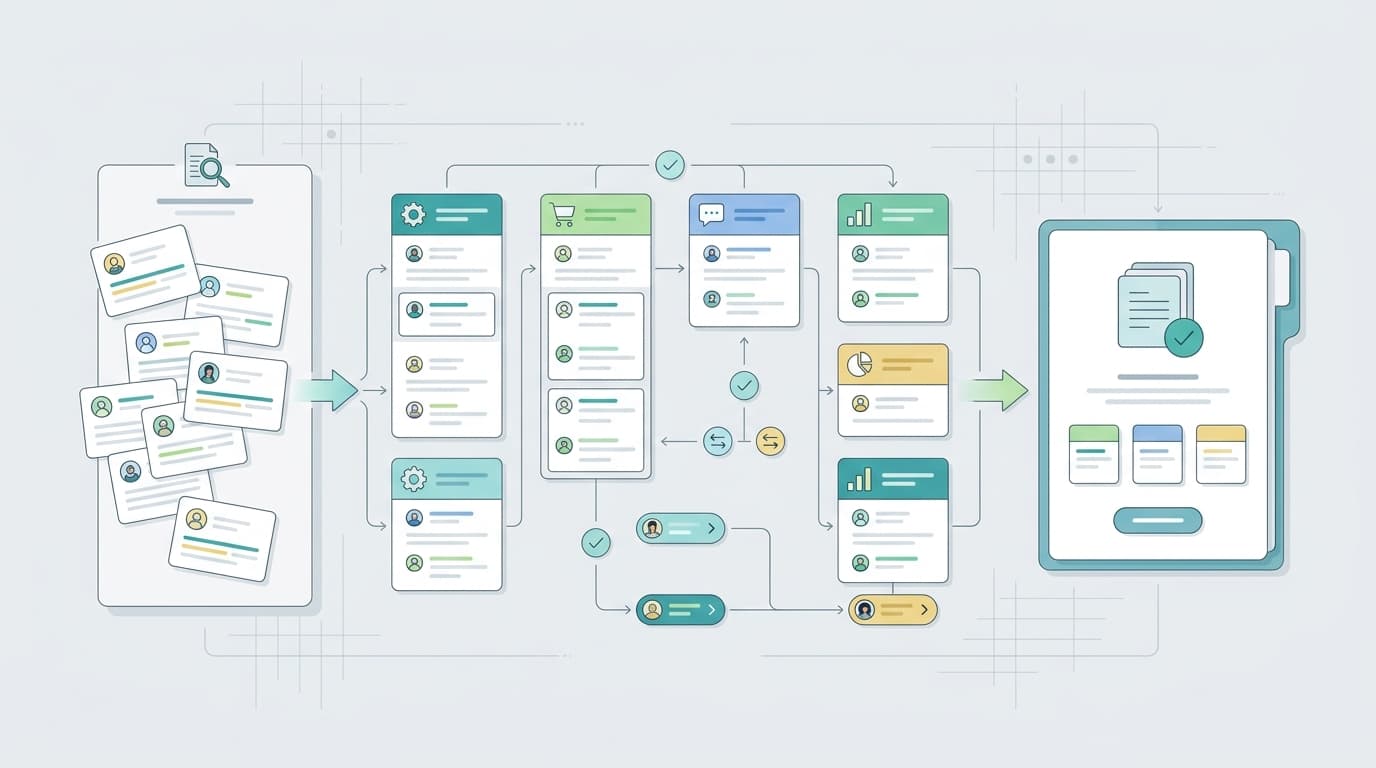
The Voice of Customer Analysis page positions the product as the foundation of VOC.AI, with clustering by pain point, expectation, and feature mention, plus a shared dataset across dashboards, the agent, and the API. The Review Analysis API gives engineering teams direct access to the same Amazon truth through REST, Python SDK, and MCP support.
That matters because a serious AI review analysis comparison is not just about reading reviews faster. It is about whether the output can move into a workflow the team will actually use again.
If budget is part of the comparison, the Pricing page currently shows a Free trial with 2,000 credits for 3 days, Pro at $99/month, Team Lite at $599/year, Team Growth at $1,199/year, and Enterprise Custom for larger needs.
What the current search results miss
The live SERP is crowded with vendor pages and tool roundups, but most of them still leave the buyer with open questions:
- Can I inspect the cohort?
- Can I compare like with like?
- Does the tool preserve evidence?
- Will it route the output to an owner?
- Can the result be reused outside the product UI?
Those are the checks that matter in a real AI review analysis comparison. Not whether the demo had a nicer chart.
FAQ
Is AI review analysis the same as review summarization?
No. Summarization compresses language. AI review analysis should preserve scope, evidence, contradictions, and the path to action.
Do I need monitoring if I only want a one-time analysis?
Not necessarily. Use monitoring only when the decision depends on what changes over time, such as new complaints, rating shifts, or recurring themes after a launch.
What should I compare first: features or workflow?
Workflow. A tool with fewer features but better evidence and handoff can be more useful than a fuller dashboard that stops at the summary layer.
Where should Amazon-specific buyers start?
Start with What to Look for in a Customer Review Analysis Tool or Best Amazon Review Analysis Tools for 2026: A Buyer’s Guide.
Conclusion
The best AI review analysis comparison is the one that helps you buy for the job, not for the slide deck. If your team only needs a summary, choose lightly. If you need recurring decision support, choose a tool that can preserve evidence, control the cohort, and hand the result to an owner.
That is the buying line that separates a nice demo from a tool your team can actually use. Use this AI review analysis comparison as the checklist before the contract, not after.