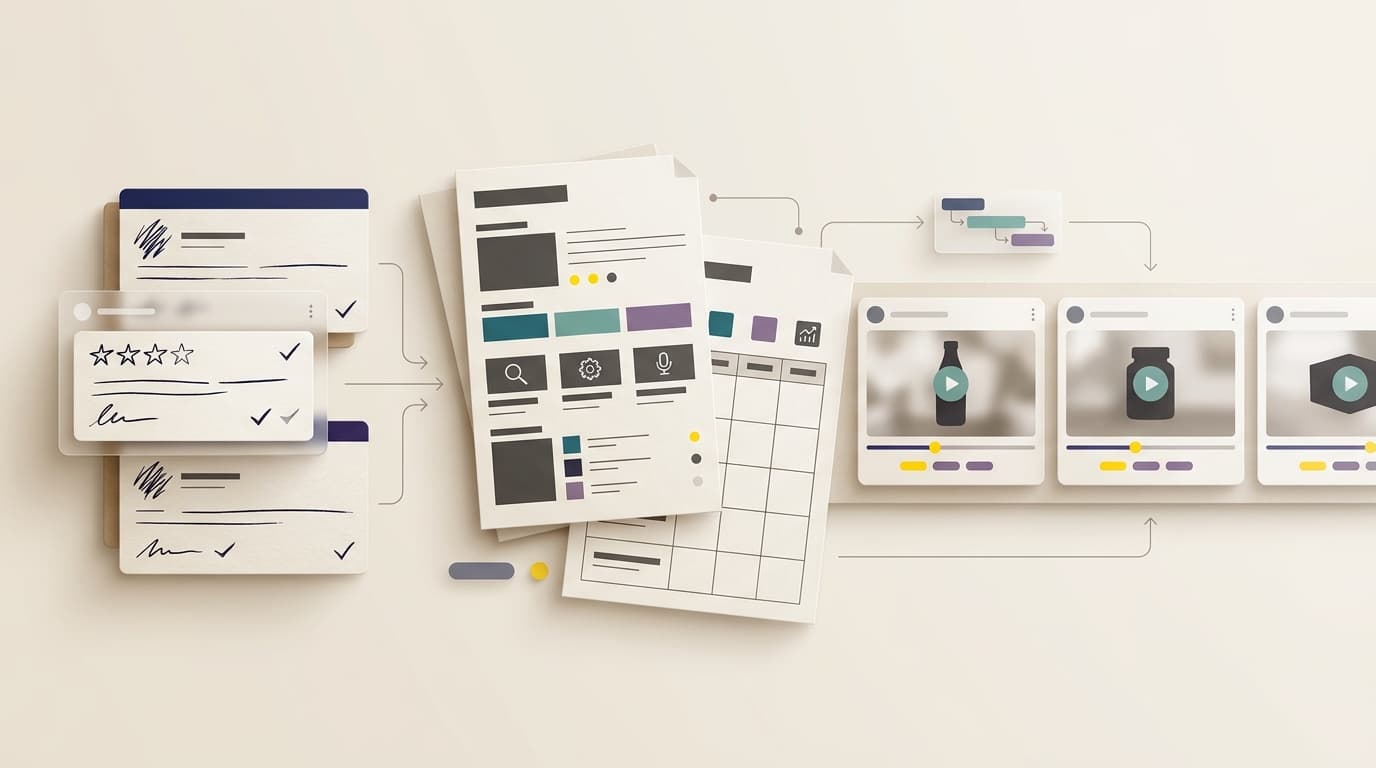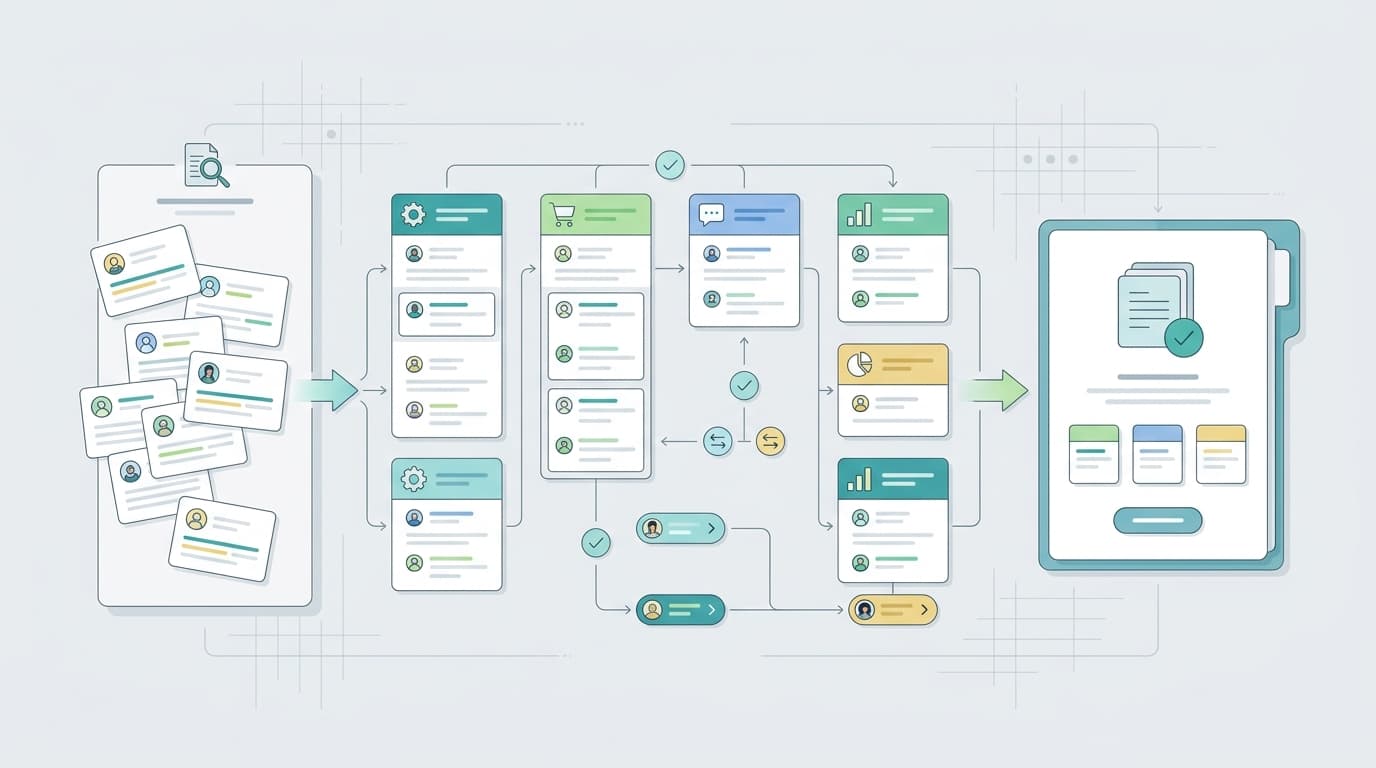
Amazon competitor analysis is useful when it explains why shoppers choose one ASIN over another. It is not a screenshot collection exercise or a reason to copy the leading listing. A good analysis compares products against the same buyer need, then looks for gaps in reviews, content, pricing, offers, and search behavior that can be turned into better decisions.
This playbook is written for sellers who already have products in market or are preparing to enter a category. It focuses on interpreting market evidence: what competitors promise, what customers believe, what reviews expose, and where your product can take a defensible position without inventing claims.
TL;DR
| Analysis area | What to compare |
|---|---|
| ASIN cohort | Choose direct substitutes with similar use cases, price bands, buyer intent, and category context. |
| Customer voice | Read reviews for repeated praise, complaints, missing features, and buyer vocabulary. |
| Search and content | Compare titles, bullets, images, A+ content, keyword coverage, and claim clarity. |
| Offer pressure | Review price, coupon, fulfillment, rating count, and visible trust signals. |
| Market gap | Turn evidence into a positioning, product, listing, or pricing decision. |
| Final output | End with a short list of product, content, pricing, or advertising decisions supported by buyer evidence. |
Define the Competitor Set Before Reading the Data
The analysis is only as good as the competitor set. A seller should not compare against every product in a category just because they share a keyword. The better set includes products that a shopper would realistically consider for the same problem, budget, use case, and quality expectation. A premium item and a bargain multipack may compete in search results but serve different buying logic.
Use Amazon tools such as Product Opportunity Explorer and Brand Analytics where available to understand search and category context. Then narrow the cohort manually. The goal is to compare against products that can teach you something specific, not to inflate the spreadsheet with ASINs that create false averages.
The competitor set should also reflect the market boundary behind the shopper decision. The U.S. Small Business Administration's guidance on market research and competitive analysis is useful here because it frames competitor research around customers, demand, and market position rather than a random list of rivals. For Amazon sellers, that means a competing ASIN is not just a product with a similar keyword. It is a product a shopper would reasonably compare when weighing price, proof, features, delivery, and trust.
When the cohort is defined this way, review analysis becomes much sharper. A complaint about size on one competitor may be a minor defect, but the same complaint across a tight cohort can reveal a category-level opportunity. A phrase buyers repeat across multiple listings can become a positioning clue, a product roadmap item, or a content improvement. This is also where internal comparisons help: a seller can connect this analysis to weekly seller competitor analysis when the insight needs monitoring rather than a one-time listing edit.
Read Reviews as Market Research, Not Reputation Scores
Reviews explain the competitor's actual market position better than a star rating alone. A product can have a high rating and still leave gaps around size, durability, instructions, accessories, packaging, or support. Another product can have visible complaints but still win because it solves the main use case better than alternatives. The seller should read for tradeoffs.
| Review pattern | Market meaning | Possible seller action |
|---|---|---|
| Repeated praise for one feature | That feature may be a category decision driver. | Decide whether your product can prove the same benefit or should position differently. |
| Repeated complaint across leaders | The category may have an unmet need. | Use product, content, or bundle changes to solve the gap. |
| Confusing expectations | Listings may be attracting the wrong buyer. | Clarify images, bullets, sizing, use cases, and limitations. |
| Review language around alternatives | Shoppers are comparing products in specific words. | Use those phrases to improve content and research keywords. |
Compare Listing Claims Against Buyer Proof
Competitor titles and bullets show what brands want shoppers to believe. Reviews show whether buyers accept those claims after purchase. The gap between the two is where analysis becomes useful. If every competitor promises durability but reviews complain about breakage, the seller needs proof, not louder copy. If competitors hide dimensions and reviews mention fit confusion, clearer content can become a conversion advantage.
Do not copy a rival claim just because it appears to rank. Ask whether your product can support the claim with material details, images, usage evidence, warranty clarity, or review proof. This approach also protects the listing from overpromising. Amazon competitor analysis should sharpen the brand's position, not push the seller into a claim race.
Use Search and Price Data to Explain the Battlefield
Search visibility and price pressure shape how shoppers compare options. A competitor may win because it owns a high-intent keyword, has a stronger coupon, or looks safer due to review count. Another may win because its content answers a question your listing skips. These signals should be interpreted together rather than ranked separately.
For advertising and search context, Amazon Brand Analytics can help eligible sellers see search behavior. The analysis should connect those search signals to review language and listing content. If shoppers search for a use case that reviews repeatedly mention, that phrase may deserve stronger placement in content or campaigns.
Turn Competitor Gaps Into Decisions
The output should be a decision list, not a long audit nobody uses. A product gap may lead to a feature change or bundle. A content gap may lead to new images or rewritten bullets. A pricing gap may require a promotion test rather than a permanent price cut. A review gap may become a product roadmap item if buyers complain about the same limitation across many competitors.
VOC AI can support this work by clustering review themes across competitor ASINs and showing how buyers describe strengths and frustrations. That customer language helps sellers identify gaps that are visible in the market but not obvious from keyword tools alone. The strongest competitor analysis combines marketplace signals with the words buyers use after purchase.
FAQ
How many ASINs should a competitor analysis include? A practical analysis usually starts with five to twelve ASINs. The list should be narrow enough that each product competes for the same buyer decision. Large lists can be useful later, but they often hide the product gaps that matter most.
What is the difference between a competitor and a benchmark? A competitor fights for the same shopper and sale. A benchmark may be a product outside the exact cohort that does one thing especially well, such as images, packaging, or review generation. Both can teach useful lessons, but they should not be mixed in the same scorecard.
Should sellers copy competitor titles? No. A competitor title can reveal keyword and positioning patterns, but copying it can create inaccurate claims or weak differentiation. Use the title as market evidence, then rewrite around your own product proof and buyer language.
How do negative competitor reviews help? Negative reviews show the promises competitors fail to keep. If the same complaint appears across several products, it may reveal an unmet need. The seller should only use that gap if the product can genuinely solve it.
What should the final report contain? The final report should contain the competitor cohort, the main buyer gaps, the evidence behind each gap, and the decisions recommended for product, content, pricing, or advertising. A long list of observations is less useful than a short decision memo.