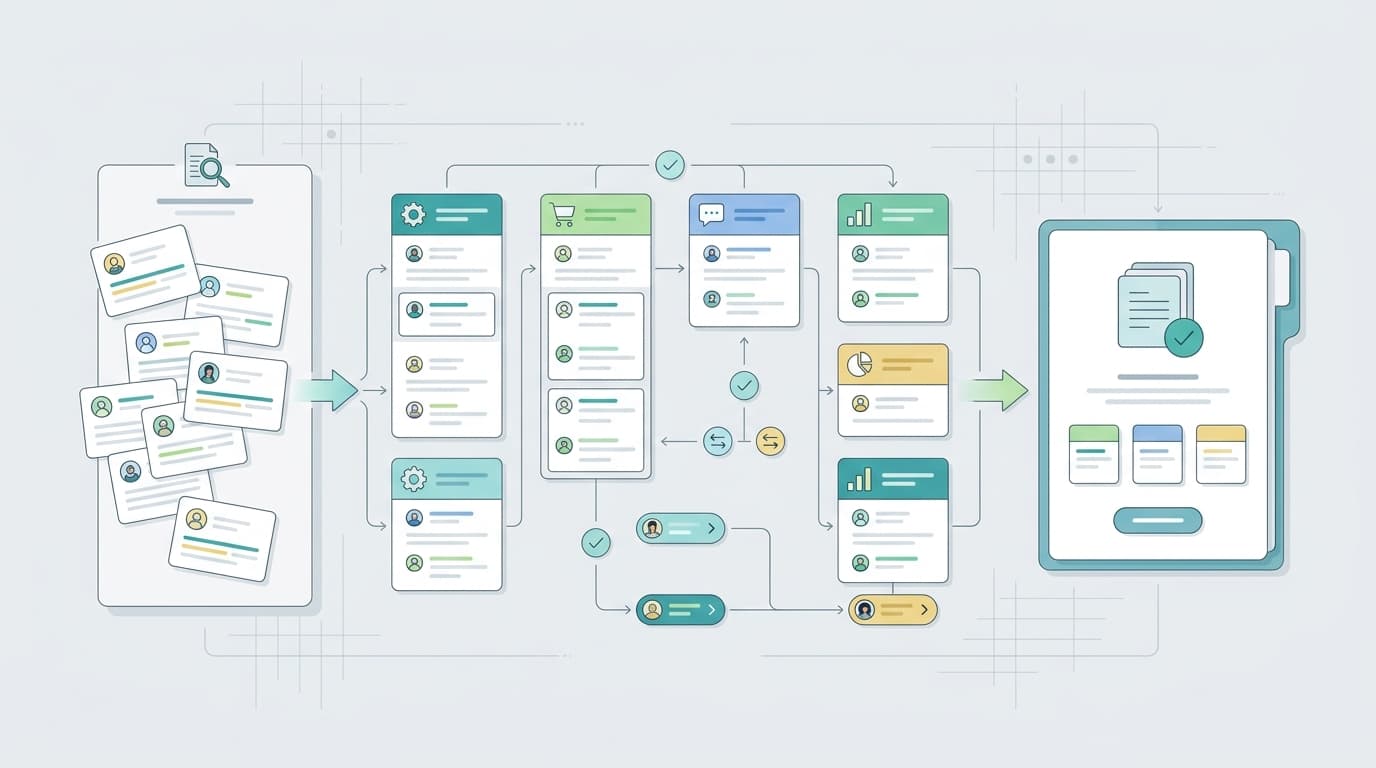
Amazon seller competitor analysis is different from a one-time category study. It is a practical operating habit for teams that need to know when competitors change price, win trust, improve content, gain reviews, or create pressure around a priority ASIN. The output should help a seller decide what to adjust this week, not fill a research deck.
This article is written for marketplace operators, brand managers, and growth teams. It focuses on the signals that change often enough to deserve monitoring: offers, pricing, review movement, listing content, promotions, and search behavior. The aim is a smaller but more useful analysis that assigns every finding to an owner.
TL;DR
| Operating question | Recommended answer |
|---|---|
| What should be watched weekly? | Price, coupon, Buy Box, offer count, review movement, content edits, rating changes, and search visibility for priority competitors. |
| What should not be watched weekly? | Huge category lists, vanity rank snapshots, and competitors that do not serve the same shopper need. |
| What is the output? | A short action list for pricing, content, ads, product, and support owners. |
| What is the review role? | Reviews explain why a competitor's offer is working or where shoppers still feel pain. |
| What makes the habit useful? | The same ASIN cohort, the same signal definitions, and clear ownership each review cycle. |
Choose Competitors by Seller Threat, Not Category Size
A seller competitor set should be built around threat and substitutability. Include the products that take traffic from your ASIN, win similar search terms, sit near your price band, or appeal to the same buyer use case. Exclude products that only share a broad category but do not influence your shopper's decision. This keeps the analysis small enough to use every week.
The cohort can change by business moment. A launch may track emerging products with fast review growth. A mature ASIN may track price leaders and premium alternatives. A seasonal product may track competitors running early promotions. The important point is to document why each competitor is included so the team does not keep reviewing irrelevant ASINs out of habit.
Weekly competitor analysis should include the wider ecommerce context, not just the seller's own search results. The U.S. Census Bureau's retail ecommerce data gives teams a macro reminder that online purchasing behavior keeps shifting at category and channel level. That does not tell a seller which ASIN to copy, but it does explain why a weekly operating view needs to include offer pressure, price perception, fulfillment promises, and customer feedback rather than only organic rank.
A practical operator map should separate fast-moving signals from slow-moving strategy. Price, coupon, Buy Box state, and offer count can change quickly and deserve weekly review on priority ASINs. Product gaps, review themes, and brand positioning usually need a slower decision cycle. Linking the weekly review to Amazon PPC competitor analysis also helps teams distinguish a paid traffic problem from a product or listing problem before they change bids.
Watch Offer Moves Before They Become Rating Problems
Competitor pressure often appears first in offer signals. Price cuts, coupons, faster fulfillment, multipacks, and review-count gains can make a rival look safer or more attractive before your own conversion metrics decline. A weekly seller view should capture these changes with timestamps and notes about whether they are temporary, seasonal, or part of a larger repositioning.
Offer data becomes more useful when paired with customer voice. If a competitor drops price but reviews complain about quality, a seller may not need to follow the discount. If a competitor raises price and reviews praise durability, the category may support a stronger value claim. Amazon seller competitor analysis should help teams understand the reason behind market movement rather than react to every price change.
Route Signals to the Team That Can Act
Each signal needs an owner. Pricing owners can review coupon pressure. Listing owners can respond to competitor content improvements. Advertising owners can test keyword or placement changes. Product owners can evaluate review gaps. Support owners can identify service complaints that competitors have solved better. Without routing, the analysis becomes interesting but inert.
| Signal | Primary owner | Action question |
|---|---|---|
| Competitor content change | Listing owner | Does our page answer the same buyer question more clearly? |
| Review gain or rating lift | Brand or product owner | What theme is driving trust, and can we prove a stronger benefit? |
| Price or coupon move | Marketplace or pricing owner | Is this temporary pressure, or does it change the value comparison? |
| Search visibility shift | Advertising owner | Should campaigns, content, or keyword priorities be adjusted? |
Use Review Gaps to Avoid Copycat Decisions
Seller teams often copy visible competitor tactics because those tactics are easy to see. Reviews provide the missing context. A rival may have better images but still receive complaints about setup. Another may win on price but disappoint buyers on durability. A third may rank well because it matches a specific use case that your product should not chase.
Reading competitor reviews keeps the team from copying bad promises. It also reveals buyer language that can improve bullets, images, A+ content, and ad messaging. For deeper customer-language research, a guide on Amazon review analysis can help sellers organize themes before turning them into listing decisions.
Create a Weekly Seller Action Snapshot
The weekly snapshot should fit on one page. It should list the competitor set, the top three changes, the likely business impact, and the owner for each action. If nothing meaningful changed, say that. A stable week is useful information because it prevents unnecessary edits and gives the team confidence that no urgent competitor move was missed.

VOC AI can support the review and customer-language side of the snapshot. Sellers can compare competitor praise and complaints, identify language gaps, and see whether a market change is backed by real buyer sentiment. That makes the weekly review more grounded than a price or rank report alone.
The weekly snapshot should also explain what changed since the last review. A competitor that holds a temporary coupon for two days should not trigger the same response as a competitor that rewrites images, gains review velocity, and starts winning the same search terms for several weeks. Add a simple status label such as watch, test, fix, or ignore so the team knows whether the signal needs action or only documentation. That discipline keeps the analysis practical and prevents weekly competitor watching from turning into constant reactive editing.
FAQ
What makes seller competitor analysis operational? It becomes operational when each finding has an owner and a time frame. A price move may need same-week review, while a product gap may need roadmap discussion. Without ownership, the analysis becomes background reading.
Which competitor changes deserve immediate review? Review sudden coupon changes, Buy Box shifts, major content updates, rating movement on a close rival, and review bursts around launch or promotion windows. These changes can affect conversion before a monthly report notices them.
How should sellers treat seasonal competitors? Seasonal competitors should be tracked during the period when shoppers compare them, then removed or downgraded afterward. Keeping them in the weekly set all year can distort price, review, and demand signals.
Can one team own the whole process? One team can coordinate the process, but different signals need different owners. Pricing, advertising, product, listing, support, and marketplace teams each need the slice of the analysis they can act on.
What is the simplest weekly output? A one-page snapshot works well: top competitor changes, likely impact, evidence links, owner, action, and follow-up date. If nothing meaningful changed, the report should say that clearly instead of inventing tasks.