Customer feedback rarely fails because a team has too little data. It fails because the evidence changes shape at every handoff.
A support ticket becomes a tag. A tag becomes a dashboard count. A count becomes a roadmap argument. By the time someone asks, “What exactly did customers experience?”, the original context is gone.
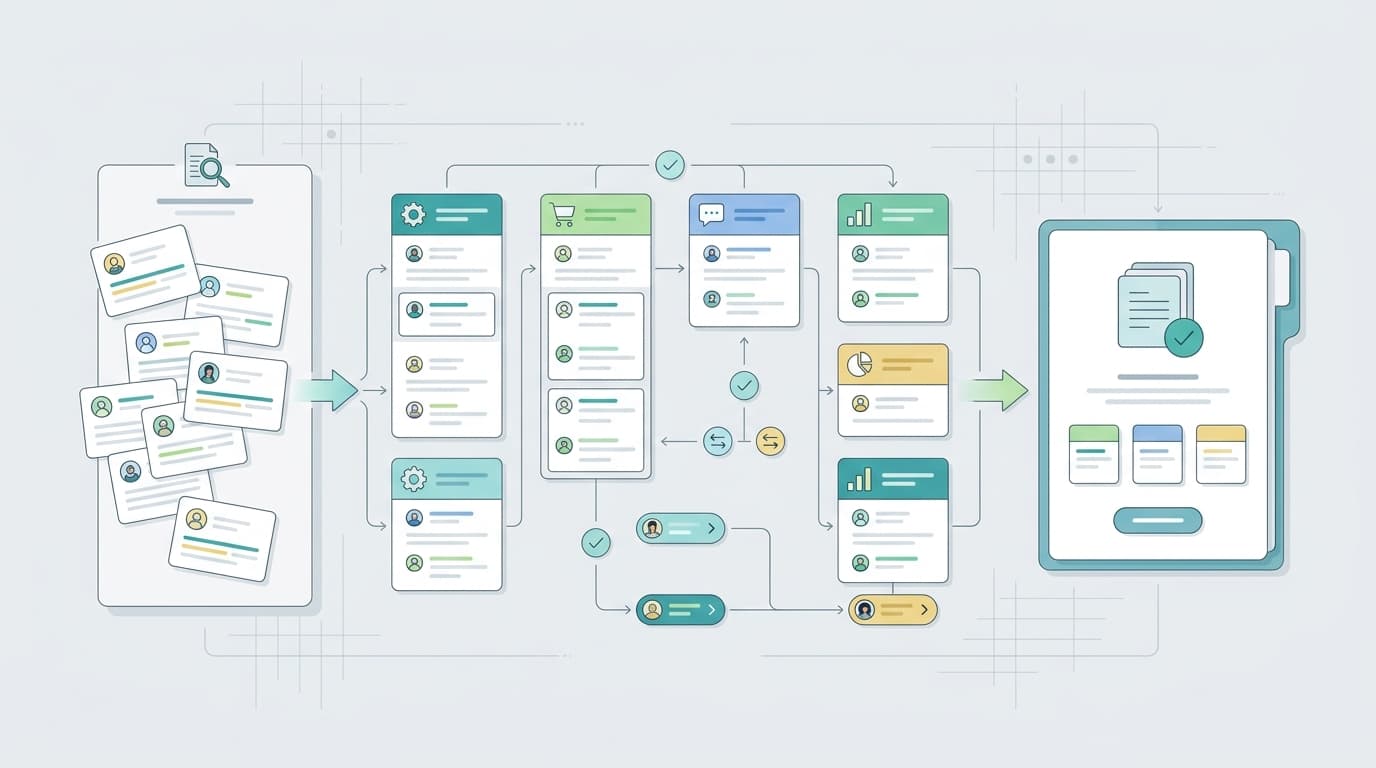
This customer feedback intelligence workflow playbook fixes that problem with seven copy-and-paste templates. Each template creates a durable artifact for one step in the work: capture, triage, theme formation, investigation, decision, communication, and outcome review.
The templates work in a spreadsheet, document, issue tracker, research repository, or feedback platform. The tool matters less than preserving the chain from customer language to business decision.
The workflow in one view
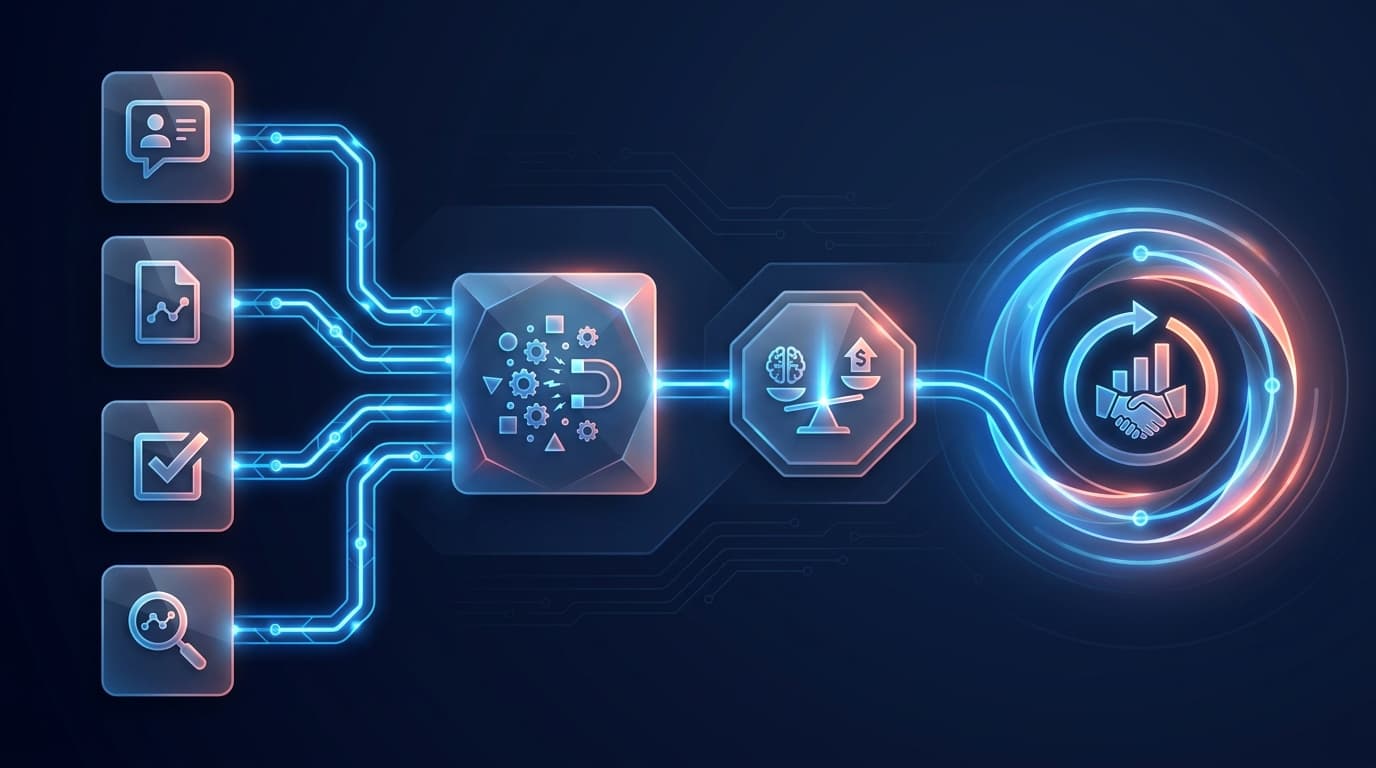
Use the seven templates as a connected system:
- Evidence record: preserve the original signal and its context.
- Triage note: route urgency without pretending urgency equals priority.
- Theme hypothesis: describe a possible pattern without declaring it true.
- Investigation brief: test the pattern against broader and contradictory evidence.
- Decision record: document what the team chose, why, and who owns it.
- Customer-loop message: communicate honestly without promising more than the team decided.
- Outcome review: check whether the intervention changed the customer problem.
This is a companion to the broader customer feedback intelligence workflow playbook, which explains triage, investigation, and decision follow-through. The guide below focuses on the actual records your team can copy into its operating system.
Template 1: customer evidence record
Start with one record per original piece of evidence. Do not begin with a summary.
In a customer feedback intelligence workflow playbook, this is the artifact that protects traceability before any clustering or prioritization begins.
EVIDENCE ID:
SOURCE LINK:
SOURCE TYPE: support / interview / review / survey / sales / community / other
DATE OBSERVED:
CUSTOMER SEGMENT OR CONTEXT:
PRODUCT / PLAN / MARKET / JOURNEY STAGE:

CUSTOMER LANGUAGE:
“Paste a short, exact excerpt here.”

OBSERVED BEHAVIOR OR CONSEQUENCE:
What did the customer do, fail to do, abandon, return, request, or work around?

INITIAL LABEL:
A provisional label only. Avoid explaining the cause yet.

URGENCY CHECK:
safety / security / compliance / access / outage / churn / reputation / none known

CONTEXT LIMITATIONS:
What do we not know about this evidence?
Why this template matters
An evidence record keeps the source, customer language, context, and consequence together. Without those fields, different complaints can be merged because they use similar words, while identical problems can be split because customers describe them differently.
The observed behavior or consequence field is especially useful. “This is confusing” is weak evidence by itself. “The customer abandoned setup after trying three times” gives the team a clearer problem to investigate.
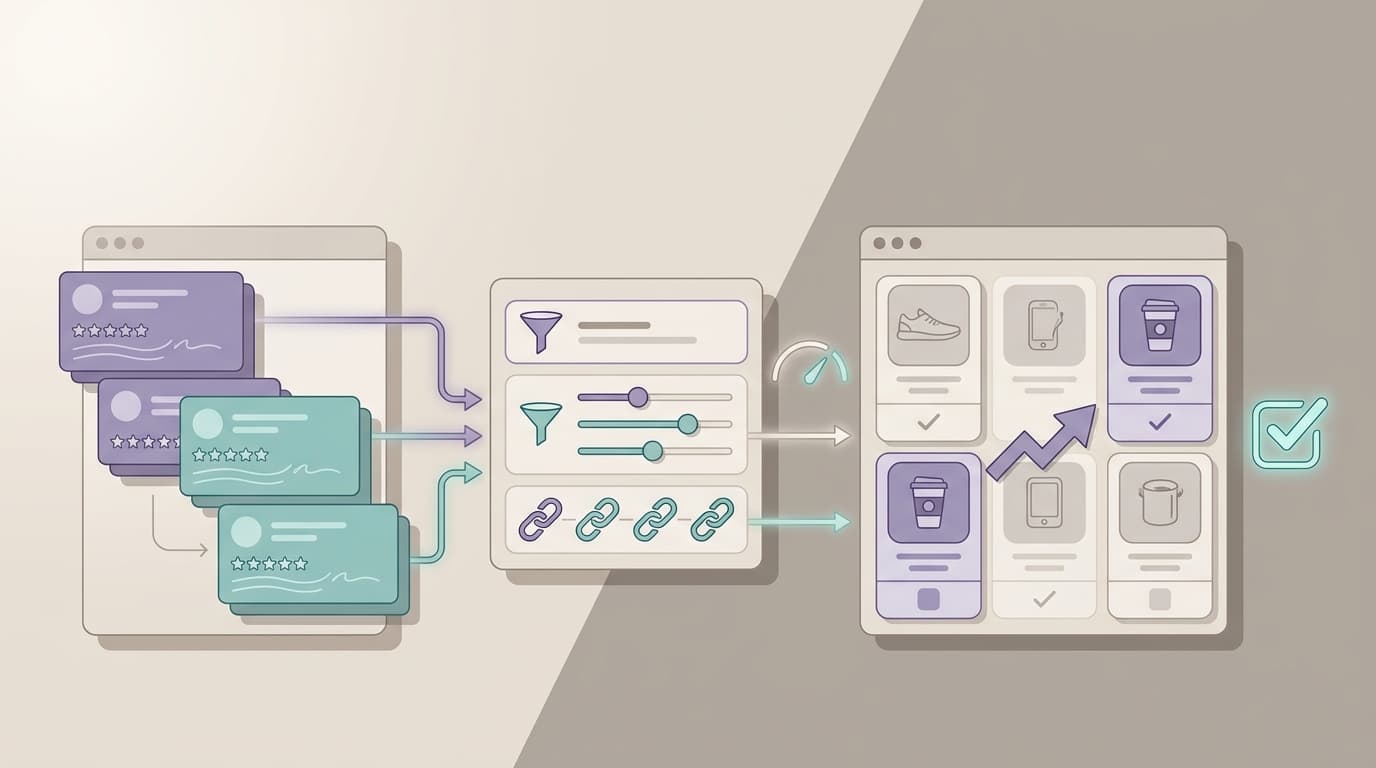
If you collect signals from reviews, tickets, surveys, interviews, and social channels, keep source-specific context before combining themes. The guide to analyzing ecommerce feedback across channels shows how to normalize evidence without erasing where it came from.
Template 2: feedback triage note
Triage decides what happens next. It does not decide whether a feature should be built.
The triage section of a customer feedback intelligence workflow playbook should route evidence quickly while keeping urgency, recurrence, consequence, and understanding separate.
TRIAGE NOTE

EVIDENCE ID(S):
TRIAGE OWNER:
TRIAGE DATE:

IMMEDIATE RISK:
Is there a safety, security, compliance, access, outage, or severe reputation issue?

ROUTE:
[ ] Escalate now
[ ] Add to an existing theme
[ ] Open a new candidate theme
[ ] Hold for more evidence
[ ] Close as duplicate while preserving the source

REASON FOR ROUTE:
One or two sentences based on available evidence.

NEXT OWNER:
NEXT REVIEW DATE:
The key triage rule
Keep four questions separate:
| Question | What it determines |
|---|---|
| Is this urgent? | Whether someone must respond immediately |
| Is it recurring? | Whether the signal belongs to a broader pattern |
| Is it consequential? | Whether the problem changes behavior or business outcomes |
| Is it understood? | Whether the team has enough evidence to choose an intervention |
A single severe issue can be urgent without being common. A common request can be low-consequence. A high-volume theme can still be poorly understood. Separating these questions prevents the loudest inbox item from becoming an accidental roadmap.
Template 3: theme hypothesis card
A theme is not a bucket of similar words. It is a testable statement about a customer, a situation, and a likely problem mechanism.
This customer feedback intelligence workflow playbook treats every theme as a hypothesis that can gain confidence, become narrower, or be rejected.
THEME HYPOTHESIS

WORKING THEME NAME:
AFFECTED CUSTOMER OR SEGMENT:
JOB / MOMENT / JOURNEY STAGE:

WE BELIEVE:
[Defined customers] struggle with [specific job or moment] because [possible mechanism].

EVIDENCE SEEN SO FAR:
- Source types:
- Date range:
- Representative evidence IDs:
- Observed behaviors or consequences:

ALTERNATIVE EXPLANATIONS:
1.
2.
3.

COUNTEREVIDENCE TO FIND:
What evidence would weaken or disprove this theme?

CONFIDENCE:
low / medium / high

NEXT TEST:
What is the smallest investigation that could change our confidence?
Write themes around mechanisms
Suppose customers mention “slow,” “confusing,” and “too many steps.” A vocabulary-based taxonomy may create three themes. A mechanism-based investigation may find one issue: customers cannot tell whether a long-running action has started, so they retry it and create duplicate work.
The theme card forces the team to state the suspected mechanism and list alternatives. It also requires counterevidence. That prevents a tidy cluster from being treated as proof.
For a deeper scoring method after a theme is formed, use the framework for how to prioritize customer feedback.
Template 4: feedback investigation brief
Open an investigation when a theme could influence a meaningful decision but the mechanism, affected segment, or consequence remains uncertain.
The investigation template turns a customer feedback intelligence workflow playbook into decision support instead of an open-ended research backlog.
FEEDBACK INVESTIGATION BRIEF

DECISION QUESTION:
What decision will this evidence inform?

SCOPE:
- Customer segment:
- Product / journey area:
- Market or channel:
- Date range:
- Sources included:
- Sources excluded:

CURRENT HYPOTHESIS:

EVIDENCE PLAN:
- Retrieve original examples
- Compare affected and non-affected customers
- Check behavior or operational data where available
- Look for repeat contact, returns, workarounds, abandonment, or escalation
- Search for contradictory examples

FINDINGS:
1. What appears to be happening?
2. For whom?
3. Under what conditions?
4. What consequence follows?
5. What evidence disagrees?

PLAUSIBLE MECHANISMS:
1.
2.
3.

CONFIDENCE AND LIMITATIONS:

OPTIONS FOR THE DECISION OWNER:
- Act now:
- Run a bounded test:
- Monitor:
- Decline or defer:

RECOMMENDED NEXT STEP:
Start with the decision question
“Analyze onboarding feedback” is not a decision question. It invites unlimited research and a generic summary.
Better questions create boundaries:
- Should we change the first-run setup sequence for new self-serve accounts?
- Is packaging damage concentrated in one fulfillment route or spread across the product line?
- Is the repeated reporting request a missing capability, a discoverability problem, or a permissions problem?
The investigation should be only as large as necessary to change a real decision. If no decision owner can say what choice the evidence will inform, the work is not ready to start.
Template 5: customer feedback decision record
Every completed investigation needs an explicit decision, including “monitor” and “not now.”
A useful customer feedback intelligence workflow playbook records declined and deferred choices as carefully as approved work.
CUSTOMER FEEDBACK DECISION RECORD

DECISION ID:
DATE:
DECISION OWNER:
LINKED THEME / INVESTIGATION:

DECISION:
[ ] Act
[ ] Run a test
[ ] Investigate further
[ ] Monitor
[ ] Decline

RATIONALE:
What evidence, constraints, and tradeoffs drove the choice?

SCOPE:
What is included? What is explicitly excluded?

DELIVERY OWNER:
TARGET DATE OR WINDOW:

EXPECTED CUSTOMER CHANGE:
What behavior, experience, or consequence should change?

LEADING SIGNAL:
What may move first?

OUTCOME SIGNAL:
What result will indicate the problem improved?

CHECK DATE:
REVISIT TRIGGER:
What new evidence would reopen this decision?
Record the expected customer change
“Ship the new filter” is a delivery statement. It is not a customer outcome.
An expected customer change sounds like this: “Users who manage more than 20 projects can find an active project without opening multiple pages.” That statement helps the team choose an outcome check and notice when a shipped feature does not solve the original problem.
A shared customer feedback dashboard can show decision status and ownership, but the decision record remains the source of reasoning.
Template 6: customer-loop communication
Closing the loop means communicating the status truthfully. It does not mean telling every customer that the team accepted the request.
The communication step makes the customer feedback intelligence workflow playbook visible to customers without creating false commitments.
Use one of these message patterns.
When the team is investigating
Thanks for describing what happened. We are reviewing this experience, including when it occurs and who it affects. We have linked your example to that investigation. We do not have a committed change to announce yet, but your context is part of the evidence the team is using.
When the team decided to act
Your feedback helped us understand [specific problem]. We have decided to [specific action or test]. The work is planned for [honest time window, if known]. We will share an update when there is something customers can use or evaluate.
When the team is not acting now
We reviewed this request alongside related feedback. We are not planning a change in the current scope because [brief, appropriate rationale]. We have preserved your example and will revisit the decision if [revisit trigger] changes.
Avoid vague messages such as “Great idea—we passed it to the team.” They create the appearance of a loop without giving the customer a meaningful status.
Template 7: outcome review
The workflow is not finished when work ships. It is finished when the team learns whether the customer problem changed.
Outcome review is what makes a customer feedback intelligence workflow playbook a learning system rather than a release log.
OUTCOME REVIEW

DECISION ID:
REVIEW DATE:
LEARNING OWNER:

INTERVENTION DELIVERED:
What actually changed, for whom, and when?

ORIGINAL EXPECTED CUSTOMER CHANGE:

EVIDENCE REVIEWED:
- New customer feedback
- Repeat contact or escalation
- Returns, abandonment, workaround, or usage behavior
- Operational or product metrics
- Non-affected segments and counterevidence

RESULT:
[ ] Problem improved
[ ] Problem partly improved
[ ] No clear change
[ ] Problem worsened
[ ] Too early or insufficient evidence

WHAT WE LEARNED:

NEXT DECISION:
[ ] Close
[ ] Iterate
[ ] Expand
[ ] Roll back
[ ] Continue monitoring

NEXT OWNER AND DATE:
Measure the problem, not only the release
Delivery metrics answer whether the team completed work. Outcome evidence asks whether customers now succeed more often, need fewer workarounds, repeat the complaint less, or experience a smaller consequence.
Feedback is often self-selected, so a change in comment volume alone should not be treated as proof. Review the new qualitative evidence alongside relevant behavior, operational, or commercial signals. Keep the limitations visible.
Put the templates into one operating table
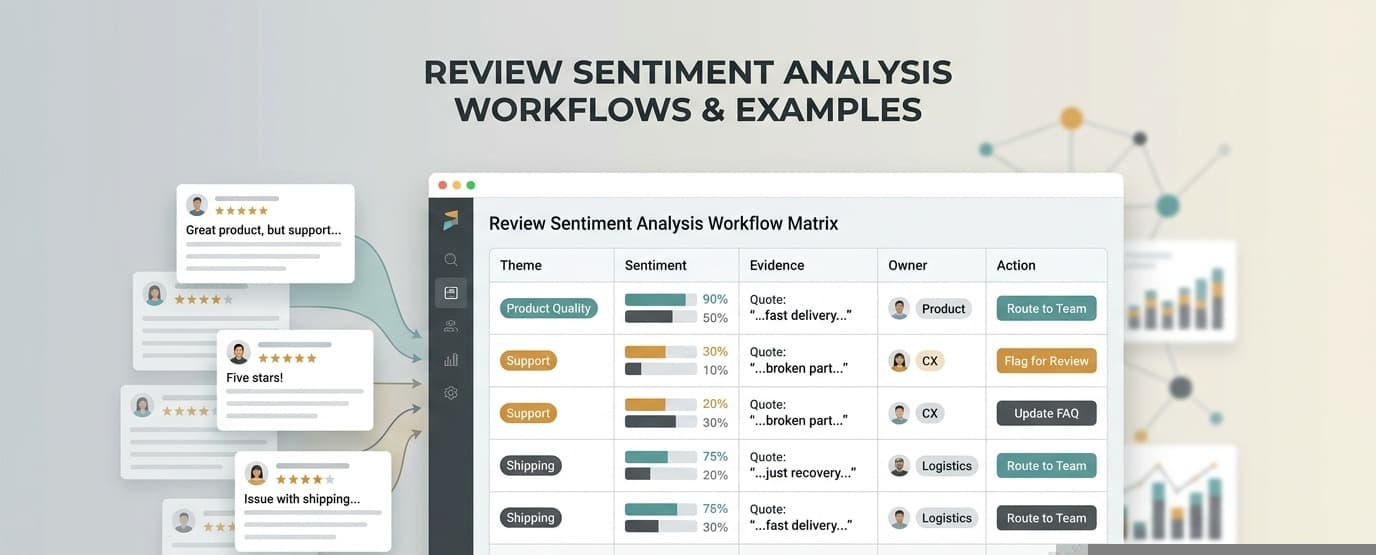
You can start in a spreadsheet or database with one row per artifact and stable links between them.
Together, these linked records make the customer feedback intelligence workflow playbook auditable from the original signal through the final learning check.
| Artifact | Required owner | Created when | Must link to |
|---|---|---|---|
| Evidence record | Signal steward | A useful signal arrives | Original source |
| Triage note | Triage owner | Evidence enters the queue | Evidence record |
| Theme hypothesis | Evidence owner | Related signals suggest a pattern | Evidence records |
| Investigation brief | Evidence owner | A consequential question needs testing | Theme and evidence |
| Decision record | Decision owner | Investigation reaches a choice | Investigation brief |
| Customer-loop message | Customer-facing owner | Status can be communicated honestly | Decision or investigation |
| Outcome review | Learning owner | The check date arrives | Decision and delivery |
If your team needs a repeatable meeting rhythm around these artifacts, use the weekly customer feedback workflow. It defines roles, handoff service levels, and a 30-day rollout.
Where AI helps in the workflow
AI can reduce retrieval and organization work. Useful applications include:
- Extracting candidate evidence from large review or ticket collections
- Suggesting provisional labels while preserving source links
- Finding semantically similar examples that use different words
- Drafting theme hypotheses from linked evidence
- Retrieving counterexamples and affected segments
- Summarizing an evidence packet for a decision meeting
- Comparing new feedback with the expected customer change in a decision record
AI should not silently decide whether evidence is representative, whether a consequential claim is true, or which tradeoff the business should choose. Keep the original examples accessible, review high-impact classifications, and make one person accountable for each decision.
VOC.AI’s Voice of Customer Analysis can help teams analyze review language for recurring needs, frustrations, praise, objections, and product opportunities. The templates in this playbook provide the surrounding decision system: they show how evidence moves from discovery into an owned choice and a measurable learning check.
A practical starting sequence
Do not roll out all seven templates across every team at once.
- Choose one recurring customer problem with a real decision owner.
- Create ten evidence records from original sources.
- Write one theme hypothesis with at least two alternative explanations.
- Open one bounded investigation brief.
- Record the decision, including the expected customer change and check date.
- Send an honest loop-closing message where appropriate.
- Run the outcome review on schedule.
After one complete cycle, remove fields nobody used and add only the context that changed a decision. The goal is not perfect documentation. The goal is a traceable path from what customers experienced to what the team learned.
Frequently asked questions
What is a customer feedback intelligence workflow?
A customer feedback intelligence workflow is a traceable process for capturing customer evidence, routing it, testing themes, making decisions, communicating status, and checking outcomes. It connects original customer language to accountable action rather than stopping at tags or summaries.
What templates should a customer feedback workflow include?
The minimum useful set includes an evidence record, triage note, theme hypothesis, investigation brief, decision record, customer-loop message, and outcome review. Small teams can keep them in one table as long as the links and owners remain explicit.
Is a customer feedback template the same as a dashboard?
No. A template defines the information required at a workflow step. A dashboard provides a shared view of volume, state, ownership, and trends. Teams usually need both, but the dashboard should link back to the underlying evidence and decision records.
How do you avoid confirmation bias in feedback analysis?
Write alternative explanations before investigating, search for contradictory examples, compare affected and non-affected customers, preserve source context, and record limitations. A theme should become more specific—or be rejected—as evidence improves.
Can one person own the whole workflow?
One person can perform several roles on a small team, but the responsibilities should remain distinct. Someone must steward incoming evidence, someone must own the investigation, someone must make the decision, and someone must check the outcome.
How does VOC.AI support customer feedback intelligence?
VOC.AI analyzes customer review language to surface recurring needs, frustrations, praise, objections, and product opportunities. Teams can connect those findings to the templates above so review intelligence informs a documented decision and learning loop.