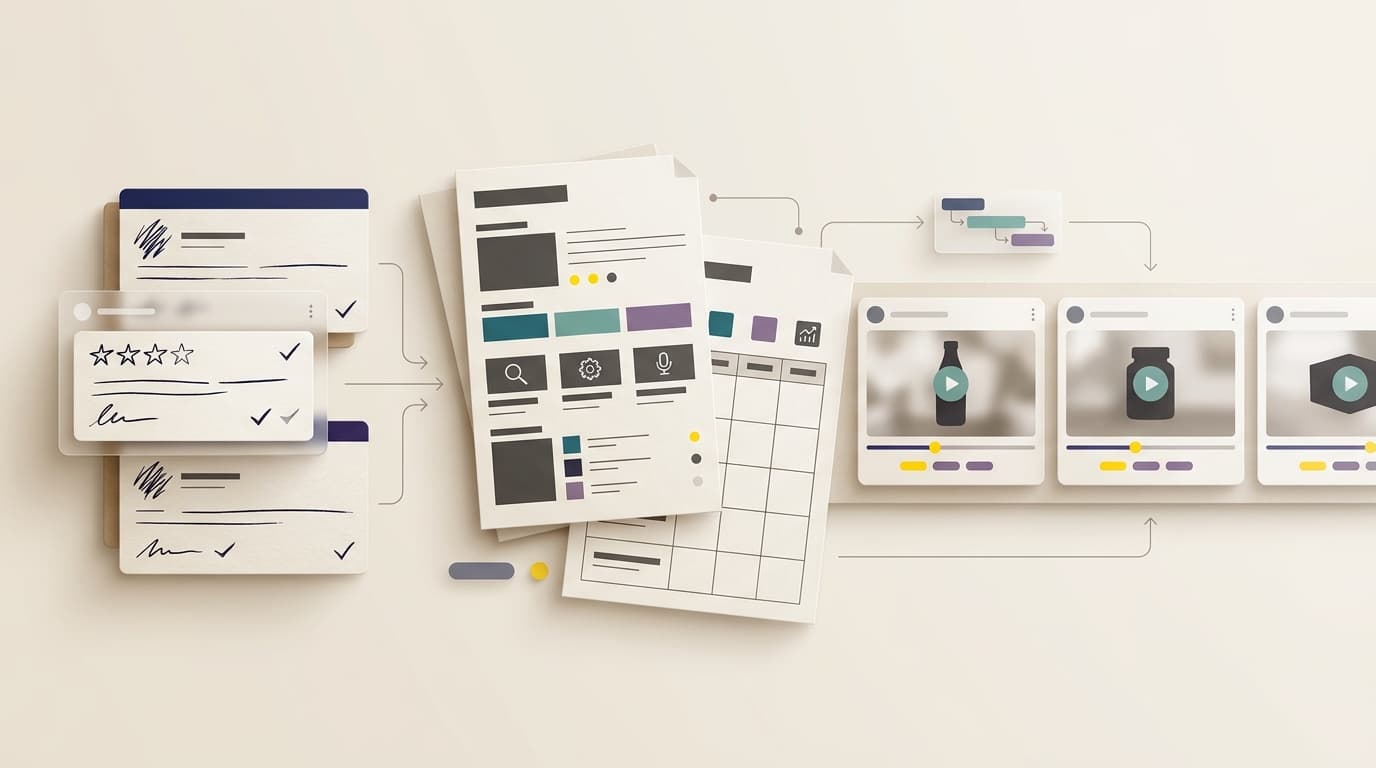
Customer stories can make review-analysis and customer-experience software easier to evaluate. They can also create false confidence when a recognizable logo or impressive percentage replaces the details a buyer actually needs.
For ecommerce teams, the useful question is not simply, “Does this vendor have case studies?” It is:
Does the customer story show a workflow that could improve a decision our team needs to make?
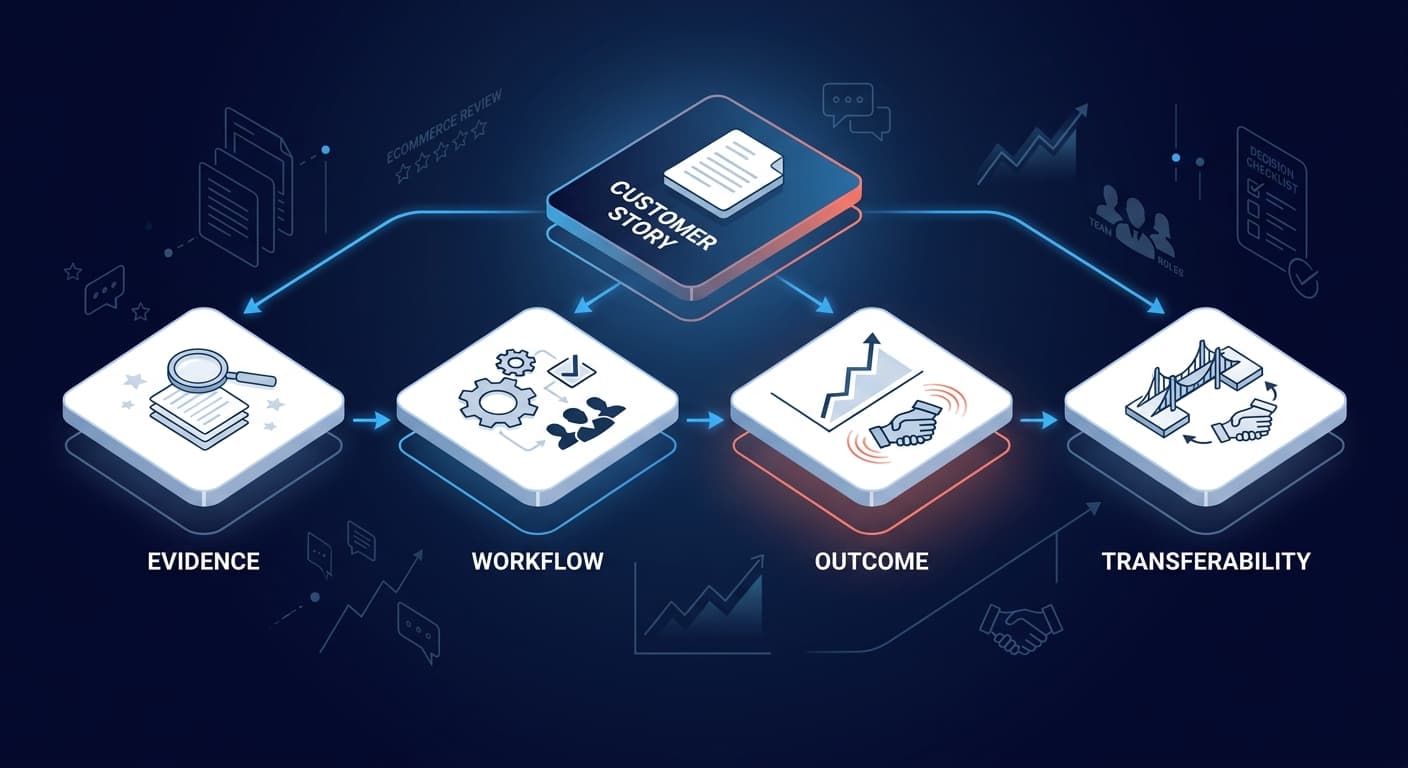
That standard changes how you read customer proof. Instead of scanning for a headline result, you inspect the evidence, operating process, outcome, and transferability of the story.
This guide provides a practical framework for evaluating customer stories while comparing review-analysis, voice-of-customer, and customer-experience software.
Why customer stories matter in software evaluation
Feature pages describe what a product is designed to do. Customer stories show how a team reportedly used a workflow in context.
That context matters because the same capability can create very different value depending on the decision, data source, team structure, and operating cadence around it. Review clustering may help one team prioritize product defects, another clarify listing language, and another detect a recurring support problem.
A strong customer story helps you understand five things:
- Starting condition: What problem or operating constraint existed before the change?
- Evidence: Which customer signals were available and how were they bounded?
- Workflow: How did people, processes, and software work together?
- Outcome: What reportedly changed, over what period, and according to whom?
- Transferability: Which parts of the approach could apply to your products, markets, and team?
Without those elements, proof may be persuasive but not decision-ready.
The four-part customer-story test
Use this four-part test before treating a case study as evidence for a software purchase.
| Test | What to look for | Warning sign |
|---|---|---|
| Evidence | Named sources, cohorts, products, markets, and time periods | “Customer data” with no boundary |
| Workflow | A clear path from signal to analysis, owner, action, and recheck | A result with no explanation of how work changed |
| Outcome | Attributed results with a defined baseline or measurement method | An isolated percentage with no denominator or timeframe |
| Transferability | Similar decisions, constraints, scale, and team ownership | A famous logo used as a substitute for operational relevance |
The goal is not to reject every imperfect story. It is to identify exactly what the story supports and what you still need to validate.
1. Inspect the evidence behind the story
Start with the customer signals involved. A story about customer intelligence should make it possible to understand what the team analyzed.
Useful evidence details include:
- Reviews, support conversations, surveys, return reasons, social comments, or another named source.
- The product, category, model, variation, or competitor set included.
- The marketplace, country, language, or channel covered.
- The date range and whether recent changes were separated from historical feedback.
- The customer segment, use case, rating band, or issue type involved.
These boundaries matter because broad customer feedback can hide specific operational problems. A complaint may affect one model, one region, one production period, or one use case rather than the entire portfolio.
When a case study does not provide the evidence boundary, ask the vendor to demonstrate the workflow using a product and cohort you already understand.
2. Follow the workflow from signal to decision
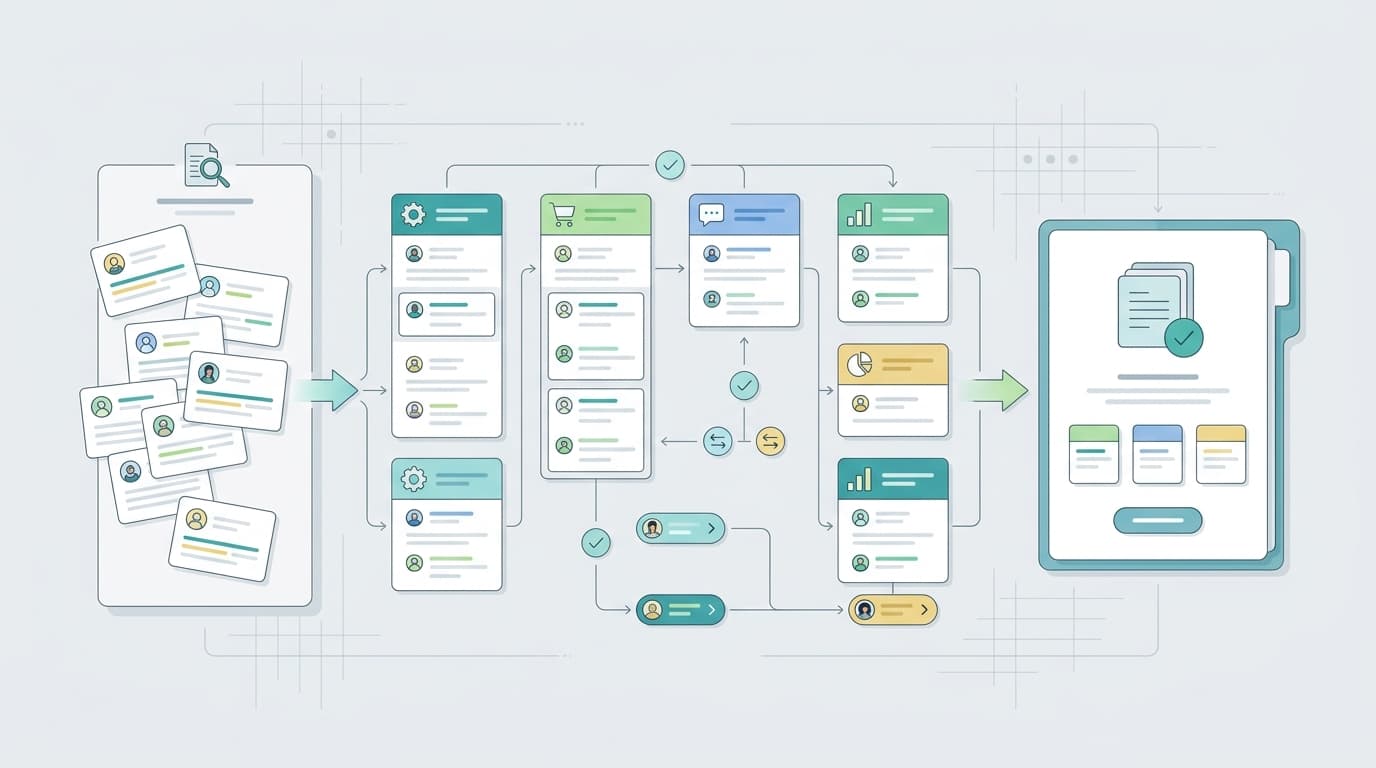
The strongest customer stories do more than say that a company “used AI” or “analyzed feedback.” They show how information moved through the organization.
Look for a sequence such as:
- Customer signals were collected for a defined cohort.
- Feedback was grouped into specific pain points, expectations, use cases, or praise themes.
- A person reviewed representative evidence and contradictions.
- A decision owner received the finding.
- The team changed a product, listing, support process, campaign, or operating rule.
- The signal was checked again after action.
This is the difference between a summary and an operating system. A summary helps someone understand what customers said. A workflow helps a team decide what to do next.
VOC.AI’s published Anker voice of customer case study is useful in this context because it focuses on the feedback-to-action architecture behind customer intelligence. The transferable lesson is the connection between evidence, ownership, action, and remeasurement—not any single headline number.
3. Read outcome claims with attribution and context
Customer stories are usually produced by a vendor, a customer, or both. That does not make the information unusable, but it does affect how you should interpret it.
For each result, record:
- Who reported it: the customer, vendor, analyst, or independent third party.
- What changed: time, cost, quality, conversion, satisfaction, workload, or another measure.
- Compared with what: the previous process, a control group, another period, or an estimated baseline.
- Over what timeframe: days, months, a campaign, or an ongoing deployment.
- Under which conditions: product scope, team size, automation level, integrations, and human review.
The U.S. Federal Trade Commission’s endorsement guidance is a useful reminder that testimonials should not be interpreted as automatic proof that every buyer will achieve the same result. In software evaluation, treat a reported customer outcome as a reason to investigate the workflow—not as a guaranteed forecast for your business.
4. Test whether the proof transfers to your use case
A well-documented result can still be irrelevant to your buying decision.
Use the transferability test:
| Dimension | Buyer question |
|---|---|
| Decision | Is the story about a decision we actually need to improve? |
| Data | Do we have comparable review or customer-feedback inputs? |
| Scale | Is the workflow credible at our product and feedback volume? |
| Team | Do we have a named owner who can act on the insight? |
| Systems | Can findings move into our product, CX, support, or growth tools? |
| Risk | Does the workflow preserve human review for high-impact decisions? |
| Measurement | Can we define a baseline and recheck the same signal? |
Do not ask whether your company looks exactly like the featured customer. Ask whether the operating pattern can be reproduced under your conditions.
Match the customer story to the software decision
Different customer stories should support different evaluation questions.
Review-analysis software
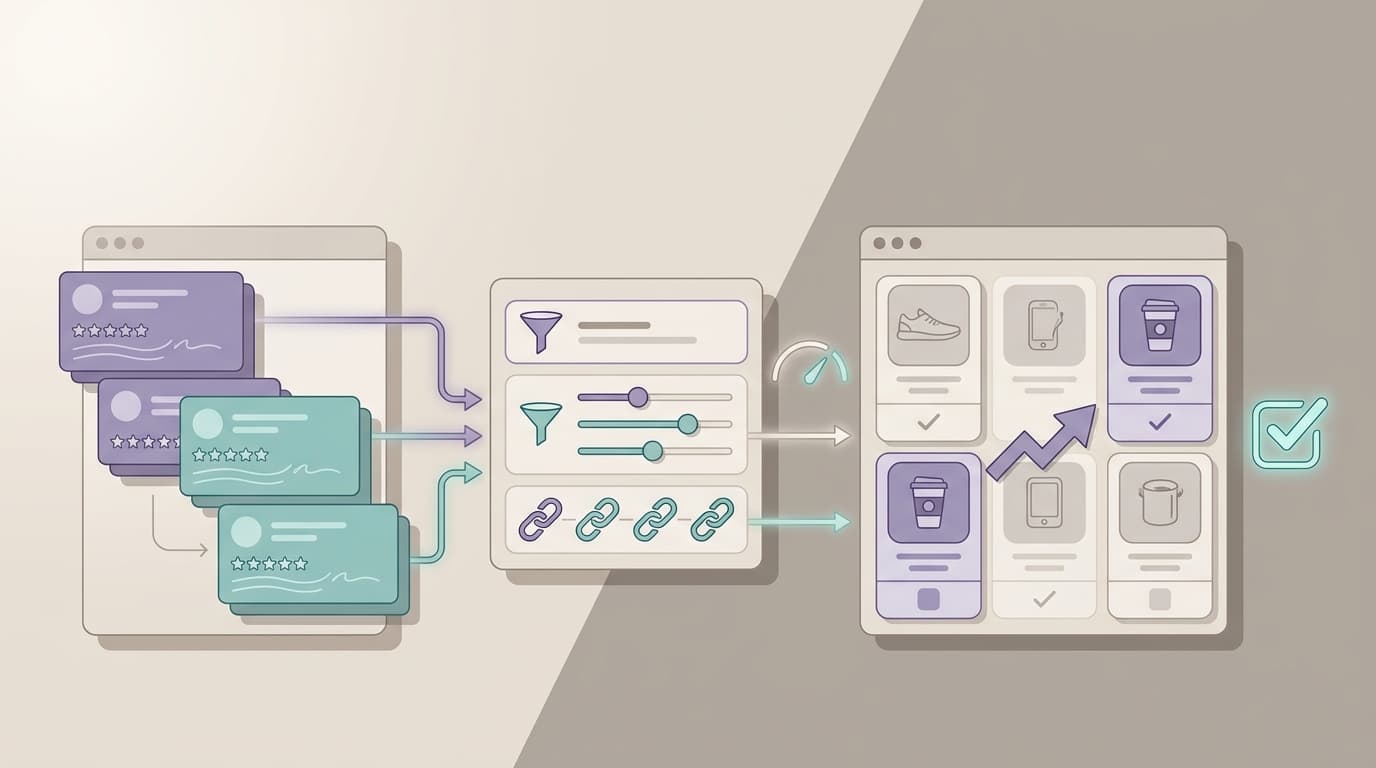
Look for proof that the workflow preserves more than an overall sentiment score. Useful stories show how a team handled themes, representative evidence, contradictions, cohorts, competitors, and repeated analysis.
The buyer question is:
Can this workflow turn a large review set into a traceable product, listing, or market decision?
Use VOC.AI’s customer feedback analysis software guide for ecommerce teams to define the broader evaluation criteria before mapping a customer story to your shortlist.
Voice-of-customer software
Look for the route from feedback to cross-functional ownership. A useful story should show how product, marketing, support, or operations received and acted on the same customer evidence.
The buyer question is:
Does the story show a repeatable feedback-to-action loop, or only a one-time insight?
VOC.AI’s Voice of Customer Analysis page describes the current product workflow for organizing review evidence into pain points, expectations, and feature themes.
AI customer service software
Look for the specific service workflow: which interactions were in scope, where automation was used, where human review remained, and how the team measured quality.
The buyer question is:
Does the proof explain service quality and escalation design, not only automation volume?
When evaluating this category, connect the customer story to the vendor’s current AI customer service for ecommerce documentation. Historical customer deployments and current product scope are not automatically the same.
Shared customer-feedback operations
Look for evidence that multiple teams can use a common analytical layer without forcing every team into one execution tool.
The buyer question is:
Can the organization share evidence, definitions, and priorities while preserving clear ownership?
The guide to structuring a customer feedback dashboard for product, support, and marketing provides a complementary operating model for cross-functional teams.
Build a proof distribution map
Customer proof becomes more useful when it appears at the point where a buyer has a specific question.
For each customer story, create a small distribution map:
| Destination | Proof role |
|---|---|
| Category guide | Demonstrate that the software category supports a real decision |
| Product page | Clarify how a current capability is used in context |
| Comparison page | Support an evaluation criterion without making unsupported competitor claims |
| Pricing page | Help buyers connect package discussions to a proof-of-value plan |
| Sales conversation | Define the customer’s baseline, pilot scope, and measurement method |
This approach is useful for both buyers and vendors. Buyers can see why a story is relevant. Vendors are less likely to repeat a broad testimonial where a specific workflow example is needed.
VOC.AI’s Customer Stories hub is the starting point for reviewing named customer proof. The individual story should then connect to the exact review-analysis, VOC, or customer-service decision being evaluated.
A 10-question customer-proof scorecard
Score each question from 0 to 2:
- 0: Not shown.
- 1: Partially shown or available only after clarification.
- 2: Specific, attributable, and relevant.
- Is the starting problem specific?
- Are the customer signals and cohort defined?
- Is the previous workflow explained?
- Is the new workflow visible from evidence to action?
- Is a decision owner identified?
- Are outcomes attributed to a source?
- Is the baseline, timeframe, or comparison clear?
- Are limitations or conditions visible?
- Does the use case match a decision your team needs to improve?
- Can the vendor reproduce the workflow with your evidence?
| Score | Interpretation |
|---|---|
| 0–7 | Marketing signal; substantial validation required |
| 8–14 | Useful directional proof; clarify gaps in a demo or pilot |
| 15–20 | Strong evaluation input; still validate with your own workflow |
The score does not rank vendors by itself. It helps you separate brand familiarity from usable evidence.
Turn customer proof into a proof-of-value pilot
The best next step is not to debate the case study. It is to convert the story into a small test.
- Choose one product, category, or customer journey.
- Define one decision owner and one decision question.
- Select the evidence sources and cohort.
- Record the current baseline, including time, quality, or decision latency.
- Run the proposed analysis workflow.
- Inspect representative evidence and contradictions.
- Route one or two findings to an owner.
- Recheck the signal after action.
At the end of the pilot, you should be able to write your own internal customer story: what evidence you used, what decision changed, what happened next, and what remains uncertain.
The main lesson
Customer stories should reduce buying uncertainty, not replace due diligence.
The most useful proof connects a bounded evidence set to a visible workflow, an attributed outcome, and a decision that resembles your own. A logo creates attention. A repeatable operating pattern creates confidence.
Use customer stories to build sharper demo questions, a more relevant software shortlist, and a measurable proof-of-value pilot. If you want to test this approach with review evidence from your own category, discuss a proof-of-value workflow with VOC.AI.
Sources and methodology
- VOC.AI Customer Stories, accessed July 27, 2026.
- Anker Voice of Customer Case Study, accessed July 27, 2026.
- VOC.AI Voice of Customer Analysis, accessed July 27, 2026.
- FTC Endorsement Guides: What People Are Asking, accessed July 27, 2026.
This article provides an evaluation framework based on public product documentation and customer-story materials. Vendor-reported outcomes should be reviewed in their original context and validated against your own data, workflow, and success criteria.