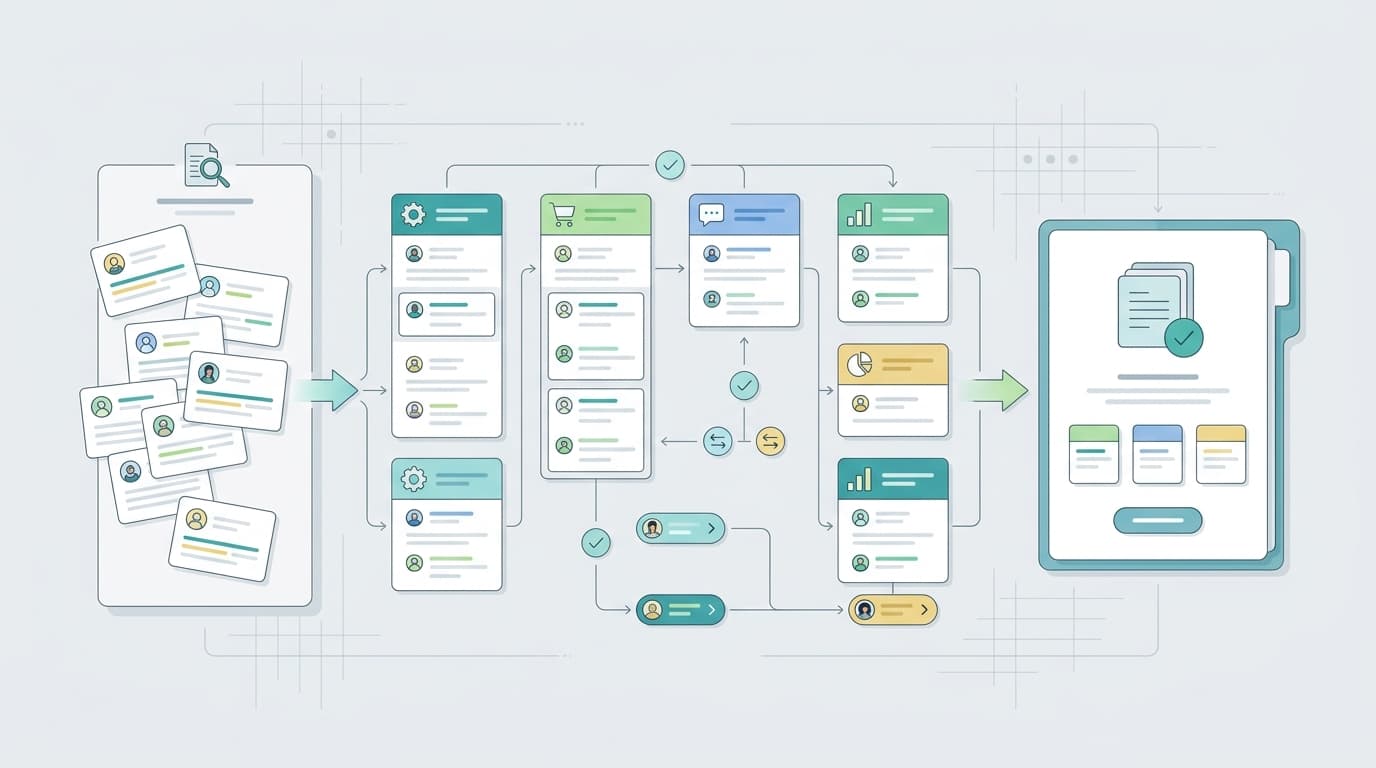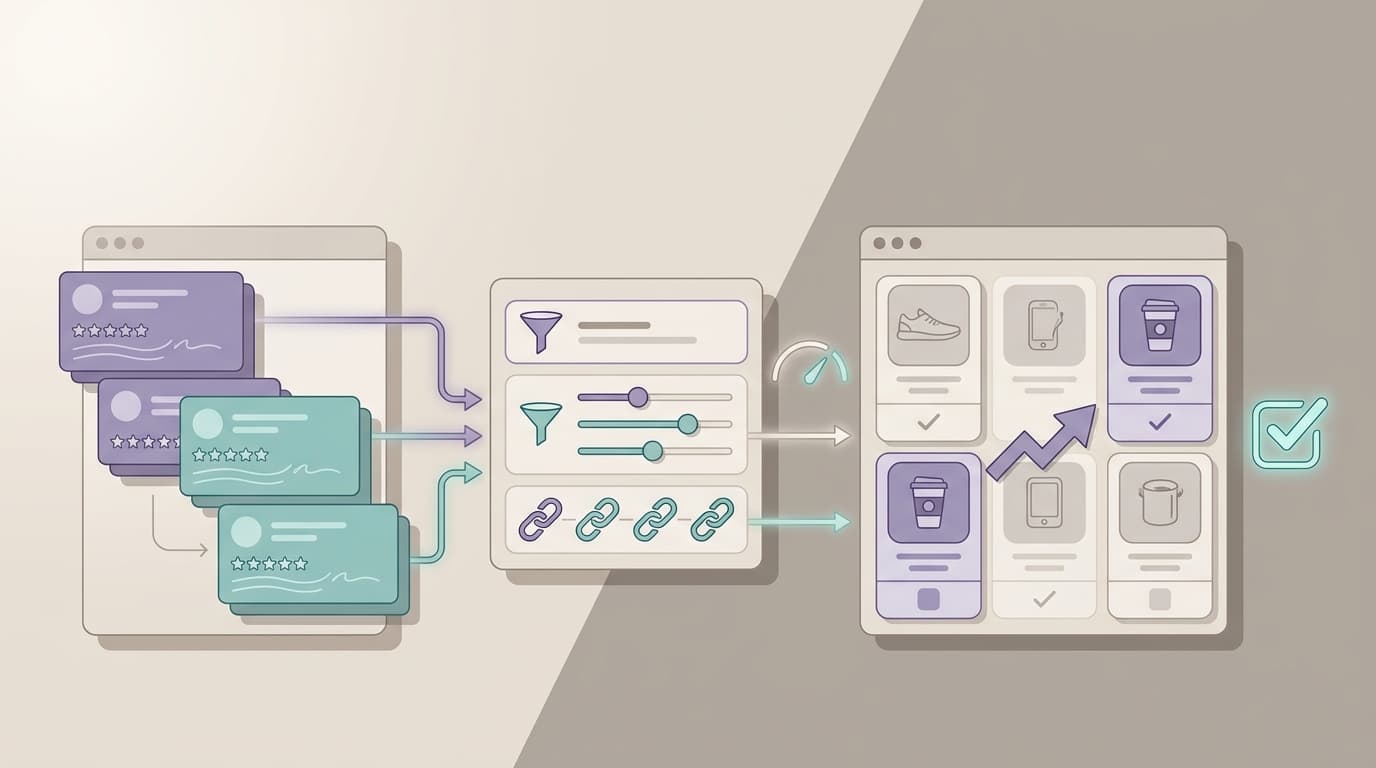
Social listening for ecommerce works best when it starts with evidence you already own: customer reviews.
Reviews show what verified buyers experienced after purchase. Social conversations show what shoppers, creators, and communities are noticing before, during, and after a product enters the market. When ecommerce teams connect those two signal sets, they can move from scattered mentions to a practical early-warning workflow.
The goal is not to collect every comment on the internet. It is to answer a smaller set of operational questions:
- Is a familiar review complaint beginning to spread on social channels?
- Is a new creator-led use case appearing before it shows up in marketplace reviews?
- Are shoppers using language that should change a product detail page, launch message, or support response?
- Is a sentiment shift isolated noise, or does it repeat across channels and customer stages?
This guide explains how to build that workflow without turning social listening into another dashboard nobody checks.
What Is Social Listening for Ecommerce?
Social listening for ecommerce is the process of collecting, organizing, and interpreting public customer conversations so a brand can make better product, marketing, merchandising, and support decisions.
Unlike basic mention tracking, a useful ecommerce workflow goes beyond counting brand names. It looks for recurring themes such as:
- product expectations,
- feature requests,
- usage scenarios,
- quality concerns,
- packaging or delivery problems,
- competitor comparisons,
- creator-led trends,
- purchase objections,
- and language customers use to describe value.
The most reliable setup connects social signals to marketplace evidence. A viral comment may be an early clue, but a repeated review theme gives the clue context. A review complaint may describe an established problem, while a burst of creator comments may reveal that the same problem is becoming more visible.
That is why ecommerce social listening should begin with a review baseline and then expand outward.
Why Reviews Should Be the Foundation
Social channels are fast, expressive, and useful for discovering emerging language. They are also noisy. One highly visible post can generate hundreds of reactions that repeat the creator's framing rather than independent product experiences.
Reviews have a different strength. They tend to contain post-purchase detail: what the customer expected, how the product was used, what failed, what worked, and whether the experience justified the price.
A review-first baseline gives your team a stable taxonomy before it starts monitoring broader conversations. Instead of searching social channels for vague positive or negative sentiment, you can watch for known decision themes.
For example, a portable blender brand might establish these review themes:
| Theme | What to look for | Likely owner |
|---|---|---|
| Battery life | Charge duration, number of uses, charging friction | Product |
| Blending power | Ice, frozen fruit, texture, motor stalls | Product and merchandising |
| Leak resistance | Lid fit, seals, bag spills, cleaning | Product and support |
| Portability | Weight, cup size, commuting, gym use | Marketing |
| Cleaning | Blade access, odor, dishwasher expectations | Support and content |
The team can then monitor social conversations for the same themes plus new language that does not yet exist in the review taxonomy.
VOC AI's Voice of Customer Analysis workflow is designed around turning review language into structured customer insight. That review foundation can support a broader social listening process instead of forcing teams to interpret every channel from scratch.
Reviews and Social Signals Answer Different Questions
The two sources become more valuable when teams stop treating them as substitutes.
| Signal source | Best at answering | Common limitation |
|---|---|---|
| Marketplace reviews | What buyers experienced after purchase | Themes may appear after a problem is already established |
| Creator videos and comments | What attracts attention and how products are demonstrated | Visibility can be driven by one influential account |
| Community discussions | What buyers compare, question, or troubleshoot | Identity and purchase context may be unclear |
| Brand comments and direct responses | What needs an immediate support or messaging response | Conversations can be fragmented across posts |
| Competitor conversations | What shoppers praise or reject across alternatives | Mention volume does not automatically indicate purchase intent |
Reviews are often strongest for depth. Social signals are often strongest for speed and language change.
An ecommerce team needs both when it is preparing a launch, responding to a complaint spike, refreshing a listing, or investigating why a competitor is gaining attention.
A Six-Step Ecommerce Social Listening Workflow
1. Build a Review Baseline
Start with a defined product set: one ASIN, one product family, or a small group of direct competitors.
Analyze enough reviews to identify recurring themes, but do not reduce the output to a single sentiment score. Capture:
- the theme,
- positive and negative variations,
- customer wording,
- usage context,
- product or operational implication,
- and a few representative examples for validation.
If you already maintain a customer-feedback dashboard, use its existing theme names. If not, the workflow in our guide to building a customer feedback dashboard for product, support, and marketing provides a useful starting structure.
2. Define the Social Signal Map
Do not monitor every channel equally. Match each source to the decision it can inform.
| Channel type | Useful signal | Example decision |
|---|---|---|
| Short-form creator content | Demonstrations, hooks, objections, emerging use cases | Launch creative and product positioning |
| Video comments | Questions, confusion, comparison language | PDP FAQ and creator brief updates |
| Community threads | Troubleshooting, alternatives, long-form objections | Product fixes and support content |
| Brand post comments | Immediate praise, complaints, and service needs | Response routing and escalation |
| News and public discussion | Category-level shifts and reputation risks | Campaign timing and executive review |
This prevents the common mistake of collecting a large volume of mentions without knowing what action each source should trigger.
3. Match Social Language to Review Themes
Use the review taxonomy as the first classification layer.
When a social post or comment matches an existing theme, tag it to that theme. When it does not match, place it in a temporary “emerging” bucket until enough evidence appears to create a new theme.
For each signal, capture four pieces of context:
- Theme: What customer problem, benefit, or expectation is present?
- Stage: Is the person considering, buying, using, returning, or recommending the product?
- Source: Where did the signal appear, and what format created it?
- Evidence strength: Is it one comment, repeated independent comments, or a pattern that also appears in reviews?
This structure keeps a viral anecdote from receiving the same weight as a cross-channel pattern.
4. Look for Cross-Channel Movement
The most useful signal is not raw mention volume. It is movement in a decision-relevant theme.
Watch for patterns such as:
- a review complaint appearing in creator comments,
- a social use case later appearing in positive reviews,
- a competitor benefit becoming a repeated comparison point,
- a packaging complaint spreading from reviews into unboxing content,
- or a support question becoming common enough to require new PDP content.
Use a simple matrix to prioritize what deserves attention:
| Review evidence | Social evidence | Interpretation | Action |
|---|---|---|---|
| High | High | Established and visible issue or benefit | Assign an owner now |
| High | Low | Stable customer experience theme | Monitor and improve the underlying experience |
| Low | High | Emerging or creator-amplified signal | Validate quickly before making a large change |
| Low | Low | Weak signal | Log it and wait for repetition |
This matrix helps teams separate early warnings from temporary attention spikes.
5. Route Each Theme to an Owner
Insight without ownership becomes reporting.
Assign each theme to the team that can change the customer experience:
- Product: recurring quality, feature, usability, and durability themes.
- Merchandising: bundles, variants, price-value expectations, and assortment gaps.
- Marketing: creator hooks, customer vocabulary, objections, and differentiators.
- Support: setup confusion, troubleshooting, returns, and response priorities.
- Operations: packaging, delivery, fulfillment, and damage patterns.
Every routed item should include the evidence, the recommended next decision, and a review date. Avoid sending a screenshot with no context and asking another team to “look into it.”
6. Close the Loop in Reviews
After a product, listing, support, or campaign change, return to the review baseline.
Ask:
- Did the complaint theme decline?
- Did customers adopt the new product language?
- Did a social use case become a durable review benefit?
- Did the change create a new expectation or objection?
This turns social listening into a feedback loop rather than a one-time monitoring project. Our customer feedback loop guide explains how to connect recurring feedback to product-roadmap decisions.
How to Use Social Listening Before a Product Launch
The workflow is especially useful before a launch because the team has limited first-party feedback on the new product.
Start with reviews from adjacent products and direct competitors. Build a baseline of buyer expectations, complaints, desired features, and exact phrases. Then monitor social content around the same product category.
Look for gaps between the two sources:
- Are creators demonstrating a use case that reviews barely mention?
- Are comments repeatedly asking a question competitors fail to answer?
- Is a feature praised in videos but criticized after purchase?
- Does the category use different language on social channels than on marketplace listings?
Those gaps can improve launch briefs, product demonstrations, PDP FAQs, creator instructions, and post-launch monitoring plans.
VOC AI's product research, competitor analysis, and Market Insight workflows can help teams connect customer language with product and category decisions.
Metrics That Make the Workflow Useful
Avoid building the program around mention count alone. A small number of repeated, decision-relevant comments can matter more than a large burst of generic reactions.
Track metrics that connect signals to action:
| Metric | What it tells you |
|---|---|
| Theme frequency | Whether a problem or benefit is repeating |
| Channel spread | Whether the theme exists in one source or across several |
| Review-social overlap | Whether fast social chatter has post-purchase evidence |
| New-theme rate | How often new language appears outside the review taxonomy |
| Owner response time | Whether insights reach the team that can act |
| Resolution status | Whether the team tested or completed a response |
| Post-change review trend | Whether customer experience changed after action |
Use sentiment as a filter, not the final decision. A negative theme can contain a product fix, while a positive theme can reveal a new positioning opportunity. VOC AI's sentiment analysis capabilities can support prioritization when they remain connected to the underlying customer language.
Common Mistakes to Avoid
Monitoring Without a Decision
If the team cannot name the decision a channel informs, the monitoring scope is too broad.
Treating Every Mention as Equal
A buyer describing repeated product failure is different from a person repeating a creator's joke. Keep evidence context attached.
Using Sentiment Without Themes
“Negative increased” is not an action plan. Teams need to know which expectation, feature, or experience changed.
Replacing Validation With Automation
AI can cluster and summarize large amounts of feedback, but operators should still inspect representative source material before changing a product, campaign, or listing.
Keeping Reviews and Social Data in Separate Teams
The value comes from connection. If the marketplace team owns reviews and the social team owns comments with no shared taxonomy, cross-channel movement remains invisible.
A Practical Weekly Review
A 30-minute weekly social-listening review can be enough when the inputs are structured.
- Review the five themes with the largest week-over-week movement.
- Check whether each theme appears in reviews, social channels, or both.
- Validate representative examples.
- Assign one owner and one next action for high-priority themes.
- Move weak signals to monitoring instead of forcing a decision.
- Revisit the effect of actions taken in previous weeks.
The output should be a short decision log, not a presentation full of screenshots.
FAQ
What is the difference between social monitoring and social listening?
Monitoring collects mentions, comments, and alerts. Listening interprets recurring themes and connects them to a decision. Ecommerce teams need both, but listening creates the operational value.
Can social listening replace review analysis?
No. Social signals can reveal emerging attention and language, while reviews provide detailed post-purchase evidence. The two sources are stronger together.
Which social channels should an ecommerce brand monitor?
Start with the channels where customers discover, compare, demonstrate, and troubleshoot your category. The right mix may include creator platforms, video comments, community discussions, brand comments, and public news or conversation sources.
How often should teams review social-listening data?
Use alerts for urgent support or reputation issues, then run a structured weekly review for product, marketing, and merchandising themes. Increase the cadence around launches, promotions, or known complaint spikes.
How do you know whether a social trend matters?
Check repetition, source independence, channel spread, customer stage, and overlap with review evidence. A trend matters more when it connects to a specific product expectation and appears across more than one context.
Start With One Product, Not Every Channel
The fastest way to build social listening for ecommerce is to narrow the scope.
Choose one product or competitor set. Build a review taxonomy. Add the two or three social sources most likely to reveal category language or emerging use cases. Route only repeated, decision-relevant themes. Then measure whether the workflow improves the speed and quality of product, listing, campaign, or support decisions.
VOC AI helps ecommerce teams organize review intelligence and connect it with broader customer signals. Explore the social listening workflow or view VOC AI plans to build a review-first monitoring process for your catalog.