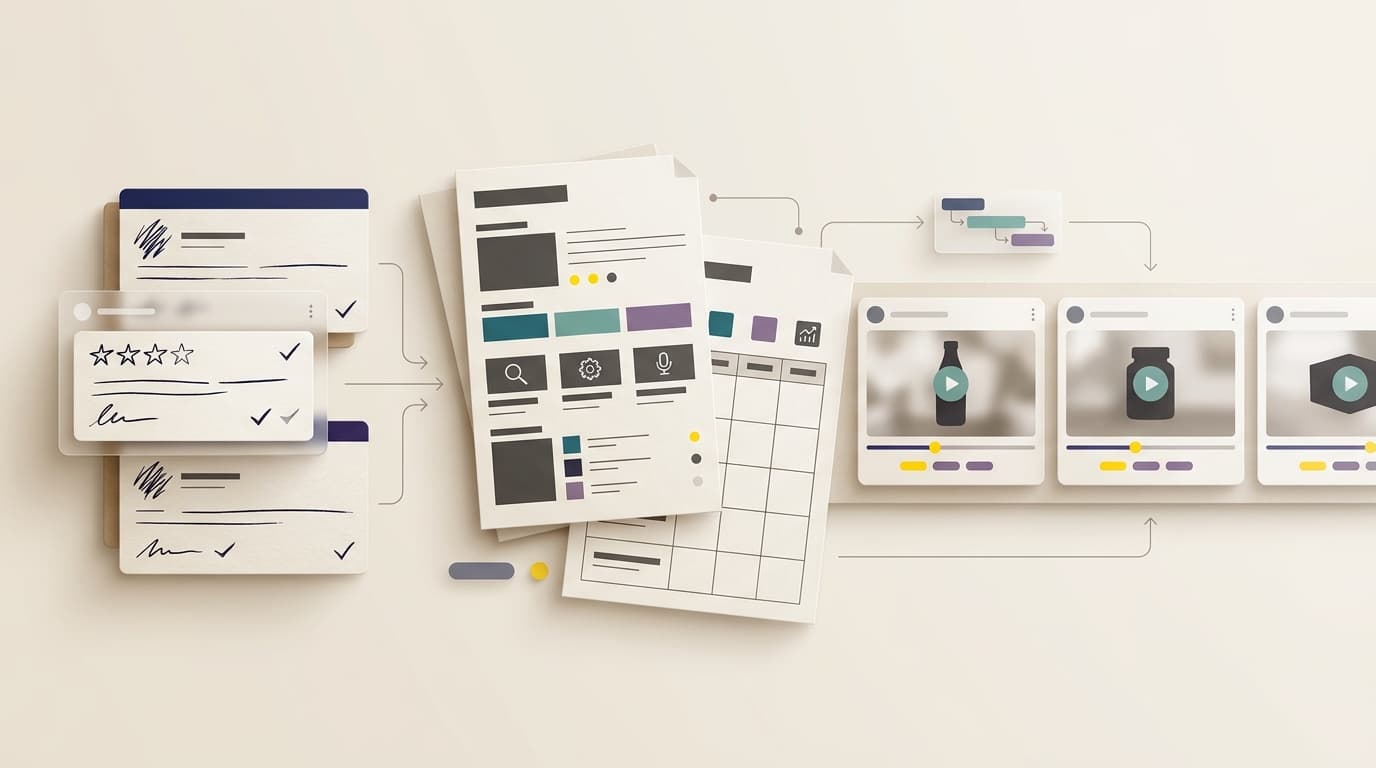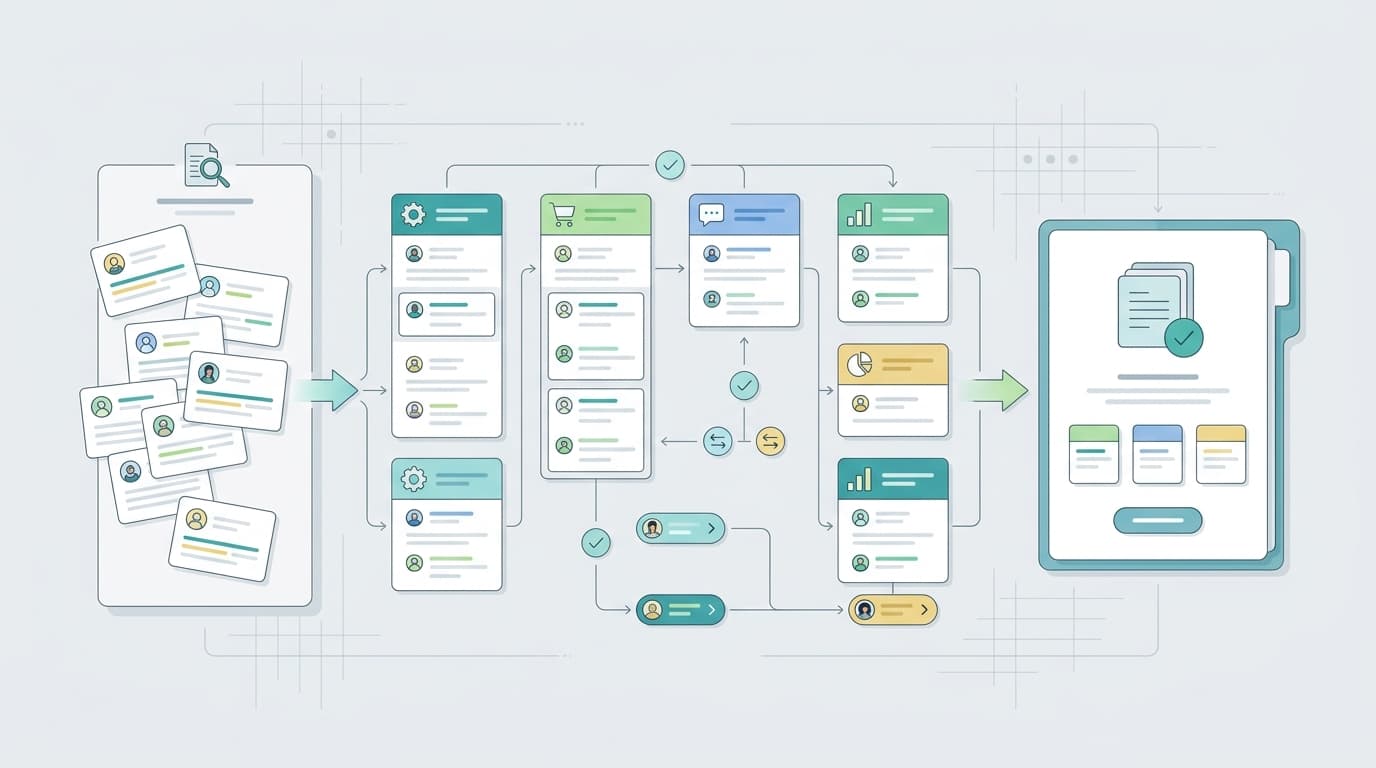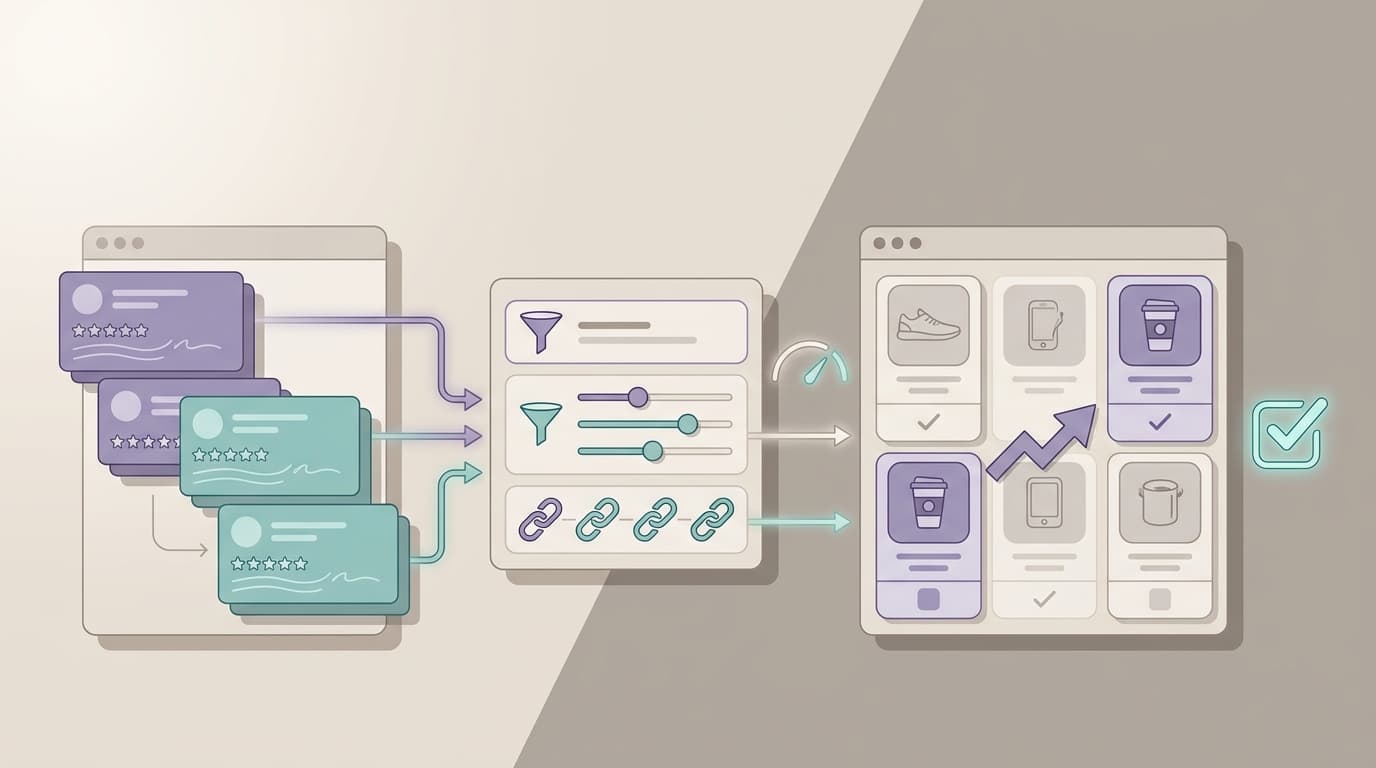
A customer review analysis tool should do more than turn thousands of comments into a polished summary. It should help your team make a specific decision without losing the evidence, scope, and context behind the conclusion.
That distinction matters because “review analysis” can describe several different jobs. One team may need a fast summary before rewriting a listing. Another may need to monitor new complaints after a product launch. A product manager may want to compare recurring weaknesses across competitors, while an agency may need a repeatable workflow across dozens of client products.
The right tool depends on what must happen after the analysis.
This guide explains the five common review-analysis jobs, the criteria that make review analysis software decision-ready, and a practical trial you can run before buying. The goal is not to collect the longest feature list. It is to score tools based on the downstream decisions they support.
Start With the Decision, Not the Feature List
Dashboards, AI summaries, sentiment charts, and automated themes can look impressive in a demo. None of them proves that the tool will support your actual workflow.
Start by writing a one-sentence decision statement:
We need to analyze reviews from this product set, over this period, so this team can make this decision and produce this output.
For example:
- We need to analyze recent reviews for our top ASIN so the listing team can rewrite bullets around the objections buyers mention most often.
- We need to monitor new reviews for a recent launch so the product and CX teams can investigate whether one complaint is accelerating.
- We need to compare three competitor products so product managers can separate category-wide tradeoffs from weaknesses we may be able to solve.
These are different jobs. A lightweight summarizer may be enough for the first. The second depends on refresh behavior and alerting. The third requires matched cohorts, comparison controls, and access to source evidence.
Before looking at vendors, define five things:
- Decision owner: Who will act on the result?
- Review cohort: Which products, markets, ratings, variants, and dates belong in scope?
- Required output: What must the analysis produce—a brief, alert, product requirement, listing input, or structured dataset?
- Evidence standard: What source detail must remain available for validation?
- Operating rhythm: Is this a one-time study or a repeated process?
Once these are clear, feature evaluation becomes much easier.
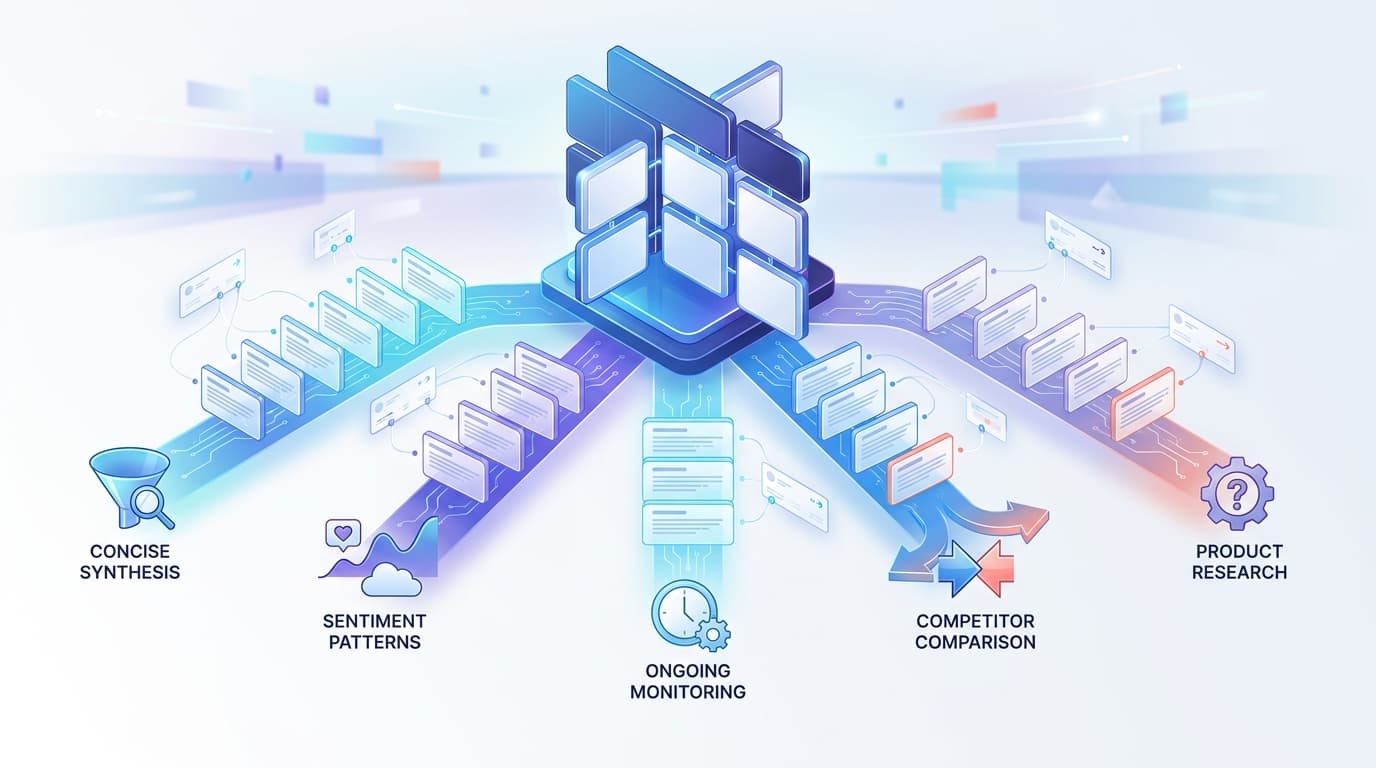
Five Types of Review Analysis Capability
Many tools combine several capabilities, but it helps to evaluate them as separate jobs. This prevents a strong result in one area from hiding a serious gap in another.
| Capability | Primary question | Minimum useful output | Common buying mistake |
|---|---|---|---|
| Summarization | What are reviewers saying overall? | Condensed themes with supporting examples | Treating a fluent summary as sufficient evidence |
| Sentiment analysis | How do buyers feel about specific topics? | Topic-level polarity with context and exceptions | Treating one aggregate score as a diagnosis |
| Monitoring | What changed after the baseline? | New-review trends, thresholds, and owner routing | Buying a one-time analyzer for an ongoing problem |
| Competitor analysis | Where do alternatives win or disappoint? | Matched comparisons by topic, cohort, and product | Comparing unmatched products or time periods |
| Product research | Which problems and tradeoffs deserve investigation? | Structured needs, use cases, objections, and evidence | Treating review frequency as proof of market demand |
1. Review Summarization
An Amazon review summarizer compresses a large body of comments into themes or a narrative. That is useful when the immediate problem is reading speed.
The key question is whether the summary stays connected to its source. A decision-ready summarizer should disclose the cohort it analyzed, preserve meaningful contradictions, and let the user inspect examples behind important themes. A summary that says “customers like the quality” is far less useful than one that distinguishes perceived material quality, durability after repeated use, packaging condition, and the situations in which opinions differ.
Summarization is often a first layer, not the whole workflow. It tells you where to look. It should not automatically tell you what to build, claim, or change.
2. Sentiment Analysis
Sentiment analysis classifies positive, negative, or neutral language. More useful systems connect sentiment to topics, use cases, product attributes, or customer segments.
Aggregate sentiment alone can hide the issue you care about. A product may have positive overall sentiment while one safety, sizing, compatibility, or durability complaint grows within a specific variant. The tool should let you inspect what the sentiment refers to, how mixed statements are handled, and which reviews support the pattern.
For a deeper seller workflow, see Amazon review sentiment analysis for sellers.
3. Review Monitoring
Amazon review monitoring is the right job when the decision depends on what happens next: new complaints, rating-mix changes, post-launch feedback, packaging issues, or the response to a product update.
A monitoring tool needs more than a refresh button. Evaluate how often it checks for new data, what baseline it uses, whether thresholds are configurable, how duplicates or delayed reviews are handled, and where alerts go. An alert should also preserve enough context for an owner to decide whether to investigate, watch, or dismiss it.
If monitoring is central to your use case, review the workflow for Amazon review monitoring for rating drops and complaint trends.
4. Competitor Review Analysis
Competitor analysis compares buyer experiences across alternatives. It can help teams find recurring competitor complaints, table-stakes expectations, underserved use cases, and tradeoffs that buyers accept.
The comparison is only useful when cohorts are reasonably matched. A mature bestseller with years of reviews should not be compared casually with a new launch and treated as equivalent. The tool should make product selection, date range, rating filters, variants, and review counts visible.
The strongest output is not “competitor A has more negative reviews.” It is a structured explanation of what buyers expected, what happened, who experienced the problem, and what evidence would be needed before turning it into a requirement. This competitor complaint-to-product-requirement workflow shows how to make that handoff.
5. Product Research From Reviews
Product research uses reviews to understand buyer motivations, desired outcomes, usage situations, objections, strengths, weaknesses, and unresolved tradeoffs.
Reviews are valuable evidence of customer experience, but they are not a complete market model. A frequent complaint does not by itself prove market size, demand, defect rate, or commercial opportunity. Product teams should combine review evidence with category movement, pricing, keyword demand, sales data, operational constraints, and additional customer research.
Use product research from customer reviews when you need a method for moving from customer language to bounded product hypotheses.
The 14 Criteria That Make a Tool Decision-Ready
Once you know the job, evaluate the tool in four groups: data, analysis, trust, and workflow. Use a 0–3 scale for each criterion:
- 0 — Missing: The tool does not support the requirement.
- 1 — Weak: The output exists but cannot support the decision reliably.
- 2 — Usable: The output supports the decision with manageable manual work.
- 3 — Strong: The output is clear, traceable, repeatable, and ready for handoff.
Do not total the scores immediately. Mark each criterion as required, useful, or irrelevant for your decision first. A tool that fails one required criterion should not beat a specialist simply because it accumulates points from features you will not use.
| Group | Criterion | What to verify in a trial |
|---|---|---|
| Data | 1. Coverage | Which reviews, products, markets, variants, dates, and rating levels are included? |
| Data | 2. Freshness | When was the data last updated, and how is refresh behavior disclosed? |
| Data | 3. Sampling | Can you see whether the result uses all available reviews or a sample? |
| Data | 4. Filtering | Can users reproduce cohorts by date, rating, product, variant, or relevant segment? |
| Analysis | 5. Theme quality | Are themes specific, distinct, and useful—or generic labels that blur different problems? |
| Analysis | 6. Sentiment context | Is sentiment tied to topics and evidence rather than shown only as one score? |
| Analysis | 7. Buyer language | Can the workflow preserve the phrases, objections, and outcomes customers actually describe? |
| Analysis | 8. Comparison controls | Can products or periods be compared with matched definitions and visible denominators? |
| Trust | 9. Evidence traceability | Can important findings be checked against source reviews or representative excerpts? |
| Trust | 10. Uncertainty handling | Does the output preserve contradictions, small samples, ambiguity, and alternative explanations? |
| Trust | 11. Governance | Are access, retention, permissions, and acceptable-use requirements clear for your team? |
| Workflow | 12. Monitoring and handoff | Can changes be routed to the right owner with context and a clear next action? |
| Workflow | 13. Export or API | Can results be repeated, exported, joined with other data, or embedded where needed? |
| Workflow | 14. Operating cost | How much manual cleanup, taxonomy work, validation, and training is required per product? |
These criteria turn a vague software comparison into an operational test. They also expose the difference between an attractive demo and a system your team can use repeatedly.
For a commercial comparison format, use the Amazon review analysis tool buyer scorecard after you have defined your required outputs.
Match the Scorecard to Your Actual Job
The same criterion should not carry the same weight for every team.
| Job | Required criteria | Usually useful | Often secondary |
|---|---|---|---|
| One-time listing input | Coverage, filtering, theme quality, buyer language, evidence traceability | Sentiment context, export | Monitoring |
| Post-launch issue watch | Freshness, filtering, monitoring and handoff, evidence traceability | Sentiment context, comparison | Buyer-language export |
| Competitor product brief | Coverage, sampling, filtering, comparison controls, traceability | Theme quality, buyer language, export | Alerts |
| Product research | Coverage, theme quality, buyer language, uncertainty handling, traceability | Comparison, export/API | High-frequency monitoring |
| Agency or multi-brand program | Reproducible filters, governance, exports/API, operating cost, collaboration handoff | Monitoring, reusable taxonomies | One-off narrative polish |
A narrow monitoring tool can be the best choice when the only job is detecting and routing new complaints. A broader platform may be better when the team must connect review themes to product research, competitor comparisons, listing inputs, and repeated reporting.
There is no prize for buying the broadest system. The goal is to meet every required criterion with the least unnecessary operating burden.
How to Test a Customer Review Analysis Tool Before Buying
Run a bounded trial using the same input and task for every candidate. Avoid vendor-selected examples because they make comparison difficult.
Step 1: Choose One Real Decision
Pick a decision your team expects to make within the next 30 days. Examples include investigating a recurring complaint, preparing a competitor brief, or updating listing language.
Step 2: Define a Matched Dataset
Use the same product or ASIN set, marketplace, date range, rating filters, and variants. Record the available review count and any limits the tool applies.
Step 3: Specify the Required Output
Ask each tool to produce the same deliverable. A useful trial prompt is:
Analyze this defined review cohort for the decision stated above. Identify the most decision-relevant themes, preserve contradictory evidence, show the cohort and limitations, provide representative source support, and recommend the next validation step without treating review frequency as proof of demand or defect rate.
Step 4: Audit the Evidence
Select three important findings and trace them back to source reviews. Check whether the wording, frequency, context, and exceptions match the summary.
Step 5: Complete the Handoff
Move the result into the destination workflow: a product brief, listing document, alert queue, client report, roadmap note, or data pipeline. Measure the cleanup and validation time required.
Step 6: Score the Operating Cost
Include setup, taxonomy maintenance, exports, training, permissions, manual QA, and repeated use. A cheaper subscription can become the more expensive workflow if every analysis requires extensive repair.
Red Flags That Review Analysis Software Will Not Support Real Decisions
Be cautious when a tool:
- produces conclusions without showing the analyzed cohort;
- gives polished themes but no route back to evidence;
- hides whether it analyzed all reviews or a sample;
- collapses mixed customer statements into a single sentiment label;
- compares products with unmatched dates, markets, variants, or review counts;
- presents review frequency as proof of demand, prevalence, or defect rate;
- removes contradictions and edge cases from the final output;
- offers monitoring without a clear baseline, threshold, or owner workflow;
- exports only a screenshot when teams need structured reuse;
- requires so much manual cleanup that the process cannot be repeated.
Also ask how the data is obtained and whether your intended use fits platform terms, privacy requirements, and applicable rules. Review analysis should support better products and clearer customer understanding—not review manipulation, suppression, or deceptive practices.
Where VOC AI Fits
VOC AI is designed for teams that need to move from customer-review evidence to product, market, and go-to-market decisions.
VOC AI’s Voice of Customer Analysis focuses on turning reviews into product direction, buyer language, and decision inputs. Teams can connect that review work with review-backed product research and competitor review analysis when the job extends beyond one summary.
For technical teams, agencies, or repeated multi-product workflows, the Review Analysis API provides a route for programmatic review, keyword, sales, and listing data workflows.
VOC AI will not be the right fit for every use case. If you only need a quick one-off summary, a lightweight summarizer may be enough. If you only need authenticity screening, use criteria built for that job. VOC AI becomes more relevant when evidence must support product research, competitor analysis, buyer-language discovery, or a repeatable decision workflow.
Frequently Asked Questions
What does a customer review analysis tool do?
A customer review analysis tool collects or accepts review data and helps users summarize, classify, compare, monitor, or operationalize it. Capabilities differ materially: one tool may focus on summarization, another on sentiment or alerts, and another on product and competitor decisions.
What is the difference between an Amazon review summarizer and an Amazon review analyzer?
An Amazon review summarizer mainly condenses review content. An Amazon review analyzer may also add themes, sentiment, filtering, comparisons, source evidence, or workflow outputs. These are not universal product definitions, so evaluate the actual output rather than the label.
When do I need Amazon review monitoring instead of a one-time analysis?
Use monitoring when your decision depends on new reviews or change over time—for example after a launch, packaging change, promotion, or product update. Monitoring should include a baseline, refresh cadence, threshold, evidence, and an owner response.
Can sentiment analysis identify product problems automatically?
It can surface patterns worth investigating, but it does not automatically prove the cause, frequency, or business impact of a problem. Operators should validate the cohort, source evidence, affected segments, contradictions, and alternative explanations.
How should I compare customer review analysis tools?
Use one real decision, one matched dataset, one required output, and the same evidence audit for every tool. Score required criteria before useful extras, then measure whether the result can be handed to the next team without excessive cleanup.
Do I need an API for customer review analysis?
An API matters when analysis must be repeated, embedded in another product, joined with operational data, or standardized across products and clients. It may be unnecessary for occasional manual research.
Choose the Tool That Supports the Next Decision
The best customer review analysis tool is not the one with the most charts. It is the one that preserves enough context and evidence to support the decision your team must make next.
Define the decision. Build a matched cohort. Mark required criteria. Run the same trial. Audit the evidence. Complete the handoff.
Then score tools based on the downstream decisions they support.
If your team needs a repeatable workflow across products, competitors, or data systems, discuss a review-analysis workflow with VOC AI.