Getting traffic to your Amazon listing is only half the battle. The real frustration comes when you see thousands of impressions but a conversion rate that sits flat at 2%.
Most sellers fail not because their product is bad, but because their listing fails to "speak" to the buyer's specific needs or gets lost in the algorithm.
In this blog, I curated the 6 best Amazon listing optimization tools.They can help you stop guessing what the algorithm wants and start giving customers exactly what they need to click "Add to Cart."
If you are in a hurry, have a look at the quick breakdown of my top picks.
Product | Best for | Key Strength |
VOC AI | Deep Review & Sentiment Analysis | Uncovering hidden buyer pain points to refine copy. |
Helium 10 | All-in-One SEO & Keywords | Massive database and "Scribbles" listing builder. |
Jungle Scout | Beginner-Friendly Optimization | Intuitive listing grading and direct Seller Central sync. |
Perci.ai | AI Listing Copywriting | Generating Amazon-compliant, conversion- focused text. |
PickFu | A/B Testing Visuals | Real human feedback on main images before launch. |
DataDive | Advanced Data Correlation | Aggregating data to build weighted "Master Keyword Lists." |
VOC AI: Best for Deep Review & Sentiment Analysis
Best for: Sellers who want to optimize their listing based on what customers actually care about (Voice of Customer), rather than just guessing keywords.
Why I Pick It: VOC AI allows you to tap into the mind of your customer. While standard SEO tools tell you what keywords people search for, VOC AI tells you why they buy (or bounce).
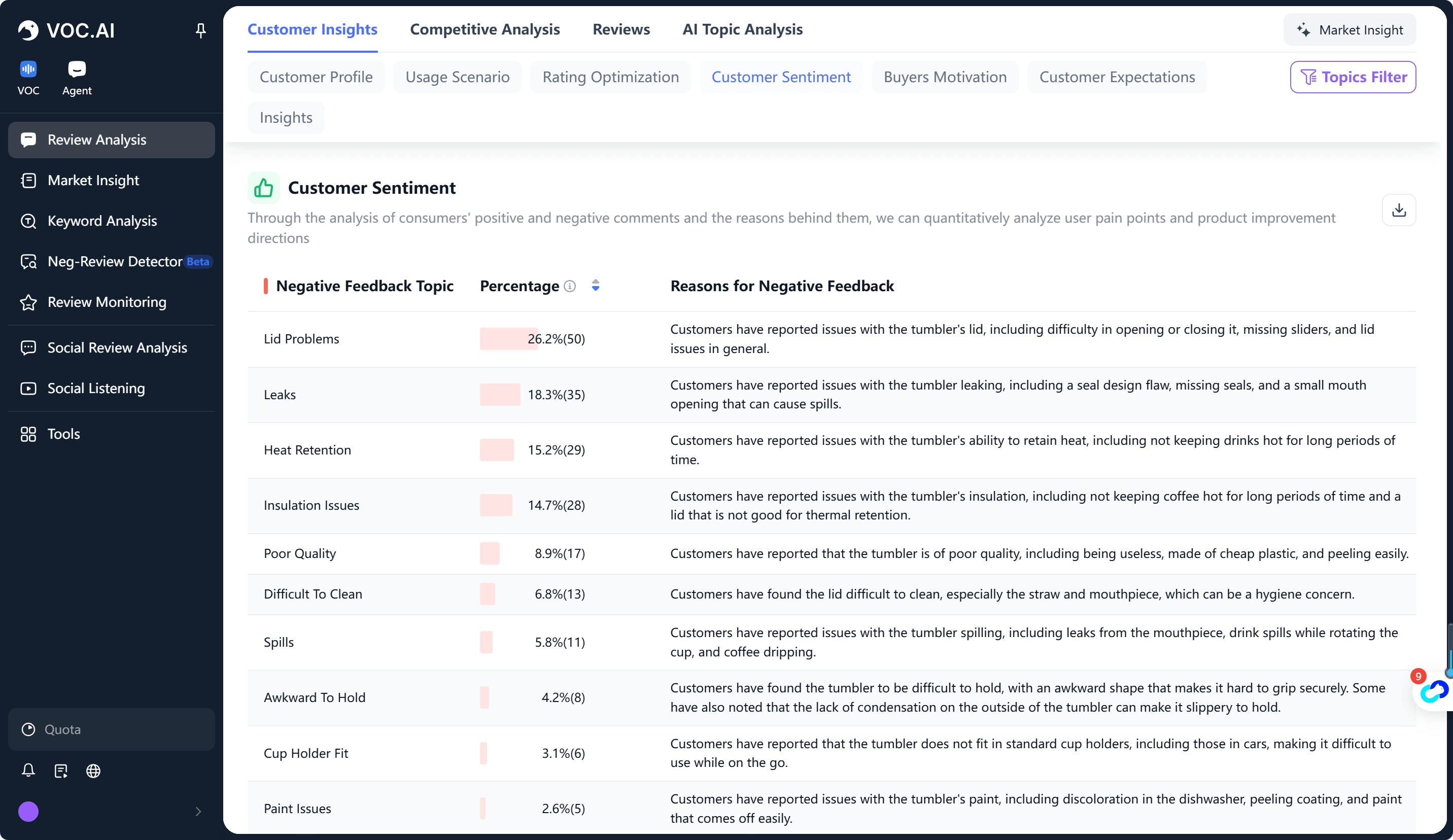
I used it to analyze 5,000 reviews of competitors' thermos cup. The AI instantly identified that "lid problem" was the #1 complaint. I immediately updated my listing's title and images to highlight "leak-proof Technology."
It acts as a Buyer Psychology Engine. It scrapes reviews and Q&A sections to build a profile of your customer's triggers, allowing you to write copy that resonates emotionally, not just algorithmically.
Core Functionalities:
- Sentiment Insights: Breaks down positive/negative feedback by topic (e.g., "Size," "Durability").
- Competitive Analysis: Visualizes where your product wins or loses against the category leader.
- Review Downloader: One-click export of thousands of reviews for deep analysis.
- AI Topic Analysis: Suggests bullet points based on high-frequency customer phrases.
Limitations:
- Focuses heavily on text/sentiment; you still need a standard keyword tool for search volume data.
Pricing:
- Free Plan: Basic access to AI review analysis features, ideal for beginners testing the waters.
- Pro Plan ($99/mo): For advanced product research. Includes 600 review analysis reports per month, market insights, and access to 10+ AI seller tools.
- Enterprise Plan (Custom): For large-scale businesses. Offers unlimited reports, API access for review analysis, and advanced AI listing optimization features.
Helium 10: Best for All-in-One SEO & Keywords
Best for: Experienced sellers who need a comprehensive suite for keyword research, listing building, and rank tracking.
Why I Pick It: Helium 10 is the industry standard for a reason. Its tool, Scribbles, is the main reason I keep my subscription.
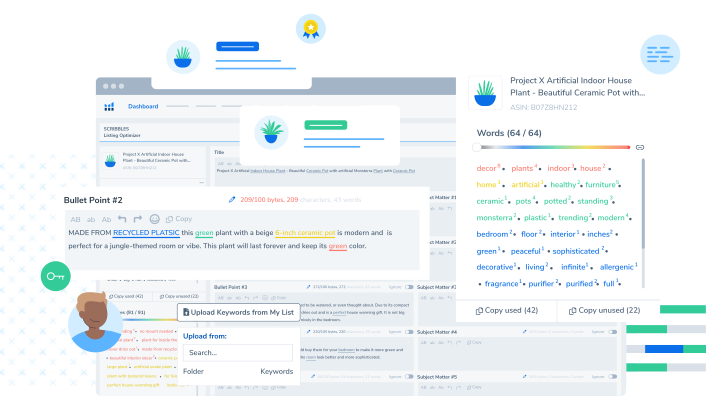
When I’m optimizing a listing, I import my "Master Keyword List" into Scribbles. As I write the title and bullets, the tool crosses off the keywords in real-time. It ensures I never miss a high-volume search term.
Combined with Cerebro (their reverse ASIN lookup tool), it provides the most accurate data on which keywords are driving sales for competitors, making it the backbone of any optimization strategy.
Core Functionalities:
- Scribbles: Validates that all critical keywords are used in the backend and frontend.
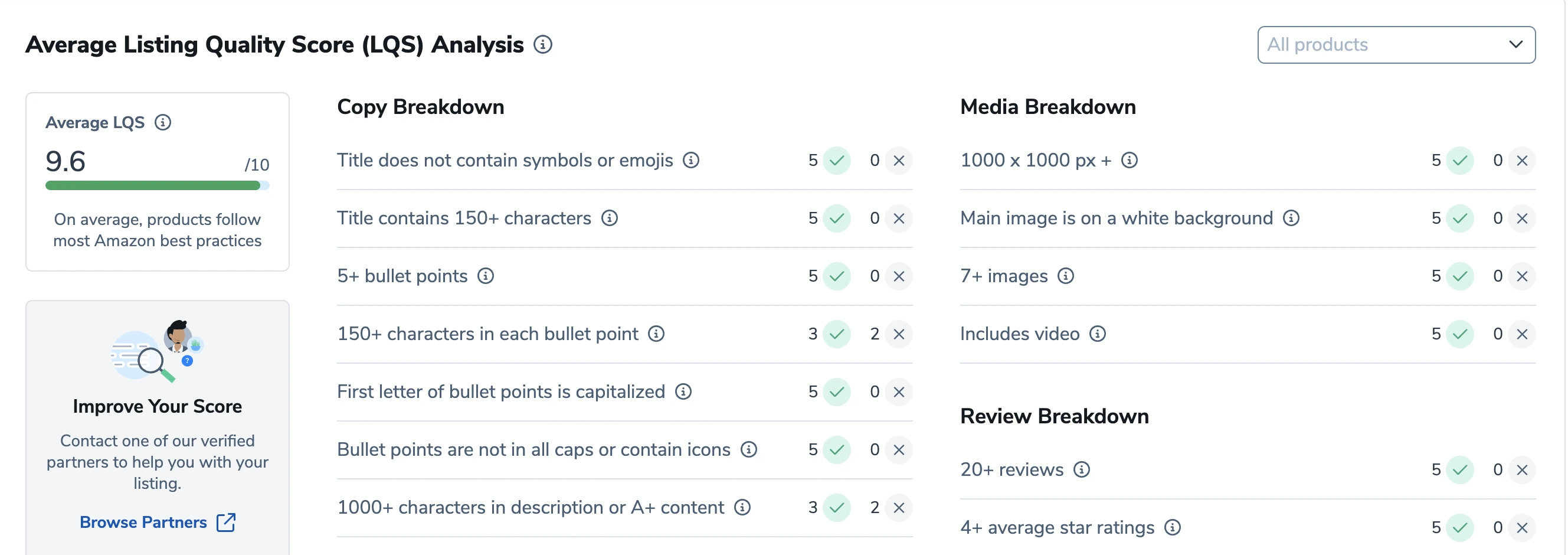
- Listing Analyzer: Gives your listing a score (1-10) based on Amazon's best practices.
- Index Checker: Verifies if your product is actually indexed for your target keywords.
- Magnet: Finds long-tail keyword opportunities that competitors missed.
Limitations:
- The interface can be overwhelming for beginners due to the sheer number of features.
- It is one of the more expensive options on the market.
Pricing:
- Free Plan: Good for testing basic features like Xray.
- Platinum Plan($129/mo): The standard for most sellers; includes all core research tools and AI advertising.
- Diamond Plan($359/mo): For experts scaling up; adds Walmart data and unlimited TikTok search.
Perci.ai: Best for AI Listing Copywriting
Best for: Sellers who want to write high-converting, Amazon-compliant copy in minutes without hiring a copywriter.
Why I Pick It: I used to struggle with "writer's block" when facing a blank listing. Perci.ai solved that.
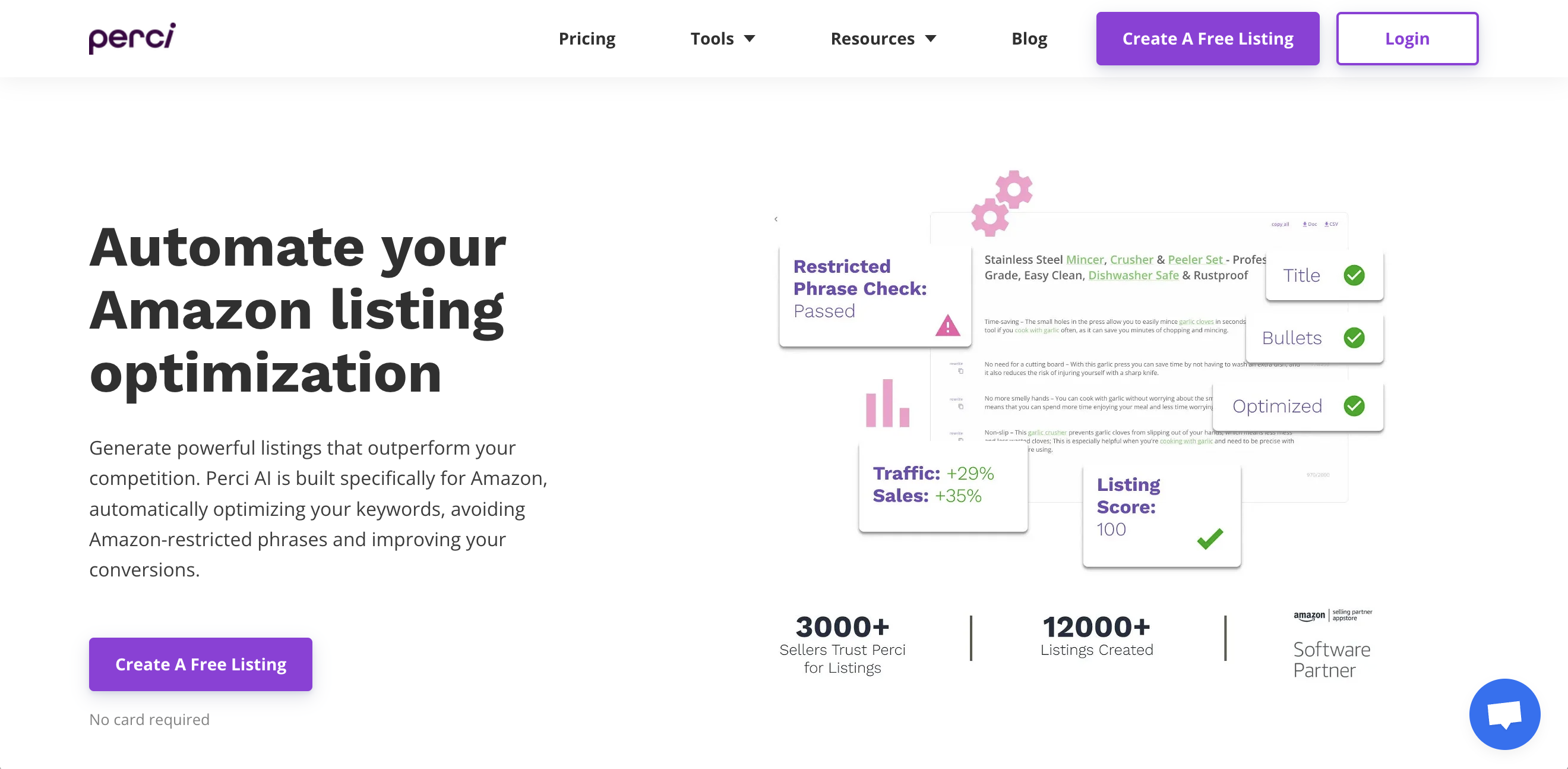
Unlike general AI like ChatGPT, Perci is specifically trained on Amazon's A9 algorithm and strict style guides. It knows not to use prohibited claims (like "Best Seller" or "Eco-friendly" without certs) that can get your listing suppressed.
I can feed it a list of raw keywords from Helium 10, and it weaves them into natural-sounding bullet points that emphasize benefits over features. It turns a 3-hour writing task into a 15-minute review session.
Core Functionalities:
- ASIN SEO Optimization: Automatically integrates target keywords into the copy.
- Restricted Keyword Guard: Flags terms that might trigger Amazon's compliance bots.
- Tone Adjustment: Can switch between "Professional," "Friendly," or "Urgent" tones.
- Bulk Generation: Creates copy for multiple variations at once.
Limitations:
- It is purely a writing tool; it does not track rankings or sales.
- Generated content still requires a human "sanity check" for brand voice.
Pricing:
- Pay as you go: $15/listing (includes keyword research and 30-day tracking).
- Seller: $299/month (50 credits/month, sync 1 Seller account, Walmart listing generator).
- Standard: $1,199/month (500 credits/month, sync 5 accounts, custom restricted words).
- Enterprise: $2,999/month (1,500 credits/month, API access, dedicated account manager).
PickFu: Best for A/B Testing Visuals
Best for: Sellers who want to validate their main image, title, or A+ content before pushing it live.
Why I Pick It: Your main image is the most important factor in your Click-Through Rate (CTR). PickFu lets you test it before you risk your money.
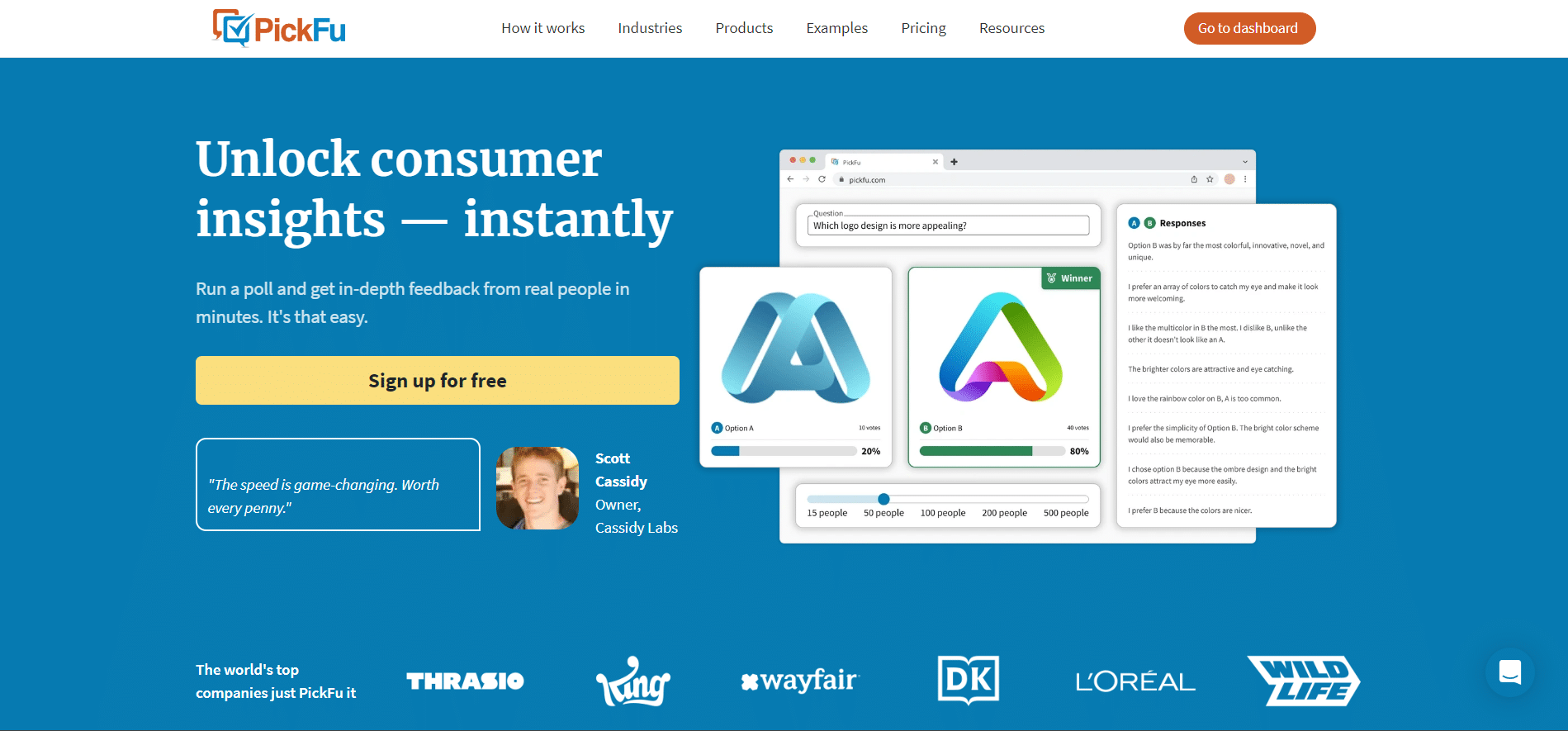
I use PickFu to run "Main Image polls." I upload my product image next to my top 3 competitors and ask 50 real US-based Prime members: "Which one would you click?"
The feedback is brutal and honest. In one case, I thought my packaging looked premium, but PickFu respondents said it looked "medical and scary." I changed the design before launch and saved thousands in potential lost sales.
Core Functionalities:
- Split Testing: Test Main Images, Titles, Logos, and A+ Content layouts.
- Audience Targeting: Filter respondents by income, Prime membership status, or habits (e.g., "Dog Owners").
- Written Feedback: Respondents must explain why they chose one option over the other.
Limitations:
- It is not an automated AI; it relies on human panels, so results take 1-4 hours (fast, but not instant).
- Can get expensive if you run multiple tests per product.
Pricing:
- Pay As You Go: Free signup, starts at $1 per response. No monthly subscription fees; you only pay for the specific polls you run.
- PickFu+: Prepaid annual plans starting at $999/year. Includes AI analysis tools, free daily mini-polls, and volume discounts ranging from 5% to 15% off per poll.
- Enterprise: Custom pricing. Designed for teams needing dedicated customer success managers, multi-team contracts, and custom audience profiling.
Jungle Scout: Best for Beginner-Friendly Optimization
Best for: New sellers who need an intuitive, all-in-one platform to launch their first product.
Why I Pick It: If Helium 10 is the complex cockpit of a jet, Jungle Scout is the streamlined dashboard of a Tesla. It is incredibly user-friendly.
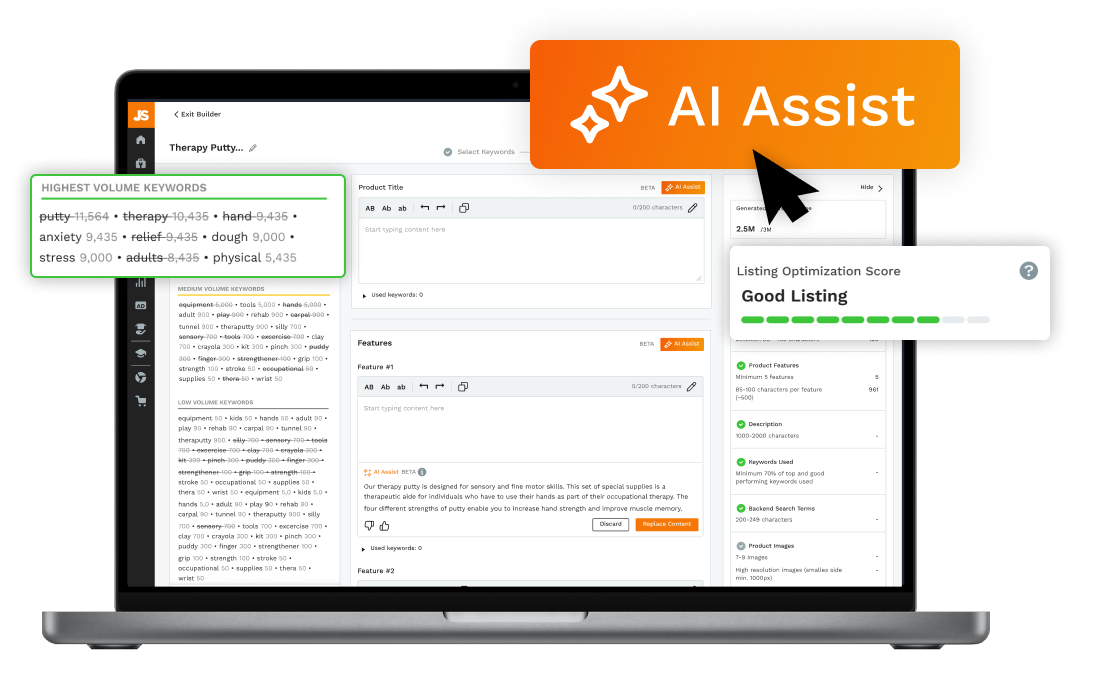
I rely on their Listing Builder to sync directly with Seller Central. This means I can push updates to my listing from Jungle Scout with one click, without having to navigate Amazon’s clunky backend.
Their "Listing Grader" is also excellent for a quick audit. It instantly tells me if my title is too short, if I’m missing images, or if my description lacks key formatting.
Core Functionalities:
- Direct Sync: Updates your listing on Amazon Seller Central automatically.
- Keyword Scout: Generates keyword lists based on competitor ASINs.
- Opportunity Score: Validates if a niche is worth entering before you even optimize.
- AI Review Analysis: Summarizes common positive and negative sentiments (similar to VOC AI but less deep).
Limitations:
- Data accuracy for lower-volume products can sometimes vary compared to Helium 10.
Pricing:
- Starter Plan($29/mo): Best for launching with industry-leading product and keyword research tools.
- Growth Accelerator($49/mo): Adds advanced research functionality and tools for growing sellers.
- Brand Owner($129/mo): The ultimate tier with unrivaled unlimited functionality and all Competitive Intelligence features.
DataDive: Best for Advanced Data Correlation
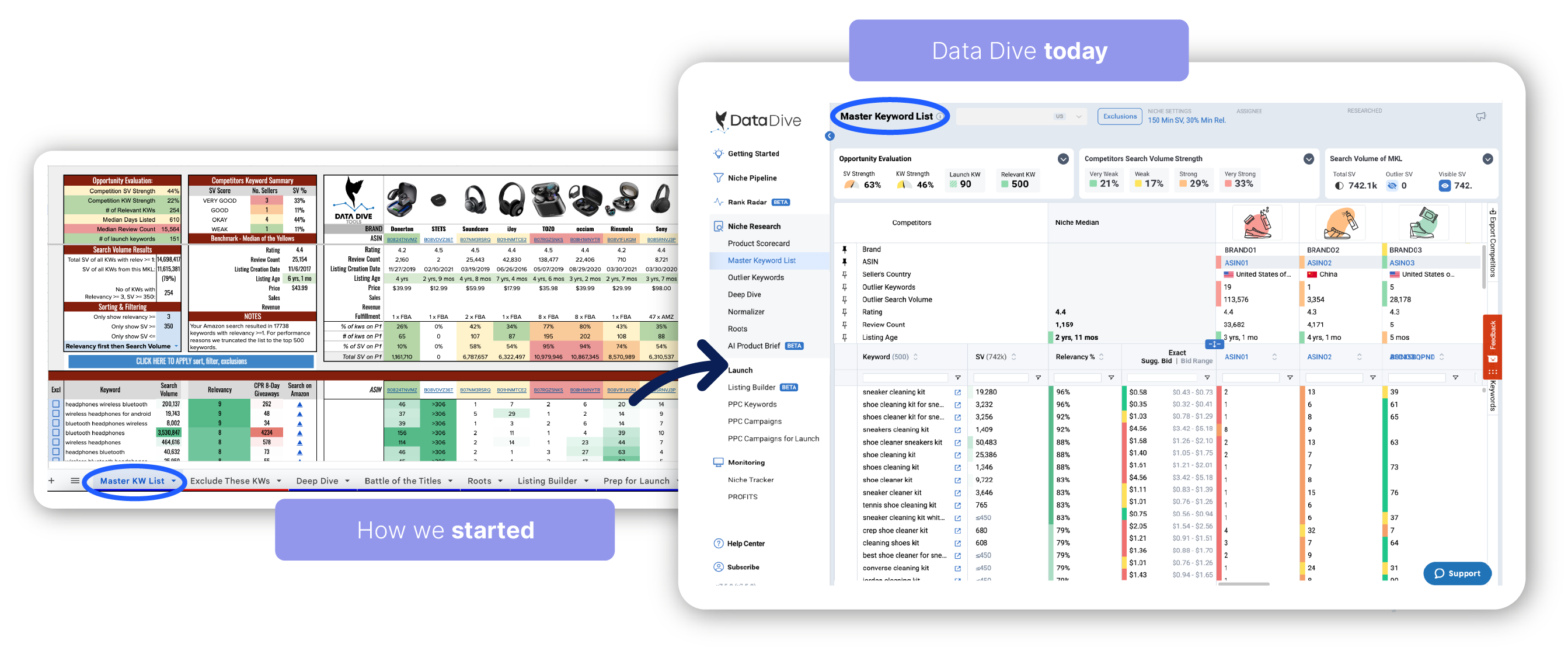
Best for: 7-figure sellers and agencies who treat Amazon optimization as a data science project.
Why I Pick It: DataDive is not for the faint of heart, but it is powerful. It acts as a layer on top of Helium 10 data to provide a "Listing Strength" score that correlates directly with sales.
I use it to build "Master Keyword Lists" that are mathematically weighted. DataDive tells me exactly how many times a keyword should appear in my title vs. bullets to match the "root density" of the top sellers on page 1.
It eliminates the guesswork. If the top 5 sellers all have the word "Organic" in their title, DataDive flags it as a mandatory requirement for your optimization.
Core Functionalities:
- Master Keyword List: Aggregates data from multiple sources to find the "Gold" keywords.
- Listing Health Score: Compares your listing directly to the Top 10 competitors.
- Excel-Based Workflow: Deep integration with Google Sheets for massive data handling.
Limitations:
- Requires a Helium 10 subscription to work fully.
- Steep learning curve; the UI is essentially a complex spreadsheet.
Pricing:
- Starter: $32/month (billed yearly). Designed for light research and aspiring sellers, including 100 ASIN dives and 10 AI copywriter tasks.
- Standard: $124/month (billed yearly). The most popular plan for active FBA sellers, featuring 1,000 ASIN dives, 1,000 tracked keywords, and 50 AI tasks.
- Enterprise: $408/month (billed yearly). Built for aggregators and large teams, offering 4,000 ASIN dives, 12,000 tracked keywords, and extensive AI limits.
FAQ
1. Why is my Amazon listing getting traffic but not converting?
High traffic with low conversion (stuck at 2%) usually happens because your listing fails to "speak" to the buyer's specific needs or gets lost in the algorithm. Tools like VOC AI help solve this by analyzing customer reviews to uncover psychological triggers and pain points (like "lid problems"), allowing you to write copy that resonates emotionally and increases sales.
2. Can I use general AI like ChatGPT for Amazon listing optimization?
While possible, general AI often lacks specific knowledge of Amazon's compliance rules. Specialized tools like Perci.ai are trained specifically on Amazon's A9 algorithm. They automatically integrate keywords and include a "Restricted Keyword Guard" to prevent you from using prohibited claims (like "Best Seller") that could get your listing suppressed.
3. What is the difference between Helium 10 and Jungle Scout?
The main difference is complexity and user experience. Helium 10 is considered the industry standard for advanced sellers, offering a comprehensive suite for deep data and keyword mastery (like the "Scribbles" tool). Jungle Scout, on the other hand, is best for beginners; it acts like a streamlined dashboard with features like direct Seller Central syncing and an intuitive "Listing Grader."
4. How do I validate my Amazon product images before launching?
To ensure your main image drives clicks, use a tool like PickFu to run A/B tests with real people. Unlike standard AI tools, PickFu polls real US-based Prime members to see which image they would click and why. This helps you identify issues—such as packaging looking "medical and scary" rather than premium—before you risk money on a live launch.