Updated August 16, 2026.
Customer feedback analysis should help a team make a decision, not just admire a dashboard. The hard part is rarely collecting more comments. The hard part is proving which customer signal is strong enough to change a roadmap, support workflow, ecommerce listing, pricing explanation, onboarding flow, or retention experiment.
That is why evaluating customer feedback analysis tools only by source connectors, AI summaries, or sentiment charts leads to bad purchases. A tool can look impressive in a demo and still fail the moment a product manager asks, "Which customers said this, what did they actually say, and what should we do next?"
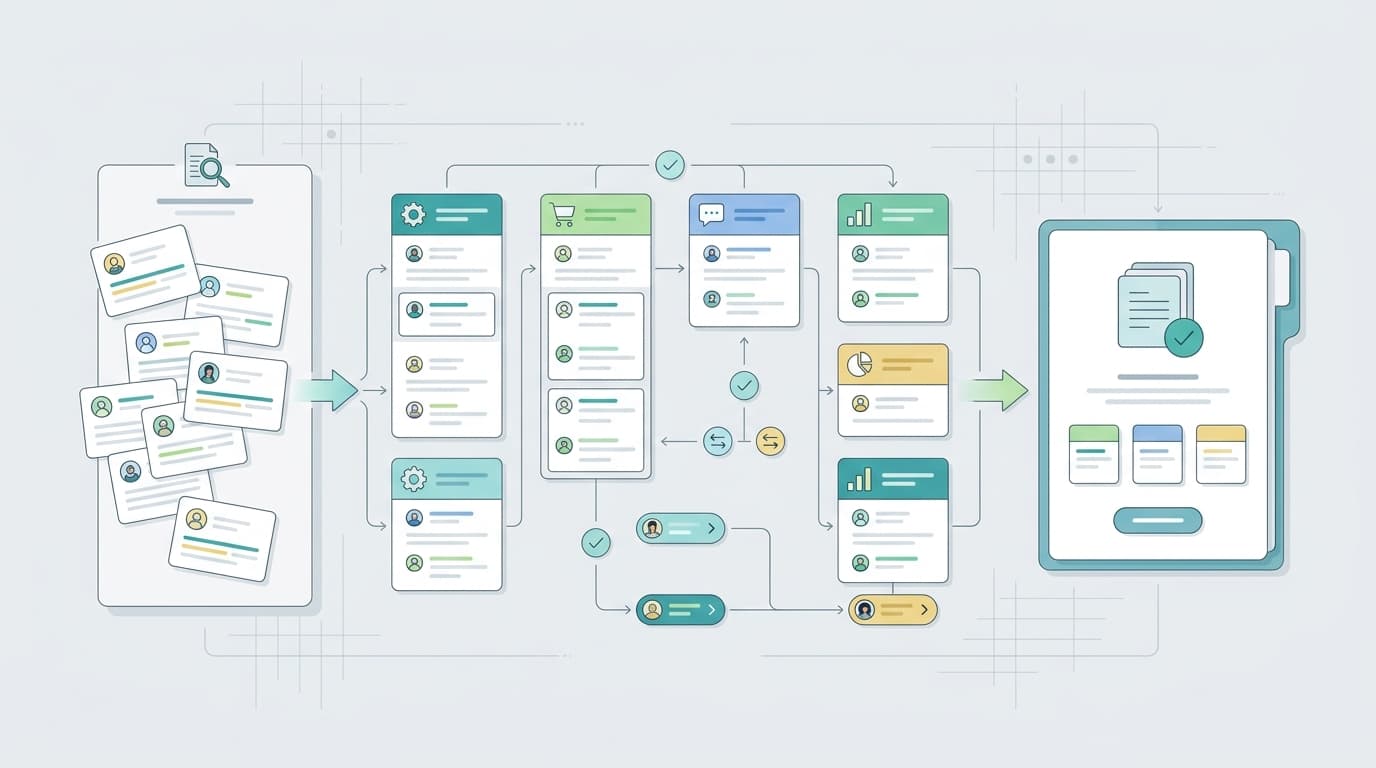
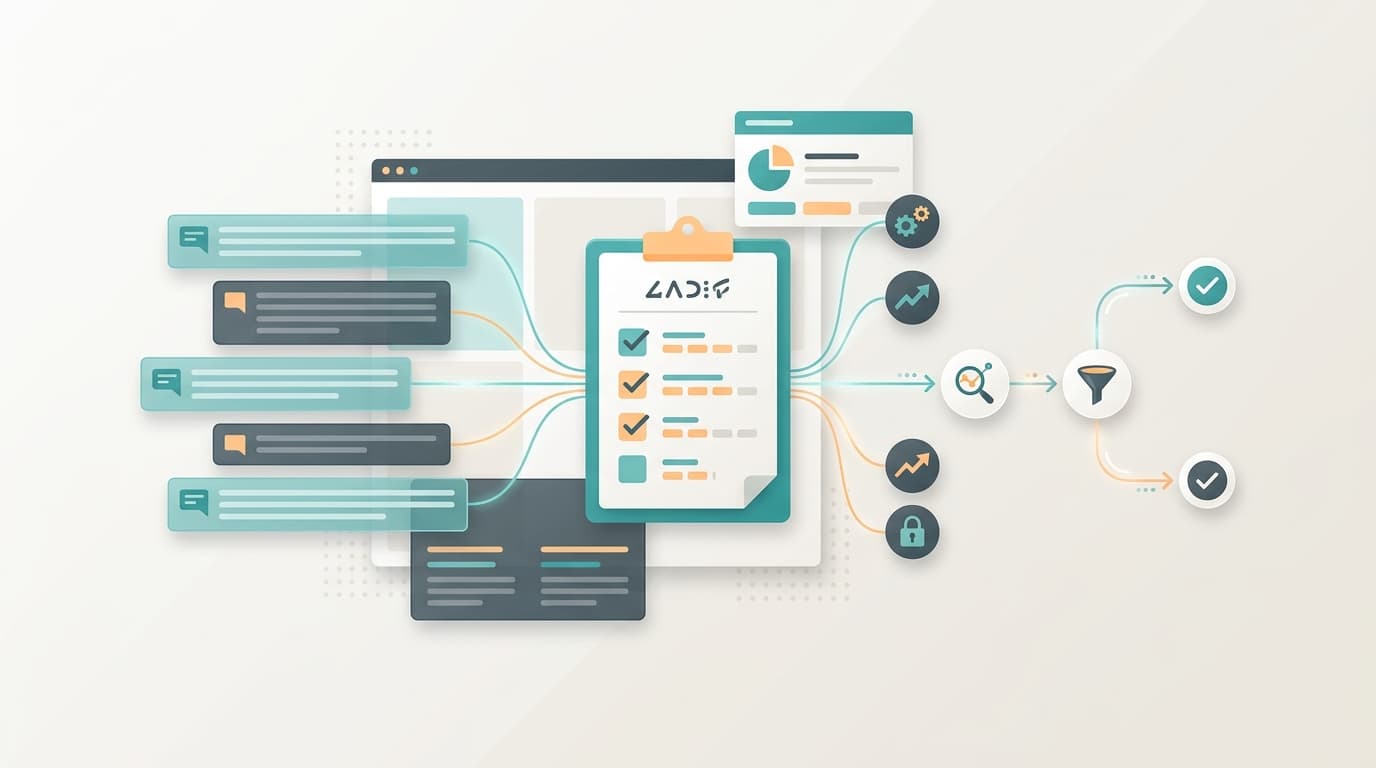
Use this framework when comparing customer feedback analysis tools. It gives you a same-evidence test, a weighted scorecard, a tool-type matrix, and a short pilot plan. The goal is to choose software that preserves evidence, controls scope, explains themes, surfaces counterevidence, and hands a clear decision to the person who owns the next action.
What customer feedback analysis has to prove
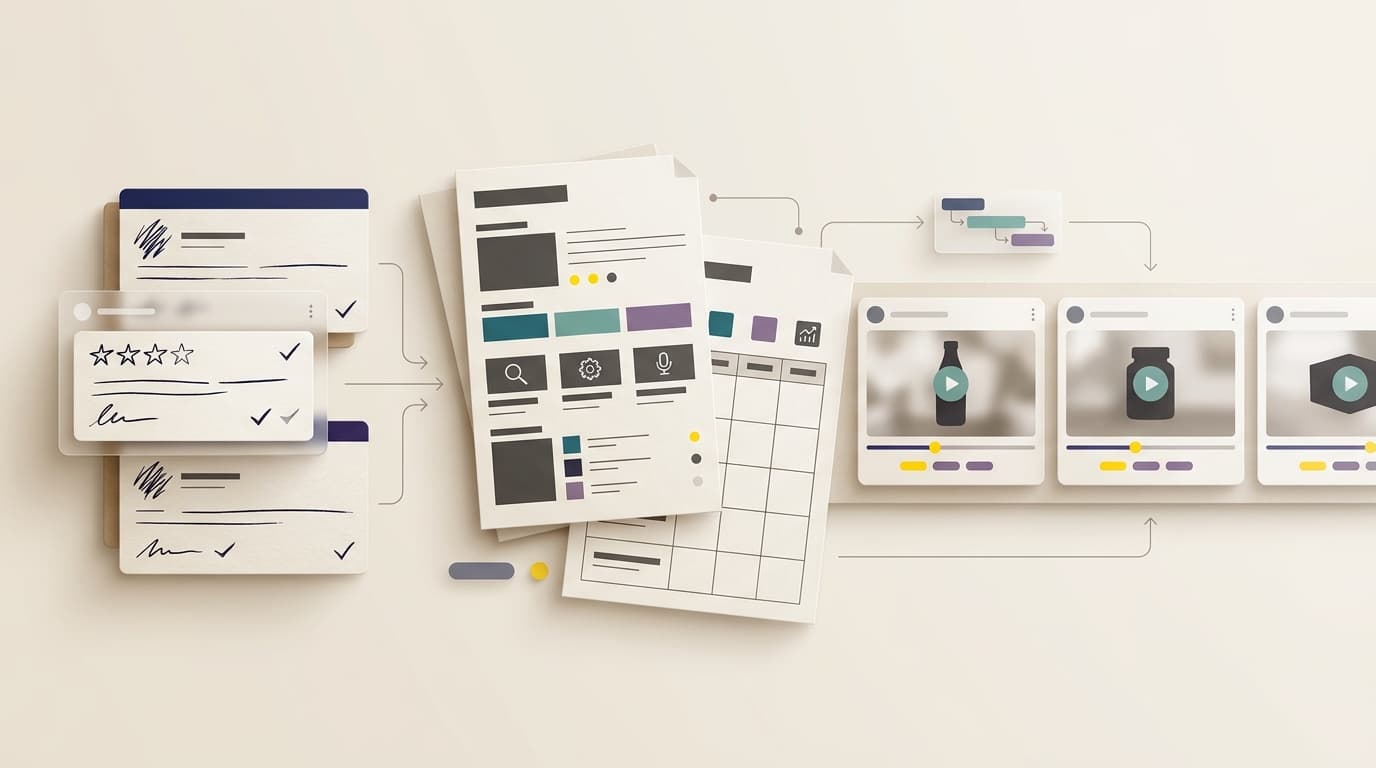
Customer feedback analysis turns customer language into decision-ready evidence. The input might be product reviews, support tickets, surveys, sales notes, research calls, app store reviews, community posts, cancellation forms, or social comments. The output should be more than a summary.
A useful output tells the team:
- Which customer cohort was analyzed.
- Which theme or pain point appears repeatedly.
- Which source records support the finding.
- Which records weaken or narrow the finding.
- Which decision the evidence affects.
- Who owns the next action.
- What signal will be checked after action is taken.
If the tool cannot answer those seven questions, it may still be useful for reporting. It is not yet reliable customer feedback analysis software for product, UX, CX, ecommerce, or growth decisions.
The customer feedback intelligence workflow playbook goes deeper on the operating loop. This article stays focused on tool evaluation: how to compare the software before you commit budget or move a team process into it.
Start with the decision inventory
Before you compare customer feedback analysis tools, write down the decisions the tool must support. This keeps the buying process from becoming a feature checklist.
| Decision area | Weak evaluation question | Better evaluation question |
|---|---|---|
| Product roadmap | Can the tool find themes? | Can it prove which customer problem deserves roadmap time, with source examples and counterevidence? |
| UX research | Can it summarize interviews? | Can it separate task friction, expectation gaps, and segment-specific patterns without losing the original notes? |
| Support and CX | Can it detect sentiment? | Can it route recurring customer pain to the right owner with enough context to fix the root cause? |
| Ecommerce reviews | Can it analyze reviews? | Can it compare review-backed objections, purchase motivations, use cases, and product gaps across ASINs or competitors? |
| Marketing | Can it extract keywords? | Can it preserve exact customer language that should appear in copy, FAQ, ads, or listing changes? |
| Retention | Can it find churn themes? | Can it distinguish one-time complaints from repeated friction that predicts downgrade, return, or cancellation risk? |
This inventory also prevents cannibalization between tools. A research repository, survey platform, product analytics suite, support intelligence tool, and review intelligence platform can all support customer feedback analysis, but they do not solve the same job.
The six evaluation criteria that matter
Use these six criteria before demos, trials, renewals, or replacement projects.
1. Source traceability
Every insight should point back to the original evidence. That means the team can inspect the source comment, review, ticket, survey response, interview note, customer segment, product, date, channel, and filter logic.
Good signs:
- Theme summaries link to individual records.
- Original customer language is preserved.
- AI-generated labels are distinguishable from raw evidence.
- Exports keep enough context for review.
- A reviewer can reproduce the evidence set later.
Weak signs:
- The tool returns polished conclusions without examples.
- The demo hides the cohort behind a generic "all feedback" view.
- Sources are blended without channel labels.
- Screenshots become the only handoff artifact.
Source traceability is the first filter because unsupported summaries create false confidence. If a team cannot audit the evidence, it cannot defend the decision.
2. Cohort control
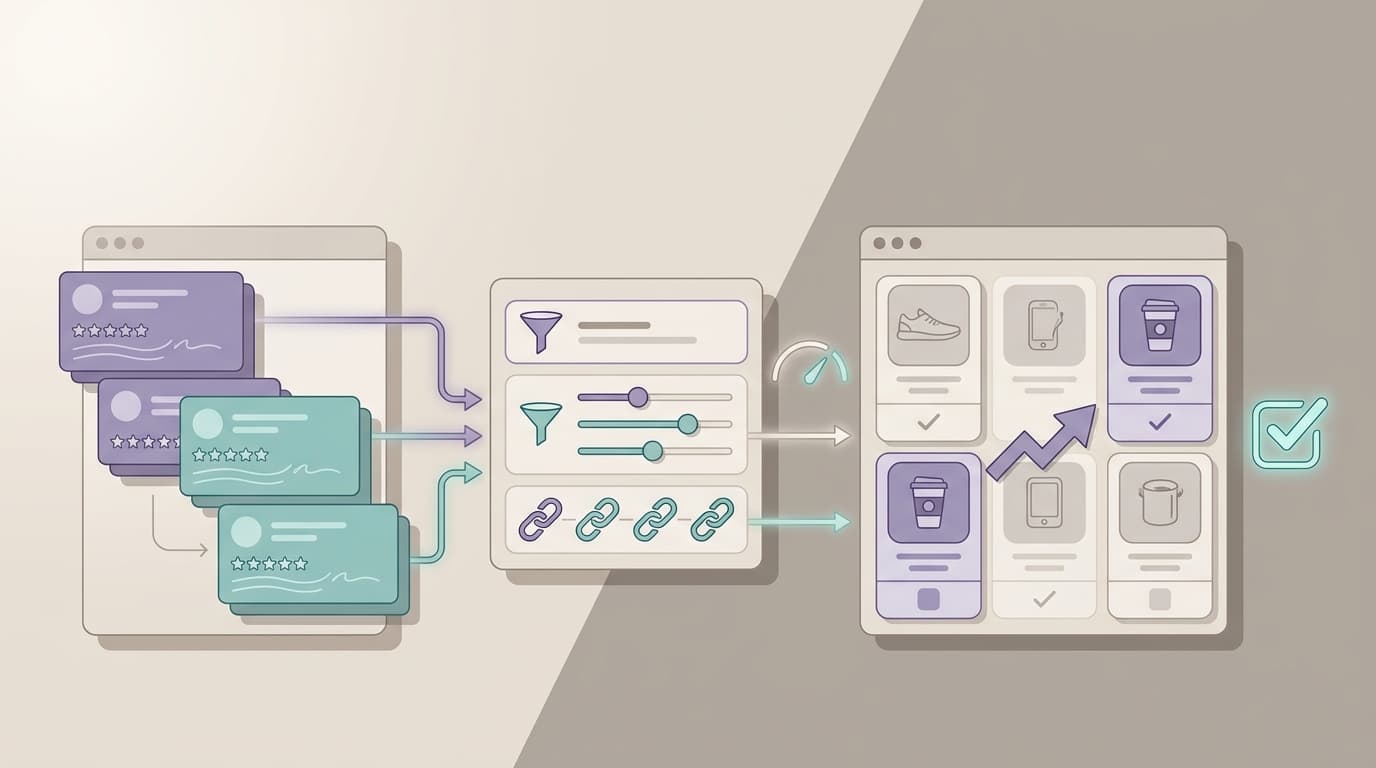
Customer feedback analysis changes meaning when the cohort changes. Three-star reviews from the last 90 days answer a different question than all reviews since launch. Enterprise onboarding tickets answer a different question than free-trial chat messages.
Test whether the tool can define, save, and repeat cohorts such as:
- Product, SKU, ASIN, plan, market, or competitor.
- Date window before and after a launch.
- Rating band, sentiment band, or severity band.
- New customers, churned customers, repeat buyers, or high-value accounts.
- Channel source such as reviews, tickets, surveys, calls, or communities.
- Language, region, device, use case, or customer segment.
Without cohort control, teams overgeneralize. A real problem for one customer segment becomes a fake priority for the whole business.
3. Theme quality
Weak customer feedback analysis produces labels. Strong analysis explains behavior.
| Weak theme | Useful theme |
|---|---|
| Negative onboarding | New users expect imported history to preserve tags, but the setup flow does not explain what carries over. |
| Bad quality | Buyers like the design but report zipper failure after repeated travel use. |
| Pricing complaints | Trial users who viewed the pricing page twice are confused about credits, not necessarily objecting to price. |
| Feature request | Customers ask for bulk export because weekly reporting requires copying quotes into stakeholder decks. |
Ask each finalist to show how themes are created, merged, split, renamed, and reviewed. The tool should support human judgment instead of freezing the first AI taxonomy as truth.
The VOC analysis examples article shows this same standard in workflow form: a useful theme has a source, a pattern, a decision, and a next check.
4. Counterevidence handling
A tool should not only show what customers say most often. It should help the team ask what would make the conclusion weaker.
Look for counterevidence features such as:
- Examples that disagree with the dominant theme.
- Segments where the issue does not appear.
- Channels where the theme is absent.
- Date windows where the issue improved or disappeared.
- Product behavior that supports or contradicts customer language.
- Confidence notes that distinguish strong evidence from directional hints.
Counterevidence matters because customer feedback is uneven. The loudest comments are not always the most representative, and a clean AI summary can hide the exceptions that should change the decision.
5. Decision handoff
The output of customer feedback analysis should move into the team's operating system. It should not die in a dashboard.
A good decision handoff includes:
- Decision question.
- Evidence cohort.
- Top themes.
- Representative quotes or records.
- Counterevidence.
- Recommended action.
- Owner.
- Due date or review date.
- Expected signal change.
- Link back to the evidence set.
This is the difference between "customers complain about shipping" and "operations should test protective packaging for the travel case SKU because recent two- and three-star reviews mention cracked corners after delivery; recheck rating mix and complaint share in 30 days."
6. Repeatability and governance
One-off analysis is easy to fake. Repeatable customer feedback analysis requires workflow discipline.
Check whether the tool supports:
- Saved queries, taxonomies, and segments.
- Permission controls for sensitive feedback.
- Audit trails for AI-assisted changes.
- Export/API paths for dashboards, docs, tickets, or agents.
- Clear usage limits and operating cost.
- Data retention and deletion controls.
- A way to compare this month with last month.
For AI-assisted workflows, governance does not have to be heavy. It does have to be explicit. The team should know which outputs are raw customer evidence, which are AI-generated interpretations, and which decisions were made by humans.
Customer feedback analysis tool types
Most buying confusion comes from comparing tools that belong to different categories. Use this matrix to narrow the field before you score individual vendors.
| Tool type | Best for | What to test | Watch out for |
|---|---|---|---|
| Research repository | Interviews, usability studies, research notes, synthesis libraries | Can it preserve study context and link findings to source notes? | Manual tagging burden and slow operating cadence |
| Survey / experience platform | NPS, CSAT, form responses, segmentation, benchmark programs | Can it analyze open text without over-weighting survey respondents? | Treating survey sentiment as the whole customer voice |
| Product analytics suite | Funnels, activation, retention, behavioral cohorts | Can it connect behavior with verbatim evidence? | Explaining what happened without enough why |
| Support conversation intelligence | Tickets, chat, escalations, macros, service quality | Can it route repeated issues to product, ops, or CX owners? | Optimizing support queues while missing non-ticket buyers |
| Review intelligence platform | Product reviews, ecommerce objections, competitor gaps, buyer language | Can it control cohorts and preserve review-backed evidence by product or competitor? | Treating all review themes as equally important |
| Social listening platform | Public sentiment, community signals, creator comments, brand monitoring | Can it separate noise from purchase or product evidence? | High volume with weak decision handoff |
| API-first feedback intelligence | Embedded analysis, internal dashboards, agents, recurring workflows | Can engineers access structured outputs and source evidence? | Buying an API without clear owners for taxonomy and QA |
| Spreadsheet / general AI workflow | Small scoped analyses and early experiments | Can the team keep samples, prompts, labels, and decisions auditable? | Mistaking a prompt for a production process |
VOC.AI fits best when review-backed ecommerce evidence is central to the decision. The current Voice of Customer Analysis page positions VOC.AI around 2B+ reviews, buyer language, and decision-ready outputs. The Review Analysis API page describes REST API, Python SDK, and MCP support for teams that want review, keyword, listing, and sales-estimate signals inside their own workflows.
That does not mean every team should use review intelligence as the only feedback system. It means review intelligence is a strong backbone when customer feedback analysis depends on Amazon reviews, competitor reviews, product gaps, purchase motivations, use cases, listing copy, and repeatable ecommerce research.
A 45-minute same-evidence test
Do not evaluate customer feedback analysis tools with each vendor's sample data. Use the same evidence set across every finalist.
Pick one narrow decision:
- Which onboarding friction should the next sprint address?
- Which review-backed objection should the next product page answer?
- Which competitor weakness should product research investigate?
- Which support issue should be escalated to product?
- Which cancellation reason is strong enough to change the retention playbook?
Then run this test.
| Minute | Task | What to inspect |
|---|---|---|
| 0-5 | Define the decision | Can the team state one decision and one owner? |
| 5-12 | Load or select the evidence cohort | Are source, date, segment, and channel preserved? |
| 12-22 | Generate themes | Are themes specific enough to change an action? |
| 22-30 | Inspect evidence and counterevidence | Can the team see examples that support and narrow each theme? |
| 30-38 | Create the decision handoff | Does the output name action, owner, due date, and expected signal change? |
| 38-45 | Score repeatability | Could the same workflow be rerun next week or next month? |
Run the same test for every finalist. Do not change the source data, date range, prompt, or decision question between tools. If one tool needs heavy cleanup before the team can trust the result, count that cleanup as part of the operating cost.
Weighted scorecard for customer feedback analysis tools
Use a 1-5 score for each criterion. A score of 3 means "usable with process guardrails." A score of 5 means "reliable enough for recurring decisions."
| Criterion | Weight | 1 means | 5 means |
|---|---|---|---|
| Source traceability | 20% | Findings cannot be audited | Every finding links to source records and cohort context |
| Cohort control | 15% | Feedback is pooled broadly | Teams can save, repeat, and compare precise cohorts |
| Theme quality | 15% | Generic sentiment or broad labels | Specific behavior-based themes that guide action |
| Counterevidence | 15% | Only dominant themes are shown | Exceptions and narrowing evidence are easy to inspect |
| Decision handoff | 15% | Output stops at a dashboard | Output names action, owner, evidence, and follow-up signal |
| Repeatability / governance | 10% | Workflow depends on manual cleanup | Queries, taxonomy, permissions, exports, and audit paths are defined |
| Operating cost | 10% | Setup, credits, or cleanup are unclear | Usage model and team effort match the workflow's value |
Suggested decision rule:
- 4.2-5.0: Strong finalist. Move to a real pilot with owner and measurement plan.
- 3.4-4.1: Conditional finalist. Identify the process guardrails before rollout.
- 2.6-3.3: Narrow use case only. Use for reporting or exploration, not recurring decisions.
- Below 2.6: Do not scale. The tool creates more interpretation risk than decision value.
When pricing matters, compare total operating cost instead of only subscription price. Include data connectors, usage credits, API calls, seats, setup, taxonomy maintenance, QA time, and the analyst time needed to clean up outputs. VOC.AI's current pricing page uses a credit model across API, MCP, and Agent analysis, with free, personal, team, and enterprise options; verify current plan details on the pricing page before budgeting.
Red flags during demos
Watch for these signs that a tool is optimized for presentation, not decision support:
- The vendor cannot show the exact source records behind a summary.
- The demo switches datasets when you ask for counterevidence.
- Themes are broad enough to be true but too vague to act on.
- The tool cannot save the cohort or reproduce the same analysis.
- Exports lose source context.
- The handoff is a chart, not a decision packet.
- The AI output is treated as final instead of reviewable.
- The pricing model is clear for a demo but unclear for weekly use.
- The tool has no answer for who owns taxonomy changes.
- The platform cannot distinguish product, support, marketing, and research use cases.
One red flag does not always disqualify a tool. Three or more usually means the team should narrow the scope, run a smaller pilot, or choose a different category.
How to roll out the first pilot
Keep the first pilot small. The goal is not to prove that feedback matters. The goal is to prove that this customer feedback analysis workflow can improve one real decision.
Use a 14-day pilot:
| Day | Work | Output |
|---|---|---|
| 1 | Choose one decision and one owner | Decision question, owner, source cohort |
| 2-3 | Load or connect the evidence | Cohort manifest with sources, dates, filters |
| 4-6 | Generate and review themes | Theme list with representative evidence |
| 7 | Inspect counterevidence | Confidence note and scope boundaries |
| 8-9 | Create the decision packet | Action recommendation, owner, expected signal |
| 10-13 | Take the action or prepare the handoff | Product, support, listing, copy, or research change |
| 14 | Review pilot quality | Scorecard, cleanup time, repeatability decision |
After the pilot, make one of four decisions:
- Scale: The workflow produced a decision with inspectable evidence and reasonable effort.
- Narrow: The tool is useful for one source or team, but not the full feedback system.
- Fix process: The tool is viable, but taxonomy, ownership, or QA needs work.
- Stop: The output is too hard to verify or too disconnected from action.
Where VOC.AI fits
VOC.AI is not trying to be every possible customer feedback analysis category. It is strongest when the feedback source is review-heavy and the team needs to turn review language into product, listing, competitor, market, support, or API workflows.
Use VOC.AI as a finalist when:
- Amazon or ecommerce reviews are a primary evidence source.
- The team needs buyer language, purchase motivations, use cases, pain points, product strengths, and weaknesses.
- Competitor review patterns matter to the decision.
- Product, listing, and market research teams need repeatable review intelligence.
- Engineering or operations teams want API access to review-backed signals.
Use a different lead system when the main source is formal research interviews, enterprise survey programs, product analytics events, or support operations. VOC.AI can still support the review-intelligence layer, but the lead platform should match the source that drives the decision.
For broader platform strategy, see the customer insights platform strategy guide. For narrower review-tool comparison, use the AI review analysis comparison.
FAQ
What is customer feedback analysis?
Customer feedback analysis is the process of turning customer comments, reviews, tickets, surveys, calls, and other feedback into evidence that supports a decision. Good analysis preserves source context, identifies repeated themes, checks counterevidence, and points to a next action.
What should I look for in customer feedback analysis tools?
Start with source traceability, cohort control, theme quality, counterevidence, decision handoff, repeatability, governance, and operating cost. Do not start with AI summaries alone.
Is customer feedback analysis the same as sentiment analysis?
No. Sentiment analysis classifies emotional tone. Customer feedback analysis should explain what customers are trying to do, where they struggle, what they value, and which decision the team should consider next.
Should I choose one platform for all feedback sources?
Not always. Many teams need a lead platform plus specialist tools. The right lead platform depends on the source that drives the decision: research notes, surveys, support tickets, product analytics, social signals, or reviews.
How do I compare AI customer feedback analysis tools?
Use the same evidence set, same decision question, and same scoring criteria for every finalist. Check whether each tool can preserve the original evidence, generate useful themes, show counterevidence, and create a decision handoff.
Conclusion
The best customer feedback analysis tool is not the one with the most impressive summary. It is the one that helps your team make a better decision with evidence it can inspect later.
Start with the decision inventory. Run the same-evidence test. Score traceability, cohorts, themes, counterevidence, handoff, repeatability, and cost. Then choose the tool category that fits the feedback source your team actually uses.
That is how customer feedback analysis moves from "interesting dashboard" to a workflow your product, CX, research, ecommerce, and growth teams can trust.