Social Listening for Ecommerce: Start With Reviews, Then Expand Outward
Most ecommerce teams do not ignore customer sentiment. They split it.
Reviews live in one workflow. Social posts, creator reactions, comments, and community threads live in another. Product, support, and marketing teams end up reading different signals at different times, then reacting after the theme is already obvious.
That is why social listening for ecommerce works better when it starts with review intelligence instead of replacing it.
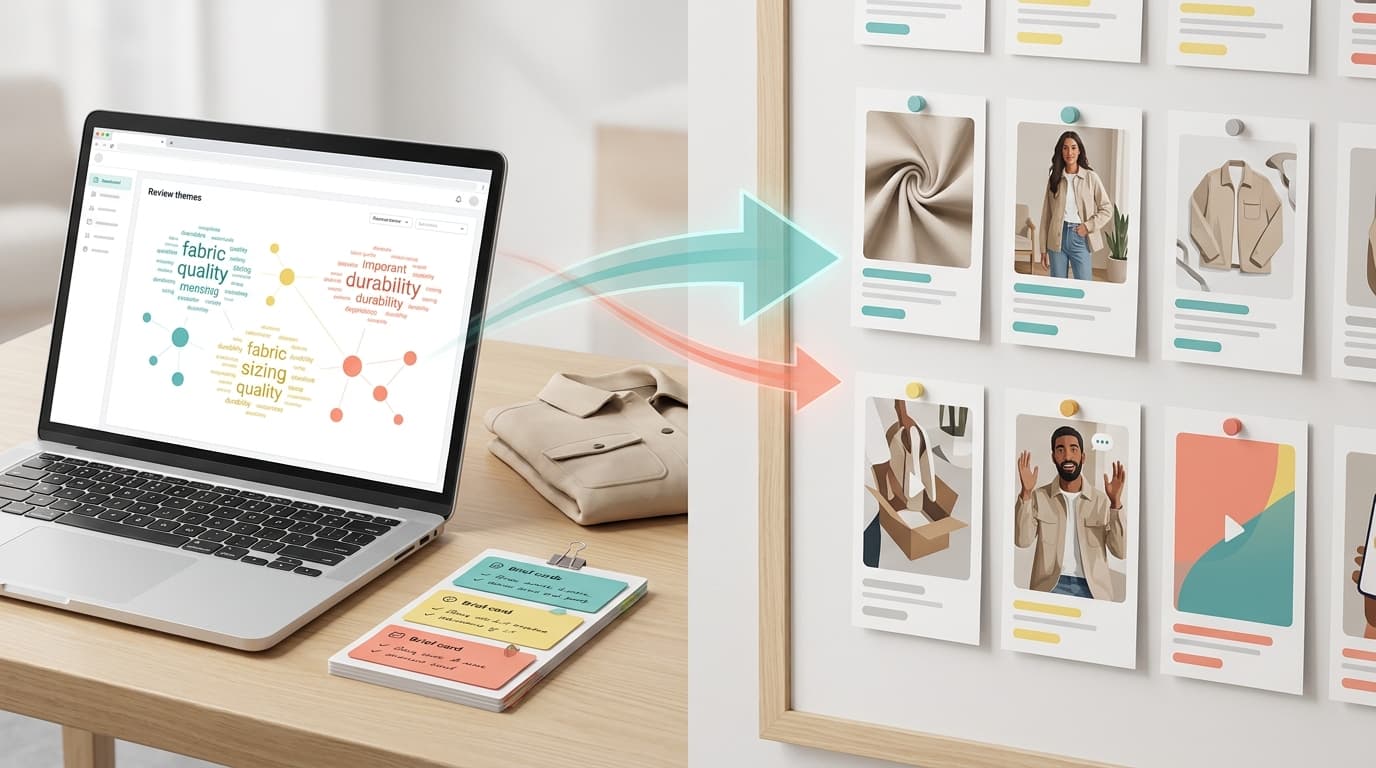
Reviews show what buyers consistently experienced after purchase. Public channels can surface earlier reactions around confusion, excitement, repeated objections, and creator-led narratives before those themes settle into marketplace reviews. When teams connect both signal types, they get a more useful picture of what needs action next.
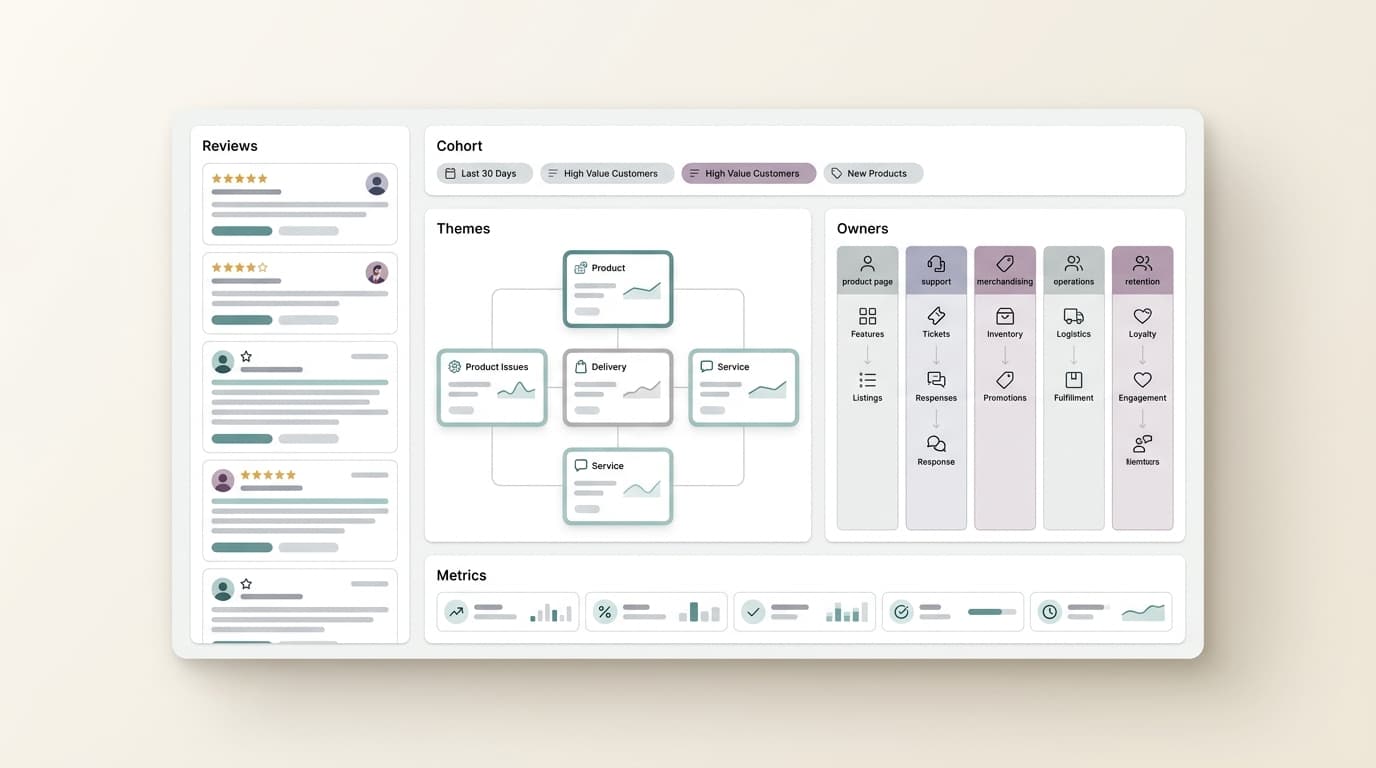
This guide explains how to build social listening for ecommerce around that workflow: review baseline first, outward monitoring second, then clear routing to product, support, listing, campaign, and merchandising owners.
Why reviews alone are not enough
Reviews are still the most stable source of product-specific feedback for ecommerce teams.
They tell you what buyers actually received, what disappointed them, what surprised them, and what language they use after living with the product. That makes reviews a strong baseline for repeated complaints, recurring praise, and post-purchase expectations.
But reviews are not always the earliest signal.
Before review volume catches up, ecommerce teams may already see:
- creator demo reactions on TikTok,
- repeated product questions in Instagram comments,
- troubleshooting and skepticism inside Facebook groups,
- long-form objections in YouTube reviews,
- fast launch reactions on X,
- and category narrative shifts in public news coverage.
The problem is not that reviews are weak. The problem is that reviews usually show what has already happened, while public channels can show what is starting to happen.
That is the real value of social listening for ecommerce. It helps teams catch public sentiment shifts earlier, then compare them against the review baseline before deciding whether the signal is noise or a real trend.
What social listening means in an ecommerce context
Generic social listening content often focuses on brand mentions, PR alerts, or broad reputation dashboards.
That is not the most useful framing for ecommerce teams.
In an ecommerce setting, social listening for ecommerce is about watching the public conversations that influence product perception, campaign response, and buyer expectations around a specific product, category, or launch. The goal is not to monitor everything in real time. The goal is to identify repeated sentiment patterns that deserve action.
That usually means tracking what shoppers and creators say across marketplaces and public channels, then using the overlap between those signals to answer practical questions:
- Are the same objections appearing before they hit review volume?
- Is creator excitement aligned with actual buyer satisfaction?
- Did a campaign trigger praise, confusion, or skepticism?
- Is a packaging, fit, quality, or expectation issue spreading publicly?
- Which team owns the response?
This is where ecommerce social listening becomes operational instead of theoretical.
Reviews vs. public social signals
The best workflow does not ask one source to do every job.
| Source | What it answers best | What it misses |
|---|---|---|
| Marketplace reviews | What buyers consistently experienced after purchase | Early public reaction before review volume grows |
| TikTok and short-form creator content | What spreads quickly through demos, hooks, and visible product reactions | Whether the theme persists after purchase |
| Instagram comments | Which questions, objections, and lifestyle-fit concerns shape perception | Deeper product troubleshooting context |
| Facebook groups | Which concerns shoppers discuss in peer-to-peer communities | Broad reach outside the specific community |
| YouTube reviews | Which product attributes matter enough for longer public discussion | Fast-moving short-term reaction |
| X and public discussion spikes | Which narratives spread quickly during launches or issues | Stable post-purchase detail |
| News and media coverage | Which outside narratives may shape sentiment at the category level | Detailed buyer experience at the product level |
Reviews give the team a durable baseline. Public signals show where the narrative may be moving. Combining both creates a more complete product sentiment monitoring workflow.
The channel mix that matters most
Not every ecommerce team needs every channel with the same intensity. The right mix depends on product type, audience, and launch motion. Still, a few channels consistently matter.
TikTok and creator-led reactions
TikTok is useful when product sentiment spreads through demos, reactions, and short-form commentary. Teams should watch for:
- repeated frustration around product setup or expectations,
- delight moments that create strong hooks,
- creator confusion around how the product is supposed to work,
- and comments that repeat the same objection under multiple posts.
This is often where social listening for ecommerce reveals an early mismatch between what the listing promises and what the product experience delivers.
Instagram comments and creator communities
Instagram comments can surface product perception issues that are tied to lifestyle fit, gifting, aesthetics, or usability. These are often softer than one-star review complaints, but they still matter for conversion.
Watch for:
- repeated pre-purchase questions,
- objections about fit, look, or use-case clarity,
- and comment patterns that expose weak campaign messaging.
Facebook groups and shopper communities
Facebook groups remain useful because shoppers and sellers often explain issues in more detail there than they do in a quick public comment.
These communities can surface:
- comparison discussions,
- skepticism around a launch,
- setup problems,
- and peer-to-peer advice that reveals hidden friction.
For many teams, this channel makes product sentiment monitoring more actionable because the wording is often explicit enough to route to support, listing, or product owners.
YouTube reviews and long-form commentary
YouTube matters when the product category attracts explanation-heavy content. Long-form reviewers often surface tradeoffs that short-form channels blur together.
That makes YouTube useful for:
- understanding which features matter most,
- spotting repeat objections that deserve FAQ or listing updates,
- and separating shallow hype from durable concerns.
X and fast-moving public narratives
X is not always the deepest signal source, but it can help teams catch rapid launch reactions, creator amplification, and public complaint spikes early.
This is most useful during:
- launches,
- campaign pushes,
- product incidents,
- or public discussions that spread faster than reviews can accumulate.
News and category narrative shifts
Sometimes the public narrative changes because of something larger than one product: a category controversy, policy shift, recall, or trend story. News monitoring helps teams understand whether sentiment is moving because of the product itself or because the category context changed.
How to build a review-first workflow
The cleanest social listening for ecommerce workflow is simple.
1. Set the review baseline
Start with review intelligence. Define the normal complaint clusters, praise themes, and buyer-language patterns for the product or category.
Without that baseline, teams overreact to loud public posts that do not reflect persistent buyer experience.
2. Expand outward to public channels
Once the team understands the review baseline, monitor the public channels most likely to surface early shifts: TikTok, Instagram, Facebook groups, YouTube, X, and relevant news coverage.
The goal here is not volume for its own sake. The goal is pattern detection.
3. Compare overlap
When a public concern appears, compare it to review history.
Ask:
- Does this match an existing complaint cluster?
- Is this a new objection that reviews have not yet captured?
- Is the issue spreading because of messaging confusion rather than product quality?
- Is the signal isolated to one creator or repeated across multiple sources?
This comparison step is what turns ecommerce social listening into decision support instead of dashboard theater.
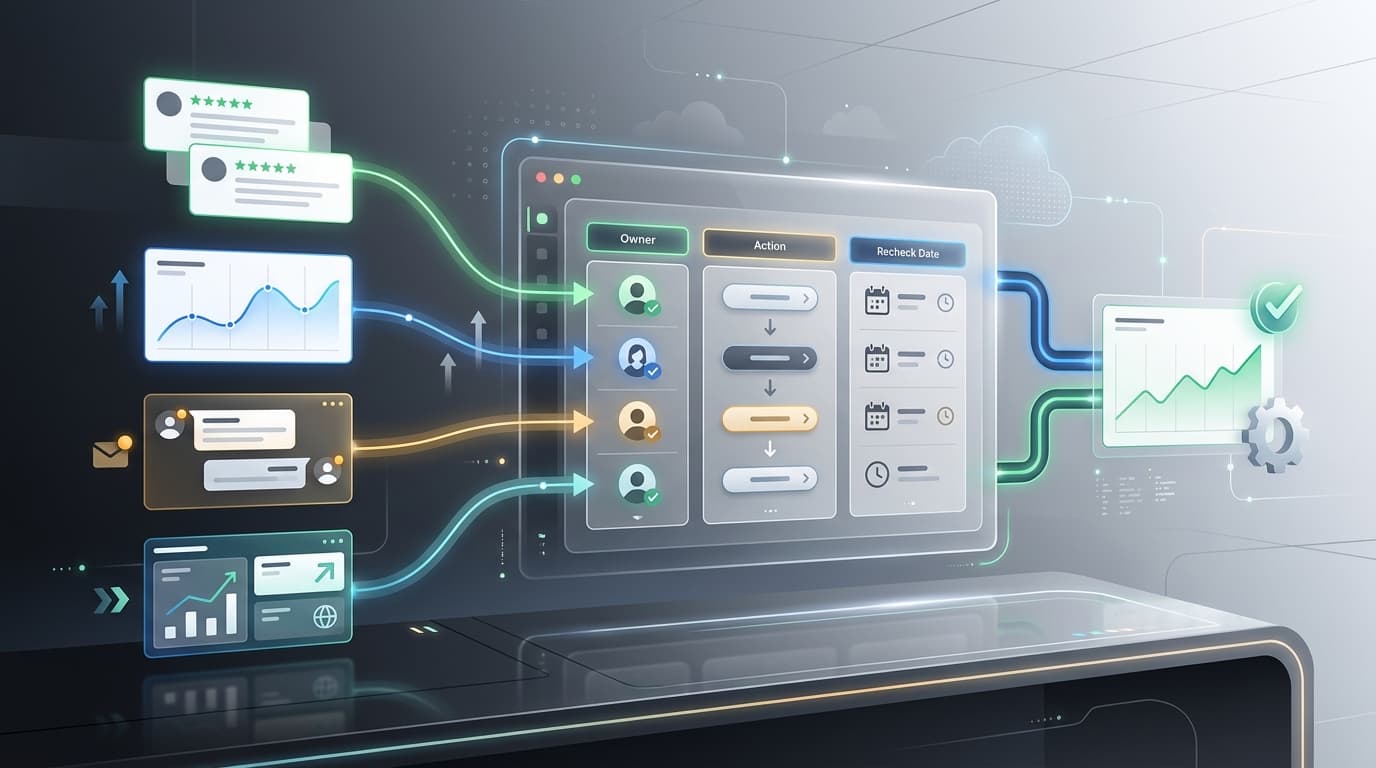
4. Route the signal by owner
Signals only matter if someone can act on them.
| Signal type | Best owner | Likely action |
|---|---|---|
| Repeated expectation mismatch | Listing or merchandising | Update bullets, images, FAQ, or PDP copy |
| Setup confusion | Support | Prepare macros, help content, and escalation paths |
| Recurring feature complaint | Product | Evaluate design, packaging, or quality fixes |
| Campaign misunderstanding | Marketing | Adjust hooks, claims, or creator briefing |
| Competitor comparison language | Growth or research | Refine positioning and comparison messaging |
5. Re-check reviews after action
Reviews help close the loop. After the team updates copy, support flows, or product decisions, review data can show whether the complaint pattern stabilizes or keeps growing.
That is why social listening for ecommerce should not replace reviews. It should make review analysis more timely and more useful.
Where sentiment signals matter most
A strong workflow is easier to understand through concrete use cases.
Before a launch
Pre-launch monitoring helps teams catch objections before the product has enough marketplace reviews to expose them clearly.
Public comments can reveal:
- confusion about what the product actually does,
- skepticism about claims or compatibility,
- and strong reactions to packaging, style, or perceived quality.
That can influence launch messaging, FAQ updates, creator guidance, and support readiness.
During a campaign
A campaign can generate attention that reviews will not reflect immediately. Social reaction may show whether the creative is attracting the right audience or creating confusion that later becomes returns and negative reviews.
During product iteration
Product teams need to know whether a repeated public complaint is isolated or persistent. Comparing social chatter to the review baseline helps them prioritize the signals that deserve roadmap attention.
For listing and merchandising updates
Sometimes the issue is not the product itself. It is the expectation the listing creates. When public objections repeat the same misunderstanding, teams can use that language to tighten bullets, imagery, and FAQ content.
For support readiness
If a complaint theme starts spreading publicly, support teams can prepare responses and escalation paths before ticket volume peaks. This is one of the most practical social listening ecommerce benefits for fast-moving products and campaigns.
Common mistakes in ecommerce social listening
Many teams invest in signal collection but still miss the operating value because the workflow is unclear.
The most common mistakes are:
Treating every public spike as equally important
Not every viral comment represents a durable problem. The team still needs the review baseline and cross-channel comparison step.
Watching channels without routing rules
If nobody owns the next action, the monitoring workflow becomes a reporting ritual instead of a decision system.
Using broad brand-monitoring language for product-specific work
Ecommerce teams usually need product, listing, support, and campaign insight more than a generic brand-health score.
Ignoring buyer wording
The exact language in reviews and public comments matters. That wording often reveals the expectation gap more clearly than a high-level sentiment label.
Expecting total real-time coverage
The useful goal is earlier signal detection and clearer routing, not perfect coverage of every channel and every conversation.
How VOC AI fits this workflow
VOC AI fits best when the team wants to connect review intelligence with broader public-channel monitoring instead of reading those signals in isolation.
Its public product positioning already supports that review-first model:
- the social-listening route describes tracking what shoppers and creators say across marketplaces and social channels alongside Amazon review data,
- the VOC analysis route focuses on turning customer reviews into product direction, buyer language, and market-ready decisions,
- and the sentiment-analysis route supports action-oriented interpretation before product feedback becomes a larger sales problem.
That makes VOC AI a practical fit for teams that want to:
- establish a review baseline,
- expand into public-channel monitoring,
- compare repeated public themes against post-purchase feedback,
- and route those signals to product, support, marketing, and merchandising owners.
Helpful next steps include:
- Social Listening
- VOC Analysis
- Sentiment Analysis
- Market Insight
- Competitor Analysis
- Product Research
- Customer Feedback Loop for Ecommerce
- Customer Feedback Dashboard for Product, Support, and Marketing
- Pricing
- Contact Sales
FAQ
What is social listening for ecommerce?
Social listening for ecommerce is the practice of monitoring product and brand-related public conversations across reviews, social channels, communities, and media sources to identify sentiment patterns that can inform listing, support, campaign, and product decisions.
Why should social listening for ecommerce start with reviews?
Reviews provide the most stable record of post-purchase buyer experience. Starting there gives the team a baseline, so public social signals can be compared against real complaint and praise patterns instead of being read in isolation.
Which channels matter most for ecommerce social listening?
The most useful channels often include marketplace reviews, TikTok, Instagram comments, Facebook groups, YouTube reviews, X, and relevant news coverage. The best mix depends on the product, audience, and launch motion.
What are the main social listening ecommerce benefits?
The main social listening ecommerce benefits are earlier signal detection, better routing across product and support owners, stronger listing and campaign adjustments, and clearer separation between short-lived noise and repeated customer feedback.
Conclusion
The strongest social listening for ecommerce workflow does not start by trying to monitor everything. It starts by understanding what reviews already say, then expands outward to the public channels that can reveal earlier shifts in sentiment.
That review-first approach gives teams a better way to decide what matters, who owns it, and what should change before the next launch, campaign, or merchandising update.