Most teams do not buy a social listening tool because they love dashboards. They buy one because they need clearer decisions.
That is where many evaluations go wrong. A tool can show mention spikes, engagement shifts, and sentiment movement across public channels, yet still leave a product or marketplace team unsure what to do next. The missing step is usually the connection between public conversation and the more durable signals that appear in reviews, complaint clusters, buyer wording, and category patterns.
For that reason, the best choice is not always the platform with the biggest mention graph. It is the workflow that turns social listening into action. For many ecommerce and product teams, that means comparing generic social listening against a review-linked workflow before making the purchase.
This comparison explains where generic platforms are useful, where they often fall short for operator teams, and why VOC AI can be the better fit when social listening needs to support product, listing, support, and category decisions.
Why product teams need more than mention counts
Generic social listening is good at answering broad visibility questions:
- Are people talking about the brand more this week?
- Did a campaign trigger a public reaction?
- Which creators or communities are amplifying the message?
- Is sentiment rising or falling across public channels?
Those are useful questions. They matter for PR, campaign reporting, brand tracking, and community monitoring.
But a product or marketplace team usually needs a different set of answers:
- What complaint theme is repeating?
- Does the same concern also appear in marketplace reviews?
- Is the problem a product issue, a listing issue, or a support issue?
- Which owner should act first?
- Is this a one-channel spike or a pattern with category-level relevance?
That is the difference between broad social monitoring and decision-ready customer insight. When teams evaluate social listening for ecommerce, they should look beyond whether the tool can collect conversation. They should ask whether it helps convert that conversation into work.
What generic social listening usually does well
Generic social listening tools are useful when the main job is public visibility and trend detection.
They often help teams:
- track brand mentions across social networks,
- monitor campaign or creator response,
- measure engagement around launches,
- spot fast-moving public sentiment changes,
- and keep an eye on share-of-voice or reputation trends.
That can be enough for teams whose main goal is awareness, communications, or campaign reporting. If the operating question is, "What is the public saying right now?" generic tools often do their job well.
This is why generic social listening should not be dismissed. It solves a real problem. The issue is fit. Product teams rarely stop at public visibility. They need to know whether the public signal matches a deeper customer problem and what that means for the business.
Where generic social listening often breaks down for ecommerce teams
The harder part of social listening for ecommerce is not seeing public chatter. It is connecting chatter to post-purchase reality.
Generic tools often break down when a team needs to answer questions like:
- Are people repeating the same objection after purchase?
- Is the public reaction new, or is it part of an existing review pattern?
- Which exact buyer language should go into listing updates or support content?
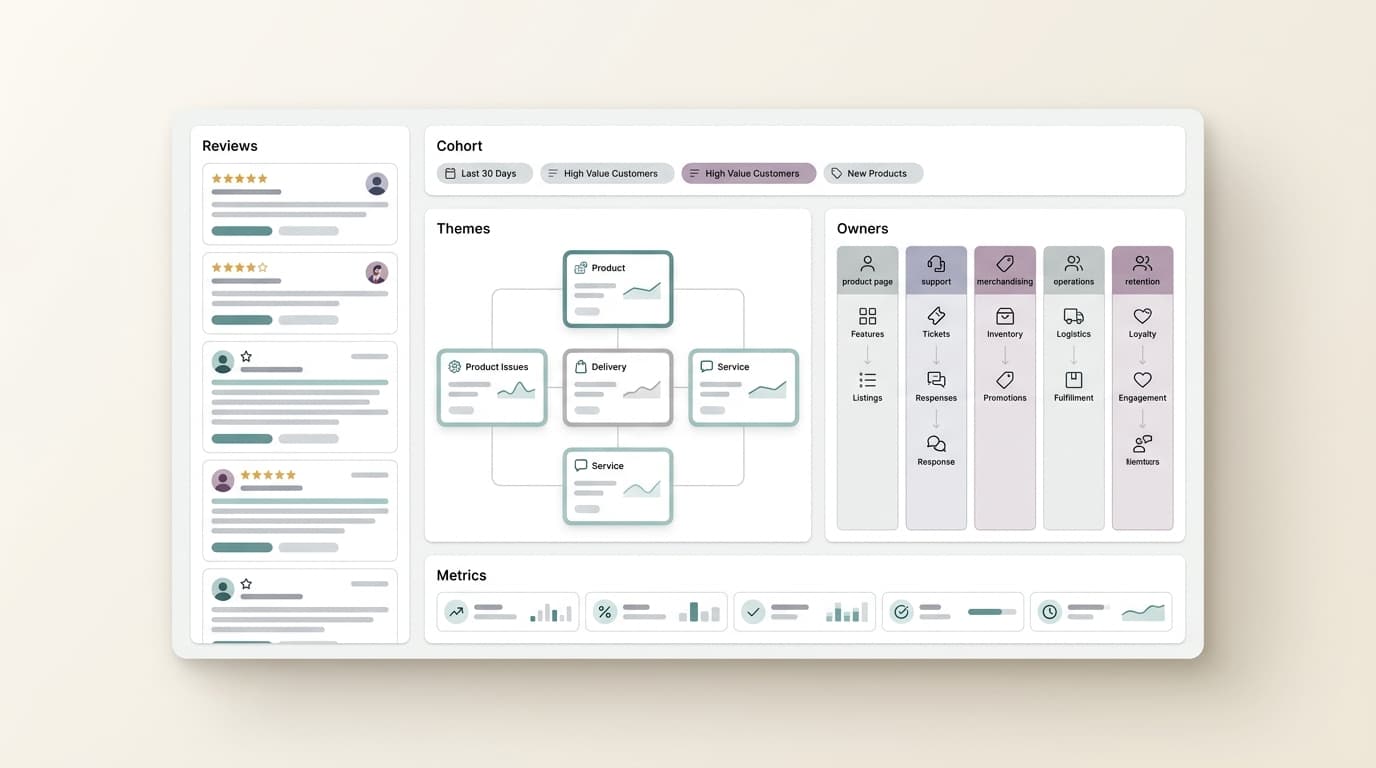
- Which issue belongs with product, packaging, support, or merchandising?
- Does the signal look isolated, or does it reflect a broader category problem?
Those jobs usually require more than alerts and sentiment graphs. They require context.
Public reaction without review context can be misleading
A loud creator comment or viral thread can look important, but it does not always represent the durable customer problem. Some reactions fade quickly. Others repeat in reviews for weeks and need immediate action.
Without review context, a team can easily overreact to noise or underreact to an issue that has already become consistent in marketplace feedback.
Mention dashboards do not automatically route work
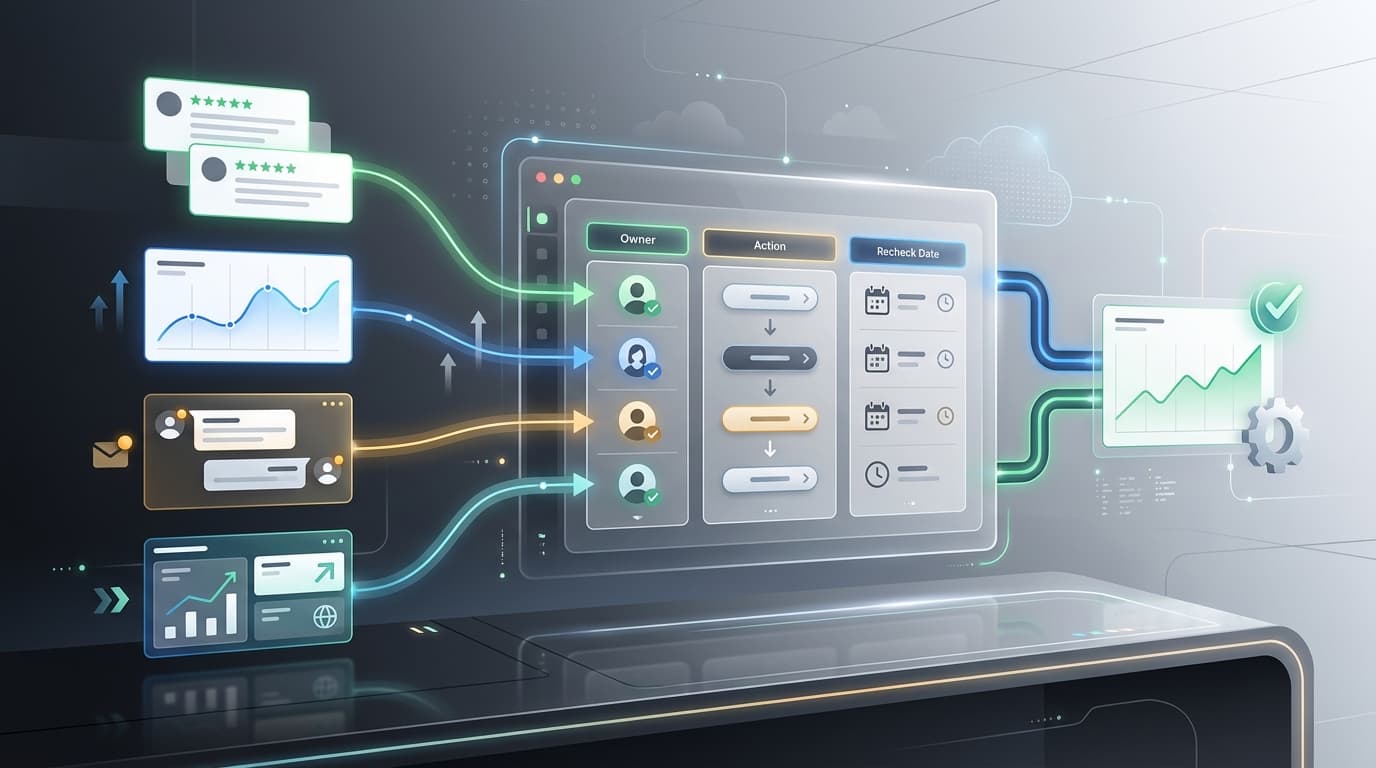
Many generic social tools are strong at monitoring and weaker at owner-level routing. Product teams still need someone to interpret the data, group repeated complaints, compare it with review evidence, and decide whether the next step is:
- a listing update,
- a support macro or FAQ change,
- a product investigation,
- a packaging escalation,
- or a category positioning adjustment.
That interpretation layer is where many teams lose speed.
Broad sentiment is not the same as buyer-language insight
High-level sentiment helps show whether conversation is moving in a positive or negative direction. It does not always tell you what customers expected, what disappointed them, or which phrase they keep repeating.
For ecommerce operators, buyer wording matters because it shapes:
- listing copy,
- FAQ language,
- creator briefing,
- support responses,
- and product-priority discussions.
That is why customer feedback analysis software for ecommerce is often a better category lens for operator teams than broad brand-monitoring language alone.
VOC AI's angle: connect reviews, public signals, and category insight
VOC AI takes a narrower but more useful position for product and marketplace teams.
The current public Social Listening page describes tracking what shoppers and creators say across marketplaces and social channels alongside Amazon review data. That matters because it points to a workflow that is not limited to public mention tracking alone. It connects public signals with the more stable evidence found in reviews.
That creates a stronger fit for teams that need social listening for ecommerce to answer operational questions, not just awareness questions.
What that workflow makes easier
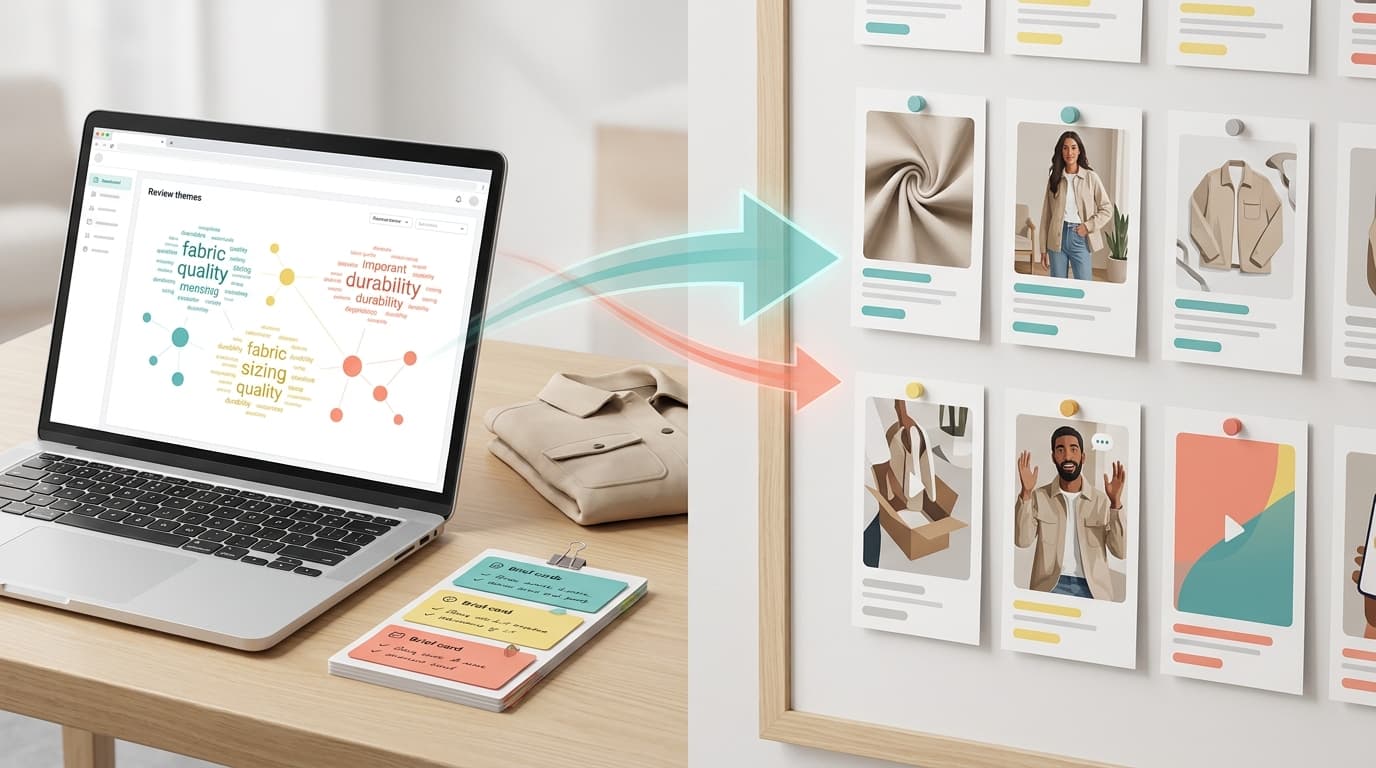
When a team can look at public discussion and review evidence together, it becomes easier to:
- compare early public objections against established review themes,
- spot whether creator excitement matches actual buyer satisfaction,
- identify recurring complaint clusters rather than one-off reactions,
- pull clearer buyer wording into listing and support decisions,
- and route the signal to the right owner faster.
This is especially useful for:
- product managers,
- marketplace operators,
- merchandising teams,
- insight or research teams,
- and cross-functional ecommerce teams that need to connect feedback to action.
VOC AI vs generic social listening: side-by-side comparison
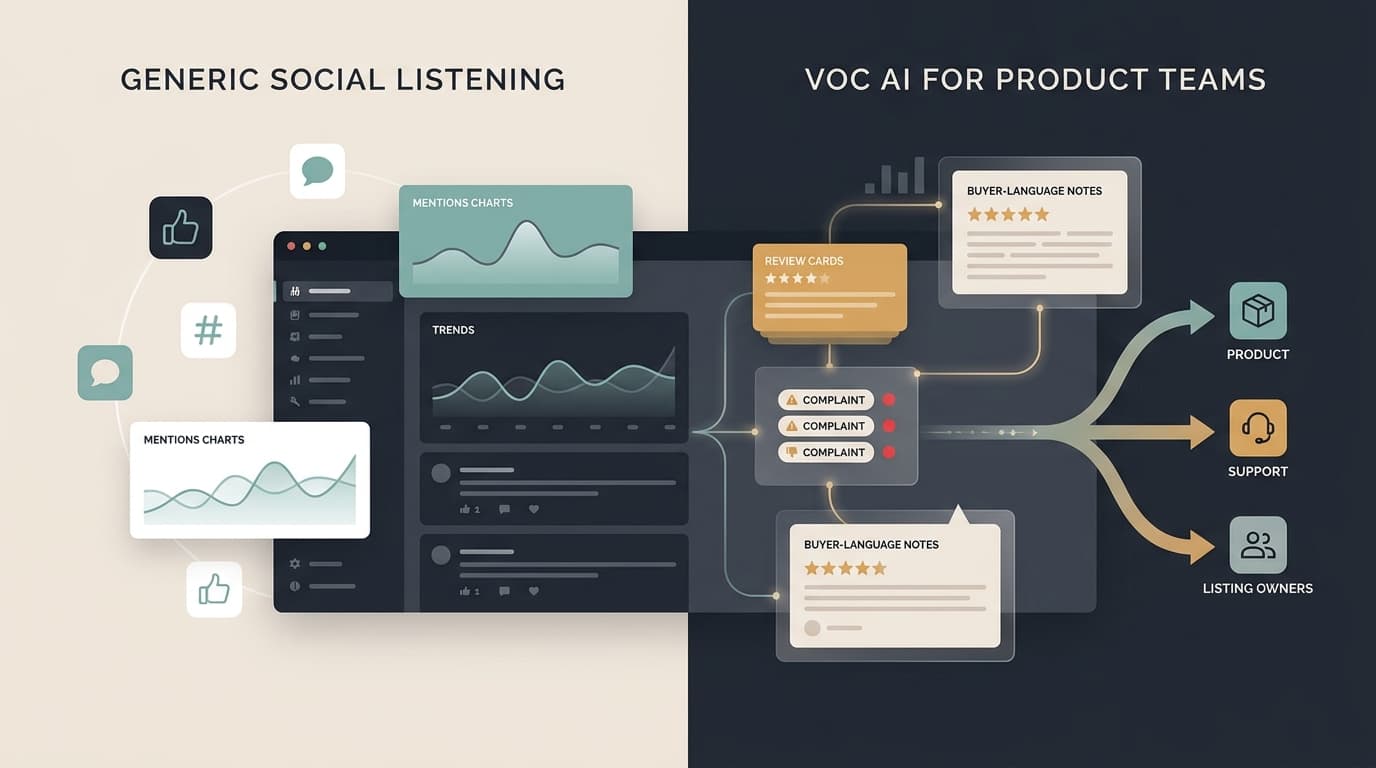
The cleanest way to evaluate the tradeoff is to compare the main job each option serves.
| Evaluation area | Generic social listening | VOC AI |
|---|---|---|
| Primary job | Monitor mentions, public sentiment, campaign response, and trend movement | Connect public-channel signals with review-backed customer insight |
| Best fit | Brand, social, PR, and communications teams | Product, marketplace, insight, and ecommerce operator teams |
| Typical output | Mention dashboards, alerts, engagement charts, and trend summaries | Review-linked themes, complaint patterns, buyer language, and category context |
| Decision usefulness | Often requires a separate interpretation step | Stronger fit when the team needs action-oriented customer signal |
| Review linkage | Often limited, external, or manual | Current product positioning explicitly links social channels with Amazon review data |
| Best buying reason | Broad visibility and monitoring | Product, listing, support, and category decisions grounded in customer evidence |
This does not mean one category replaces the other in every company. It means the right choice depends on what the team needs the workflow to do.
When VOC AI is the better choice
VOC AI is usually the stronger choice when a team wants social listening for ecommerce to support business decisions close to the product.
Choose VOC AI when your team needs to:
- connect public comments to marketplace review themes,
- understand repeated customer objections instead of surface-level mood,
- pull buyer language into listing or support updates,
- compare product perception with category and competitor context,
- and move from signal detection to owner routing quickly.
This is often the better path for teams that already know public buzz alone is not enough. They need insight that supports product, support, growth, or merchandising work in the same workflow.
Helpful product paths include Social Listening, VOC Analysis, Sentiment Analysis, Competitor Analysis, Product Research, and Market Insight.
If the team wants to see adjacent workflow examples first, the existing guides on Social Listening for Ecommerce: Start With Reviews, Then Expand Outward and Use Social Comments to Predict Review Themes Before They Land on Amazon show how this comparison fits into a broader operating model.
When a generic social listening tool is enough
A generic social listening tool may still be the better option when the team mainly needs:
- PR monitoring,
- campaign reporting,
- social engagement tracking,
- creator-response visibility,
- or broad mention alerts without a strong review-analysis requirement.
If your main users are social media managers or communications teams, and they do not need customer-review linkage in the same workflow, a generic tool may be enough.
That is an important buying filter. Not every team should buy the most specialized workflow. Some teams simply need broader public monitoring and a lightweight reporting layer.
How to choose the right workflow
A practical evaluation should center on use-case fit, not abstract feature volume.
Ask these questions before choosing a tool:
- Does the team need public monitoring alone, or public monitoring plus review context?
- Is the main user a brand or social team, or a product and marketplace team?
- Will the output feed campaign reporting, or product, listing, support, and category decisions?
- Does the team need buyer wording and complaint clustering, not just sentiment movement?
- Is the goal awareness tracking, or action-ready customer insight?
If most answers point toward cross-functional product decisions, VOC AI is likely the better fit. If most answers point toward visibility, PR, and campaign response, generic social listening may be enough.
The cost of choosing the wrong type of tool
The main risk is not that the tool fails completely. It is that the team ends up with useful-looking data that still does not reduce decision time.
That usually shows up in a few ways:
- dashboards are active, but listing and support teams still work from guesswork,
- public spikes are noticed, but nobody knows whether the issue appears in reviews,
- product teams see negative sentiment, but not the recurring complaint pattern behind it,
- or multiple teams read the same signal and route it differently.
For teams evaluating social listening for ecommerce, this is the hidden cost of a weak fit. The wrong workflow does not just collect less insight. It adds interpretation work that delays action.
Final take
Generic social listening is useful when the job is to monitor public conversation at scale. VOC AI is the better fit when the team needs that conversation tied back to reviews, customer language, complaint themes, and category decisions.
That is the real choice product teams should evaluate. Not "Which tool shows the most chatter?" but "Which workflow helps us understand what customers mean, what repeats, and what to do next?"
If your team needs social listening to support product, listing, support, or merchandising decisions, start with a workflow that links public signal to customer evidence. You can explore that path through VOC AI Social Listening, review the broader platform on Pricing, or speak with the team through Contact Sales.
FAQ
What is the difference between social listening and customer feedback analysis for ecommerce?
Social listening focuses on monitoring public conversation across social channels, communities, and media. Customer feedback analysis for ecommerce goes further by organizing review themes, buyer wording, complaints, and product-level insight that can support listing, support, and product decisions.
When is a generic social listening tool enough?
A generic tool is often enough when the main goals are PR monitoring, campaign response, creator visibility, engagement tracking, or broad mention alerts. It is less ideal when teams also need review-linked customer insight in the same workflow.
Why do product teams need review-linked social listening?
Product teams need review-linked social listening because public reactions alone do not always show whether a concern is durable, repeated after purchase, or actionable. Review context helps separate noise from real customer patterns and improves routing across product, support, and marketplace owners.
Is VOC AI built for social media managers or product teams?
The safer fit to emphasize is product, marketplace, insight, and ecommerce operator teams. VOC AI can support broader social-signal work, but the strongest current positioning is around connecting public-channel signals with Amazon review data and customer-feedback workflows.