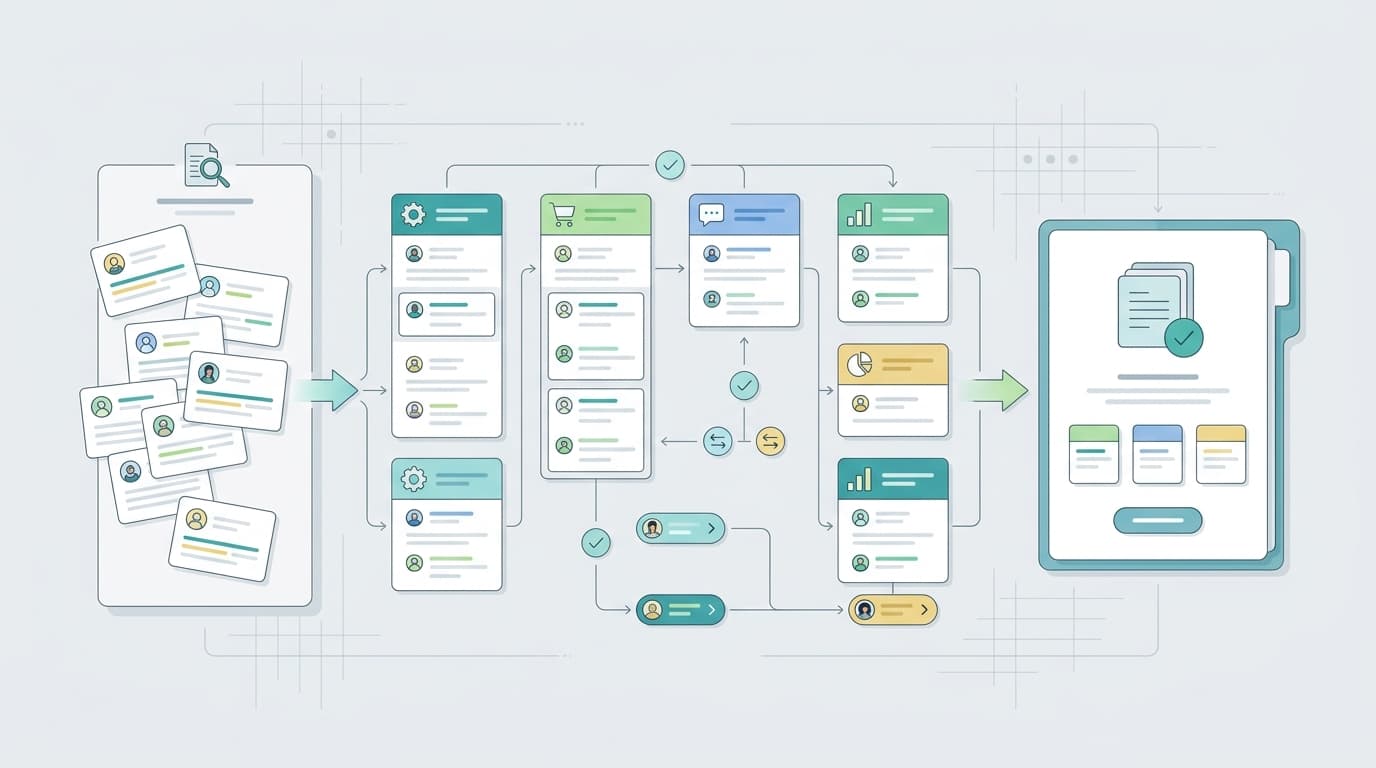
Amazon sellers compare VOC AI vs TheReviewIndex when they want a faster way to understand what buyers are saying in product reviews. Both tools help reduce the time spent reading long review sets, but they are built for different levels of decision-making.
TheReviewIndex is useful when someone wants a quick summary of Amazon product reviews. VOC AI is built for sellers, brands, and ecommerce teams that need to turn review language into product, listing, competitor, and customer experience decisions.
That difference matters. A shopper may only need to know whether a product is worth buying. A seller needs to know which complaints are hurting conversion, which competitor weaknesses can become positioning opportunities, and which review themes deserve action from product, listing, support, or brand teams.
Online reviews are not a minor signal. Pew Research Center has reported that many consumers read online ratings or reviews before making purchase decisions, and the OECD has examined how online ratings and reviews affect trust in digital markets. For Amazon sellers, review analysis is not just research. It is part of product-market feedback.
TL;DR - VOC AI vs TheReviewIndex
Feature | VOC AI | TheReviewIndex |
Best for | Amazon review intelligence, competitor benchmarking, and seller workflows | Quick Amazon product review summaries and shopper research |
Primary user | Amazon sellers, brands, agencies, and ecommerce teams | Shoppers, researchers, and lightweight product evaluators |
Review depth | Portfolio and competitor analysis with theme and sentiment workflows | Product-level summary and review analysis |
Team workflow | Better fit for repeated analysis, exports, and action planning | Better fit for fast reading and one-off checks |
Pricing signal | Public pricing starts with Pro at $99/month | Public site emphasizes a free review analysis experience |
Who it is for | Teams that turn review language into product, listing, and support decisions | People who want a quick summary before buying or researching a product |
Choose VOC AI if review analysis is part of your weekly seller workflow. It is the better fit when you need to compare ASINs, identify recurring complaint themes, review competitor weaknesses, prepare listing updates, or brief product teams. Choose TheReviewIndex if you want to inspect a single Amazon product and do not need a full seller intelligence workflow.
The short version is simple: VOC AI helps teams act on reviews; TheReviewIndex helps people understand reviews. Both jobs are useful. They should not be treated as the same buying decision.
What Is VOC AI?
VOC AI is an AI review analysis and customer voice platform for Amazon sellers and ecommerce teams. Its core value is turning large amounts of buyer language into usable insight: recurring complaints, product strengths, sentiment patterns, purchase motivations, usage scenarios, competitor weaknesses, and listing opportunities.
For a seller, that is different from reading star ratings or exporting raw review text. A 4.4-star product may still have a serious pattern hidden inside reviews: confusing sizing, weak packaging, unclear instructions, missing accessories, battery complaints, or repeated quality-control concerns. A seller needs those themes grouped clearly enough to decide what to fix.
VOC AI is especially relevant when a team wants to:
- Analyze Amazon reviews across multiple ASINs
- Compare buyer feedback between competing products
- Find negative sentiment patterns before they damage conversion
- Use buyer language to improve listing copy and creative briefs
- Build product improvement notes from review themes
- Track review changes as part of a recurring operating process
For deeper operating guidance, VOC AI’s guide on how to analyze Amazon reviews explains how sellers can move from manual review reading to pattern-based analysis.
What Is TheReviewIndex?
TheReviewIndex is best understood as a product review summary tool. It helps users scan Amazon reviews more quickly by surfacing common positives, negatives, and product-level themes.
That makes it useful for fast research. A seller exploring a new niche might use a lightweight summary to spot obvious complaints before doing deeper category research. A shopper might use it to understand whether a product’s marketing claims match what customers mention after purchase.
TheReviewIndex is strongest when the job is simple:
- Summarize one product quickly
- Understand common review themes before buying
- Scan positives and negatives without reading hundreds of reviews
- Do early product research before deeper seller analysis
It is less suited to workflows that require catalog monitoring, multi-ASIN benchmarking, team ownership, recurring reporting, or structured seller decision-making. That does not make it weak. It means it solves a narrower problem.
Review Intelligence Depth
For Amazon sellers, the main question is not “Can this tool summarize reviews?” The better question is “Can this tool help us decide what to do next?”
A useful seller review workflow has to answer questions like:
- Which complaints appear across several products?
- Which negative themes are increasing over time?
- Which competitor weaknesses show up repeatedly?
- Which words do buyers use when describing a product benefit?
- Which listing claims are creating mismatched expectations?
- Which issues belong to product, support, listing, or operations?
VOC AI is the stronger fit when sellers need that level of structure. Its sentiment analysis use case is not only about labeling comments as positive or negative. The value comes from connecting sentiment to product attributes, pain points, and decisions.
TheReviewIndex is better when the goal is quick interpretation. If you only want to know the main strengths and weaknesses of one product, a lighter summary tool may be enough.
Need | Better fit | Reason |
Summarize one product quickly | TheReviewIndex | The interface is built around fast review interpretation. |
Compare several competitors | VOC AI | Seller teams need structured comparison, not only a summary. |
Create a product improvement backlog | VOC AI | Themes must be grouped, prioritized, and reusable. |
Do casual shopper research | TheReviewIndex | The workflow is simple enough for quick evaluation. |
Seller Workflow and Team Accountability
Review analysis becomes valuable when someone owns the next action.
A product manager may need to investigate a defect. A listing manager may need to rewrite a bullet point. A support lead may need to update response templates. A brand owner may need to watch whether the same complaint is appearing in competitor reviews.
This is where VOC AI fits naturally into seller operations. It can support repeated review analysis across product, marketing, and competitor research workflows. Sellers using VOC AI competitor analysis can look beyond their own ASINs and study how customers describe competing products.
TheReviewIndex can start a conversation, but it is not designed to be the operating layer for a review intelligence program. If one person wants a quick read, that is fine. If a team needs to track themes, assign owners, and compare products over time, the workflow needs more structure.
Compliance: Review Analysis Is Not Review Manipulation
Neither tool changes Amazon’s official rules for reviews. Sellers still need to follow Amazon’s review policies and customer communication rules.
Amazon’s own Customer Reviews tool is the official seller-side environment for reviewing buyer feedback within Amazon’s ecosystem. Third-party analysis tools can help sellers understand patterns, but they do not replace Amazon-approved workflows.
This distinction is important because review analysis and review manipulation are not the same thing.
Review analysis means studying what buyers already said and using that insight to improve the product, listing, support experience, or competitive positioning. Review manipulation means trying to influence, filter, incentivize, or distort reviews. Sellers should keep that line clear.
The FTC’s guidance on consumer reviews and testimonials also makes review integrity a business issue, not just a marketplace issue. Any seller using review insights in marketing should make sure claims are accurate, supportable, and not selectively misleading.
Pricing and Buying Decision
VOC AI is paid seller software. Its public pricing page lists plans such as Pro and Team tiers, with features tied to Amazon review analysis, market insights, monitoring, and other seller workflows. Sellers should still check the live pricing page before buying because SaaS packaging can change.
TheReviewIndex may be easier to test for quick product research, depending on its current public offer. But sellers should not evaluate it as if it were a full Amazon seller operations platform unless the current product and pricing clearly support that use case.
A practical way to decide is to ask how often review insights affect your roadmap.
If reviews guide occasional niche research, a lightweight summary tool may be enough. If reviews guide weekly product improvements, listing edits, competitor briefs, or support decisions, VOC AI is more likely to justify the investment.
Which Should You Choose?
Scenario | Choose | Why |
You manage multiple ASINs and competitors | VOC AI | You need repeatable review intelligence across a catalog. |
You are checking one product before buying | TheReviewIndex | A quick review summary is enough. |
Your team needs to brief product or listing owners | VOC AI | Themes need to become action items. |
You want a free or lightweight research step | TheReviewIndex | It is a low-friction place to start. |
You need official review actions in Seller Central | Amazon tools | No third-party summary replaces Amazon-native workflows. |
A balanced workflow can use both types of tools. Start with fast summaries when you are exploring a new category. Move serious seller decisions into a dedicated review intelligence workflow when the product, category, or competitor set becomes important.
How VOC AI Turns Review Analysis Into Seller Actions
VOC AI is most useful after the first summary, when a team needs to decide what to do.
A repeated packaging complaint may become a QA task. Confusion about sizing may become a listing image update. A competitor’s recurring weakness may become a positioning angle. A sudden negative review theme may become a signal for support or operations.
The discipline is simple: every review theme should connect to an owner and a next step.
A strong seller review note should answer:
- What happened?
- Which ASIN or competitor did it appear on?
- How often is the theme recurring?
- Why does it matter for buyers?
- Who owns the next action?
- When should the team check again?
Without that process, review software becomes another dashboard. With that process, review analysis becomes a product and listing improvement system.
Research from Northwestern University’s Spiegel Research Center has also shown that online reviews influence purchase decisions in ways that depend on review volume, rating, content, price, and source. That is why sellers should not only watch the average star rating. The content of reviews often explains the reason behind conversion changes.
Practical Seller Checklist Before Choosing a Tool
Before choosing review software, write the operating checklist your team will actually follow. The tool should support the workflow, not replace the decision process.
Use this checklist:
- Define the decision. Are you trying to improve the product, update a listing, brief a competitor angle, monitor negative sentiment, or support customer service?
- Define the ASIN scope. Separate your own ASINs, direct competitors, category leaders, and products used only for early niche research.
- Define the review signal. Do not mix rating movement, complaint themes, positive language, sentiment shifts, competitor weaknesses, and policy-sensitive issues into one vague bucket.
- Define the owner. A theme without an owner is only a report line. A theme with an owner can become a fix.
- Define the cadence. Weekly review monitoring and monthly competitor analysis are easier to maintain than irregular deep dives.
- Define the source. Make clear whether the insight came from Amazon-native tools, exported review data, third-party analysis, or manual research.
- Define the claim review process. Buyer language can inspire listing copy, but it should not be copied into claims without verification. This matters for durability, safety, performance, compatibility, and any category where unsupported claims can create compliance risk.
This checklist also helps sellers avoid buying overlapping software. A review request tool may be good at outreach but weak at competitor analysis. A review intelligence platform may be good at insight but not designed to send review requests. A marketplace suite may connect reviews to keywords and PPC, but its review analysis may not be deep enough for product development.
Final Verdict
Choose TheReviewIndex if you need a quick way to understand one Amazon product’s reviews. It is useful for lightweight research, shopper-style summaries, and early product checks.
Choose VOC AI if review analysis is part of your Amazon seller workflow. It is the stronger fit when reviews inform product fixes, listing updates, competitor research, sentiment monitoring, and recurring team decisions.
The best choice depends on the job. If you need a summary, use a summary tool. If you need a repeatable review intelligence process, use a seller-focused platform.
FAQ
Is VOC AI better than TheReviewIndex for Amazon sellers?
VOC AI is usually the better fit for Amazon sellers who need portfolio-level review intelligence, competitor comparison, sentiment analysis, and repeatable workflows. TheReviewIndex is better for quick product-level review summaries.
Is TheReviewIndex useful for Amazon product research?
Yes. TheReviewIndex can be useful for early product research when you want to scan common positives and negatives quickly. Sellers doing serious category or competitor work may still need a more structured review intelligence workflow.
Does VOC AI replace Amazon Seller Central?
No. Seller Central remains the official place for Amazon-native seller actions. VOC AI helps sellers analyze review language and buyer patterns so they can decide what to improve or investigate.
Which tool is better for competitor review analysis?
VOC AI is better for competitor review analysis because sellers often need to compare multiple ASINs, group complaint themes, identify sentiment patterns, and turn competitor weaknesses into product or listing decisions.
Should sellers use review summaries in listing copy?
Sellers can use review summaries to understand buyer language, but they should verify every claim before using it in listing copy. Review insights should guide messaging; they should not become unsupported product claims.
What is the main difference between VOC AI and TheReviewIndex?
TheReviewIndex is mainly useful for fast review understanding. VOC AI is built for Amazon sellers who need review analysis to support product, listing, competitor, and customer experience decisions.