Amazon Seller University stands as a cornerstone educational platform for anyone seeking sustainable success in the Amazon marketplace. In 2025, the complexity and competitiveness of Amazon’s ecosystem have only intensified, making structured, authoritative learning resources more essential than ever. Whether you are a novice launching your first product or a seasoned entrepreneur aiming to refine advanced marketplace strategies, Amazon Seller University offers an all-encompassing repository of modules, tutorials, and live sessions that empower sellers at every stage. Its importance extends beyond technical how-tos—it shapes long-term business acumen, market adaptability, and the ability to build world-class brands on Amazon. By demystifying policies, procedures, and growth tactics, this platform remains an indispensable toolkit for unlocking profitability and resilience as an Amazon seller.
What Is Amazon Seller University?
Amazon Seller University (ASU) is an official, on-demand online learning hub developed by Amazon to equip sellers with the comprehensive knowledge required for successful participation in its marketplace. Accessible globally and updated regularly, the platform hosts an extensive library including video tutorials, live webinars, in-depth guides, checklists, and case studies. The content is meticulously structured into topic-based modules, ranging from account setup and product listing to advanced advertising strategies, fulfillment logistics, customer service, and compliance.
The central philosophy of Amazon Seller University is delivering an adaptable learning experience. Sellers can access materials according to their schedule, learning style, and individual business priorities. With multilingual support—offering core resources in English, Spanish, Chinese, and localized variations for international markets—ASU ensures inclusivity for Amazon’s diverse, global seller base. By offering industry-agnostic insights as well as localized strategies, the platform positions itself as both a universal and region-specific advisor for Amazon entrepreneurs.
How Amazon Seller University Works: Foundations and Mechanisms
The operational framework of Amazon Seller University is built around self-directed, modular learning. Sellers can tailor their educational journey by selecting modules that reflect their experience level, product category, and business goals.
ASU’s underlying structure employs several key mechanisms:
- Content Categorization and Learning Paths: All educational assets are grouped into thematic modules, such as “Product Research,” “Listing Optimization,” “Pricing Strategies,” and “Fulfillment by Amazon (FBA).” Learners begin with foundational topics and progress through increasingly advanced material, with recommendations made based on prior activity.
- On-Demand and Live Learning: Pre-recorded video tutorials, written guides, and interactive checklists are available at any time. Complementing this, live webinars and Q&A sessions with Amazon specialists offer real-time engagement and community-driven learning.
- Personalized Content Delivery: In 2025, ASU leverages data analytics to track user behavior and tailor content recommendations. This adaptive mechanism suggests relevant modules, curates learning paths based on prior completion and engagement, and surfaces latest updates critical to each seller’s business model.
- Localization and Language Adaptation: Multilingual support ensures that sellers in markets like Amazon India, Brazil, the UK, and beyond can access content tailored to their regulatory environment, language, and cultural context.
- Blending Practical and Strategic Perspectives: ASU’s content ranges from day-to-day operational tactics (e.g., how to process returns) to strategic best practices (e.g., expanding into international marketplaces or leveraging Amazon logistics for scale).
Through this thoughtfully designed structure, Amazon Seller University achieves both breadth and depth, equipping sellers to master the evolving marketplace landscape.
Key Components of Amazon Seller University
1. Extensive Video Tutorials Library
A central feature of ASU is its rich library of high-quality video tutorials. These range from beginner walkthroughs—like setting up a seller account—to advanced workshops on optimizing campaigns using Amazon Sponsored Brands. Visual learners especially benefit from stepwise demonstrations and real-world examples that clarify complex procedures.
2. Comprehensive Written Guides and Articles
Complementing video content, written materials provide detailed explorations of topics such as pricing strategies, inventory control, and compliance. These documents serve as enduring references for sellers revisiting specific challenges, supporting both learning and operational troubleshooting.
3. Interactive Live Sessions and Webinars
Live training sessions—often led by Amazon experts or successful marketplace veterans—enable sellers to ask questions, engage in real-time polls, and discuss timely topics such as policy changes or promotional strategies. Webinars foster a sense of community while keeping participants up-to-date on evolving best practices.
4. Case Studies and Success Stories
ASU includes an archive of case studies spotlighting real sellers who have excelled in areas like listing optimization, fulfillment, or brand building. These narratives provide concrete, inspirational roadmaps for others to follow, often including step-by-step breakdowns of implemented strategies.
5. Structured New Seller Onboarding
Dedicated modules guide new users through every phase of account creation, listing development, and the first product launch. These resources ensure that even those with no prior e-commerce experience can achieve a confident, compliant start.
6. Multilingual and Localized Content
By offering core modules in multiple languages and adapting to regional regulations, Seller University supports international sellers—whether on Amazon India, UK, or other country-specific marketplaces—with tailored guidance, ensuring relevance and inclusivity for all.
The Benefits and Advantages of Amazon Seller University
1. Accessibility and Flexibility
ASU’s on-demand structure empowers sellers to learn at their own pace, reviewing materials as needed, and fitting education into even the busiest schedules. This flexibility is invaluable in a global marketplace operating across time zones.
2. Up-to-Date, Reliable Information
ASU content is continually refreshed to reflect the latest changes in Amazon policies, algorithm updates, platform features, and compliance requirements. This reduces risk and ensures sellers always have access to the most current operational knowledge.
3. Comprehensive Coverage for All Experience Levels
From foundational learning for new sellers to advanced analytics and branding modules for experienced operators, ASU covers the complete journey of Amazon entrepreneurship. The modular approach ensures relevance, progression, and depth.
4. Enhanced Performance and Competitiveness
By mastering listing optimization, advertising strategies, and fulfillment options, sellers who engage with ASU routinely achieve higher visibility, increased sales conversions, and improved customer satisfaction—leading to long-term market resilience.
5. Community Engagement and Support
Interactive webinars, live Q&A sessions, and community forums foster peer support and real-time guidance, reducing the isolation often felt by e-commerce entrepreneurs and providing ongoing motivation and troubleshooting.
Use Cases and Real-World Applications
A. New Seller Launch and Onboarding
For an entrepreneur launching their first product, ASU’s step-by-step modules on account setup, compliance, and product listing safeguard against early mistakes. By following the guided pathway, a new seller can confidently create high-quality listings, navigate shipping options like FBA, and set up compliant promotions.
B. Advanced Seller Optimization
Experienced sellers can leverage advanced topics—like data-driven pricing tactics and multi-language advertising campaigns—to outmaneuver competitors. For example, a long-time seller might use Seller University’s modules on Sponsored Brands to master new ad formats and expand into international marketplaces, increasing their brand’s visibility.
C. Market and Policy Adaptation
Sellers facing regulatory changes or entering new international markets benefit from ASU’s localized content. A seller in Amazon India can access regionally tailored walkthroughs outlining tax structures, local compliance requirements, and cultural best practices for listing optimization.
D. Integrating Review Intelligence: VOC.AI in Action
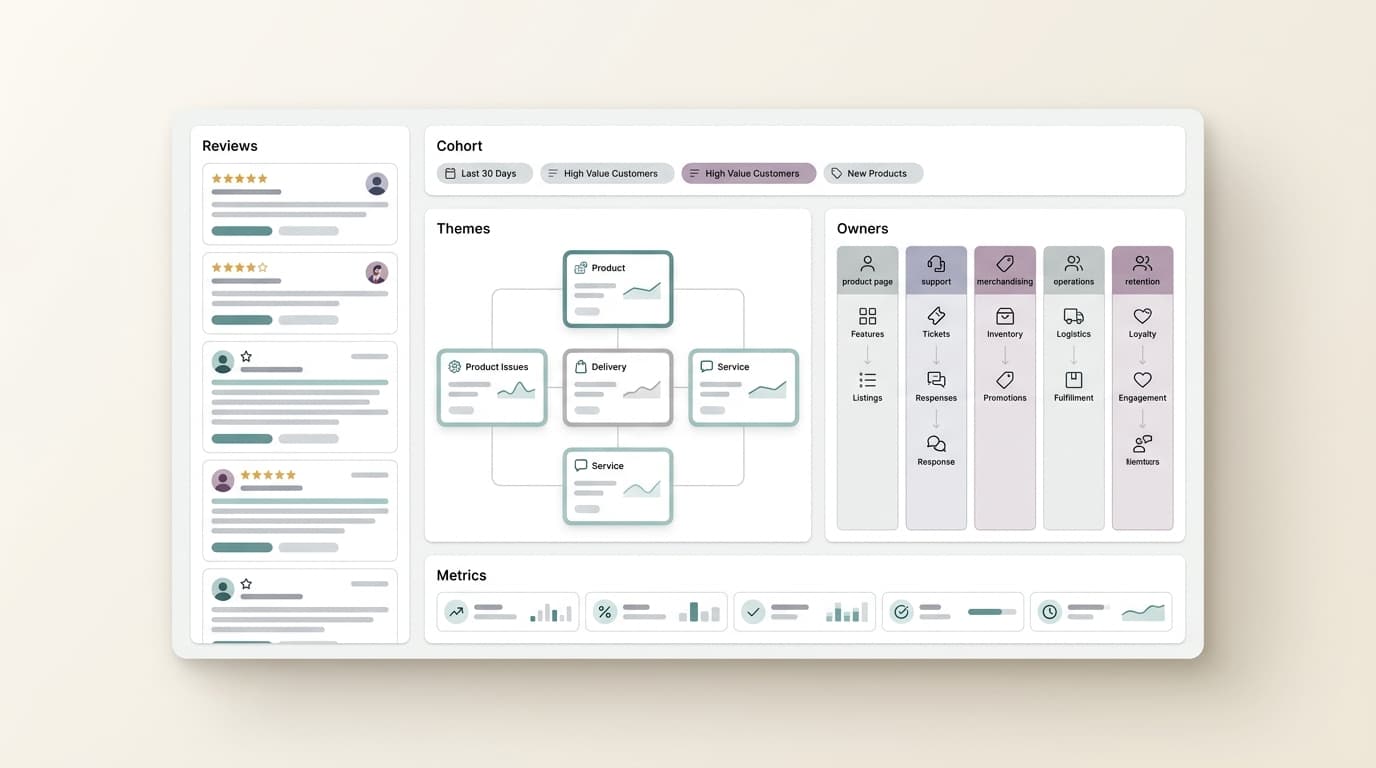
While Seller University lays the foundational “how-tos,” integrating third-party solutions like VOC.AI (Voice of Customer AI) propels sellers toward deeper analytical excellence. VOC.AI specializes in semantic analysis of Amazon review content, extracting actionable insights around customer needs, motivations, and pain points. Sellers can use ASU to perfect their listings and advertising, then deploy VOC.AI to interpret massive volumes of customer reviews, revealing not just what customers are saying—but why. For instance, after optimizing product pages using ASU modules, a seller utilizing VOC.AI might discover recurring dissatisfaction with product durability. They can then update their listing and product based on these nuanced findings. [Image: dashboard view of VOC.AI showcasing review sentiment analysis]
Overcoming Challenges and Limitations
While ASU is an essential foundation for any Amazon seller, it does pose certain challenges:
- Generalization vs. Specificity: The breadth of ASU’s content sometimes sacrifices depth for specialized niches. Sellers with highly unique products (e.g., handmade crafts or technical equipment) may find certain modules too generic, requiring supplementary industry-specific resources for best results.
- Information Overload: Especially for beginners, the sheer volume of available tutorials and materials can be overwhelming. Prioritization and structured learning are essential to avoid confusion and fatigue.
- Amazon-First Perspective: Content in ASU is developed from Amazon’s perspective, largely focusing on compliance, policies, and operations within the platform. This means advice on external strategies—like leveraging off-Amazon marketing or financing—may be limited or absent.
- Continuous Learning Demand: Frequent updates in policies and features mean sellers need to invest time in ongoing education to stay compliant and competitive—a necessity, but one that demands constant attention.
- Limited Coverage of Broader Business Strategies: ASU’s primary focus on the mechanics of selling may not delve deeply into broader business fundamentals like fundraising, global branding, or omni-channel marketing. Serious sellers should supplement with external blogs, professional courses, or mentorships for a holistic education.
Future Trends in Amazon Seller Education
In 2025, Amazon Seller University and its competitors are embracing several forward-looking trends:
- Adaptive Learning Experiences: Platforms will increasingly harness data analytics and AI to create personalized, adaptive curricula—recommending modules based on knowledge gaps and past performance. This means a first-time seller is guided through fundamentals, while veterans receive targeted advanced content.
- Interactive and Experiential Formats: Expect more live training, virtual workshops, and peer Q&A events. The shift from static videos to dynamic interaction will deepen engagement and comprehension, attracting sellers seeking up-to-the-minute guidance and community learning.
- Data-Driven Decision Support: The integration of analytics tools within training platforms will provide sellers with real-time feedback, benchmarking, and actionable recommendations for optimizing their businesses.
- Mobile Learning: With the proliferation of smartphones and global sellers, mobile-optimized content will allow anytime-anywhere learning, further democratizing access to premium seller education.
- Internationalization and Localization: Continued investment in market-specific content, localized regulations, and multi-language support will ensure relevance for sellers in emerging e-commerce markets like India, Latin America, and Southeast Asia.
- Integration With Third-Party Ecosystems: Collaboration with best-in-class tools such as VOC.AI will become commonplace, allowing sellers to move from surface-level listing improvements to deep customer insight and data-driven product innovation.
Conclusion: Building Success as an Amazon Seller in 2025
Amazon Seller University remains an irreplaceable resource in the competitive Amazon landscape of 2025. By offering a comprehensive, continually updated curriculum, the platform equips sellers with both foundational and advanced knowledge to optimize listings, master fulfillment, and scale global brands. However, to achieve sustainable growth and true differentiation, sellers must augment their Seller University experience with external tools and strategies. Solutions like VOC.AI amplify the value of ASU by extracting the underlying motivations in buyer feedback, guiding real-world product improvements and strategic messaging. By combining the robust, structured education of ASU with data-driven, customer-centric intelligence, sellers position themselves for long-term profitability, customer satisfaction, and brand dominance.
Take action now: Schedule regular learning sessions with Amazon Seller University, use tools like VOC.AI to understand your customers at a deeper level, and remain proactive in adapting to new trends. Invest in your education and analytical capabilities to ensure your continued success on Amazon in 2025 and beyond.