VOC AI vs. Amazon Review Summarizers: Which Workflow Supports Better Decisions?
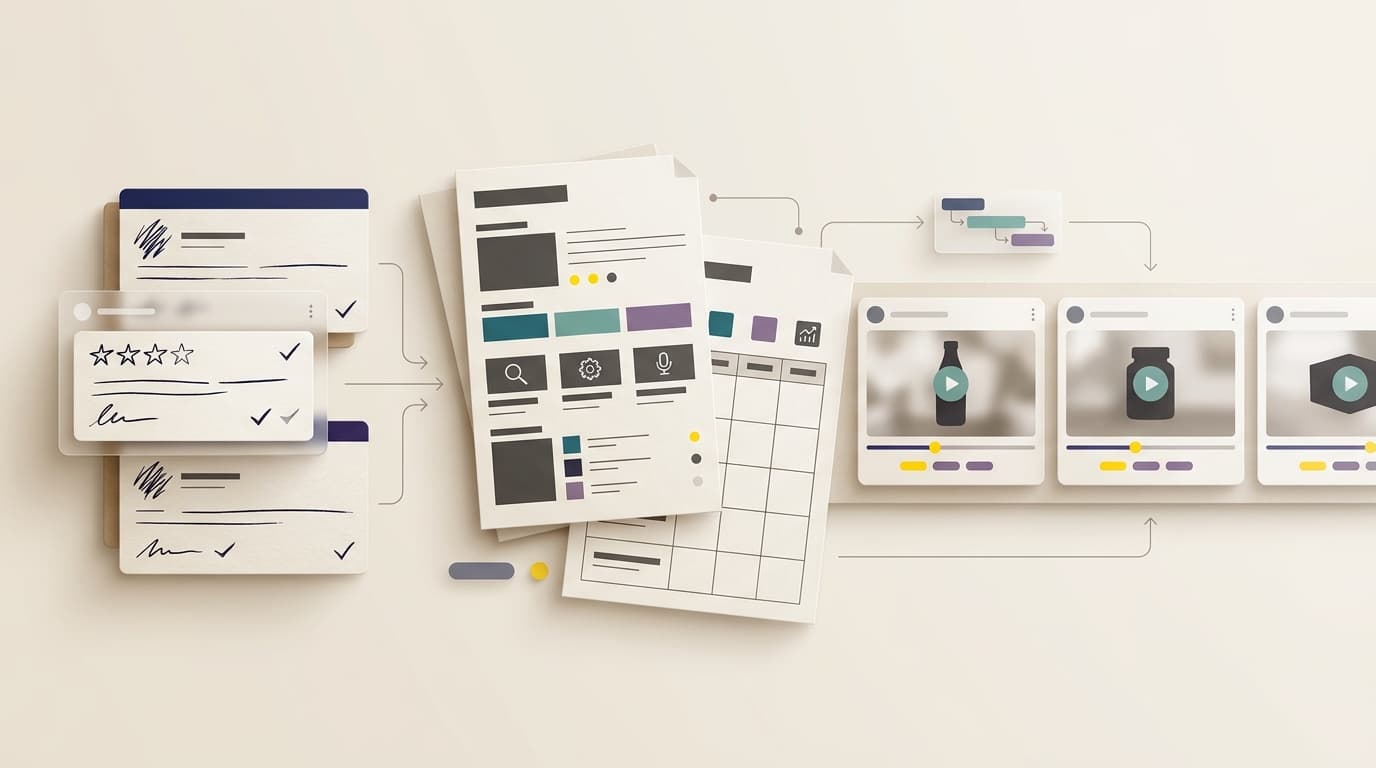
An Amazon review summarizer can be useful when you need a fast answer to a narrow question: What are buyers saying about this product? It can compress hundreds of comments into a few themes and save you from reading every review manually.
But many ecommerce decisions require more than a shorter version of the review feed. Product teams need to know which complaints are recurring, which buyer segments experience them, whether opinions conflict, how competitors compare, and what evidence supports the next action. Marketing teams need customer language they can trace back to real use cases. Operators need a workflow they can repeat after a launch, listing change, packaging update, or competitor move.
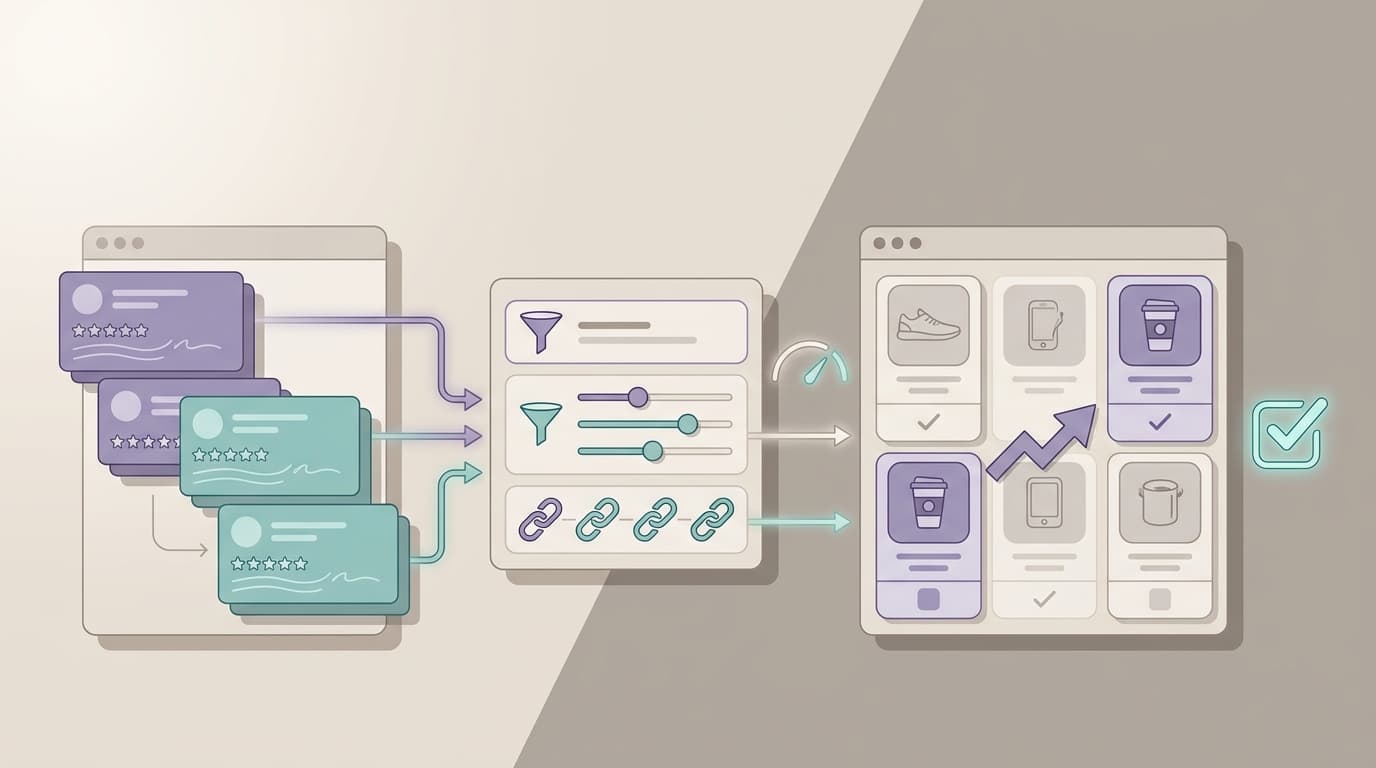
That is the practical difference between a single-purpose Amazon review summarizer and a broader review-analysis workflow such as VOC AI. One is optimized for compression. The other is designed to help teams move from customer comments to an evidence-backed decision.
This comparison does not assume that every summarizer is limited or that every team needs a full platform. Instead, it gives you a buyer framework for choosing the right level of analysis for the job.
The Short Answer
Choose a lightweight review summarizer when you need quick orientation on one product and the result will not directly drive a high-cost decision.
Choose a broader customer review analysis tool when you need to:
- compare products or competitors using matched review cohorts;
- inspect evidence behind themes and sentiment;
- preserve contradictions instead of smoothing them away;
- route findings into product, marketing, support, or research workflows;
- repeat the analysis over time or across many products;
- give multiple stakeholders a shared, auditable view of customer feedback.
The deciding question is not “Which tool produces the best paragraph?” It is “What decision must this analysis support, and how much evidence does that decision require?”
Review Summary vs. Review-Analysis Workflow
The two approaches overlap, but they optimize for different outputs.
| Evaluation area | Single-purpose review summarizer | Broader review-analysis workflow |
|---|---|---|
| Primary job | Reduce reading time | Turn review evidence into a repeatable decision process |
| Typical output | Short narrative or theme list | Themes, sentiment, evidence, comparisons, filters, and action-ready outputs |
| Best fit | Quick product orientation | Product research, competitor analysis, positioning, monitoring, and cross-team decisions |
| Cohort control | May focus on one imported or visible set | Should make product, date, rating, variation, and market scope explicit |
| Evidence traceability | Varies; may stop at the summary | Should let users inspect reviews behind important findings |
| Contradictions | Can disappear in compression | Should preserve mixed experiences and meaningful exceptions |
| Comparison depth | Often limited to separate summaries | Should support structured comparison across matched products or cohorts |
| Repeatability | Useful for occasional checks | Better suited to recurring research, reporting, or API-supported workflows |
| Handoff | Copy the summary | Share evidence, findings, priorities, and next-step ownership |
This is not a quality judgment by itself. A simple tool can be the more efficient purchase when the job is simple. The risk comes from using a summary as if it were a complete analysis.
Where an Amazon Review Summarizer Works Well
A summarizer earns its place when speed matters more than depth.
1. Fast orientation before deeper research
If you have just found a product or competitor, a summary can reveal obvious themes: buyers praise ease of use, dislike packaging, mention sizing inconsistency, or repeatedly describe a particular use case. That first pass helps you decide where to investigate.
2. Low-stakes screening
A lightweight summary can help an agency screen a list of possible competitors or help a seller decide which ASIN deserves a closer review. The summary is acting as a filter, not the final answer.
3. One-off questions
If the task will not be repeated, a browser-based or single-use workflow may be enough. There is little value in building a sophisticated reporting system for a question you will ask once.
4. Personal reading assistance
Some users simply want a faster way to understand a product before purchasing it. They may not need exports, team collaboration, cohort comparisons, or evidence routing.
The important safeguard is to treat the output as orientation. A fluent paragraph can identify a direction, but it does not automatically show how the data was selected, whether the pattern is stable, or which reviews contradict it. Our guide to what an Amazon review summarizer should show sellers explains the minimum evidence to look for even in a lightweight tool.
Where Summarization Alone Starts to Break Down
Compression removes detail by design. That tradeoff becomes risky when the missing detail affects the decision.
The cohort is unclear
A summary may sound definitive without showing the products, variants, dates, star ratings, or markets included. “Buyers dislike the fit” means very different things if the statement comes from one variation, a short post-launch window, or a broad historical review set.
Frequency is mistaken for importance
The most common phrase is not always the most consequential issue. A rare compatibility failure, safety concern, or high-return defect can matter more than a frequent cosmetic complaint. Teams need a way to weigh severity, confidence, recency, and decision relevance—not frequency alone.
Contradictions are flattened
Buyers can praise and criticize the same attribute. A product may feel sturdy to occasional users but too heavy to travelers. A battery may be sufficient for one use case and unacceptable for another. An average summary can erase the segment or situation that explains the disagreement.
Evidence cannot be inspected
When a finding will influence a product requirement, claim, listing change, or support response, stakeholders need to examine examples. Without traceability, the team cannot tell whether a theme reflects the source reviews or an overly broad interpretation.
The output has no owner or next step
“Customers mention packaging” is an observation. A decision workflow asks whether the issue is increasing, which SKU or fulfillment path it affects, how severe it is, who owns the investigation, and when the signal should be checked again.
How VOC AI Fits a Different Job
VOC AI’s Voice of Customer Analysis is positioned around analyzing customer feedback for business decisions rather than only shortening text. Its related product routes connect review evidence to applied workflows such as sentiment analysis, product research, and competitor analysis.
For buyers, the practical distinction is the shape of the workflow.
Start with a defined decision
Instead of beginning with “summarize these reviews,” begin with a business question:
- Which competitor complaint is specific enough to test as a product requirement?
- Which buyer objection should the listing address without overstating the evidence?
- Did a packaging change reduce a known complaint theme?
- Which use case creates strong satisfaction for one segment and frustration for another?
- Which finding should product, CX, growth, or operations own?
This keeps the analysis from becoming an attractive report with no operational consequence.
Make the cohort visible
Record the products, variations, date window, markets, rating bands, and review count used for the comparison. If two competitors have very different review histories, acknowledge the mismatch rather than treating their totals as equivalent.
Connect themes to evidence
Every important finding should retain a path back to representative reviews. Evidence access helps users validate wording, inspect exceptions, and avoid turning a model-generated abstraction into an unsupported claim.
Separate signal from conclusion
A review pattern can reveal a customer problem, desired outcome, objection, or tradeoff. It does not by itself prove market size, defect rate, future demand, or the commercial value of a solution. Review analysis should support the decision alongside sales data, returns, support records, keyword demand, operational constraints, and additional research.
Reuse the workflow
The Review Analysis API gives technical teams a route to evaluate repeatable review-intelligence workflows. Before selecting any platform or plan, verify current data coverage, limits, exports, access controls, and integration behavior against your actual use case.
A Decision Matrix for Buyers
Use this matrix to match the tool category to the decision.
| Your situation | Better starting point | Why |
|---|---|---|
| You want a quick overview of one product | Review summarizer | The main value is reading-speed reduction |
| You are screening many products for deeper analysis | Summarizer first, then analysis workflow | Fast triage followed by evidence-based validation |
| You are writing a product requirement | Review-analysis workflow | You need context, contradictions, severity, and traceable evidence |
| You are comparing competitor strengths and weaknesses | Review-analysis workflow | Cohort matching and topic-level comparison matter |
| You are checking whether a post-launch issue is changing | Monitoring-capable analysis workflow | The decision depends on a baseline and repeated measurement |
| You are extracting customer language for a listing | Review-analysis workflow with raw-review validation | Wording must stay faithful to actual buyer context |
| You need a one-time personal purchasing summary | Review summarizer | Collaboration and repeatability may add little value |
| Multiple teams will use the findings | Review-analysis workflow | Shared definitions, evidence, and ownership reduce handoff loss |
If you are evaluating the broader market, use the Amazon review analysis tool buyer’s guide to compare tool categories before shortlisting vendors.
The One-ASIN Evaluation Test
Marketing pages can make very different products sound similar. A controlled test with one ASIN is more revealing.
Choose a product your team already understands, then give each shortlisted tool the same cohort and the same decision question. Score each area from 0 to 2:
- 0: missing or unusable;
- 1: partially useful but requires substantial manual work;
- 2: clear, verifiable, and ready for the next workflow step.
| Criterion | What to test |
|---|---|
| Cohort clarity | Can you see exactly which reviews, dates, ratings, and variations were analyzed? |
| Theme specificity | Are findings specific enough to distinguish attributes, use cases, and failure modes? |
| Evidence traceability | Can you inspect reviews behind a theme or claim? |
| Contradiction handling | Does the output show who disagrees and under what conditions? |
| Sentiment context | Is sentiment attached to topics rather than reduced to one overall score? |
| Competitor fit | Can you compare matched products without losing cohort context? |
| Actionability | Can a team convert the output into an investigation, test, brief, or requirement? |
| Repeatability | Can the same method be reused across products and time periods? |
| Handoff quality | Can another stakeholder understand the evidence and the next step? |
| Governance | Can you verify access, retention, export, and data-handling requirements? |
A perfect score is not necessary. Weight the criteria according to the decision. Evidence traceability and contradiction handling may be critical for product development, while speed and ease of use may matter more for initial screening.
A Practical Workflow From Summary to Decision
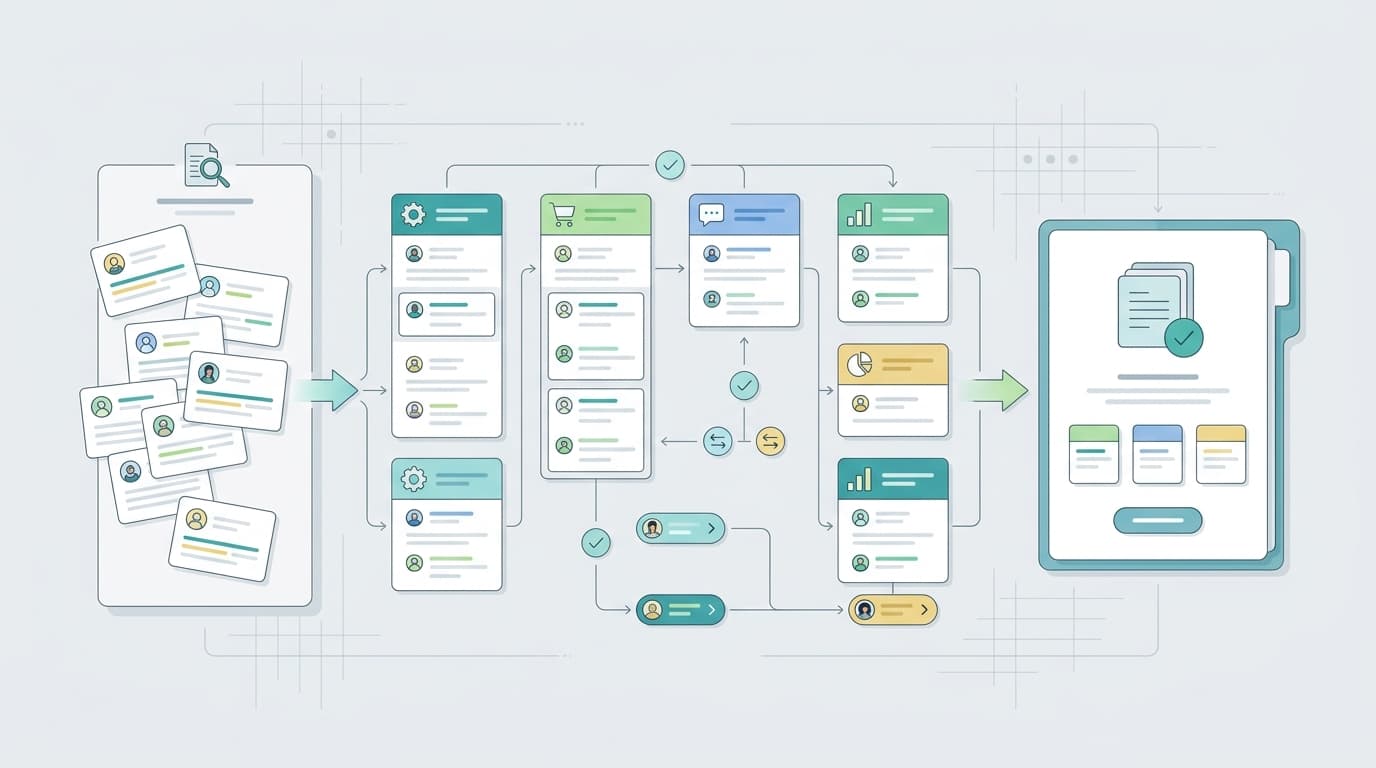
You do not always have to choose between summarization and deeper analysis. The strongest process can use both.
- Summarize for orientation. Identify the first set of possible themes.
- Define the decision. State what the team may change, test, or investigate.
- Lock the cohort. Record products, variants, dates, ratings, and markets.
- Validate the themes. Inspect representative evidence and contradictions.
- Compare relevant alternatives. Use matched cohorts where possible.
- Score the signal. Consider frequency, severity, confidence, recency, and strategic relevance.
- Assign an owner. Route the finding to product, CX, growth, operations, or research.
- Set a recheck date. Decide when new evidence could change the conclusion.
For product work, this can feed an Amazon product research workflow built from customer reviews. For competitor research, use the process to turn competitor complaints into product requirements without treating review frequency as proof of demand.
Questions to Ask Before You Buy
Whether you are evaluating VOC AI or another review analysis tool, ask vendors to demonstrate the workflow with your data.
- What exact cohort was analyzed?
- Can users open the evidence behind each important theme?
- How are mixed statements and contradictory reviews handled?
- Can the tool distinguish attributes, use cases, segments, and failure modes?
- What happens when two products have mismatched review histories?
- Can the team repeat the analysis after a launch or change?
- Which outputs can be exported or shared?
- What collaboration, access, retention, and governance controls apply?
- Which capabilities depend on a specific plan, marketplace, or integration?
- Can the vendor show where human validation remains necessary?
Avoid selecting a tool based only on the fluency of its demo summary. A polished answer is useful, but the buying decision should reflect the evidence chain behind it.
Frequently Asked Questions
Is VOC AI an Amazon review summarizer?
VOC AI can support review understanding, but its broader position is a voice-of-customer and review-analysis workflow. Buyers should evaluate it for evidence-based use cases such as sentiment analysis, product research, competitor analysis, and repeatable review intelligence—not only for producing a shorter paragraph.
Are Amazon review summarizers accurate?
Accuracy depends on the source cohort, data quality, prompt or model behavior, and the specificity of the question. Do not judge accuracy from fluency alone. Check whether important themes can be traced to reviews, whether contradictions remain visible, and whether the output stays within the evidence.
Can review summaries replace reading raw reviews?
They can reduce the amount of manual reading, but high-impact decisions still need source validation. Teams should inspect representative reviews behind important findings and review the exceptions that could change the conclusion.
What is the difference between review summarization and sentiment analysis?
Summarization condenses what reviewers say. Sentiment analysis classifies how buyers feel, ideally in relation to specific topics or attributes. Neither is automatically a full decision workflow without cohort controls, evidence, comparison, and next-step ownership.
When should a team move beyond a simple summarizer?
Move beyond summarization when findings will influence product development, positioning, monitoring, competitor strategy, support operations, or recurring reporting. The higher the cost of being wrong, the more important traceability and repeatability become.
Final Recommendation
A single-purpose Amazon review summarizer is a good choice when the goal is quick orientation and the stakes are low. It can save time and point you toward the themes worth exploring.
A broader review-analysis workflow is the better fit when your team must compare, validate, decide, and repeat. In that setting, the valuable output is not simply a summary. It is a transparent chain from cohort to evidence, from evidence to finding, and from finding to an owned next action.
If you are deciding between the two approaches, compare one ASIN with VOC AI using the scorecard above. Bring a real business question, use the same review cohort across tools, and judge the result by the decision it helps your team make.